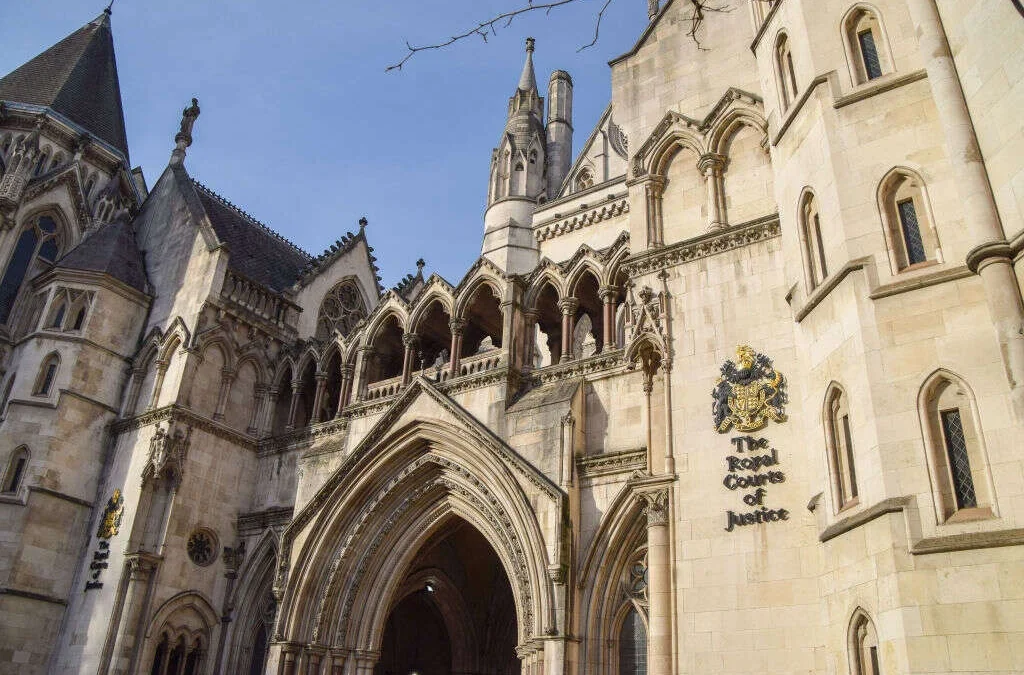
A prominent public figure has suffered a decisive legal defeat in the High Court of England and Wales following a bid to secure a pre-publication injunction against two major British media organizations. The claimant, legally identified in court documents only by the pseudonym PPT, sought to block the publication of an investigative documentary and a series of news articles detailing allegations of the abuse of power and status to pursue inappropriate and exploitative sexual activities with younger women.
In a comprehensive 52-page ruling, Mr Justice Nicklin dismissed the legal action brought against Independent Television News (ITN) and Guardian News and Media (GNM), the publisher of The Guardian. While the judiciary formally acknowledged that the impending publication would substantially elevate the risk of self-harm and suicide for the claimant, the court ultimately prioritized freedom of expression and the public interest. To allow the claimant an opportunity to lodge an appeal against the ruling, the anonymity order and temporary injunction remain strictly in place, meaning his true identity cannot yet be made public.
The High Court battle represents a legal milestone, marking the first time a litigant has attempted to invoke Article 2 (the right to life) and Article 3 (freedom from torture or degrading treatment) of the European Convention on Human Rights (ECHR) to suppress a journalistic investigation. Traditionally, individuals seeking to prevent the publication of damaging stories rely exclusively on Article 8, which protects the right to a private and family life. By expanding the legal strategy to encompass foundational life-and-safety articles, the case tested the legal boundaries of how the courts weigh freedom of the press against extreme mental health vulnerabilities.
Chronology of an Investigation and Legal Showdown
The legal confrontation is the culmination of years of investigative reporting. Journalists working for ITN originally initiated inquiries into PPT’s conduct in 2022. By April 2023, the broadcaster joined forces with The Guardian to pool resources and deepen the scope of the investigation.
Over the course of more than three years, reporting teams conducted exhaustive interviews with more than 100 individuals. This comprehensive evidence-gathering process included formal discussions with over 30 primary sources possessing first-hand accounts of the alleged behavior. The informants encompassed a broad spectrum of personal and professional connections, including friends, colleagues, former romantic partners, and relatives. Notably, all parties involved in providing accounts to the media organizations did so voluntarily, with investigative teams refusing to offer financial payments or other inducements for information.
The investigative timeline accelerated significantly in the spring of 2026. On May 18, 2026, The Guardian and ITN formally notified the claimant by issuing detailed letters inviting responses to the allegations. Combined, the correspondence contained 278 meticulously numbered points outlining the scope of the upcoming publications and requested a response within a compressed timeframe.
The receipt of the legal and editorial letters triggered a severe crisis for the claimant. Later that same day, PPT was admitted on a voluntary basis to a specialized psychiatric hospital. The litigation subsequently intensified through the autumn, culminating in a high-stakes two-day trial in late October 2026, during which legal teams for both sides debated the intersection of mental health, state obligations, and press freedom. The court was further informed that in July 2026, while the legal battle was unfolding, the claimant attempted to take his own life.
Arguments and Medical Realities in the Courtroom
During the proceedings, there was little substantive dispute regarding the precarious state of the claimant’s mental health. Medical evidence presented to the court confirmed that PPT suffers from severe psychiatric vulnerabilities. Legal representatives for the claimant argued that publication would deliver a catastrophic blow, asserting that it would trigger deep-seated shame linked to childhood trauma and lead to public humiliation, professional ruin, and the destruction of familial relationships.
Sara Mansoori KC, representing the unnamed claimant, maintained that her client vehemently denied all allegations of wrongdoing. She argued that the impact of the journalism would prove fatal were it not for the strict interventions of institutionalized care. "The only reason they would not be fatal is because the claimant would be locked up and prevented from his desire to end his life," Mansoori told the court, adding that her client harbors no future ambitions to return to public life.
Conversely, Gavin Millar KC, acting for ITN and GNM, cautioned the court against establishing a legal precedent that would force judges into the untenable position of assessing the clinical causes of suicidal ideation. Millar argued that the containment and management of a patient’s mental health crisis rest squarely with medical professionals rather than the judiciary or the press. "The obligation falls on the hospital to keep him safe, and that’s that," Millar submitted, emphasizing the severe societal value of exposing the alleged misconduct of powerful individuals.
Judicial Reasoning on Human Rights Articles
In his detailed judgment, Mr Justice Nicklin systematically addressed and dismantled the novel application of Articles 2 and 3, while balancing Article 8 privacy rights against the media’s Article 10 freedom of expression.
Addressing the Article 2 claim regarding the right to life, the judge accepted that the prospect of publication acted as a specific, powerful trigger that would materially elevate the risk of suicide. However, he ruled that the State’s positive obligations under Article 2 do not extend to controlling every external event in society that might negatively impact an individual’s psychological well-being.
"The psychiatric services have assumed responsibility for protecting the claimant against suicide arising from his mental disorder," Mr Justice Nicklin stated. "It does not follow from that responsibility, or from the court’s knowledge of the likely consequences of publication, that Article 2 requires this court to prevent every external event which may cause an acute escalation of that risk."
Similarly, the judge dismissed the Article 3 argument alleging that publication constituted degrading treatment equivalent to state-sanctioned torture. While acknowledging that the media reports would induce acute and prolonged mental suffering, the judge emphasized that proposed journalism by independent news organizations does not constitute "treatment" administered by the State.
Crucially, the court evaluated the practical utility of an injunction. The judge noted that an injunction would merely suppress a specific trigger rather than treat the underlying psychiatric condition or eliminate the claimant’s elevated baseline suicide risk. Furthermore, because the medical evidence could not identify a specific point in the future when publication would automatically become safe, any restraining order would be of uncertain and potentially indefinite duration.
In a notable observation regarding clinical safety, Mr Justice Nicklin concluded that if the allegations are to be made public, executing the publication while the claimant remains inside a supported inpatient psychiatric environment is significantly safer than doing so after his eventual discharge into the community.
Finally, weighing the claimant’s Article 8 right to privacy against the media’s Article 10 rights, the judge found in favor of freedom of expression. He noted that the allegations—centered on the abuse of power, status, and influence in dealings with younger or vulnerable women—contribute significantly to a vital public debate. The judge explicitly clarified that the court’s dismissal of the injunction did not constitute a judicial finding on the truth or falsity of the underlying allegations, leaving the ultimate editorial and legal responsibility for publication with the news organizations.
Broader Industry Reactions and Legal Implications
Legal and media experts have responded to the landmark judgment with widespread analysis of its implications for future public interest reporting and privacy injunctions.
Alex Wilson, a partner and media litigation specialist at the law firm RPC, described the ruling as a robust victory for freedom of the press. "This is a very strong judgment and an important victory for press freedom," Wilson observed. "The judge recognized that there was a real and immediate risk to PPT’s life through suicide, but that this was a risk that could be managed and reduced through treatment."
Wilson added that while the decision correctly aligns legal accountability for mental health management with medical authorities rather than the press, the exceptional nature of the case makes an appeal to a higher court entirely plausible, justifying the temporary continuation of the anonymity order.
Civil liberties and press freedom organizations also welcomed the decision, warning against the creation of legal loopholes based on wealth or vulnerability. In an official statement, Reporters Without Borders (RSF) underscored the critical societal function of independent journalism.
"The ability of journalists to expose abuses of power, and of those affected to have their voices heard, is fundamental to our democracy," the organization said. "While the risks of harm in this case of course must be taken seriously, it is important that responsible journalism in the public interest is allowed to proceed."
RSF further cautioned that legal precedents carry far-reaching consequences: "Dangerous precedents can have impacts far beyond the cases that set them, and neither wealth nor access to the best legal teams should ever shield anyone from legitimate public scrutiny. Survivors, and the journalists they trust to share their stories, must be able to speak without fear that powerful individuals can prevent them from being heard."
As the temporary injunction remains active to facilitate potential appeals, the case stands as a defining moment in British legal history, delineating the exact boundaries where medical vulnerability intersects with the public’s right to know.