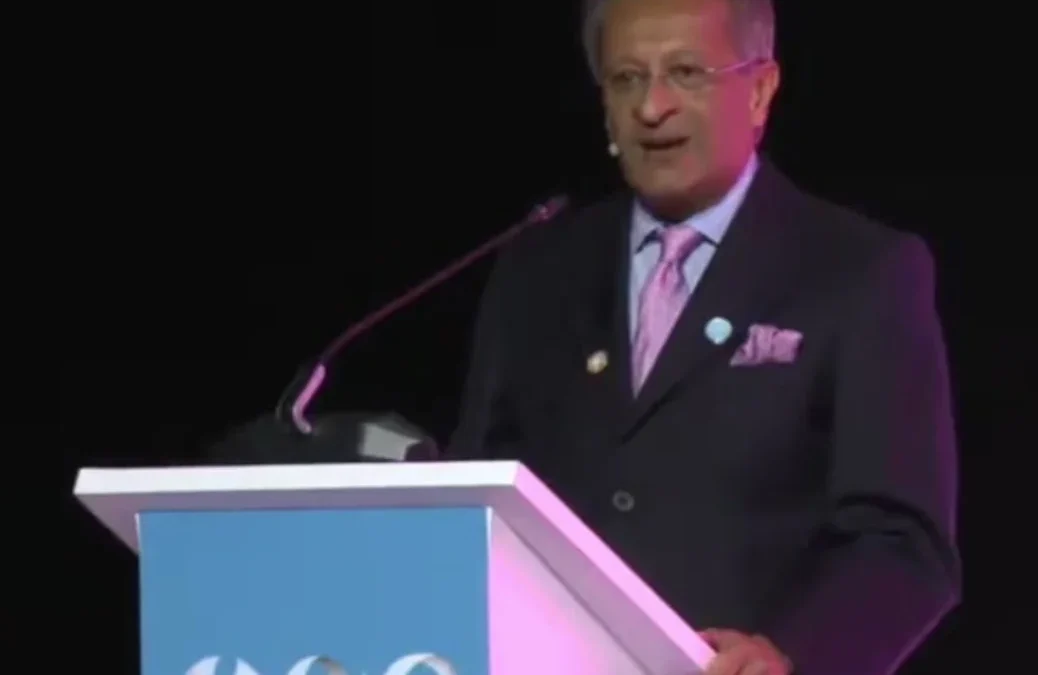
The civil justice system in the United Kingdom has once again found itself at the intersection of media freedom, corporate governance, and high-stakes reputational defense. At the center of this legal battle is Mohamed Amersi, a prominent businessman, philanthropist, and former political donor, who has initiated a high-profile libel lawsuit against the British Broadcasting Corporation (BBC). The litigation stems from an investigative report broadcast on the flagship current affairs program Panorama and published simultaneously in digital format in October 2021. The publications alleged that Mr. Amersi was knowingly involved in corrupt transactions executed by a Scandinavian telecommunications firm he once advised.
As the trial opened before Mrs Justice Tipples in the High Court of Justice in London, the courtroom became a battleground of complex international corporate structures, historic multi-million-dollar transactions, and clashing interpretations of journalistic ethics and corporate due diligence. Mr. Amersi firmly denies all accusations of wrongdoing, asserting that the BBC’s reporting caused catastrophic and unjustified harm to his personal and professional standing. The outcome of this protracted legal showdown is expected to carry significant implications not only for the parties involved but also for the broader landscape of investigative journalism, defamation law, and corporate accountability in the UK.
Background Context and Origins of the Dispute
The roots of the legal dispute stretch back more than a decade, concerning complex commercial operations within the emerging-market telecommunications sector. Mr. Amersi began his professional life as a barrister and solicitor before pivoting toward the corporate sphere, where he carved out a niche as an expert in high-risk telecommunications markets. Between 2007 and 2013, he acted as an external adviser for Telia (formerly TeliaSonera), a major multinational telecommunications company headquartered in Stockholm, Sweden.
During his tenure with Telia, the firm engaged in a series of lucrative corporate expansions and asset acquisitions across Central Asia, Eastern Europe, and South Asia. The transactions subjected to journalistic scrutiny involved Telia’s operations in Uzbekistan, Kazakhstan, and Nepal. According to court filings, the core of the BBC’s investigative report focused on a 2010 transaction wherein Telia repurchased a significant equity stake in an Uzbek telecommunications venture from a Gibraltar-registered entity named Takilant.
The Panorama investigation and accompanying online articles alleged that Takilant was secretly controlled by Gulnara Karimova, the daughter of Islam Karimova, the then-president of Uzbekistan. At the time, the ruling family wielded immense influence over the Uzbek telecommunications regulator, state infrastructure, and licensing authorities. Subsequent international investigations by authorities such as the United States Department of Justice (DoJ) characterized multi-million-dollar payments tied to these agreements as systematic bribes designed to secure favorable regulatory treatment and market access. While Telia ultimately faced severe criminal penalties and reached multi-billion-dollar settlements with US, Dutch, and Swedish authorities, Mr. Amersi was never personally charged with any criminal offense by law enforcement agencies.
Opening Arguments: The Plaintiff’s Case
On the opening day of the trial, Oliver Powell KC, representing Mr. Amersi, laid out the core arguments for the claimant. He contended that the BBC’s journalistic output had seriously misled its audience by falsely portraying Mr. Amersi as a central orchestrator and willing participant in corrupt bribery schemes.
Mr. Powell emphasized that the publications had inflicted severe and tangible harm on Mr. Amersi’s reputation, stating that anyone consuming the documentary or online article would "think very much less" of his client. He argued that the BBC’s investigative team relied heavily on unwarranted inferences, retrospective suspicion, guilt by association, and hindsight rather than hard contemporaneous evidence.
"There is no contemporaneous evidence whatsoever that a bribe or corrupt payment was made to any public official or a person capable of conferring a benefit in respect of any transactions in which Mr Amersi was involved," Mr. Powell told the court. He further asserted that there was no documentation indicating Mr. Amersi knew or ought to have known that Takilant was secretly owned by Ms. Karimova. While acknowledging that Mr. Amersi provided commercial advice on the contractual terms, Mr. Powell stressed that his client did not handle the direct financial negotiations or execute the ultimate fund transfers. Consequently, the claimant’s legal team argued that the BBC failed to meet the necessary evidentiary threshold to substantiate its serious claims.
The Defense: The BBC’s Counter-Arguments
In response, the BBC mounted a robust defense, spearheaded by Sonia Tolaney KC. The corporation maintains that the allegations published in October 2010 are substantially true and that there are strong, verifiable grounds to suspect Mr. Amersi’s complicity in corrupt corporate practices.
Ms. Tolaney raised a preliminary procedural challenge in her written submissions, arguing that Mr. Amersi had failed to demonstrate that any identifiable, quantifiable harm had actually materialized in his professional or personal life during the five years since the publication. She asserted that this absence of demonstrable real-world damage alone provided grounds for the court to dismiss the claim.
However, the defense did not rely solely on procedural thresholds. Ms. Tolaney pointed to a voluminous paper trail of contemporaneous documents, emails, and internal communications to argue that Mr. Amersi was far more than a passive or peripheral adviser. She claimed that Mr. Amersi acted as the primary liaison point between Telia and its counterparties across multiple contested deals, notably in Uzbekistan, Kazakhstan, and Nepal.
"The centrality of his role, his own self-professed expertise in emerging market telecoms, and, among other things, the revealing contents of his contemporaneous correspondence demonstrate not just that there are strong grounds to suspect that Mr Amersi knew or should have known that the deals and payments were corrupt, but in fact that he knew full well the reality of what was going on," Ms. Tolaney submitted to Mrs Justice Tipples.
Chronology of Key Events
To contextualize the arguments presented in the High Court, a detailed chronology illustrates the timeline of the underlying corporate transactions and the subsequent legal and journalistic developments:
- 2007: Telia sells a quarter-ownership stake in an Uzbek telecommunications entity to Takilant, a Gibraltar-registered firm, prior to Mr. Amersi formally commencing his advisory role with the Scandinavian company.
- 2007–2013: Mr. Amersi serves as an external consultant and strategic adviser to Telia, providing market guidance on various international transactions across emerging economies.
- 2010: Telia agrees to buy back the stock from Takilant for approximately $220 million (£165 million). Investigators later allege this transaction facilitated payments to Gulnara Karimova.
- 2016–2017: International regulatory and law enforcement bodies, including the US Department of Justice and authorities in Sweden and the Netherlands, launch major corruption probes into Telia’s Central Asian operations. Telia ultimately agrees to pay nearly $1 billion in global settlements. Mr. Amersi is not criminally charged.
- October 2021: The BBC broadcasts a Panorama investigation and publishes an online article detailing the Uzbekistan deals, linking Mr. Amersi to transactions deemed corrupt.
- 2021–2024: Mr. Amersi initiates legal proceedings for libel against the BBC, seeking substantial damages and a permanent injunction to prevent the republication of the disputed claims.
- Current Trial (Late 2024): The libel trial opens in the High Court of Justice before Mrs Justice Tipples, featuring detailed testimony, cross-examinations, and legal submissions from both parties. The proceedings are scheduled to run through December.
Broader Implications for Journalism and Corporate Governance
The legal battle between Mr. Amersi and the BBC carries deep resonance for both investigative journalism and corporate compliance standards in the United Kingdom. For the media sector, the case underscores the delicate balance investigative newsrooms must maintain when scrutinizing complex international white-collar crime. Public service broadcasters and investigative journalists frequently rely on whistleblowers, leaked documents, and historical corporate records to expose systemic corruption involving political elites and multinational corporations. However, as libel laws in the UK place a heavy evidentiary burden on defendants to prove the substantial truth of defamatory allegations, news organizations face substantial financial and legal risks if their reporting is challenged in court.
Conversely, the trial highlights the mounting scrutiny placed on corporate advisers, intermediaries, and consultants operating in high-risk emerging markets. In an era of heightened global anti-corruption enforcement—typified by legislation such as the UK Bribery Act and the US Foreign Corrupt Practices Act—intermediaries are increasingly expected to perform rigorous due diligence on the ultimate beneficial ownership of corporate counterparties. Whether Mr. Amersi possessed actual knowledge of illicit financial flows, or whether he exercised willful blindness regarding the true nature of his clients’ business dealings, forms the central philosophical and legal question that the High Court must resolve.
As the trial progresses through its scheduled weeks of evidence and witness cross-examinations, legal observers and media analysts alike will be closely monitoring Mrs Justice Tipples’ rulings. The final judgment, anticipated in the coming months, will not only determine the immediate fate of Mr. Amersi’s libel claim against the BBC but will also serve as a crucial benchmark for how British courts evaluate investigative journalism into transnational corporate corruption.