Modern consumer research has undergone a radical transformation, shifting away from the traditional confines of scheduled focus groups and rigid surveys. Today, customers voice their true sentiments, frustrations, and product desires in real-time across unprompted digital landscapes, including Reddit threads, TikTok review videos, niche forums, and independent blogging communities. To harness this vast ocean of organic data, enterprises increasingly rely on advanced social intelligence platforms. These systems bridge the gap between raw social media interactions and actionable business strategy, allowing organizations to read the collective room at a massive global scale.

Understanding the Evolution of Social Data Management
To comprehend the value proposition of modern social intelligence, industry analysts emphasize the distinct boundaries separating standard social media analytics, basic social listening, and comprehensive social intelligence. While social media analytics primarily focus on owned performance metrics—such as likes, shares, impressions, clicks, and follower growth—social listening casts a wider net across the web to monitor brand mentions, keywords, and general sentiment. Social intelligence, however, elevates these data points into macro-level strategic planning.

By synthesizing listening data, performance analytics, market trends, and competitive context, social intelligence platforms translate spontaneous online dialogue into multi-faceted consumer research. According to industry experts like Dylan Peterkin, corporate marketing teams typically outgrow basic listening configurations once their organizational objectives move past short-term campaign performance and transition toward deep audience and cultural comprehension. A basic tool can quantify spending efficiency and performance relative to an existing subscriber base, but full-fledged intelligence is required to identify how a brand can organically integrate into the daily lives and digital spaces of its target demographic.
Core Evaluation Criteria for Social Intelligence Platforms
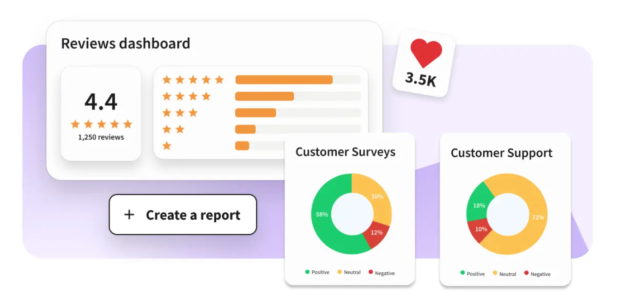
Selecting the appropriate enterprise social intelligence solution requires rigorous evaluation across several technical and functional dimensions. Organizations must prioritize robust data coverage, effective noise reduction, advanced trend detection, transparent AI-driven analysis, and intuitive user interfaces.
Data Coverage and Multi-Channel Integration
Comprehensive data coverage ensures that monitoring software captures conversations wherever they occur. Systems limited to mainstream social networks often miss vital grassroots discussions happening within niche forums or review aggregation sites. Leading platforms incorporate multi-channel data ingestion that tracks millions of websites alongside traditional social media channels. Integrating online customer reviews with social data provides a holistic view of the customer journey, exposing critical pain points and white-space market opportunities that might otherwise remain hidden.
Noise Reduction and Data Purity
The digital ecosystem is perpetually saturated with low-value chatter, automated bot activity, irrelevant keyword matches, and spam. A sophisticated social intelligence platform must deploy advanced filtration algorithms to isolate authentic human sentiment from deceptive static. Effective noise reduction prevents organizations from misinterpreting viral anomalies or unrelated keyword overlaps—such as confusing technology brands with literal fruit—ensuring that strategic decisions rest upon verified consumer signals.
Automated Trend and Theme Detection
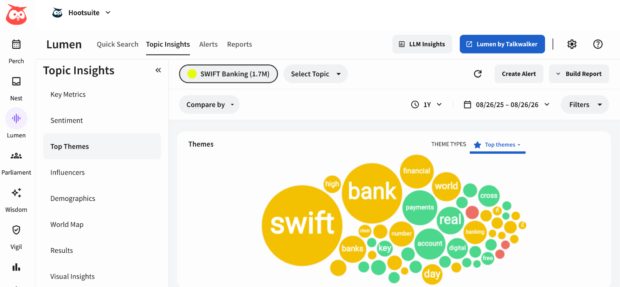
The most valuable market insights rarely reside in isolated posts; rather, they emerge through recurring behavioral patterns. Advanced platforms utilize conversation clustering to identify overarching themes across thousands of disparate comments. For instance, while a set of student discussions might superficially center on textbook expenses, clustering algorithms can contextualize these complaints within a broader macroeconomic narrative regarding the affordability of basic living necessities. Recognizing these macro-trends allows brands to align their messaging with genuine cultural movements.

Transparent AI Analysis and Actionability
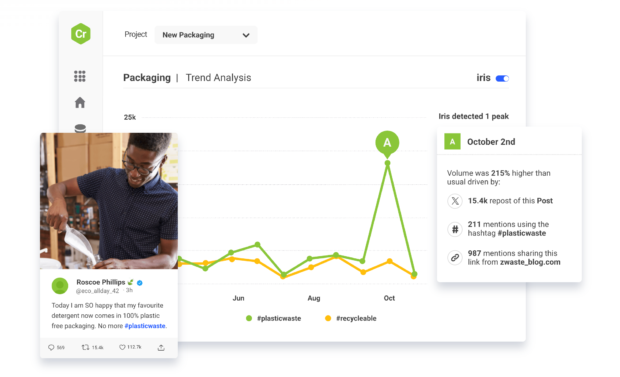
The integration of generative artificial intelligence has redefined how marketers interpret massive data spikes. When brand mentions surge by 700 percent overnight, organizations require immediate clarification regarding the underlying catalysts. Determining whether a spike stems from viral influencer endorsements, coordinated bot activity, or PR crises dictates the appropriate corporate response. To maintain credibility, modern platforms incorporate citation-backed AI assistants—such as Hootsuite’s Wisdom AI—which anchor every automated insight directly to verifiable source conversations, enabling teams to audit analytical conclusions effortlessly.
Comparative Overview of Leading Social Intelligence Tools
The market for social intelligence software features several distinct enterprise-grade solutions tailored to specific organizational needs.
Lumen by Hootsuite
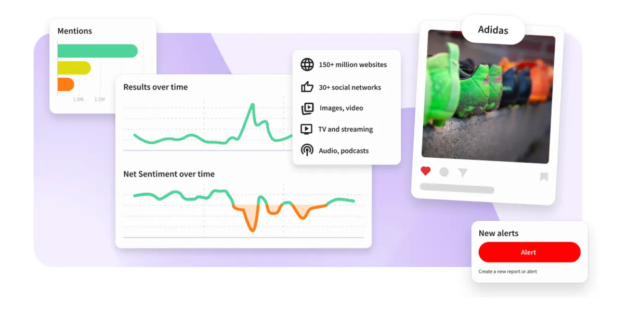
Positioned as a premier option for global enterprises, Lumen delivers extensive data coverage spanning over 150 million websites and more than 30 social networks, including specialized platforms like Bluesky and Reddit. Operating in tandem with the Wisdom AI agent, Lumen allows users to query vast datasets using natural language queries while providing direct source citations and strategic recommendations.
Brandwatch
Renowned for its unmatched historical data depth, Brandwatch has indexed over 1.6 trillion consumer conversations dating back to 2010. Powered by its proprietary Iris AI, the platform excels at large-scale trend detection, automated sentiment scoring, and advanced image and logo recognition, making it ideal for brands requiring extensive historical archives.
Meltwater
Rooted in public relations and traditional media monitoring, Meltwater tracks information across news outlets, broadcast channels, print publications, and social media. Its unique GenAI Lens capability monitors how brands are represented within major large language models like ChatGPT, Gemini, and Claude, while identifying the primary third-party publishers cited by those AI systems.
Sprinklr
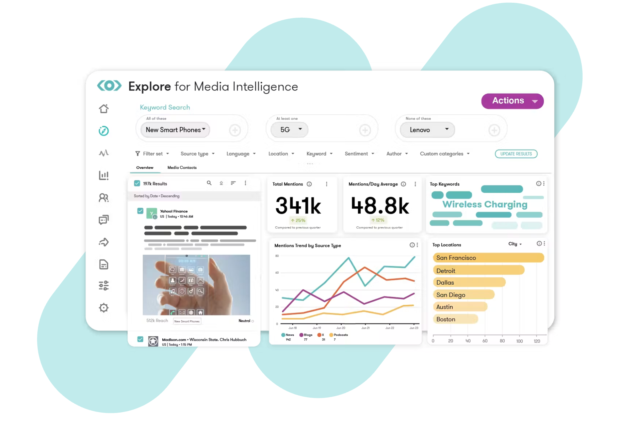
Sprinklr functions primarily as an enterprise customer experience ecosystem where social listening serves as one component of a unified suite. Designed to unify customer service, digital marketing, and community management, Sprinklr AI detects emerging thematic shifts and anomalous data patterns across massive multi-channel repositories.
YouScan
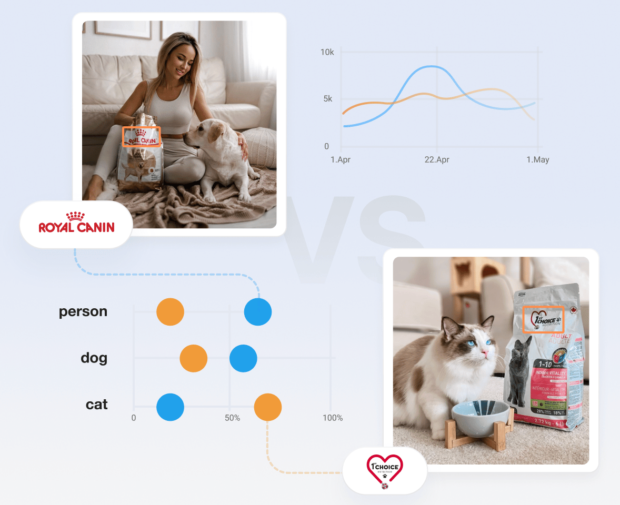
Tailored specifically for visual-first brands, YouScan complements standard text-based listening with its proprietary Visual Insights engine. Scanning over half a million online sources, the system detects logos, specific objects, and consumer demographics within images, assisted by an interactive Insights Copilot.
Audiense
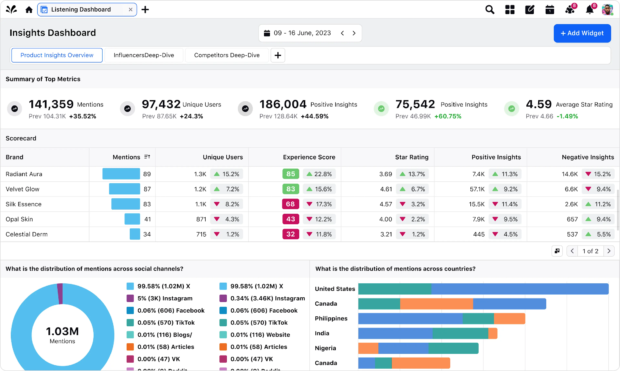
Focusing primarily on audience profiling rather than passive conversation tracking, Audiense maps social, behavioral, and intent signals across more than 3 billion global consumer profiles. A notable capability includes interactive AI personas built from real audience segments, allowing marketing teams to test creative concepts directly against simulated target demographics.
Pulsar
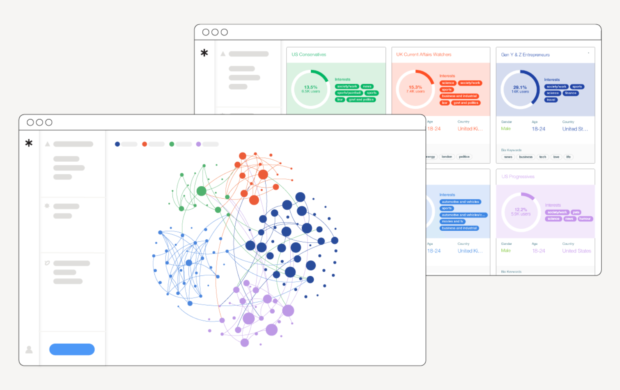
Pulsar approaches market research through granular audience segmentation. Rather than treating an entire audience as a monolithic pool, Pulsar categorizes users into distinct digital communities, analyzing how different sub-cultures converse about identical topics across 195 countries and multiple languages.
Quid
Operating as a broader consumer and market intelligence platform, Quid integrates social data with news broadcasts, patents, and scientific literature. Its core strength lies in predictive analytics, forecasting shifts in shopper demand to guide supply chain, pricing, and retail inventory strategies.
Financial Considerations and Procurement Models

Pricing structures within the social intelligence sector vary significantly depending on organizational requirements. Basic listening tools typically operate on predictable monthly subscription models ranging from several hundred dollars. Conversely, comprehensive enterprise solutions—including Brandwatch, Lumen, and Meltwater—utilize custom pricing architectures based on specific variable parameters. Vendors calculate licensing fees by evaluating data volume caps, the breadth of source integrations, the number of active user seats, and the complexity of deployed AI and analytics modules.
Strategic Implications and Future Outlook
As digital consumer habits continue to evolve at a relentless pace, the reliance on static market research methods will likely diminish further. Social intelligence platforms provide the necessary agility for brands to detect emerging reputational risks, benchmark against competitors, and pivot marketing strategies in real time. By merging comprehensive data ingestion with transparent, AI-driven interpretation, organizations can transcend traditional vanity metrics, transforming raw social noise into an enduring competitive advantage.