The global financial architecture has long been anchored by the primacy of the U.S. dollar, a status quo that has afforded Washington unparalleled geopolitical leverage. However, recent discourse surrounding the internationalization of the Chinese yuan—or renminbi (RMB)—has frequently misinterpreted Beijing’s long-term objectives. According to Zongyuan Zoe Liu, a senior fellow for China studies at the Council on Foreign Relations, the prevailing narrative that China seeks to replace the dollar as the world’s primary reserve currency is fundamentally flawed. Instead, Beijing’s pursuit of a more prominent yuan is a calculated defensive maneuver designed to insulate the Chinese economy from the potential weaponization of the dollar-based global financial system.
The core of this strategy is not to bear the heavy burden of global currency supremacy, which would necessitate the total opening of China’s capital accounts, but to establish a viable alternative that limits U.S. unilateralism. By building a network capable of facilitating trade and settlement outside of U.S. oversight, Beijing aims to construct a "financial firebreak" against the type of sanctions that saw Russia effectively disconnected from the SWIFT payment network following its 2022 invasion of Ukraine.
The Structural Constraints of Global Reserve Status
To fully displace the U.S. dollar, China would be required to undertake deep structural reforms that run counter to the Communist Party’s control over its domestic economy. A global reserve currency requires high liquidity, transparent and open capital markets, and a legal system that guarantees the security of foreign assets. For China, the liberalization required to meet these criteria would jeopardize the Party’s ability to manage capital flows and dictate domestic economic priorities.
Moreover, the domestic political economy of China relies heavily on the dollar. Many elites within the Chinese establishment maintain significant offshore dollar-denominated holdings. These assets serve as a form of insurance against the risks of domestic political instability or shifting regulatory landscapes. If Beijing were to aggressively force the internationalization of the yuan to the detriment of the dollar, it would inadvertently undermine the financial safety nets held by its own political and economic stakeholders.
The Pepsi to the Dollar’s Coca-Cola
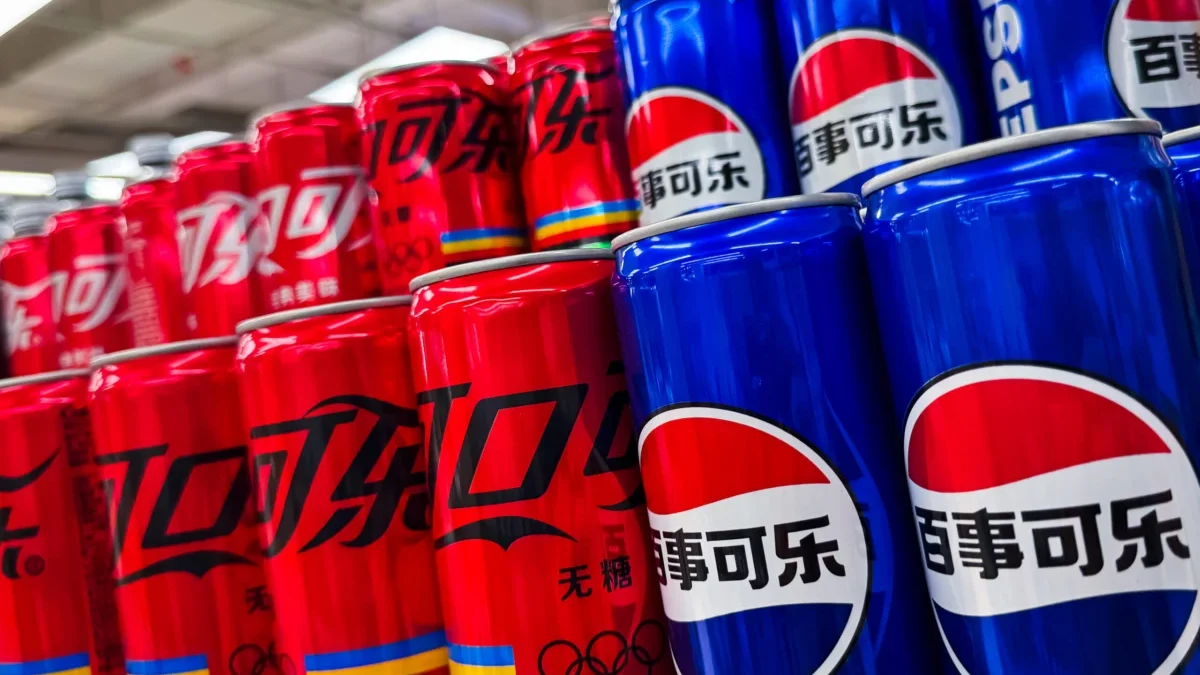
Rather than aspiring to become the market leader, Beijing’s current objective is to establish the renminbi as a functional, secondary alternative. In the analogy provided by Liu, the goal is for the yuan to be the "Pepsi" to the dollar’s "Coca-Cola." It does not need to win the market share war to be successful; it only needs to be sufficiently reliable to serve as a viable fallback. This "respectable second" or "consequential third" position would suffice to break the dollar’s effective monopoly, thereby constraining the United States’ ability to impose financial sanctions unilaterally.
This strategic positioning has already seen significant development. China’s Cross-Border Interbank Payment System (CIPS) has evolved from a niche project into a substantial infrastructure. As of June, CIPS reported 1,829 participants capable of facilitating payments to over 5,200 banks across 191 countries. While this remains a fraction of the volume handled by the U.S.-led CHIPS system, it represents a non-negligible shift in the landscape of global transaction architecture.
Chronology of Renminbi Internationalization
The trajectory of the yuan’s international role has been marked by incremental, deliberate steps rather than a sudden leap.
- 2009: China begins pilot programs for cross-border trade settlement in yuan, primarily with neighboring nations.
- 2015: The IMF includes the renminbi in the Special Drawing Rights (SDR) basket, a significant validation of its role as a global reserve asset.
- 2022: Following the imposition of unprecedented sanctions on Russia, Beijing accelerates the development of alternative payment channels and currency swap agreements.
- 2023–2026: Chinese banks double their yuan-denominated lending to overseas borrowers, and the People’s Bank of China (PBOC) expands its network of currency swap agreements to 32 foreign central banks.
- 2026 (March): Ongoing regional conflicts in the Middle East heighten discussions regarding the viability of the "petroyuan" as a potential alternative to the 1974 petrodollar agreement.
The Role of Commodities and the "Green Yuan"
While currency dominance is traditionally tied to banking and debt markets, China is attempting to bypass these traditional hurdles by anchoring the yuan in essential physical goods. The "petrodollar" system, established in the 1970s, relied on the guarantee that global oil sales would be denominated in U.S. dollars in exchange for American security guarantees.
China is currently applying a similar logic to the "green" industrial revolution. By consolidating dominance over the supply chains for critical minerals, lithium processing, and clean energy technology, Beijing is creating an ecosystem where importers have little choice but to transact in yuan. As China sets the global standards for green infrastructure, it creates a foundation for a "green yuan." If China can maintain its cost and scale advantages, it may effectively force trading partners to hold and reinvest yuan balances to secure their energy transition needs.
The Challenge of Reinvestment and Capital Controls
Despite these gains, the "reinvestment" link remains the weakest point in China’s currency ambitions. For a currency to be a true global reserve, recipients must be willing to hold and reinvest their balances in the issuing nation’s domestic assets. Currently, foreign investors are deterred by China’s unpredictable capital controls.
Data from March 2026 illustrates the disparity: foreign investors held a mere 1.6% of the Chinese bond market, compared to 27% in the U.S. bond market. Without a larger, more accessible pool of renminbi-denominated assets, the yuan cannot offer the same level of safety and liquidity that the U.S. Treasury market provides. This liquidity is essential for central banks and institutional investors who require a "safe haven" for their reserves.
Geopolitical Catalysts: The Strait of Hormuz and the Petrodollar
The vulnerability of the petrodollar has come into sharper focus during the recent escalation of tensions in the Middle East. The 1974 agreement, which saw Saudi Arabia price oil in dollars in return for U.S. security, is currently being tested by the realities of modern warfare. The U.S. failure to fully secure the Strait of Hormuz—despite persistent military presence—and the success of drone and missile technology in damaging regional energy infrastructure have led to a re-evaluation of the American security umbrella.
Analysts at Deutsche Bank noted that the potential for the Strait of Hormuz to see increased trade settled in yuan could act as a catalyst for a broader shift. If regional powers perceive that the U.S. can no longer guarantee the security of their energy assets, the incentive to maintain the dollar-based pricing system diminishes. While this does not spell the immediate end of the dollar’s dominance, it marks a significant erosion of the conditions that have underpinned its global status for half a century.
Broader Implications for Global Trade
The movement toward a multi-currency system, rather than a total replacement of the dollar, suggests a more fragmented global economy. This "de-dollarization" is not necessarily a sudden collapse but a gradual diffusion of influence. For global businesses, this implies a need to navigate a more complex financial environment where currency risk is higher and transaction channels are more bifurcated.
For the United States, the rise of the yuan as a "serviceable" alternative limits the efficacy of its most potent foreign policy tool: the ability to cut nations off from the global financial system. As long as China continues to build out the infrastructure for the renminbi, Washington will face a diminished capacity to enforce international norms through financial coercion. The future of global finance, therefore, appears to be moving toward a state of competitive coexistence, where the dollar remains the lead, but the yuan serves as a persistent and strategic shadow.