TikTok has officially published two comprehensive marketing guides targeted at advertisers navigating the final week of the calendar year, a lucrative period widely recognized within the digital advertising industry as "Q5." The newly released playbooks focus heavily on optimizing app promotions and gaming campaigns during the post-Christmas stretch leading up to New Year’s Day—a window characterized by elevated consumer engagement, increased digital consumption, and unique economic opportunities for brands operating in the mobile ecosystem.
The introduction of these strategic guides marks a concerted effort by the short-form video platform to educate marketers on consumer psychology during a traditionally overlooked commercial phase. While many traditional retailers wind down their marketing expenditures immediately following December 25, digital platforms experience a massive surge in user activity as consumers unwrap new devices, redeem digital gift cards, and settle into holiday downtime. By targeting mobile app developers and gaming studios specifically, TikTok aims to bridge the gap between audience availability and advertiser participation, offering technical frameworks designed to maximize return on ad spend (ROAS) during a time when competition for consumer attention shifts dramatically.
Understanding the Q5 Phenomenon: Background and Context
For years, digital marketers have concentrated their budgets on the critical fourth-quarter shopping peaks, spanning from Black Friday and Cyber Monday through Christmas Eve. However, consumer behavior studies consistently demonstrate that spending and media consumption do not abruptly halt once the presents are opened. The subsequent days—often dubbed Q5—represent a distinct behavioral phase defined by relaxation, self-gifting, and digital exploration.
During this post-holiday window, consumers frequently find themselves with uncommitted funds, newly acquired gift cards, and significant blocks of leisure time. Mobile devices act as the primary conduit for entertainment, leading to soaring download rates for mobile applications and mobile games. Recognizing this behavioral shift, TikTok’s newly published resources provide empirical backing for an investment strategy that runs counter to conventional retail instincts.
According to internal platform data highlighted in the guides, consumer intent remains remarkably high immediately following the holiday season. Approximately 70 percent of consumers actively plan to shop during the week immediately following December 25 to capitalize on post-holiday clearance sales and utilize newly received gift cards. Furthermore, user behavior on TikTok mirrors this economic activity: 75 percent of the platform’s active users maintain or even increase the amount of time they spend shopping during Q5 compared to the pre-holiday rush. Perhaps most importantly for app and gaming developers, 63 percent of surveyed users report shopping specifically for themselves during this period, signaling a psychological shift from gift-giving to self-reward and personal indulgence.
Strategic Insights for Gaming Brands
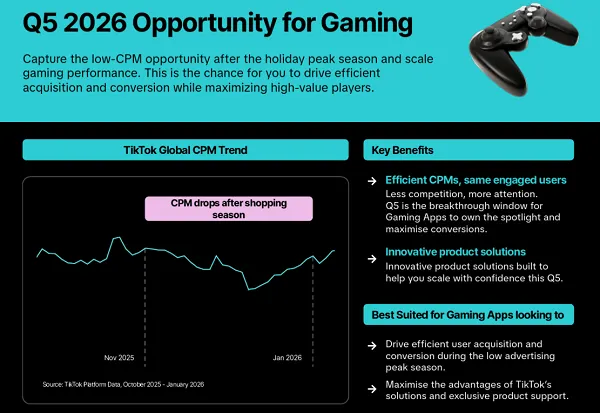
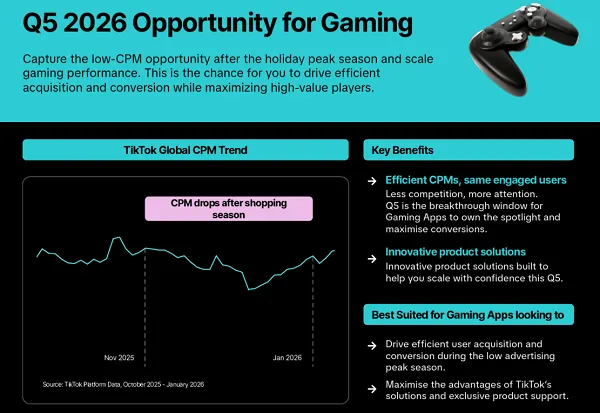
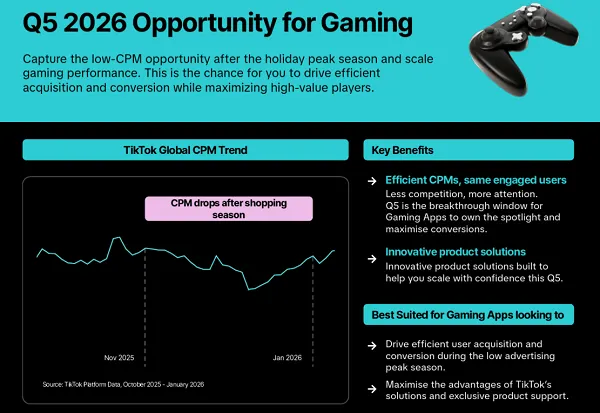
The first of the two published guides, tailored specifically for the gaming industry, addresses the unique economic advantages available to gaming studios during the final week of the year. Titled to reflect the immense opportunities within the vertical, the four-page handbook outlines how gaming brands can exploit a pronounced market inefficiency: a lower cost per ad (CPA) driven by reduced competition.
As major e-commerce brands and traditional retailers exhaust their seasonal advertising budgets prior to Christmas, the overall volume of competing ads within the digital auction landscape tends to drop. Consequently, gaming companies that maintain or scale their advertising efforts during Q5 can frequently secure ad inventory at a significantly more favorable price point. The TikTok gaming guide details how studios can capture the attention of bored, newly device-equipped consumers looking to download and test immersive experiences.
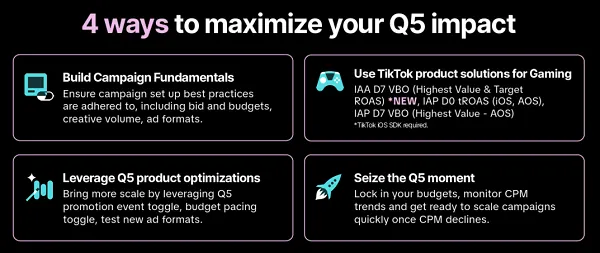
Beyond cost efficiency, the gaming playbook offers tactical instructions on configuring specific campaign types designed to drive mobile game installs and in-app purchases. It provides actionable advice on creative asset best practices, encouraging developers to utilize authentic, community-driven video content that showcases actual gameplay mechanics rather than overly polished cinematic trailers. By aligning promotional strategies with the native aesthetic of the platform, gaming brands can foster immediate engagement with audiences actively seeking interactive entertainment.
Maximizing Mobile App Promotions in Q5
Complementing the gaming resource, the second playbook focuses broadly on mobile app marketing across various verticals, including fintech, entertainment, e-commerce, and lifestyle applications. The mobile app guide mirrors the analytical rigor of its counterpart while diving deeper into the technical infrastructure required for successful campaign execution during high-traffic periods.
A central component of the app marketing guide involves campaign tracking and attribution setup. With consumer activity fluctuating rapidly across multiple touchpoints during the holiday season, accurate data collection becomes paramount for performance marketers. The guide outlines best practices for implementing software development kits (SDKs), configuring conversion APIs, and establishing robust event tracking to ensure that ad spend is accurately measured against user acquisition metrics.
Additionally, the playbook addresses the diverse promotional formats available within the TikTok advertising ecosystem, guiding app developers on how to select the appropriate campaign objective—whether the goal is increasing user acquisition, driving re-engagement among dormant users, or encouraging in-app conversions. By detailing the nuances of different ad placements and audience targeting parameters, the guide equips marketing teams with the technical competence needed to navigate automated bidding systems effectively during a period of shifting user demographics.
Technical Guidance and Implementation Frameworks
Combined, the two handbooks serve as an operational roadmap for digital marketing teams seeking to eliminate guesswork during the final stretch of the fiscal year. Rather than offering vague theoretical advice, the documentation delivers granular, technical guidance that addresses the entire campaign lifecycle, from initial ideation and asset creation to post-campaign attribution analysis.
Industry analysts note that as privacy regulations continue to alter the digital advertising landscape, platform-specific guides that emphasize first-party data utilization and robust tracking setups have become increasingly valuable. TikTok’s inclusion of technical parameters within the Q5 playbooks demonstrates a growing industry emphasis on infrastructure readiness, ensuring that advertisers not only capture attention during peak consumption hours but also accurately evaluate the commercial impact of their campaigns.
Fact-Based Implications for the Digital Advertising Industry
The release of these playbooks carries broader implications for the digital marketing ecosystem, signaling a structural evolution in how brands approach annual budget allocations. Historically, corporate marketing departments operated under a rigid calendar that wound down operations by mid-December, leaving valuable weeks of consumer liquidity unexploited.
By systematically breaking down the data behind Q5 consumer behavior, platforms like TikTok are encouraging a paradigm shift toward continuous, year-round digital engagement. For mobile app developers and gaming studios operating in fiercely competitive markets, leveraging lower ad auction costs while consumer screen time is at an annual peak presents a distinct competitive advantage.
Furthermore, the emphasis on self-gifting trends highlights a sophisticated understanding of post-holiday consumer psychology. As audiences transition from the communal obligations of gift-giving to personal recreation, digital goods, mobile games, and consumer software naturally align with user intent. The empirical data provided in the guides—such as the finding that nearly two-thirds of users shop for themselves during Q5—offers a quantitative justification for maintaining aggressive marketing postures well past the traditional holiday cutoff.
Looking Ahead: The Evolving Role of Q5
As digital platforms continue to refine their analytical tools and publish targeted educational resources, the concept of Q5 is rapidly transforming from an industry insider secret into a standard component of enterprise marketing strategy. The accessibility of TikTok’s new playbooks ensures that both enterprise-level publishers and independent app developers can access the insights necessary to optimize their year-end performance.
Ultimately, the release of these guides underscores the growing maturation of short-form video platforms as comprehensive performance-marketing engines. By combining high consumer engagement metrics with actionable technical guidance, TikTok has provided advertisers with the framework needed to turn the post-holiday lull into a highly profitable conclusion to the annual marketing cycle.