The delicate ecosystem of regional journalism often forces a reluctant compromise between local access and objective accountability. Nowhere has this tension played out more visibly than in the state of Maine, where long-serving U.S. Senator Susan Collins has maintained a formidable political stronghold for nearly three decades. Long viewed by a national audience as a quintessential moderate Republican capable of breaking ranks with her party, Collins has successfully preserved an image of independent pragmatism. However, a growing body of scrutiny from independent reporters, regional watchdogs, and recent national analyses suggests that this enduring political identity is not merely a reflection of her legislative record, but the product of a uniquely deferential local media environment—a phenomenon critics have dubbed the "Collins Media Industrial Complex."
The Mechanics of Media Influence and Post-Publication Edits
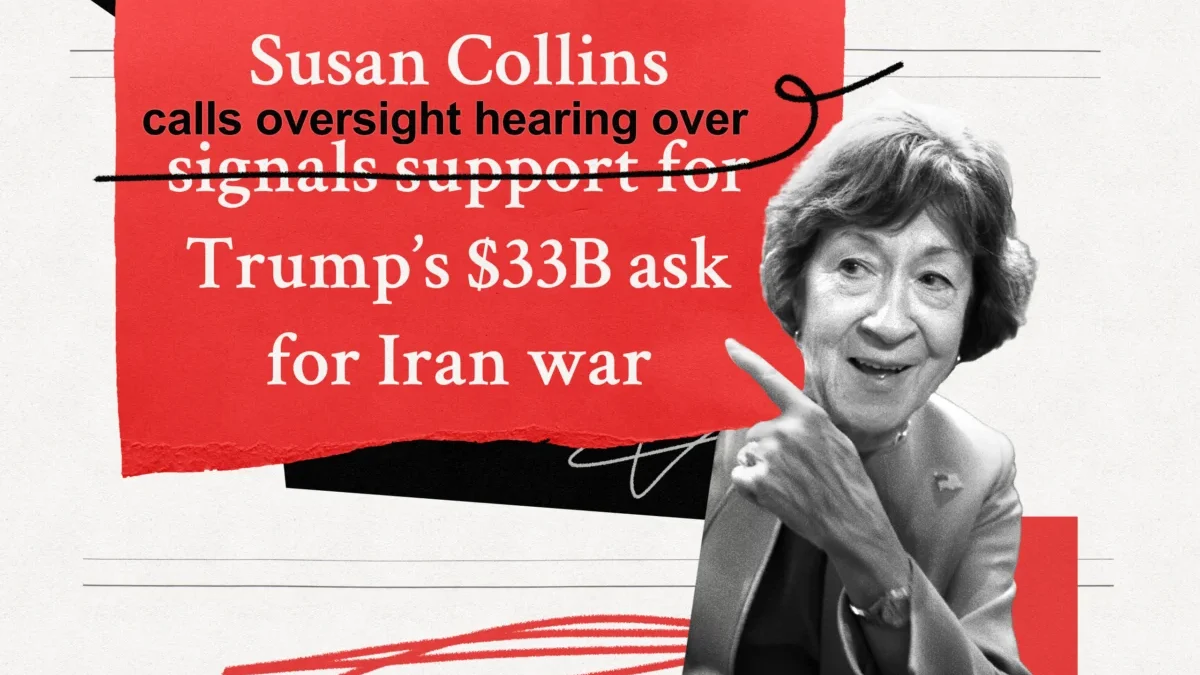
The extent to which the Maine press interacts with the senator’s office came under sharp review following a telling incident at the Portland Press Herald, the state’s largest newspaper. On the afternoon of July 21, the publication issued a routine digital report regarding a Senate oversight hearing concerning a multi-billion-dollar funding request for potential military actions involving Iran. The original headline stated simply that Senator Collins had called for the oversight hearing.
However, sharp-eyed readers soon noticed a glaring discrepancy. The URL slug for the article explicitly stated that Collins was signaling support for the funding itself, while the headline had been quietly altered post-publication to emphasize a narrative of pushback against an unpopular conflict. When questioned by readers who tracked the digital revisions, Kirby Wilson, the Press Herald’s politics editor, confirmed that the headline was modified following direct pressure and outreach from the senator’s congressional staff.
While newsrooms occasionally adjust headlines for clarity, making substantive alterations to framing at the behest of a subject’s political office is generally considered a breach of standard editorial independence. Steve Greenlee, who served as the top editor of the Press Herald from 2021 to 2024, acknowledged that the senator’s Washington office operated with relentless persistence in managing local press coverage. Greenlee noted that the arrival of a Washington, D.C., area code on newsroom caller IDs was a near-constant occurrence whenever an article so much as mentioned the senator’s name, prompting editorial exhaustion and, in some cases, defensive accommodation.
A History of Deference and the Incumbency Advantage
The pressure applied by Collins’s staff is not an isolated phenomenon, but rather part of a long-standing pattern experienced by journalists across various regional outlets in Maine. Reporters from papers such as the Bangor Daily News and independent local publications have frequently recounted receiving meticulous, nitpicking feedback from the senator’s communications team immediately following the publication of stories that involved her, even in a tangential capacity.
This environment of heightened sensitivity stems largely from the unique structural challenges of local journalism. Unlike national reporters who frequently cycle through beats, states, and administrations without long-term local ramifications, regional journalists rely heavily on ongoing access to elected officials and local institutions. Alienating a powerful home-state incumbent can severely restrict a reporter’s ability to gather basic information, creating a subtle yet potent incentive for journalistic deference.
Furthermore, economic pressures within regional newsrooms exacerbate this dynamic. Local publishers and editors constantly monitor subscription metrics, acutely aware that conservative readers frequently complain about perceived liberal bias when coverage challenges right-of-center narratives. The fear of subscriber cancellations—often fueled by competing national talk radio narratives or cable news—creates a commercial imperative to maintain a neutral or non-confrontational stance toward popular incumbents, regardless of their actual legislative outcomes.
Legislative Reality Versus Public Perception
The friction between Collins’s public persona and her actual voting record has long been a point of contention among political analysts. Nationally, Collins is widely known for expressing public "concern" over contentious Republican policy shifts, particularly regarding social issues such as reproductive rights and immigration enforcement. These expressions of unease frequently dominate local and national headlines, projecting an image of internal party dissent.
However, detailed legislative tracking reveals a stark disparity between rhetorical concern and decisive action. In October, The New York Times published an extensive analytical review of Collins’s Senate career since 2017. The analysis demonstrated that while Collins frequently participates in bipartisan efforts on minor or nonbinding legislation, she rarely casts a decisive vote against her party’s core legislative priorities when the outcome hangs in the balance. Critics argue that the local media’s historical tendency to amplify her expressions of dissent while downplaying her ultimate voting alignment has successfully shielded her from political accountability in a historically left-leaning state.
This dynamic has occasionally crossed the boundary from standard journalistic coverage into direct political participation. Over the decades, Maine media figures have occasionally transitioned directly from newsrooms to the senator’s political apparatus, or vice versa. Notably, a former managing editor of the Bangor Daily News transitioned directly into a communications role for Collins before later returning to lead the paper’s editorial department. Similarly, high-profile regional media personalities have publicly endorsed her reelection campaigns, blurring the traditional lines separating objective news reporting from political advocacy.
Evolving Standards and Recent Investigative Pressures
Despite the long history of cautious reporting, the landscape of Maine journalism is showing signs of transformation. The transition of major regional papers into nonprofit models has altered ownership structures, while national investigative reporting has increasingly pierced the insular politics of the state.
A significant test of this changing media climate occurred when ProPublica published an investigative report detailing an ongoing federal inquiry into campaign donations directed toward Collins from Navatek, a defense technology firm, in exchange for official support for government contracts. While the investigation was ultimately disrupted by administrative shifts within federal oversight bodies before reaching a formal conclusion, Maine’s largest news organizations broke with past tendencies of selective downplaying by placing the story prominently on their front pages.
At the same time, regional broadcast journalists have begun pushing back more aggressively during high-stakes political forums. During the final Maine Senate debate, moderators publicly challenged the senator on her claims of independent legislative opposition, pressing her to name instances where her vote fundamentally altered the outcome of major party initiatives. When the senator cited an effort to oppose a controversial nomination, the moderator pointedly noted that the effort ultimately failed to change the final tally, signaling a growing willingness within the regional press corps to parse rhetoric from legislative reality.
Broader Implications for Regional Accountability
The ongoing evolution of the relationship between Susan Collins and the Maine press highlights a broader vulnerability within regional journalism across the United States. As local newsrooms contract, lose financial stability, and struggle against the rising tide of hyper-partisan media ecosystems, maintaining objective oversight over entrenched political incumbents becomes increasingly difficult.
The case of Maine demonstrates that political longevity is frequently manufactured not just through constituent service and campaign strategy, but through the delicate navigation of local media relationships. As regional outlets slowly adapt to the demands of modern fact-checking and transparent accountability—mirroring shifts already undertaken by major national institutions—the traditional "media industrial complex" protecting long-term incumbents faces unprecedented pressure to modernize, adapt, and prioritize factual precision over comfort and access.