In the modern digital landscape, managing user-generated and external media is one of the most persistent operational challenges for web developers and enterprise applications. As users upload files in diverse formats, arbitrary resolutions, and unpredictable sizes, applications must dynamically process these assets to maintain performance and visual consistency. Historically, engineers built custom ingestion pipelines, deployed self-hosted storage buckets, and configured complex processing servers using libraries like ImageMagick or FFmpeg. Today, however, the paradigm has shifted toward specialized, cloud-native file management utilities designed to handle the entire lifecycle of digital assets: uploading, transforming, and delivering media at scale. Among these solutions, platforms like Filestack have emerged as prominent utilities, offering comprehensive APIs and developer toolkits to streamline media workflows from source to consumer.
The Evolution of Web Media Management and the Rise of Dedicated Utilities
To understand the current reliance on specialized media services, it is necessary to examine the evolution of web development over the past two decades. In the early eras of the internet, file uploads were rudimentary, often limited to basic HTTP form submissions handling static images or small documents. Servers processed these files synchronously, which frequently led to bottlenecks, memory exhaustion, and server crashes during traffic spikes. As Web 2.0 ushered in an era of rich user participation—characterized by social media profile pictures, document sharing portals, and cloud storage integrations—the volume and complexity of user-uploaded data escalated exponentially.
Developers found themselves spending disproportionate amounts of engineering hours writing boilerplate code to handle edge cases: validating file extensions, sanitizing malicious uploads, managing cloud storage permissions on Amazon S3 or Google Cloud Storage, and writing scripts to transcode videos or resize high-resolution photographs. This operational overhead diverted engineering talent away from core product development.
In response to these systemic inefficiencies, cloud-based file management infrastructure matured. Rather than reinventing the wheel for every new project, development teams began adopting third-party APIs that abstract away the underlying complexity of cloud storage and server-side processing. These platforms provide turn-key user interfaces, robust security protocols, and scalable content delivery networks (CDNs), allowing applications to ingest, modify, and distribute media with minimal code integration.
Getting Started with Modern Media Infrastructure: The Onboarding Process
Integrating a third-party media utility typically begins with an exploratory trial phase, allowing engineering teams to evaluate compatibility, performance, and developer ergonomics. For instance, platforms offering developer-centric services frequently provide risk-free evaluation windows—such as 21-day trial periods—during which developers can test the full suite of SDKs and API endpoints without immediate financial commitment.
Once an account is provisioned, the primary resource for engineering teams is comprehensive technical documentation. In the realm of developer tools, documentation quality often dictates the speed of adoption. Leading platforms invest heavily in detailed API references, interactive code samples across multiple programming languages, and step-by-step integration guides. These resources enable front-end and back-end engineers to quickly implement core functionalities, ranging from basic client-side file pickers to complex asynchronous processing workflows.
Streamlining Ingestion: Front-End and Back-End Upload Strategies
The first critical phase of any media pipeline is ingestion. A robust upload mechanism must accommodate user convenience while maintaining strict security and validation standards. Modern file management solutions typically offer dual-path ingestion strategies, supporting both client-side user interfaces and server-side programmatic uploads.
Client-Side Integration via JavaScript
On the client side, user experience is paramount. Requiring users to navigate complex file systems or deal with failed uploads due to size limits often leads to user abandonment. Modern JavaScript libraries provide elegant, feature-rich file uploading user interface components that can be initialized with minimal code:
const client = filestack.init("apikey");
const picker = client.picker();
picker.open();
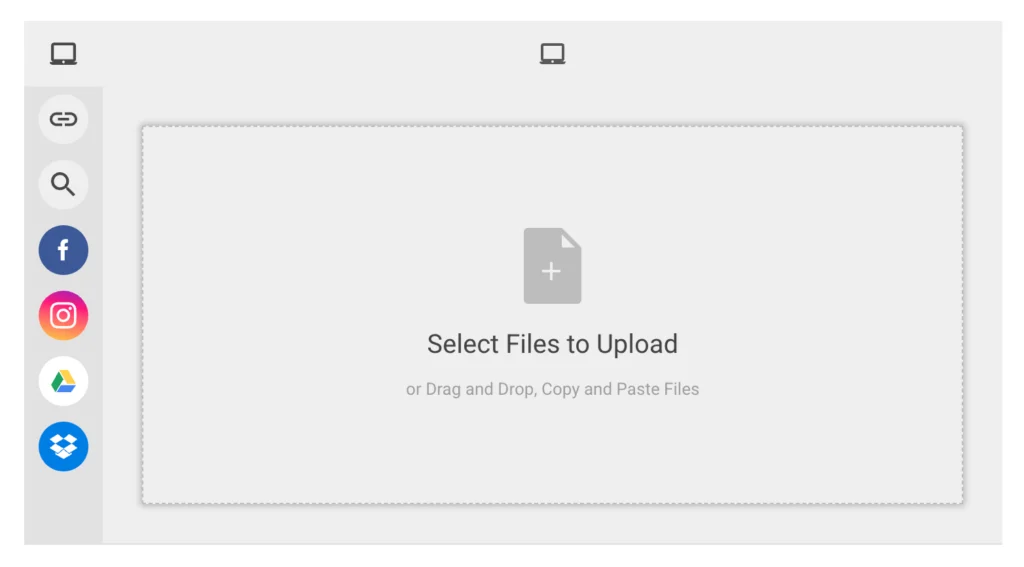
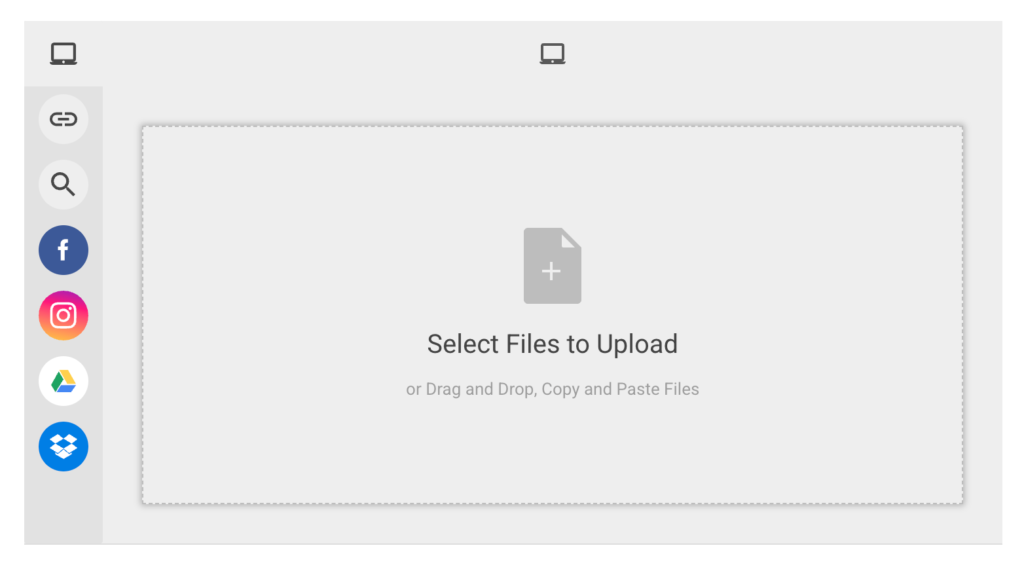
The resulting UI component provides a polished, responsive modal window equipped with drag-and-drop functionality. Crucially, these modern upload widgets integrate seamlessly with more than twenty popular third-party cloud storage and social media services, including Google Drive, Dropbox, GitHub, Facebook, and Instagram. This multi-source integration capability allows end-users to import media directly from their preferred cloud accounts or local devices without manual downloading and re-uploading.
Server-Side Integration via Python
While client-side pickers excel in user-facing applications, many enterprise workflows require server-to-server file transfers, automated batch processing, or background ingestion from external feeds. For these scenarios, robust back-end SDKs—such as Python libraries—allow developers to programmatically upload and route files directly to cloud storage buckets with specific metadata and security tags:
from filestack import Client

client = Client(APIKEY)

store_params =
    'location': 's3',
    'path': 'folder/subfolder/',
    'upload_tags':
          "foo":"bar"


filelink = client.upload(filepath='path/to/filename.jpg', store_params=store_params)
By abstracting the underlying cloud storage configuration (such as AWS S3 bucket policies and authentication headers), these libraries significantly reduce the friction associated with back-end file management.
Real-Time and Asynchronous Media Transformations
Once files are successfully ingested, they rarely arrive in the exact format, dimension, or style required by the host application. A user might upload a massive 12-megapixel photograph from a smartphone, whereas the website design demands a lightweight, 300-pixel-wide thumbnail in WebP format. Historically, satisfying these diverse requirements demanded dedicated image processing servers running background worker queues.
Modern media management platforms shift this burden to the cloud through URL-based transformation parameters and real-time processing engines. Transformations are no longer restricted to static images; they apply equally to video transcoding, document conversion, and complex vector graphics.
URL-Based Image and Document Manipulation
Using URL-based parameter strings, developers can apply complex transformations on the fly simply by modifying the asset’s delivery path. For example, resizing an image to a precise width of 300 pixels can be achieved by appending a simple instruction to the content delivery network URL:
https://cdn.filestackcontent.com/resize=width:300/pdn7PhZdT02GoYZCVYeF
Furthermore, these transformation engines support chaining multiple operations together. By extending the URL path, developers can apply artistic filters, adjust color tones, rotate orientations, and generate stylized borders in real time:
https://cdn.filestackcontent.com/resize=width:300/sepia=tone:80/polaroid/pdn7PhZdT02GoYZCVYeF
Beyond programmatic URL manipulation, many platforms also offer embeddable transformation user interfaces. These visual editors allow end-users to crop, filter, and annotate their own media prior to final submission, empowering consumers with creative control while ensuring the output aligns with application specifications.
Optimizing Delivery: The Critical Role of Content Delivery Networks (CDNs)
The final phase of the media lifecycle—delivery—is arguably the most critical for business success. Research consistently demonstrates a direct correlation between page load speeds, user retention, and conversion rates. Slow-loading images or lagging video streams increase bounce rates and degrade user trust, particularly on mobile networks.
To mitigate latency, modern file management utilities leverage globally distributed Content Delivery Networks (CDNs). When a transformed or stored file is requested for the first time, the CDN caches the asset at edge locations worldwide. Subsequent requests for the same unique URL are served instantly from the nearest edge cache, drastically reducing Time to First Byte (TTFB) and server load.
Industry standards for caching policies typically involve time-to-live (TTL) configurations. For instance, cached copies of unique media assets may be maintained across edge nodes for a specified duration—such as 30 days—before re-validating against the origin storage. This balance ensures optimal performance while accommodating necessary content updates.
Industry Impact and Strategic Implications for Enterprise Architecture
The widespread adoption of specialized media management platforms reflects a broader shift toward microservices and API-driven architecture in software engineering. By outsourcing peripheral concerns—such as file ingestion, transcoding, and global delivery—organizations can reallocate valuable engineering resources toward core business logic and user experience design.
From a financial and operational perspective, utilizing managed media pipelines reduces infrastructure overhead. Maintaining dedicated encoding clusters, managing cloud storage egress fees, and scaling processing infrastructure to handle traffic spikes can incur substantial hidden costs. SaaS-based media utilities offer predictable, consumption-based pricing models that scale dynamically with business growth.
Security and compliance are additional drivers accelerating this trend. Handling user-uploaded files introduces significant security vectors, including malware distribution, arbitrary code execution via malformed file uploads, and unauthorized data access. Enterprise-grade media utilities incorporate automated virus scanning, secure storage isolation, and strict access control policies out of the box, mitigating risks that individual development teams might inadvertently overlook.
Conclusion: The Future of Frictionless Media Handling
As web applications continue to evolve with heavier reliance on high-definition video, immersive imagery, and instant document processing, the demand for efficient media infrastructure will only intensify. The transition from custom-coded upload scripts and self-managed processing servers to intelligent, cloud-native file utilities represents a mature milestone in web development. By unifying upload flexibility, real-time transformation engines, and high-performance global delivery into cohesive ecosystems, platforms like Filestack illustrate how modern infrastructure can transform a historically cumbersome engineering hurdle into a seamless, automated asset pipeline from source to consumer.