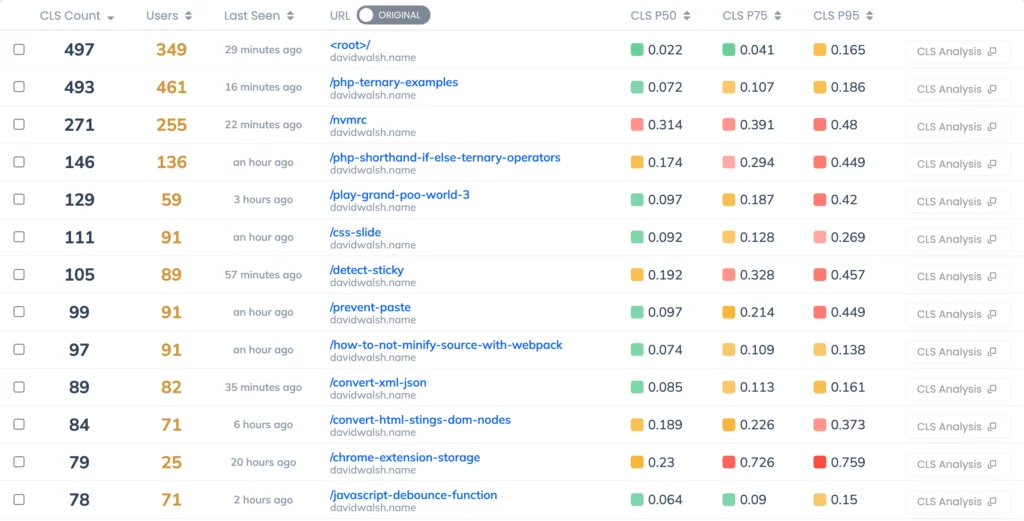
In the competitive landscape of digital publishing and software development, website performance is no longer a secondary consideration—it is a foundational pillar of user experience and search engine visibility. DavidWalshBlog, a globally recognized hub attracting more than 50,000 developers monthly seeking JavaScript solutions and coding guidance, recently confronted a critical performance hurdle. Despite its strong editorial reputation and loyal readership, monitoring data revealed that visitors were experiencing frustrating visual instability during page loads. Through a disciplined diagnostic approach utilizing real user monitoring and targeted code remediation, the platform successfully diagnosed and mitigated its performance bottlenecks, offering a case study in modern web optimization.
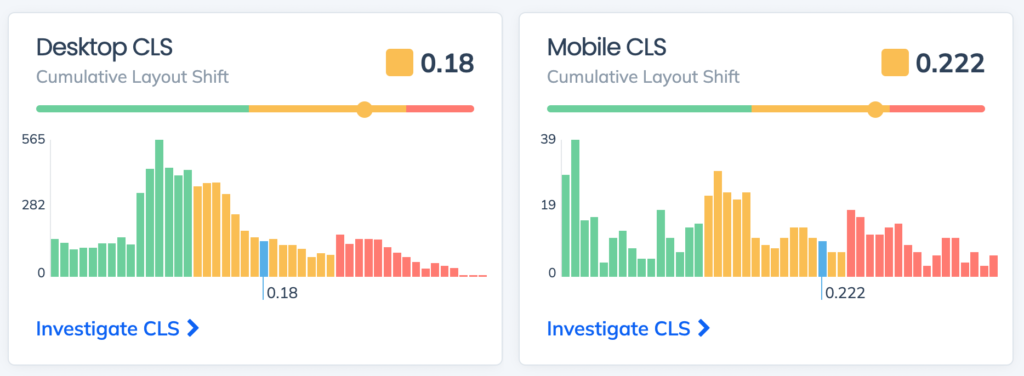
The core of the issue centered on Cumulative Layout Shift (CLS), one of the vital metrics comprising Google’s Core Web Vitals framework. Unlike traditional metrics that measure pure loading speed, CLS evaluates visual stability by quantifying how often elements on a page shift unexpectedly while it is still rendering. For a reader attempting to read a technical tutorial, sudden content jumps caused by late-loading assets can result in misclicks, disorientation, and an overall perception of a sluggish, poorly maintained site. Beyond mere user friction, Core Web Vitals directly influence algorithmic search rankings. In an ecosystem where search traffic dictates the viability of blogs, media outlets, and e-commerce platforms alike, addressing a suboptimal CLS score became an urgent operational priority.
The Illusion of Synthetic Testing: Why Lighthouse Fell Short
When diagnosing the initial performance decline, technical stakeholders frequently turn to synthetic testing tools such as Google Lighthouse. When an initial Lighthouse audit was executed on DavidWalshBlog, the resulting report indicated a flawless performance score. On paper, the site appeared optimized and ready for deployment. However, experienced developers understand that synthetic scores can present a misleading picture of real-world conditions.
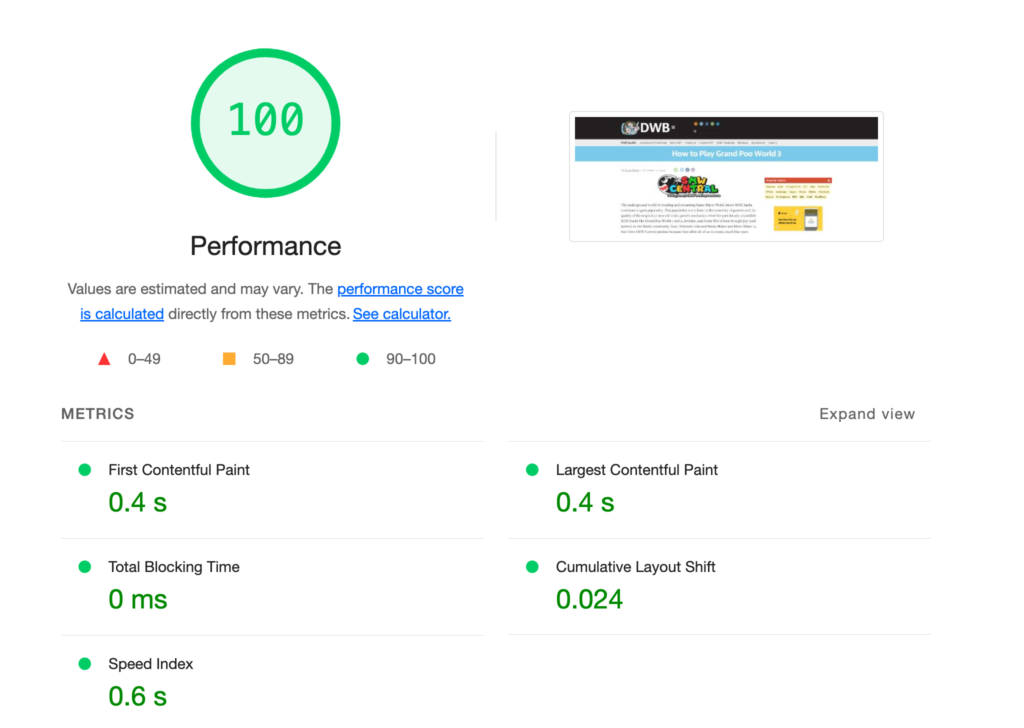
Google Lighthouse operates within a controlled, high-performance environment—running on a powerful machine connected to a high-speed broadband network in a specific geographic location. This testing methodology fails to account for the heterogeneous realities of a global audience. The readership of DavidWalshBlog spans multiple continents, accessing content across a diverse array of mobile devices, fluctuating network speeds, and varying hardware capabilities.
Recognizing the limitations of synthetic diagnostics, the site utilized Request Metrics, a real user monitoring (RUM) platform. By capturing telemetry data from actual visitors over time, the RUM tooling exposed the divergence between lab simulations and field data. While synthetic tests showed perfection, real-world users were experiencing noticeable layout instability, proving that effective performance management requires continuous observation of actual user interactions rather than occasional snapshots from idealized environments.
Isolating the Root Cause: The Impact of Unconstrained Visual Assets
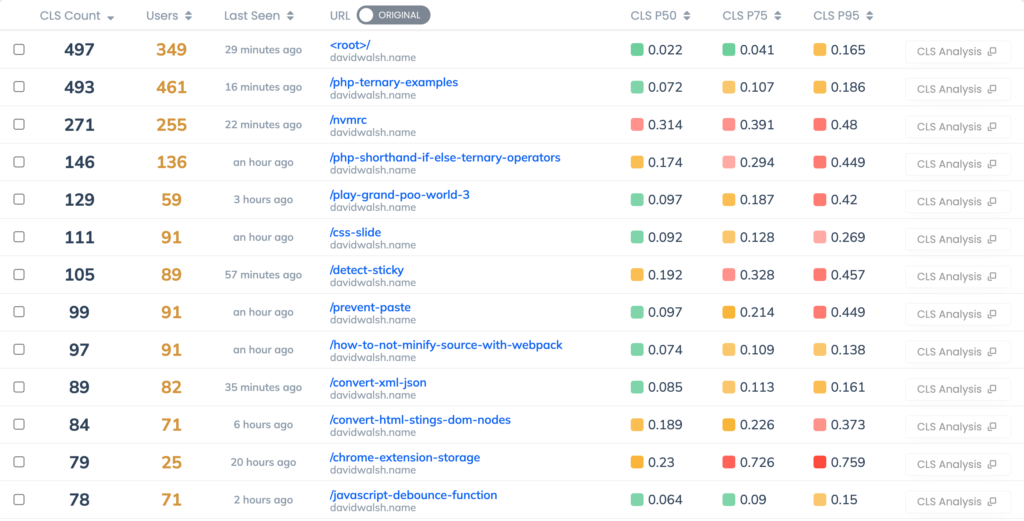
Armed with granular real-user data, administrators moved beyond aggregate metrics to analyze performance at the individual page level. While the primary landing page maintained an acceptable CLS profile, specific archival and tutorial articles exhibited troubling instability scores. Granular tracking revealed that the primary culprit behind the shifting elements was not complex JavaScript widgets or asynchronous advertising banners, but rather foundational document elements: specifically, the primary paragraphs (main > article > p) shifting downward as subsequent page components rendered.
A deeper examination of the affected posts identified a common denominator: image-heavy technical tutorials. In web development, images are a notoriously frequent catalyst for layout shifts. When an HTML document is parsed, the browser initially allocates zero space for an image element unless explicitly instructed otherwise. As the browser parses the text, it begins downloading the referenced image files. Once an image successfully downloads and its true dimensions are realized, the browser forces a reflow of the surrounding document object model (DOM), causing blocks of text and adjacent UI components to abruptly jump to accommodate the newly rendered asset. For articles containing multiple diagrams, screenshots, and code-related graphics, this cascading reflow occurred repeatedly throughout the reading experience, severely degrading the stability score.
Technical Remediation and Implementation
Resolving the layout shift crisis required adhering to established web standards for asset rendering. To prevent a browser from guessing an image’s dimensions, developers must provide explicit sizing hints directly within the HTML markup. By defining specific width and height attributes on <img> tags, developers grant the browser the necessary metadata to calculate the asset’s aspect ratio instantly during the initial layout phase.
<img src="/path/to/image" width="300" height="100" />Crucially, these dimensions must be declared as raw integer attributes rather than within cascading style sheets (CSS), allowing the browser to reserve the correct physical bounding box before the image file itself is fully fetched over the network. Modern CSS can still be applied subsequently to make images responsive or adjust their visual presentation without interfering with the underlying layout geometry.

Because DavidWalshBlog operates on the WordPress content management system, site maintainers leveraged native platform functions, such as wp_image_src_get_dimensions, to systematically programmatically extract and inject correct dimensions into legacy and newly published markup. This systematic update removed the ambiguity that forced browsers to re-render text blocks dynamically.
Measurable Outcomes and Broader Industry Implications
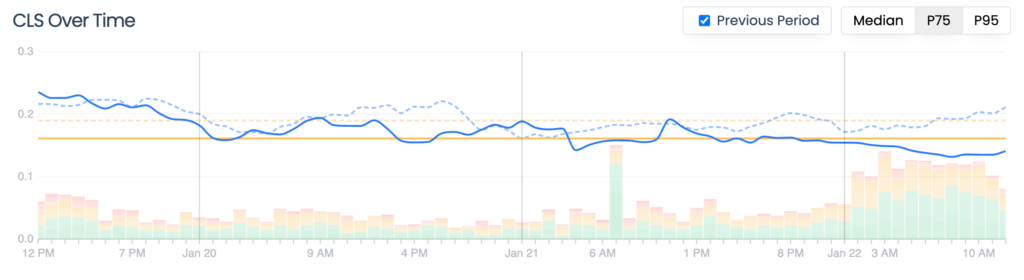
The implementation of proper image dimension attributes yielded immediate, quantifiable results. Within days of deploying the markup updates across the content library, the site’s aggregate CLS score dropped by 20 percent, settling at 0.123 and bringing the platform to the threshold of Google’s officially designated "Good" user experience range. While minor typographic adjustments remain on the technical roadmap for future optimization cycles, the immediate stabilization of the reading interface validated the remediation strategy.

The experience of DavidWalshBlog underscores a broader lesson for digital publishers and enterprise web properties alike. As search engines increasingly tie algorithmic visibility to quantitative user experience metrics, ignoring technical debt in front-end architecture carries direct commercial consequences. Relying exclusively on synthetic testing tools creates a false sense of security, masking real-world friction experienced by international and mobile audiences. By combining robust real user monitoring with disciplined adherence to web standards—such as explicit asset sizing—site owners can protect their search equity, enhance accessibility, and deliver the seamless, high-performance digital experiences modern users demand.