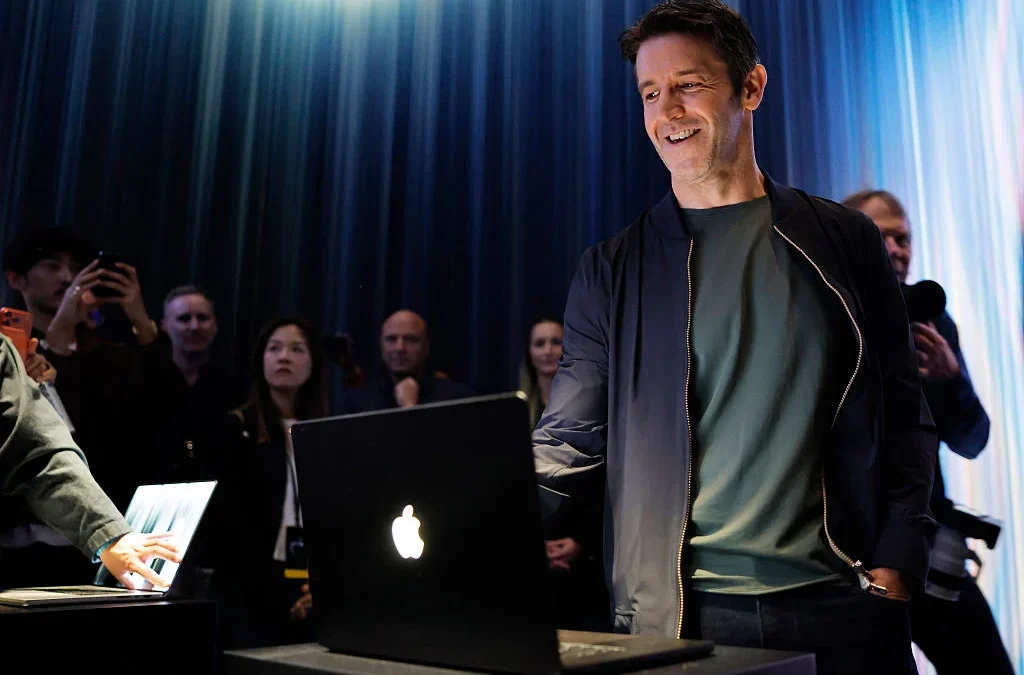
The landscape of personal computing is undergoing its most significant transformation in decades, and Apple, under the newly appointed leadership of CEO John Ternus, finds itself at a critical juncture. As the industry grapples with the rapid integration of generative artificial intelligence, Ternus has publicly addressed ongoing concerns regarding Apple’s perceived lag in the sector. During a recent high-profile interview with Wired’s Steven Levy, the executive underscored a philosophy that prioritizes product utility and human-centric design over the industry-wide rush to push experimental AI features to market.
This strategic recalibration comes as Apple navigates a transition period following the leadership change that saw Ternus ascend to the CEO position in September 2026. As the company continues to unveil new hardware and software iterations in Los Angeles, the focus has shifted toward whether Apple’s "deliberate" approach is a sign of caution or a necessary departure from the erratic development cycles of its competitors.
A Chronology of Apple’s AI Evolution
Apple’s journey into the current generation of AI has been marked by a series of measured steps rather than the sudden, explosive releases seen elsewhere in Silicon Valley. For years, the company integrated machine learning into the background of its operating systems—powering features like computational photography, on-device biometric security, and predictive text—without labeling the underlying technology as "AI."
The pressure to pivot became acute in 2024 and 2025, as competitors like OpenAI, Google, and Microsoft dominated the discourse with large language models (LLMs). Apple’s response, while perceived by some market analysts as sluggish, culminated in the summer of 2026 with the release of an overhauled, AI-driven version of Siri. This update, which aimed to resolve long-standing limitations in natural language processing and task automation, served as a litmus test for the company’s new direction. Despite the technical improvements, the launch was met with a tepid response from some critics who questioned whether the update arrived too late to capture the zeitgeist of the AI revolution.
The Philosophy of Product Utility
At the heart of the current debate is the distinction between "AI for the sake of AI" and AI as an invisible utility. Ternus’s position reflects a long-standing Apple tradition: the company rarely identifies itself as a "first mover" in emerging technology categories. Instead, it seeks to refine the user experience until the technology feels seamless.
"We don’t want to ship AI for AI’s sake," Ternus stated during his discussion with Levy. "When we’re doing it right, people won’t have to think about whether it was AI that made this happen or more traditional software. What matters is, did we build something that they really love?"
This perspective challenges the prevailing industry trend where companies release beta-stage AI tools to the public to gather massive datasets and test market reactions. Apple’s approach, conversely, focuses on integrating intelligence into the "silicon-to-software" stack, ensuring that privacy and local processing—a hallmark of the company’s brand—remain uncompromised.
Supporting Data and Market Context
Market data from the third quarter of 2026 indicates that while Apple faces intense competition, its ecosystem remains remarkably resilient. Despite the headlines suggesting that Apple is "behind," the company maintains a dominant position in premium hardware sales. According to industry tracking data, Apple’s active installed base reached record highs in late 2026, suggesting that consumers are prioritizing hardware reliability and cross-device integration over raw AI capabilities.

However, the financial implications are significant. Analysts at major investment firms have noted that while Apple’s services revenue is growing, the lack of a "killer" AI feature has occasionally dampened investor enthusiasm during earnings calls. The challenge for Ternus is to convince the market that Apple’s integration of AI into the core OS will lead to increased device replacement cycles, as users seek hardware capable of running more sophisticated, on-device models.
Industry Reactions and Expert Analysis
The broader tech community remains divided on Apple’s strategy. Supporters argue that Apple’s insistence on quality control prevents the "hallucination" problems and data privacy scandals that have plagued other AI-focused firms. By waiting to ensure a product is robust, Apple avoids the brand erosion associated with failed or controversial software rollouts.
Conversely, some industry analysts express concern that the speed of AI development is so high that even a year’s delay could result in a loss of market share among younger, tech-forward demographics who prioritize generative capabilities. These critics suggest that by staying "human-centric," Apple risks becoming a luxury hardware provider rather than a platform innovator, potentially losing its influence over the future of software development to entities that are more willing to iterate in the public eye.
Implications of the "Agentic" Future
Perhaps the most provocative portion of the dialogue centered on the future of software interaction. As AI agents move toward performing complex tasks—such as booking travel, managing calendars, and interacting with third-party applications—there is a legitimate question as to whether the "app" model, which Apple pioneered with the App Store, will remain relevant.
When pushed on whether AI agents might render apps obsolete, Ternus provided a characteristically Apple-centric response. He acknowledged the convenience of such automation but ultimately defended the creative process. "That could make life really easy, I suppose, but the creation of products is a deeply human and personal thing, something that we love to do," he said.
This stance suggests that Apple does not intend to fully automate away the human experience of software interaction. Instead, the company appears to be betting on a hybrid model where AI assists the user in navigating their existing digital tools rather than replacing those tools entirely.
The Road Ahead for John Ternus
As John Ternus settles into his role as CEO, the expectations placed upon him are immense. He is tasked with maintaining the company’s legendary profit margins while simultaneously proving that Apple can be a leader in the most competitive technological race in modern history. The Los Angeles event, and his subsequent interviews, suggest a leader who is comfortable with the company’s methodical pace.
The implications for the next 24 months are clear: Apple will continue to double down on privacy-preserving, on-device AI. It will likely avoid the trend of massive cloud-based generative models in favor of edge computing that leverages Apple’s custom silicon. Whether this strategy will be viewed as a masterclass in patience or a strategic blunder will ultimately be decided by the consumer.
For now, the message from Apple is one of steady confidence. Ternus’s tenure is unlikely to be defined by a single "wow" moment, but rather by the cumulative impact of integrating intelligence into the everyday lives of billions of users. The goal, according to the leadership team, is not to win the race to build the fastest model, but to win the race to build the most meaningful, human-centered technology. As the company navigates this transition, the tech world will be watching closely to see if the "Apple way" can withstand the relentless pressure of the AI era.