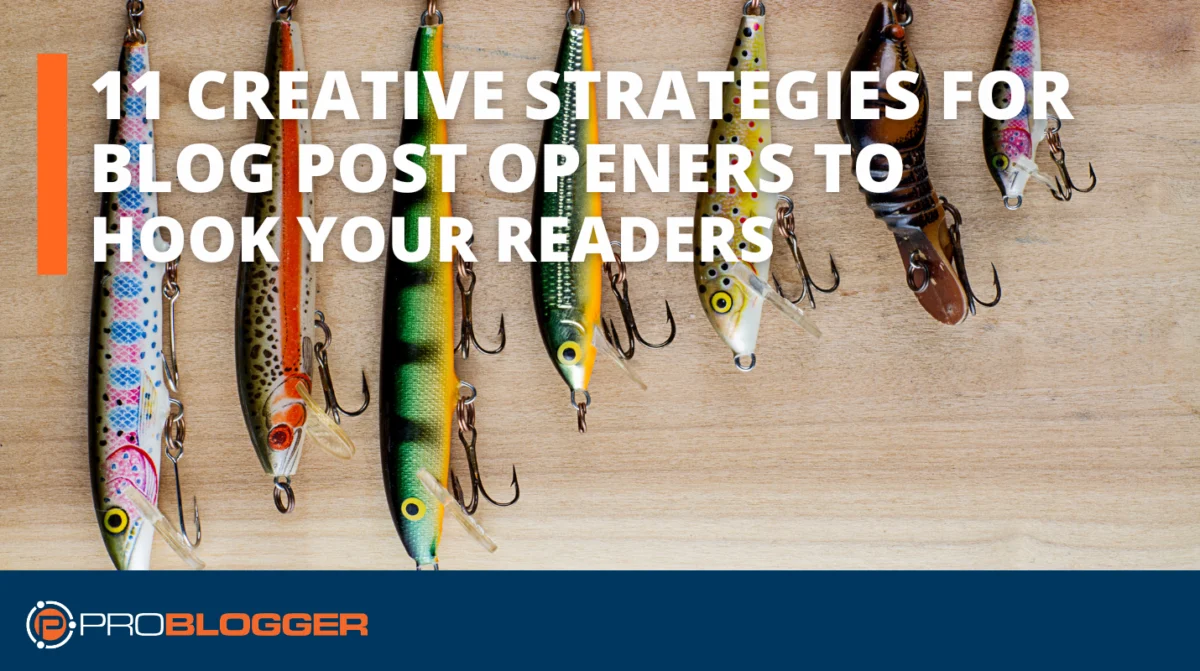
In the digital landscape, where the average human attention span has dwindled to approximately eight seconds, the opening lines of a blog post function as the primary mechanism for reader retention. Data from various content marketing analytics firms, including Nielsen Norman Group, consistently demonstrate that readers typically scan the first few sentences of a page to determine whether the content warrants further investment of their time. If the opening fails to establish immediate relevance, authority, or interest, the bounce rate for that specific entry increases significantly.
The psychological mechanics behind this phenomenon are rooted in the "serial position effect," a cognitive bias where individuals are more likely to remember the first and last items in a series. In blogging, the headline serves as the initial hook, while the opening sentence acts as the secondary bridge, designed to convert a casual visitor into an active reader. This transition from discovery to engagement is where the majority of content creators encounter difficulty.
The Anatomy of Reader Engagement
A critical analysis of high-performing digital content reveals that the most successful posts employ specific rhetorical devices to sustain interest. While a compelling title attracts the initial click, the opening sentence must justify that click by acknowledging the reader’s intent. Research into user behavior indicates that readers generally seek three things upon clicking a link: a solution to a problem, a validation of a belief, or an acquisition of new information.
The following eleven strategies represent verified techniques for optimizing the introduction of digital content to ensure maximum reader retention.
1. The Identification of Urgent Needs
Content that directly addresses a reader’s pain point from the outset creates a sense of immediate value. By articulating the specific problem the reader is facing, the writer establishes a "problem-solution" dynamic. This method is statistically effective because it frames the rest of the post as a necessary resource, effectively reducing the likelihood of a reader exiting the page prematurely.
2. The Implementation of Affirmative Inquiries
Copywriting professionals often utilize "yes-set" questions—inquiries designed to elicit a mental or physical affirmative response. By posing a question that the reader is likely to answer with a "yes," the writer builds a psychological rapport. This technique aligns the reader’s mindset with the post’s premise, fostering a sense of agreement that makes the subsequent information more palatable and authoritative.
3. The Deployment of Intriguing Paradoxes
Human curiosity is an evolutionary trait that researchers identify as a "gap in knowledge." By posing a question that challenges conventional wisdom or presents a seemingly contradictory fact, writers can force the reader to seek the resolution. This gap creates a tension that can only be resolved by reading the subsequent paragraphs, effectively securing the reader’s focus.
4. The Strategic Use of Personal Narratives
While digital content is often expected to be professional, the inclusion of a personal anecdote—even one that seems tangential—can serve as a powerful "pattern interrupt." When readers are conditioned to expect a dry, instructional tone, a shift to a personal story can recalibrate their focus. This technique humanizes the brand or author, increasing the likelihood of emotional resonance.
5. Utilizing Analogies for Conceptual Clarity
Complex topics often require a bridge to make them accessible. An analogy acts as a cognitive shortcut, allowing readers to map a new concept onto an existing mental model. By opening with a relatable comparison, the writer lowers the barrier to entry, ensuring that the reader feels capable of understanding the technical or abstract content that follows.
6. The Power of Assertive Claims
In an era of information saturation, bold and definitive statements can cut through the noise. By opening with a strong assertion—often involving a promise of a specific outcome or a challenge to an industry norm—the writer positions themselves as a subject matter expert. This approach demands a high level of accountability, as the writer must substantiate their claim within the body of the text.
7. Leveraging Controlled Controversy
Controversy, when handled with nuance, remains one of the most potent engagement drivers. By taking a firm, perhaps unconventional stance on a widely discussed topic, the writer invites discourse. This encourages readers to engage with the comment section or share the post to express their own perspectives, thereby increasing the post’s reach through social signals.
8. Evoking Sensory Imagery
"Show, don’t tell" is a foundational principle of effective communication. By inviting the reader to visualize a scenario—engaging their senses—the writer transforms a passive reading experience into an active, imaginative one. Studies in neuroscience suggest that descriptive language stimulates the same areas of the brain as actual sensory experiences, leading to higher rates of content retention.
9. Integrating Data and Startling Statistics
Hard data provides an objective foundation for any argument. Opening with a statistic that reveals a surprising truth or a significant trend provides immediate credibility. When a reader sees a concrete number that impacts their life or profession, the post is instantly categorized as "high-value," creating a strong incentive to continue reading to understand the context behind the data.
10. The Strategic Application of Authoritative Quotes
Drawing upon the wisdom of established figures can lend immediate weight to an argument. A well-placed quote provides social proof and sets an intellectual tone for the post. It signals to the reader that the content is grounded in reputable thought, which can be particularly effective for opinion-heavy or philosophical blog entries.
11. Visual Anchoring and Multi-Media Integration
The digital environment is inherently visual. Research from the Pew Research Center suggests that articles containing images or graphics receive significantly higher engagement rates. Starting a post with a striking, relevant image serves as a visual hook that can capture attention before the reader even processes the first line of text. In many cases, the image acts as the initial "gateway" that prompts the reader to scan the headline.
Implications and Future Trends in Content Strategy
The evolution of content consumption necessitates a shift from passive writing to intentional, high-engagement composition. As artificial intelligence and automated content generation become more prevalent, the ability to craft unique, human-centric opening lines will become a competitive advantage.
The implications for publishers are clear: the "first-look" performance of a piece of content is directly correlated with its long-term viability. By testing these eleven strategies, content creators can gather empirical data on what resonates with their specific audience. A systematic approach—monitoring bounce rates, time-on-page metrics, and social engagement—allows for continuous optimization.
Ultimately, the goal of an opening line is not merely to capture attention, but to earn the right to the reader’s time. In a digital ecosystem defined by constant distraction, those who master the art of the hook are better positioned to build sustainable, loyal audiences. The success of a post is rarely decided by the conclusion; it is won or lost in the first few seconds of engagement. By integrating these strategies, writers can ensure their message is not only delivered but also thoroughly consumed.