SpaceX has been aggressively laying the groundwork to transition its Starlink satellite constellation from a niche broadband provider into a comprehensive US mobile telecommunications carrier. Recent strategic acquisitions of radio frequency spectrum and reports of negotiations to secure access to approximately 80,000 cell sites nationwide signal Elon Musk’s intent to challenge the established dominance of AT&T, T-Mobile, and Verizon. However, the path to market entry faces significant friction, particularly regarding the potential for a Mobile Virtual Network Operator (MVNO) agreement. During the T-Mobile Q3 2026 earnings call, CEO Srini Gopalan categorically dismissed the possibility of an MVNO partnership with SpaceX, effectively closing the door on one of the most viable shortcuts for the aerospace giant to integrate into the domestic cellular landscape.
The Strategic Landscape of Starlink’s Expansion
SpaceX’s ambition to become a full-fledged mobile carrier is a logical evolution of its Starlink project. By leveraging its Low Earth Orbit (LEO) satellite constellation, the company aims to provide ubiquitous connectivity, effectively eliminating dead zones where traditional terrestrial towers fail to reach. The company’s recent activities reflect a multi-pronged approach: securing spectrum, investing in hardware, and exploring infrastructure partnerships.
For a new entrant like SpaceX, an MVNO agreement—where a company leases network capacity from an established carrier to provide service under its own brand—is a standard industry "fast-track" method. Such deals allow companies to bypass the capital-intensive process of building out a nationwide cellular network from scratch. However, Gopalan’s remarks highlight a fundamental strategic mismatch between T-Mobile’s long-term infrastructure goals and SpaceX’s current satellite-first trajectory.
T-Mobile’s Rejection: The Strategic Rationale
During the Q3 earnings presentation, Gopalan provided a detailed breakdown of T-Mobile’s criteria for entering into MVNO agreements. He noted that for a partnership to be considered, it must offer clear, incremental value to T-Mobile. Specifically, the carrier looks for access to new addressable markets, novel distribution channels, or technical capabilities that T-Mobile does not currently possess.
According to the CEO, an MVNO arrangement with SpaceX fails to meet any of these thresholds. T-Mobile is currently deep in the development of its 5G Standalone (SA) network and is already transitioning its internal R&D focus toward the next generation of connectivity: 6G. Furthermore, the carrier is heavily invested in Edge AI and high-density, low-latency applications, areas where T-Mobile believes it has achieved sufficient internal progress.
"I see no room for an MVNO with SpaceX either on the consumer side or on the physical and edge AI side," Gopalan stated during the call. By labeling satellite-based cellular service as a "complementary product" rather than a foundational shift in network architecture, T-Mobile has signaled that it does not view SpaceX as a necessary partner for its future technological roadmap.
Comparative Analysis: Satellite vs. Fixed Wireless Access
A significant portion of the tension between traditional carriers and satellite providers stems from the debate over Fixed Wireless Access (FWA). While Starlink markets itself as a revolutionary solution for internet access, T-Mobile’s leadership remains skeptical of its long-term viability in the consumer market.
Gopalan argued that satellite broadband is, at best, an "inferior version of FWA" when compared to the high-capacity, low-latency performance of 5G terrestrial networks. He pointed to technical constraints, such as the limited size of satellite beams and the challenges of capacity management in high-density regions. T-Mobile’s internal data shows that two-thirds of its home internet subscribers are located in dense urban environments—areas where satellite coverage is notoriously inefficient compared to terrestrial 5G infrastructure. For T-Mobile, satellite is relegated to a niche use case for the most rural, hard-to-reach pockets of the country, rather than a competitive threat to its core FWA product.
The Industry-Wide Stance on SpaceX
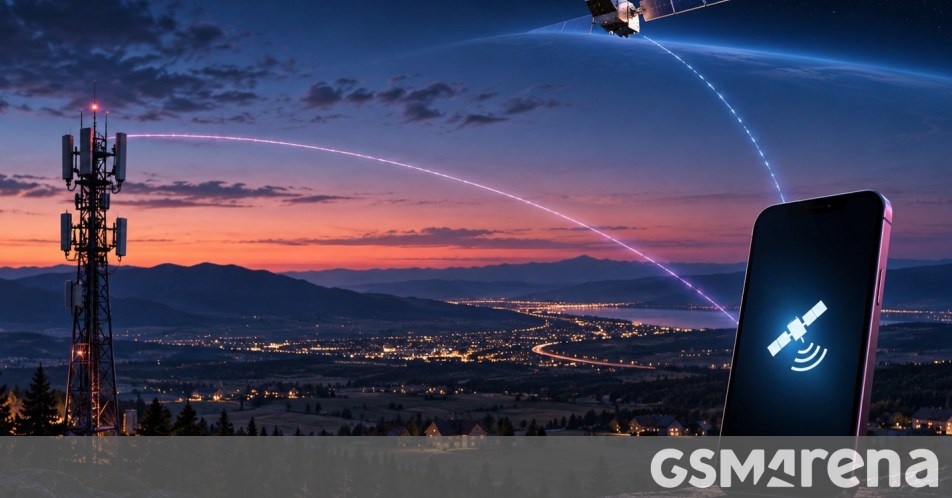
The skepticism is not limited to T-Mobile. On Monday, during its own Q3 earnings conference, Verizon CEO Dan Schulman echoed similar sentiments, explicitly ruling out an MVNO deal with any satellite provider. This alignment between the two largest US carriers suggests that the industry is forming a consensus: major terrestrial carriers prefer to maintain control over their infrastructure rather than diluting their market position by enabling a potential competitor through capacity leasing.
This wall of resistance means that SpaceX will likely be forced to pursue a "build-it-alone" strategy. By purchasing spectrum and negotiating for tower access, SpaceX is attempting to forge a third, independent path. However, this path is fraught with regulatory hurdles, astronomical capital expenditure requirements, and the technical complexity of integrating satellite-to-mobile technology at scale.
Chronology of SpaceX’s Telecom Ambitions
The push by SpaceX to enter the mobile market is the culmination of several years of strategic movement:
- Early 2024: SpaceX begins lobbying for more flexible spectrum usage rules to support Direct-to-Cell technology.
- Mid-2024: Reports emerge detailing SpaceX’s interest in acquiring unused or underutilized spectrum bands from smaller, regional wireless carriers.
- Late 2024: Starlink begins testing satellite-to-cell communication, demonstrating the ability to send SMS messages from standard smartphones via satellite.
- Early 2025: SpaceX increases its footprint by acquiring additional spectrum licenses, moving from a research project to a commercially oriented carrier initiative.
- Q3 2026: T-Mobile and Verizon publicly clarify their positions, rejecting MVNO partnerships and framing satellite as a secondary, rather than primary, telecommunications service.
Broader Implications and Market Outlook
The refusal of major carriers to act as an MVNO host for SpaceX has profound implications for the competitive landscape. Without the benefit of established terrestrial networks, SpaceX faces a massive barrier to entry. To succeed, the company must effectively become a "network-as-a-service" provider that can offer seamless handoffs between satellite and terrestrial connections—a feat that requires immense software sophistication and, eventually, a significant physical footprint on the ground.
While T-Mobile is willing to engage in commercial agreements—such as acting as a reseller for complementary satellite services, similar to its existing T-Satellite arrangement—it draws a sharp line at allowing SpaceX to utilize its core network. This "commercial but not partner" stance highlights the distinction between a product partnership and a structural business model integration.
From an economic perspective, the carriers are protecting their ARPU (Average Revenue Per User) and their infrastructure investments. By keeping satellite services at arm’s length, they ensure that the "premium" 5G experience remains tethered to their own proprietary towers.
Future Outlook
As SpaceX continues its trajectory toward becoming a full-fledged carrier, the market will be watching closely to see if it can secure the necessary regulatory approvals and hardware partnerships to bridge the "last mile" of connectivity. For now, the US telecommunications sector has sent a clear message: the incumbent carriers are not interested in subsidizing the entry of a disruptive competitor.
For the consumer, this suggests that the battle for the future of mobile connectivity will likely remain fragmented. Users will likely see a tiered market where terrestrial 5G dominates urban and suburban centers, while satellite-based mobile services remain a supplementary tool for rural connectivity and emergency response. Whether SpaceX can eventually overcome these hurdles to provide a truly unified experience remains one of the most significant open questions in the telecommunications industry for the latter half of the decade. As the sector moves toward 6G, the integration of satellite and terrestrial networks will remain a point of technical contention, even as the business battle lines have been firmly drawn.