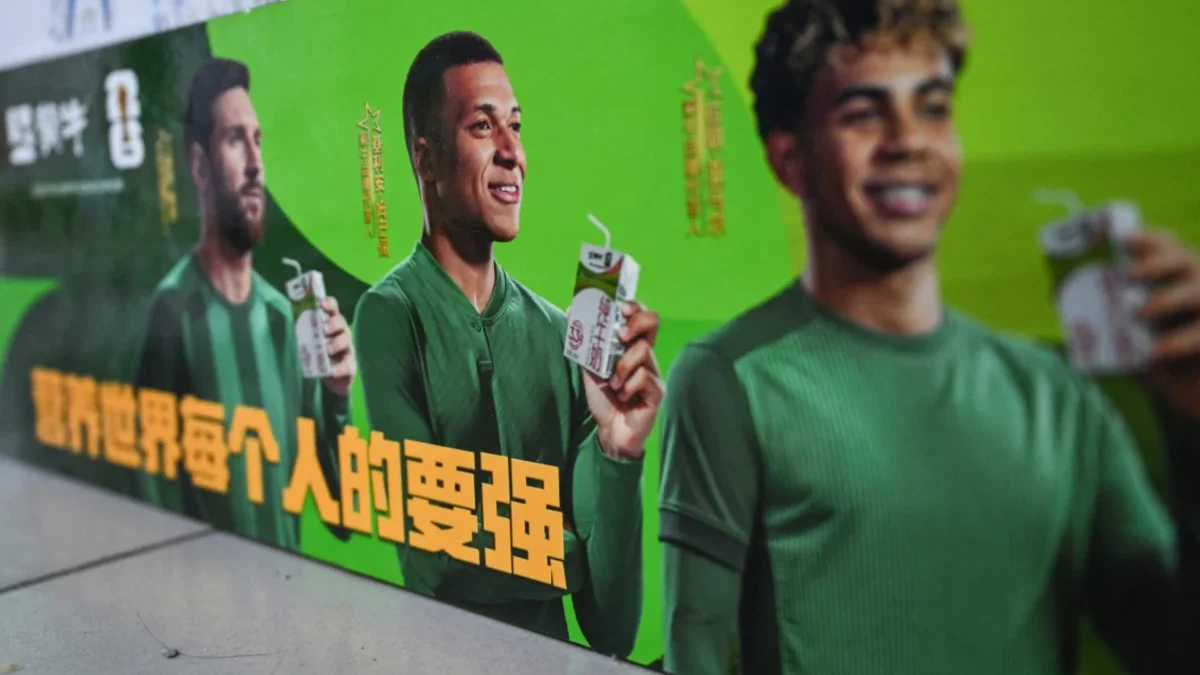
The incident underscores the precarious nature of navigating the Chinese consumer market, where cultural sensitivity, historical reverence, and nationalist sentiment can shift the trajectory of a global brand or public figure in a matter of hours. For Mbappe, a player whose brand equity is built on global appeal, the speed and scale of the reaction illustrate the high-stakes reality of modern sports diplomacy.
A Chronology of the Controversy
The sequence of events began during a casual, high-profile French media interview. During a segment involving pop-culture memes, Mbappe made an off-the-cuff comment identifying a specific meme figure as "a Chinese dictator." While the context was ostensibly lighthearted, the cultural weight of the remark was immediate. Within 48 hours, the clip had been clipped, subtitled, and circulated across Chinese platforms like Weibo and WeChat, where it garnered millions of views and triggered a wave of patriotic condemnation.
By the third day, the commercial consequences materialized. Three major Chinese corporations—beverage producer Dongpeng, dairy giant Mengniu, and cheese manufacturer Milkground—officially announced the termination of their endorsement contracts with the Real Madrid forward. These companies, which had previously utilized Mbappe’s global profile to penetrate younger demographics, opted for swift severance to distance themselves from the burgeoning controversy.
Simultaneously, the regulatory response arrived. China Media Group (CMG), the nation’s state-owned broadcaster, issued a directive to suspend the airing of LaLiga matches featuring Real Madrid. This move not only penalized the individual athlete but also placed immense economic pressure on the Spanish league, which relies on Chinese viewership to bolster its international media rights valuations.
Corporate and Institutional Responses
In the wake of the fallout, damage control efforts were launched across multiple fronts. Mbappe, recognizing the potential for long-term career damage, issued a formal apology on his X account. "My comment was ill-judged, and I now understand that it hurt many people in China and in Chinese communities around the world," the statement read. "I apologize to everyone my words have upset. This was absolutely not my intention. I have deep respect for the Chinese people and their history, and I am sincerely sorry."
The institutional entities involved also sought to insulate themselves from the diplomatic friction. LaLiga President Javier Tebas held an emergency meeting with the Chinese ambassador to Spain. In a subsequent statement, Tebas emphasized the league’s desire to rectify the situation, noting that the organization is "seeking solutions that allow us to overcome this episode" while reaffirming a commitment to the "millions of Chinese fans who follow our competitions."
Real Madrid, the club currently employing the striker, issued an official statement on October 28, 2026, aimed at smoothing over relations. The club asserted its "deep respect for China, its history, its culture, and its citizens," framing the incident as an isolated individual error rather than a reflection of the club’s institutional values.
The Landscape of Cultural Sensitivity in China
The Mbappe incident is far from an isolated case; rather, it is part of a recurring pattern of cultural and political friction between Western entities and the Chinese public. The landscape of business in China is increasingly defined by "nationalist consumerism," where perceived slights against national pride or historical figures can trigger immediate boycotts that transcend traditional marketing logic.
The 2019 NBA crisis remains the benchmark for such volatility. When Daryl Morey, then-general manager of the Houston Rockets, posted a tweet supporting pro-democracy protests in Hong Kong, the reaction was swift. CCTV suspended all NBA broadcasts, and domestic sponsors abandoned the league. It took nearly three years and a significant behind-the-scenes diplomatic effort for the NBA to re-establish a stable footing in the country.
Similarly, the 2021 boycott of H&M serves as a case study in how global supply chain decisions can collide with local political narratives. When the retailer raised concerns over labor practices in the Xinjiang region, the brand faced a near-total blackout on Chinese e-commerce platforms, resulting in a significant loss of market share that the company has struggled to recover in the years since.
More recently, the June 2026 Lululemon Great Wall controversy demonstrated that even minor cultural inaccuracies can lead to major brand damage. The company faced a firestorm after featuring a Japanese taiko drum in a promotional event on the Great Wall—a space holding immense symbolic weight for the Chinese public. The use of a Japanese instrument in a location synonymous with Chinese history was interpreted as a sign of cultural ignorance, forcing the company to scrub its digital presence and issue a formal apology.
Economic and Strategic Implications
The financial fallout from these incidents can be profound. In the luxury sector, LVMH recently reported a 5% decline in organic revenue for its fashion and leather goods division, partially attributed to a boycott following a trademark dispute with a domestic brand, Molly Tea. The incident, which saw a court order the local chain to pay $1.5 million to the luxury giant, backfired as domestic consumers rallied behind the local entity, viewing the legal action as an act of corporate bullying.
Even indigenous Chinese brands are not immune to the scrutiny of the modern consumer. The case of Nongfu Spring, which faced a massive online boycott in 2024 due to unfounded accusations that its packaging design favored Japanese aesthetics, proves that the nationalist sentiment is not strictly xenophobic in nature; it is a pervasive, highly active force that monitors every detail of corporate branding.
Fact-Based Analysis of the Current Climate
For high-profile athletes and global corporations, the "Mbappe episode" serves as a reminder of the "China Premium" and the risks attached to it. The Chinese market remains the world’s second-largest economy and a critical engine for growth in sports broadcasting, luxury goods, and consumer products. However, the cost of entry is absolute alignment with domestic cultural expectations.
The primary implication for entities operating in China is the necessity of "hyper-localization." Brands are increasingly hiring local cultural consultants to vet social media content, event programming, and even historical references in advertising. The speed of the internet ensures that any transgression, whether intentional or accidental, is amplified in real-time, leaving virtually no window for explanation or nuance once the outrage cycle begins.
Furthermore, the involvement of state-run media outlets like CMG signals that individual actions are often interpreted through the lens of national diplomacy. When an athlete or a brand makes a statement, it is rarely viewed as a private opinion; it is viewed as an affront to the national interest.
As the sporting world becomes increasingly globalized, the friction between freedom of expression in the West and the rigid cultural protocols of the Chinese market will likely continue to manifest. For Kylian Mbappe, the path forward involves a long-term strategy of public reconciliation and a fundamental shift in how his representatives manage his public appearances. For the broader industry, the lesson is clear: in the digital age, historical and cultural literacy is not just a social grace—it is an essential component of fiscal viability. The window for redemption remains open, but as history has shown, the process of rebuilding trust in the Chinese market is a slow, methodical, and high-stakes endeavor that requires far more than a statement on social media.