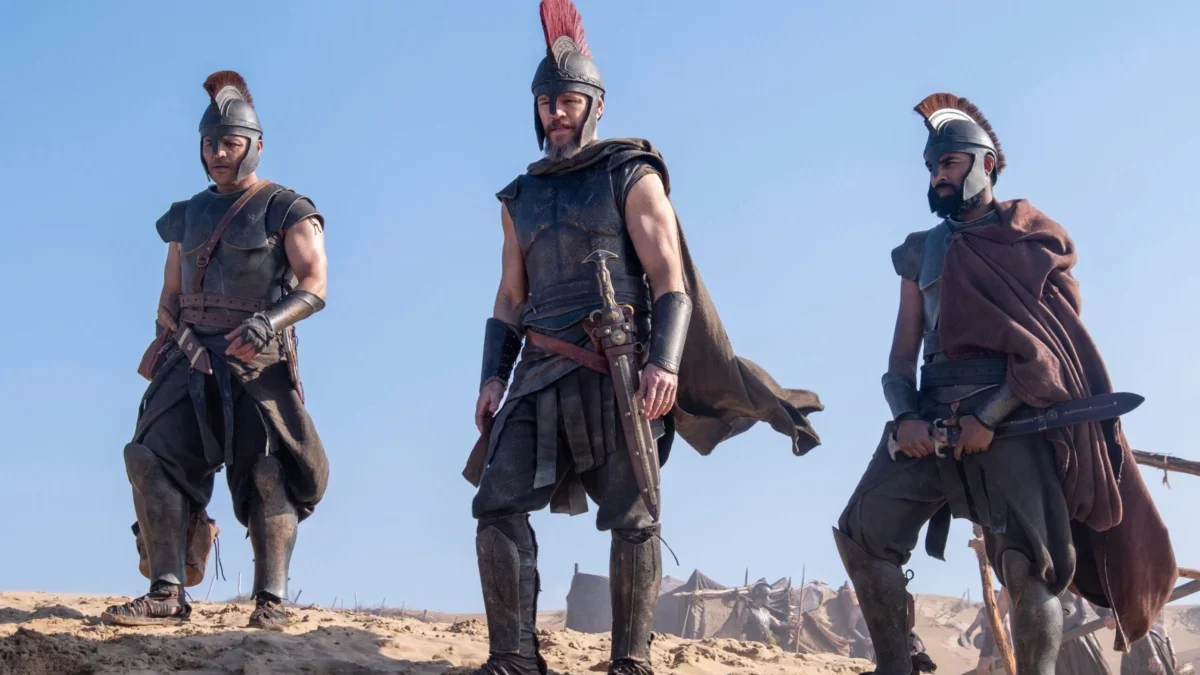
The intersection of classical literature, high-stakes Hollywood filmmaking, and artificial intelligence development has produced a curious technological footnote. Several months after the fierce public debate surrounding Christopher Nolan’s cinematic adaptation of Homer’s epic poem subsided, technology entrepreneur Elon Musk has unveiled his promised alternative: a short, AI-generated rendition titled Odyssey with Grok Imagine. The release, which arrived quietly on the social media platform X, falls significantly short of the full-length feature film Musk initially guaranteed, offering instead a seven-minute episodic glimpse into the ancient Greek world generated entirely through xAI’s proprietary video and image synthesis models.
The project originates from a broader cultural controversy that erupted during the summer release of Nolan’s blockbuster film. That motion picture, despite facing aggressive online criticism from various commentators over casting choices and narrative adaptations, went on to achieve massive commercial success, grossing nearly $1.8 billion worldwide. The financial triumph effectively muted conservative detractors who had predicted a box office disaster driven by deviations from traditional source material. Among the most vocal critics of Nolan’s interpretation was Musk, the world’s richest man, who took to X just days after the film’s premiere to voice his strong disapproval and announce plans for a superior, historically accurate version.
Chronology of the Controversy and Production
The genesis of the Grok-generated Odyssey can be traced through a distinct timeline of online commentary, technological rollout, and public expectation:
July: Christopher Nolan’s adaptation of The Odyssey premieres in theaters worldwide, rapidly climbing the box office charts and eventually nearing $1.8 billion in global revenue.
Four Days Post-Release: Elon Musk issues a public critique of Nolan’s film on X, declaring it a desecration of Homer’s narrative. He explicitly vows that xAI’s Grok Imagine tool will produce a full-length movie of the epic by the end of the year, promising historical accuracy and strict fidelity to the original text.
Three Months Later: Public anticipation settles as the discourse surrounding the summer blockbuster moves on.
Early November: Musk shares the first concrete result of his pledge: a seven-minute introductory episode produced in collaboration with AI entertainment company Wonder Studios X.
Post-Release Reception: The clip receives relatively modest engagement compared to Musk’s typical political or commentary posts, drawing critical reviews from users across the platform regarding its technical execution and narrative pacing.
An Analysis of the AI-Generated Episode
The newly released segment focuses primarily on Odysseus, King of Ithaca, and his reluctance to join the war against Troy, a conflict he is ultimately compelled to enter due to a prior oath of loyalty. However, the technical realization of this narrative premise has drawn considerable scrutiny from both casual viewers and technology analysts.
The seven-minute episode exhibits several hallmark limitations common to current generative video models. Viewers have pointed out noticeable synchronization issues between character facial movements and spoken dialogue, compounded by stilted, unnatural voice delivery. Furthermore, structural and pacing flaws are immediately apparent. In one sequence, the Ithacan forces arrive on the shores of Troy almost instantaneously after departing their homeland, bypassing the lengthy trials, voyages, and geopolitical context central to the epic.
Beyond structural anomalies, character introduction remains sparse. Aside from Odysseus, major figures appear without clear contextual framing or nominal identification. Even within user communities on X—frequently supportive of Musk’s entrepreneurial ventures—the reaction was notably muted, with multiple accounts questioning the quality control of the final output.
The Standard of Historical Accuracy
At the core of Musk’s initial critique of the Nolan film was the assertion that modern cinematic adaptations routinely fail to respect the historical and cultural realities of the ancient Mediterranean. Musk explicitly guaranteed that an AI-driven project utilizing Grok Imagine would rectify these perceived flaws by providing a strictly accurate depiction of the period.
Yet, when queried directly about its own output, the Grok chatbot provides a nuanced refutation of its master’s stated goals. When asked whether the newly released video segment meets a standard of historical accuracy, the AI model issues a direct negative. Grok clarifies that Episode 1—and the broader conceptual series—is an adaptation of a mythological literary work rather than an archaeological reconstruction of documented historical events.
The chatbot highlights several fundamental barriers to achieving historical fidelity with Homeric epics:
Mythological Foundations: The Odyssey is fundamentally a work of epic poetry rich in myth, divine intervention, and legendary monsters, leaving no basis in the verifiable historical or archaeological record for its primary narrative elements.
Anachronistic Society: Homeric society itself represents a literary amalgamation, blending potential Bronze Age structural features, such as palace-centered governance and specific warrior codes, with later Iron Age cultural practices.
Linguistic and Cultural Divergence: The characters in the AI production speak modern English with British accents rather than reconstructed Bronze Age languages or ancient Greek.
Visual and Cinematic Tropes: The aesthetic of the generated battle scenes relies heavily on modern cinematic conventions and existing AI training data rather than primary archaeological evidence, with instances such as cavalry deployment contradicting standard historical reconstructions of the era.
Ultimately, Grok’s self-evaluation concludes that the production makes no serious attempt at archaeological or linguistic fidelity beyond a generalized aesthetic evoking an ancient Greek setting.
Broader Technological and Cultural Implications
The rollout of Odyssey with Grok Imagine offers a revealing case study in the current capabilities and limitations of generative artificial intelligence in professional storytelling. While companies like Wonder Studios X and developers of foundational models like xAI continue to push the boundaries of text-to-video synthesis, the project demonstrates the persistent gap between algorithmic ambition and the nuanced demands of long-form narrative production.
The disparity between Musk’s ambitious promise of a "full-length movie" delivered by the end of the year and the subsequent release of a fragmented seven-minute episodic clip highlights the ongoing challenges of narrative coherence, temporal consistency, and character development in automated media generation. Furthermore, the episode’s reception underscores a growing public fatigue with promotional announcements that overpromise technical milestones while underdelivering on artistic execution.
As generative AI tools increasingly intersect with traditional entertainment industries, the debate over copyright, artistic integrity, and authenticity remains intense. While Hollywood blockbusters continue to draw massive global audiences through creative reinterpretations of classic texts, technological experiments driven by platform executives serve as reminders that automated tools still require substantial human creative direction, structural oversight, and editorial discipline to achieve artistic resonance.
Whether xAI and its partners will proceed with subsequent episodes to fulfill the broader vision of a complete adaptation of The Odyssey remains uncertain. For now, the project stands primarily as a demonstration of the current technological ceiling of prompt-based filmmaking, capturing both the rapid advancement of synthetic media tools and their present incapacity to replace the complex, interpretive craft of human cinematic storytelling.