Modern digital marketing has evolved far beyond the simple vanity metrics of early social media networks. As enterprise marketing budgets face increasing scrutiny and digital ecosystems expand across multiple platforms, organizations can no longer afford to manage their online presence through fragmented, manual logging. The modern social media dashboard has emerged as an indispensable command center, designed to aggregate performance data from Instagram, LinkedIn, Facebook, TikTok, and X into a single, unified interface for tracking, analyzing, and reporting.

With United States social ad spending projected to exceed $121 billion, the financial implications of managing these campaigns blindly have never been higher. Enterprise marketing teams, multi-client agencies, and scaling social departments rely heavily on centralized dashboards to mitigate the growing reporting burden that accompanies every new campaign. By pulling real-time and near-real-time data into customizable visualizations, these tools allow organizations to transition from reactive scrambling to proactive, data-driven decision-making.
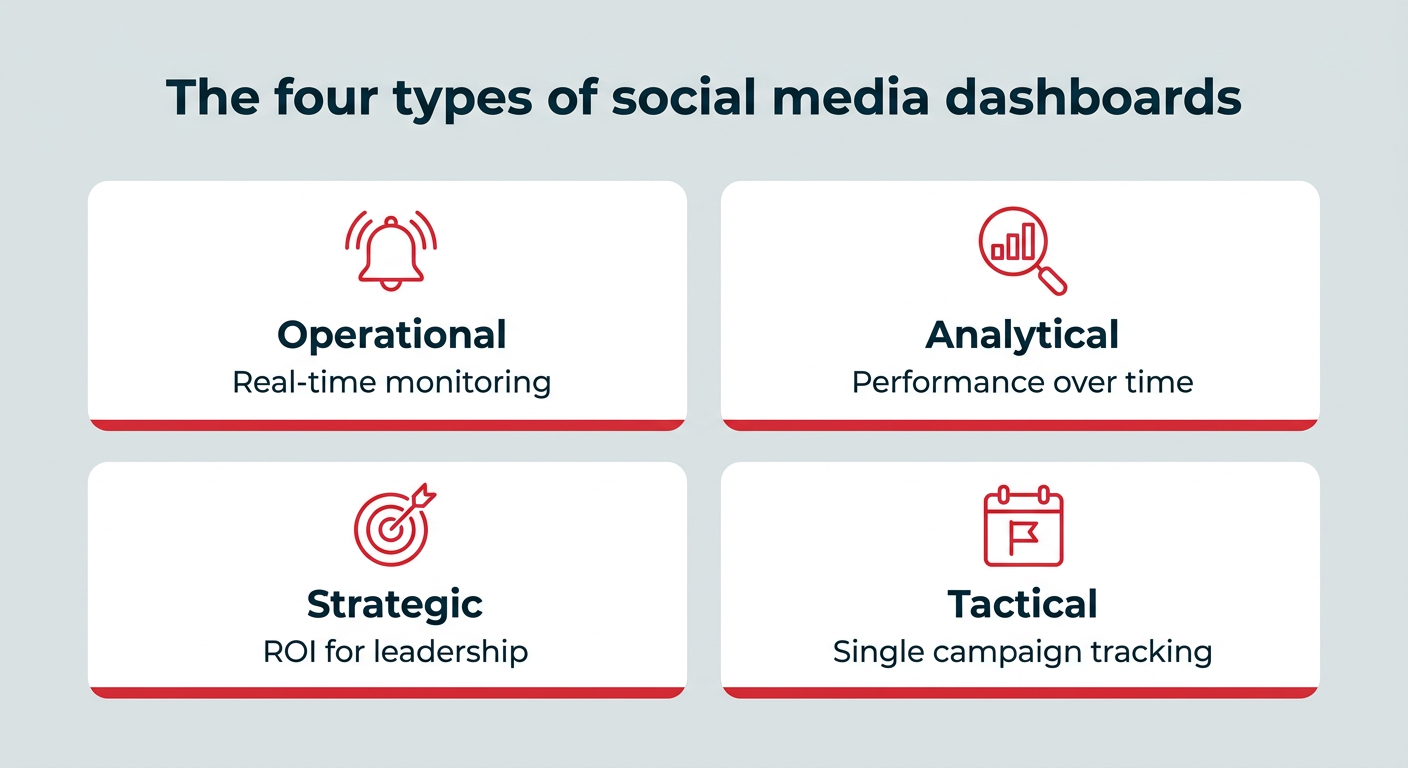
Understanding the Four Core Types of Dashboards
To prevent data overload and avoid cramming every conceivable metric into a single view, industry professionals categorize social media dashboards into four distinct types: operational, analytical, strategic, and tactical. Each serves a specific purpose within an organization and caters to different stakeholders.

Operational dashboards are engineered to monitor real-time activity and response needs. They are primarily utilized by social media coordinators, community managers, and customer care teams who need to track incoming inquiries, brand mentions, and sentiment shifts on a minute-by-minute basis.
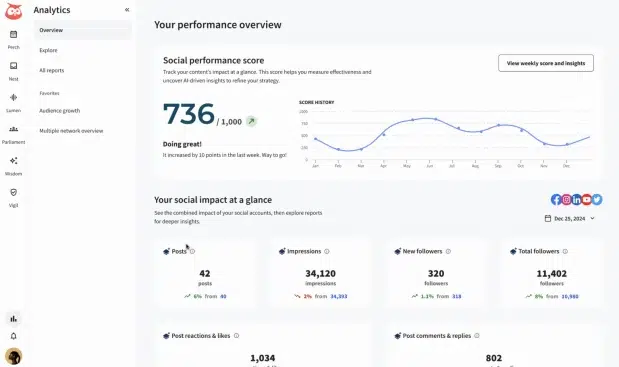
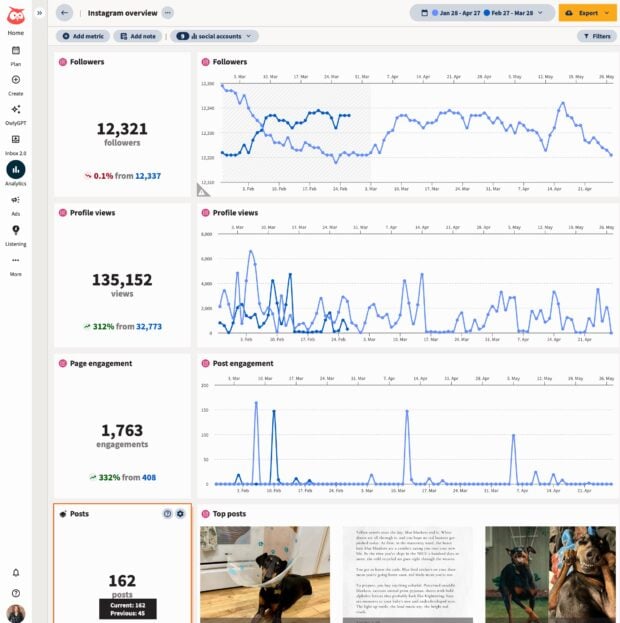
Analytical dashboards focus on long-term performance, examining content and audience metrics over extended periods. Social media managers and data analysts rely on these views to evaluate which formats resonate most with target demographics, thereby refining future content calendars.
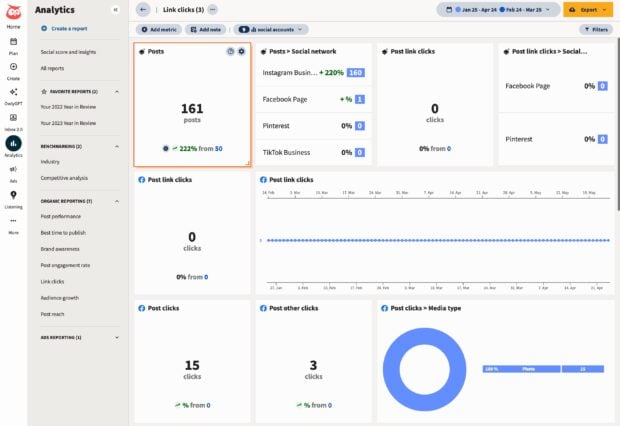
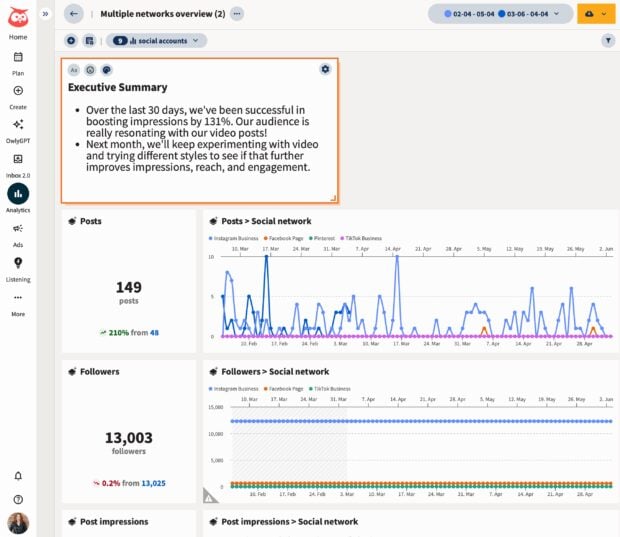
Strategic dashboards are designed for executive leadership, including Chief Marketing Officers (CMOs), vice presidents, and directors. These high-level summaries report return on investment (ROI) and overall progress toward long-term business goals, stripping away granular noise in favor of clear KPIs.
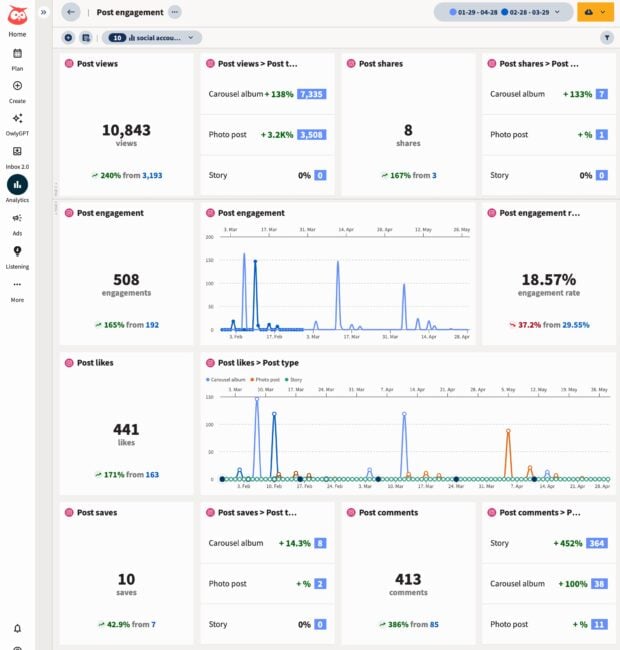
Finally, tactical dashboards track specific, time-bound campaigns from their initial launch to their final wrap-up, serving campaign managers and paid social specialists who need to optimize ad spend on the fly.
Solving the Modern Measurement and Reporting Problem
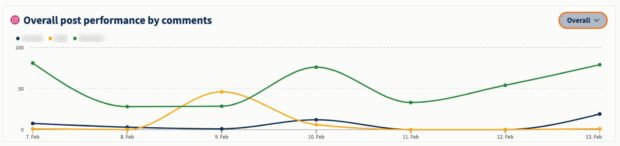
The primary driver behind the adoption of sophisticated social media dashboards is the sheer complexity of multi-channel marketing. Historically, compiling a monthly report required marketing teams to manually log into native analytics platforms for every individual network, an inefficient process that could consume hours of valuable work time. Centralized dashboards automate this data extraction, enabling teams to generate presentation-ready visualizations in a matter of minutes.

Furthermore, these tools address a critical communication gap between marketing departments and executive leadership. According to recent industry surveys, CMO marketing budgets have flatlined at roughly 7.8 percent of overall company revenue, while nearly 59 percent of marketing leaders report having insufficient budgets to execute their strategies effectively. When defending or requesting budget allocations, social media managers cannot rely on isolated figures from the previous month. Dashboards provide historical context, allowing teams to present clear trend lines that connect social efforts to tangible business outcomes, such as qualified leads, direct revenue, and improved brand health.
Aligning Metrics with Specific Business Goals
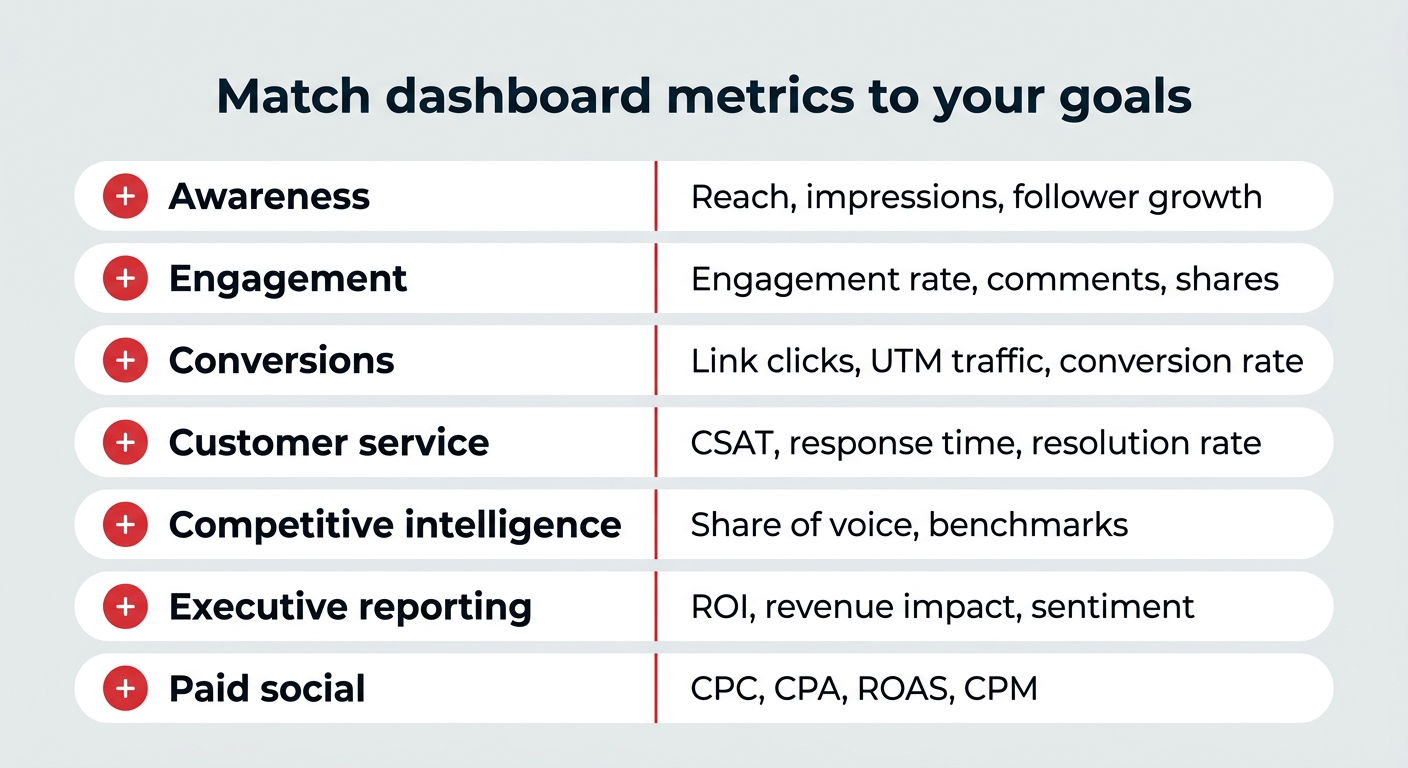
A common pitfall in social media management is tracking every metric available simply because the data exists. Experts emphasize that a dashboard is only as effective as the strategic intent behind its layout. Metrics must map directly to overarching organizational objectives.
For brand awareness initiatives, teams should prioritize reach, impressions, and follower growth over time. When the primary goal is engagement, the focus shifts to engagement rates, likes, comments, shares, and saves. Conversion-focused campaigns require rigorous tracking of link clicks, UTM-tracked traffic, and conversion rates, often paired with customer relationship management (CRM) software to measure downstream pipeline impact. For customer service and reputation management, operational dashboards track customer satisfaction (CSAT) scores, average response times, and resolution rates, while competitive intelligence dashboards monitor share of voice and industry benchmarks.
Evaluating Dashboard Platforms: From Free Tools to Enterprise Suites
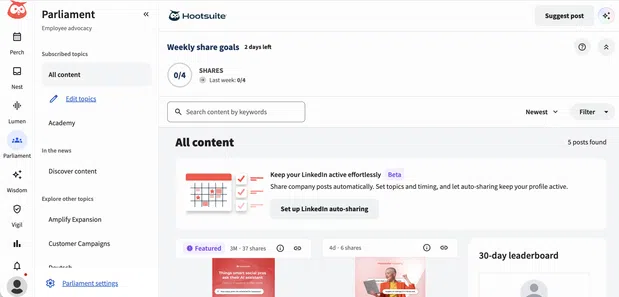
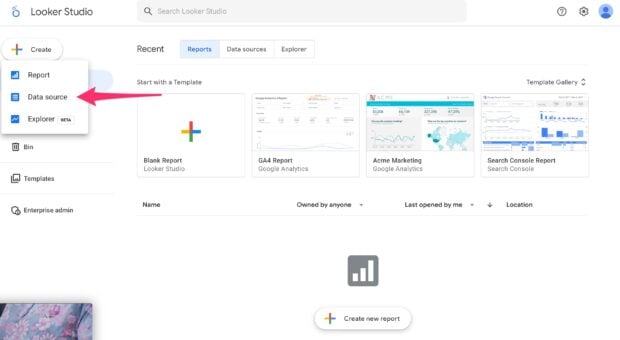
When establishing a dashboard infrastructure, organizations generally choose between building a custom solution using free tools like Google Looker Studio or investing in connected enterprise software like Hootsuite Social OS.
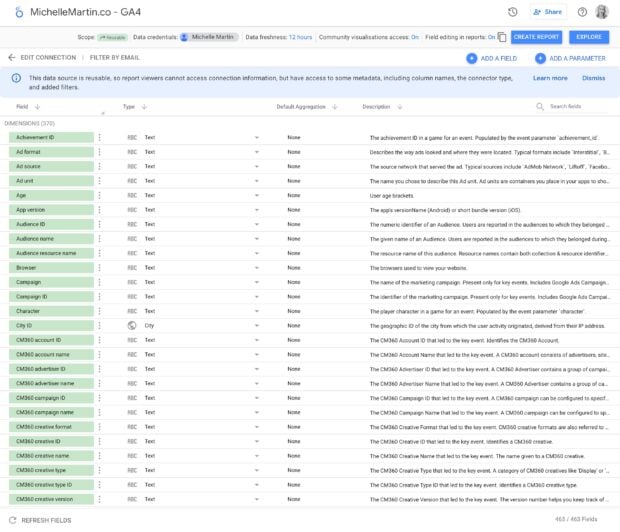
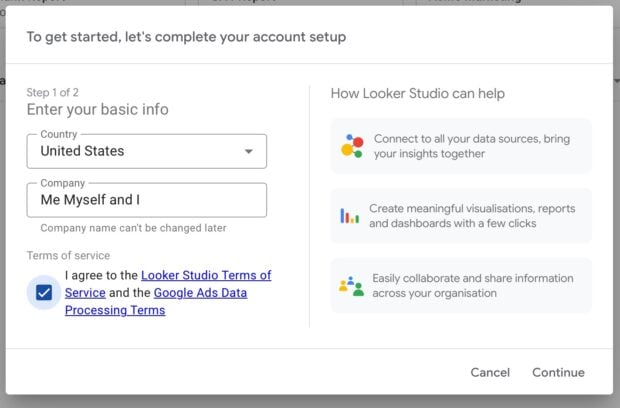
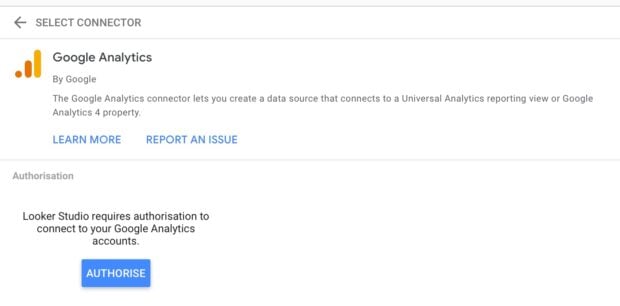
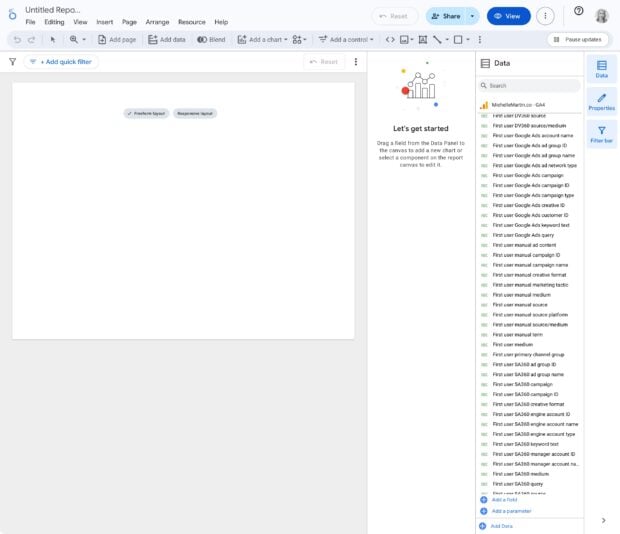
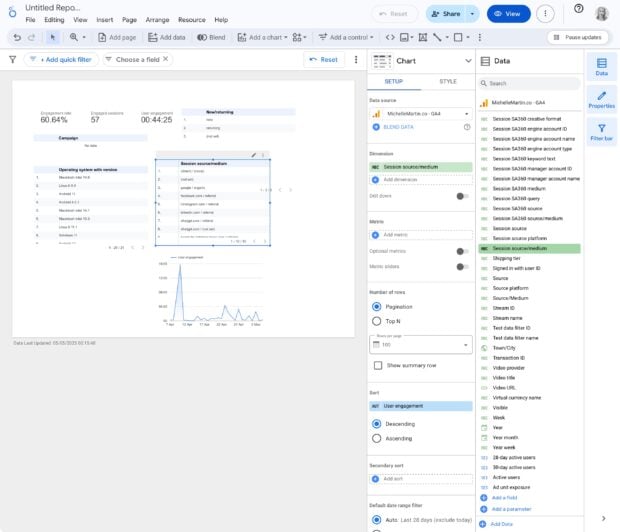
Building a custom dashboard in Looker Studio offers complete layout control and zero software licensing costs, making it attractive for budget-conscious teams. However, this approach requires manual setup, continuous maintenance, and significant personnel time to handle API updates and platform changes.
Conversely, enterprise platforms like Hootsuite Social OS, Klipfolio, Databox, DashThis, and Whatagraph offer pre-built cross-platform reporting templates, automated data updates, and seamless integration between publishing workflows, social listening, and customer care applications. For instance, integrated tools allow teams to view organic and paid social performance side-by-side, uncovering how organic reach impacts paid ad efficiency and vice-versa.
Implications and Future Outlook for Social Marketing
As global social media ad spending races toward projected milestones of $530 billion by 2030, the demand for transparent, automated, and intelligent analytics will only accelerate. Artificial intelligence is increasingly integrated into these dashboard ecosystems, surfacing anomalies, predicting trends, and offering automated summaries that help brands navigate rapid shifts in public sentiment.

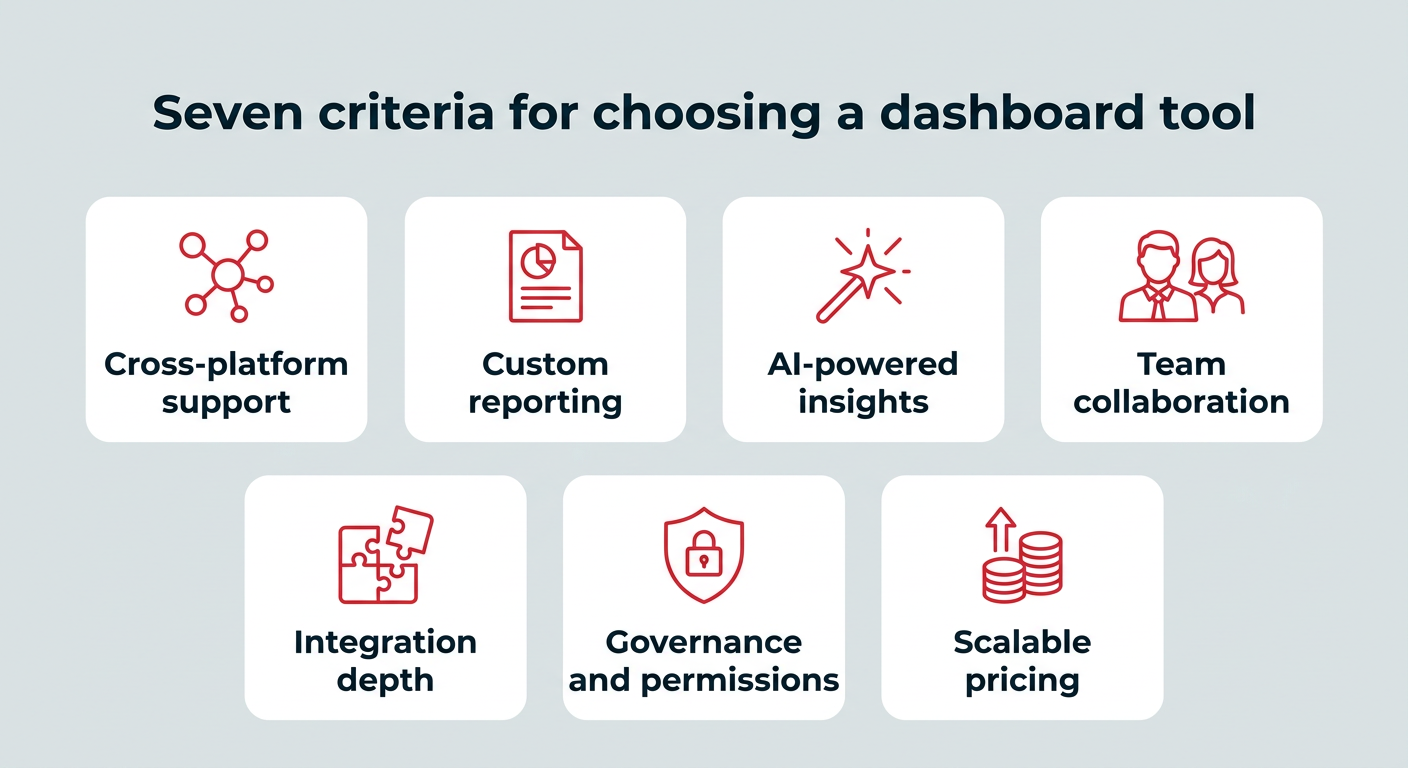
Ultimately, the choice of a social media dashboard depends on organizational scale, resource availability, and workflow requirements. Whether utilizing a free, custom-built interface or an all-inclusive enterprise suite, the objective remains constant: transforming raw digital data into actionable insights that prove value, optimize strategy, and drive sustainable business growth.