The automotive landscape in the United States has shifted dramatically over the past four decades, with Sport Utility Vehicles (SUVs) now accounting for nearly 60% of all new vehicle registrations. As manufacturers prioritize safety regulations, aerodynamic efficiency, and interior connectivity, the design language of these vehicles has undergone a profound transformation. While modern engineering provides unparalleled creature comforts and crash-test performance, a growing segment of automotive enthusiasts and design critics argues that the aesthetic integrity of 1980s SUVs remains superior to their contemporary successors. This analysis examines five iconic nameplates that debuted or flourished in the 1980s, evaluating how their original design philosophies compare to the modernized, often homogenized, iterations currently populating dealership lots.
The Shift from Utility to Homogenization
In the 1980s, the SUV segment was defined by function-first design. Engineers prioritized ground clearance, approach angles, and cargo accessibility, often resulting in "boxy" profiles that served as a hallmark of the era. According to data from the Insurance Institute for Highway Safety (IIHS) and the National Highway Traffic Safety Administration (NHTSA), the evolution of these vehicles has been driven by strict federal mandates regarding rollover stability, pedestrian impact safety, and fuel economy standards (CAFE).
These mandates have necessitated a move away from sharp, upright pillars and toward rounded, aerodynamic silhouettes. Critics argue this has led to a "sea of sameness," where SUVs from competing brands are often indistinguishable at a glance. Conversely, the 1980s vehicles maintained a distinct visual identity that reflected the rugged, off-road-oriented marketing of the period.
Toyota Land Cruiser: From Rugged Tool to Urban Luxury
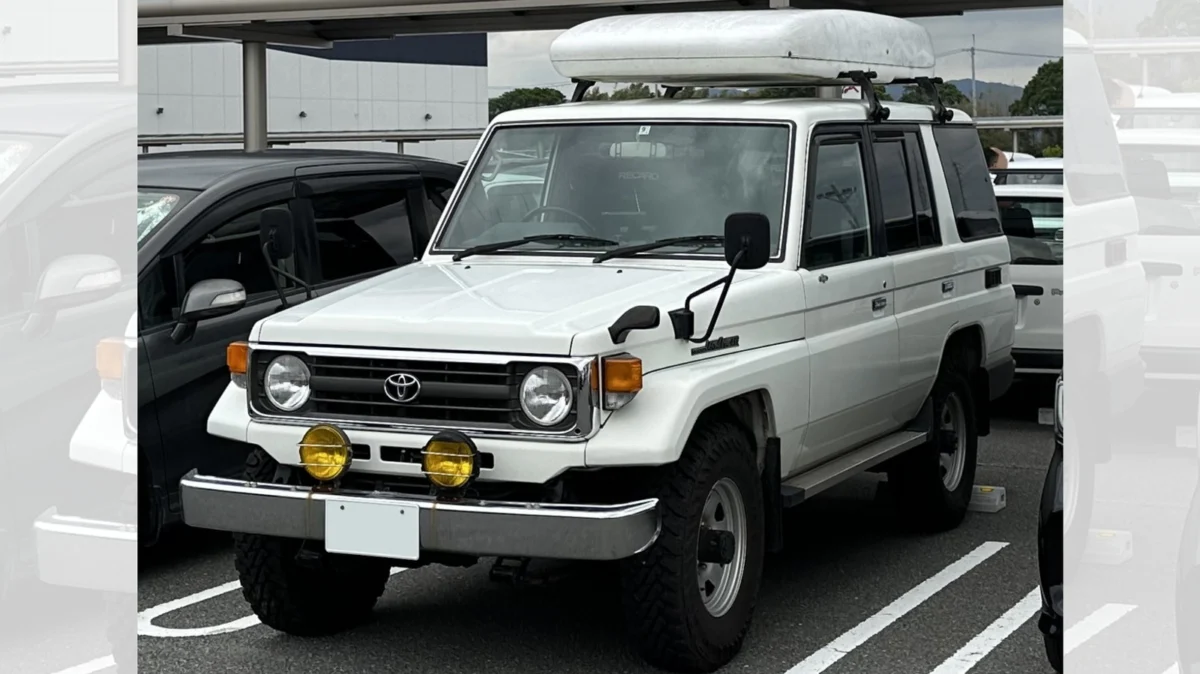
The Toyota Land Cruiser J70, introduced in 1984, remains a global benchmark for utilitarian design. With its protruding turn signals, flat greenhouse, and high-visibility rectangular grille, the J70 projected an image of indestructible utility. In contrast, the current U.S.-market Land Cruiser (the J250 Prado) attempts to blend vintage cues with modern luxury. While Toyota has successfully incorporated retro-inspired elements—such as the square, boxy frame—into the J250, industry observers note that the vehicle lacks the raw, unadorned toughness of the 1985 J70. The transition from the J70’s purely mechanical appearance to the J250’s tech-heavy cabin highlights the divergence between the "trail-ready" aesthetic of the 80s and the "lifestyle-ready" demands of the 2020s.
Toyota 4Runner: The Evolution of the Fender Flare
The 1984 Toyota 4Runner N60 represents the genesis of the modern mid-size SUV. By taking the Hilux pickup platform and enclosing the rear cargo area with a removable fiberglass hardtop, Toyota created a vehicle that was both a practical daily driver and a genuine off-roader. The N60 was characterized by thin, purposeful fender flares and a narrow, upright stance.
Comparing this to the 2026 4Runner reveals a stark contrast in scale. The modern iteration, while technically superior in terms of horsepower and safety, has adopted what design analysts call "visual bulk." The massive, oversized fender flares and high beltlines found on today’s models are often cited as a move toward aggressive, albeit bloated, styling. The loss of the removable hardtop—a feature that once allowed the 4Runner to compete directly with the Jeep Wrangler—marks a definitive shift away from modular utility toward fixed-body convenience.
Jeep Cherokee XJ: The Benchmark of Unibody Efficiency
The 1984 Jeep Cherokee XJ is widely considered one of the most significant vehicles in automotive history. Introduced during a time when body-on-frame construction was the industry standard, the XJ utilized a revolutionary unibody design that reduced weight and improved handling without sacrificing off-road capability. Its long, angular hood and distinctively narrow width gave it a silhouette that defied the trends of its time.
When compared to the 2026 Jeep Cherokee (KM), the difference is palpable. The modern Cherokee, while sophisticated, reflects the current industry trend toward soft, aerodynamic lines designed to maximize fuel efficiency through lower drag coefficients. This "softening" of the design has resulted in a vehicle that, according to consumer sentiment polls, often blends in with mainstream crossovers like the Honda CR-V or the Toyota RAV4, losing the sharp, rugged character that defined the XJ for nearly two decades of production.
Nissan Pathfinder: From Trail-Ready to Road-Focused
The first-generation Nissan Pathfinder (YD21), launched in 1985, was a true body-on-frame truck-based SUV. Its aesthetics were defined by functional black plastic bumpers, a flat grille, and an upright windshield. It was a vehicle designed to be used, where scratches were considered incidental to its primary purpose.
The 2026 Pathfinder serves as a case study in the transition of the SUV segment. Now built on a unibody platform, the current model prioritizes family transport and fuel economy. Its exterior features bulbous, smooth surfaces that, while aerodynamically efficient, lack the structural visual cues of the YD21. Automotive journalists have noted that while the modern Pathfinder is objectively more comfortable for long-distance highway travel, it has effectively surrendered its identity as a rugged explorer in favor of a family-hauler aesthetic.
Chevrolet S-10 Blazer: The Utility-to-EV Transition
The 1983 Chevrolet S-10 Blazer epitomized the compact SUV craze of the 1980s. Its design was utilitarian, efficient, and appropriately scaled for its role. In contrast, the modern 2025 Chevrolet Blazer EV and its internal combustion counterpart are significantly larger, often competing in a segment that pushes the boundaries of what is considered a "mid-size" vehicle.
The modern Blazer’s use of extensive black cladding to simulate ride height and its elongated chassis have led to criticisms regarding the loss of the "utility" aspect of the Sport Utility Vehicle. By increasing the dimensions to accommodate luxury features and battery packs, manufacturers have moved away from the compact, agile nature of the 1980s models. This trend forces consumers who prioritize maneuverability and backcountry access to look toward smaller, often less-capable vehicle classes, as the traditional mid-size SUV has grown into a large, cumbersome platform.
Implications for Future Design
The divergence between 1980s aesthetics and modern SUV design is not merely a matter of nostalgia; it reflects a fundamental shift in the American automotive market. As manufacturers continue to chase higher safety ratings and lower emissions, the design constraints have become increasingly rigid.
However, the recent resurgence of "retro-futurism"—seen in the styling of vehicles like the Ford Bronco and the Toyota Land Cruiser J250—suggests that designers are beginning to recognize the market demand for the visual cues of the past. While the 1980s models cannot be replicated due to contemporary safety standards, the industry appears to be moving toward a middle ground: incorporating the boxy, purposeful aesthetics of the 1980s while leveraging the safety and efficiency of 21st-century engineering. The legacy of the 1980s SUVs endures not because they were the most comfortable or the most advanced, but because their designs were an honest expression of their function. As the market continues to evolve, the challenge for manufacturers will be to recapture that visual honesty without sacrificing the technological advancements that consumers now expect.