The modern digital marketplace operates on a fundamental shift in consumer behavior: social media has transitioned from a secondary brand broadcast channel into the primary frontier for customer acquisition, service recovery, and relationship management. As digital interactions multiply across platforms like Instagram, LinkedIn, X, and Facebook, enterprises face an unprecedented volume of unstructured data. Comments, direct messages, brand mentions, and sentiment signals now hold the keys to consumer intent. To harness this wave of information, organizations are increasingly turning to Social Customer Relationship Management (Social CRM), a sophisticated operational framework that bridges the gap between public social engagement and centralized customer databases.

Understanding the Mechanics of Social CRM
Traditional customer relationship management systems have long served as the backbone of corporate sales and support, tracking structured historical data such as email threads, purchase histories, support tickets, and direct phone calls. While these historical metrics provide essential baseline information, they remain inherently reactive. They tell an organization what a customer did yesterday, but they rarely capture what the market feels today.

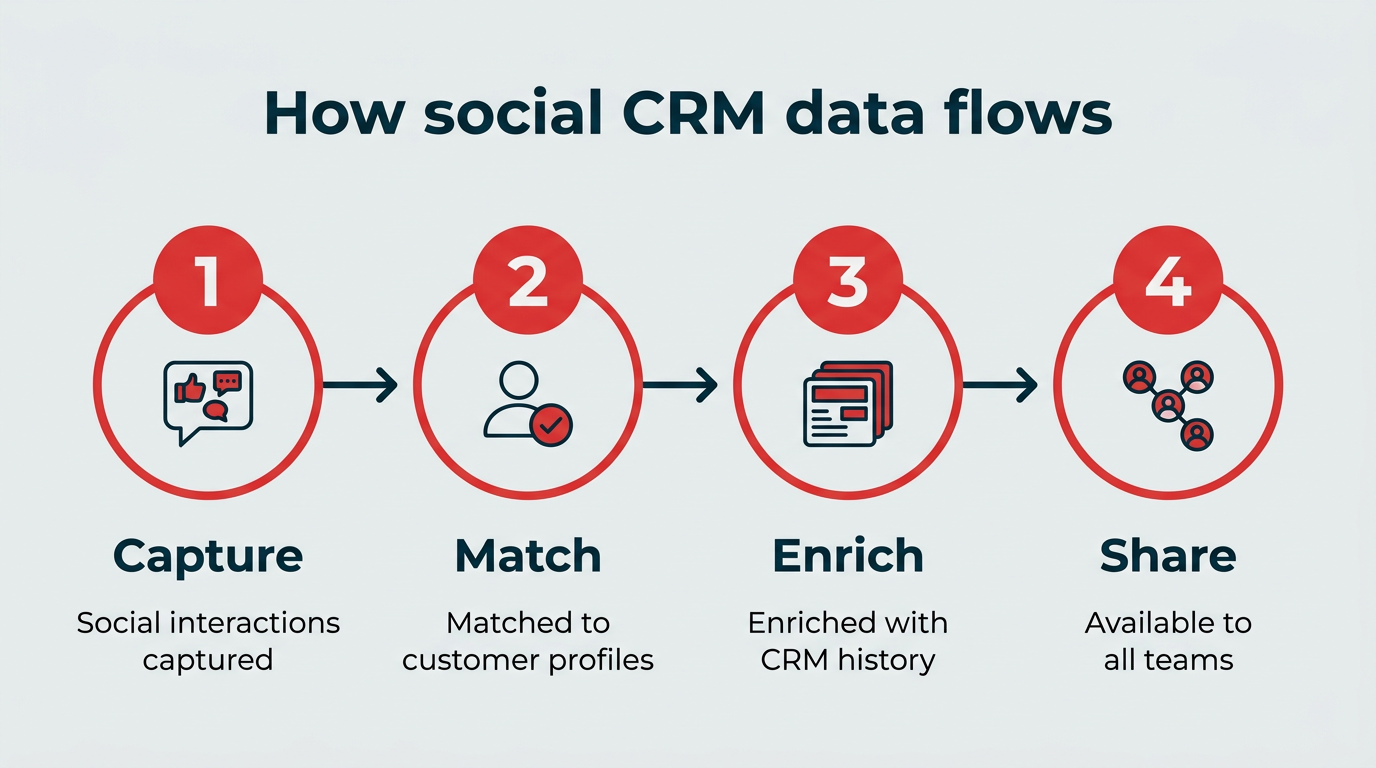
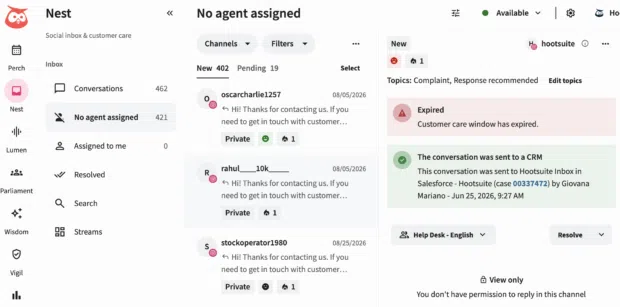
Social CRM fills this critical intelligence gap by ingesting real-time, unstructured data and marrying it with structured enterprise records. When a consumer comments on an Instagram post, expresses frustration via a direct message, or mentions a brand in a viral thread, a Social CRM architecture captures, analyzes, and appends that interaction directly to the individual’s customer profile. Consequently, cross-functional teams across marketing, sales, and customer service gain a unified, 360-degree view of the consumer. Rather than operating in isolated silos, departments share a synchronized narrative, ensuring that every touchpoint reflects the customer’s most recent digital journey.
The Market Pressures Driving Adoption
The urgency surrounding Social CRM implementation in 2026 stems from a widening expectations gap identified by leading research institutions. Industry analysts at Forrester have documented a persistent divergence between the customer experience brands intend to deliver and the actual experiences consumers receive. On social media, this gap is broadcast publicly for entire markets to witness.
Furthermore, consumer tolerance for corporate silence has plummeted. Comprehensive market research indicates that over half of consumers consider rapid responses to direct questions and inquiries to be a brand’s most appealing social behavior. Conversely, failing to engage carries a severe penalty: nearly a third of consumers will actively unfollow a brand that ignores negative feedback or community interactions.
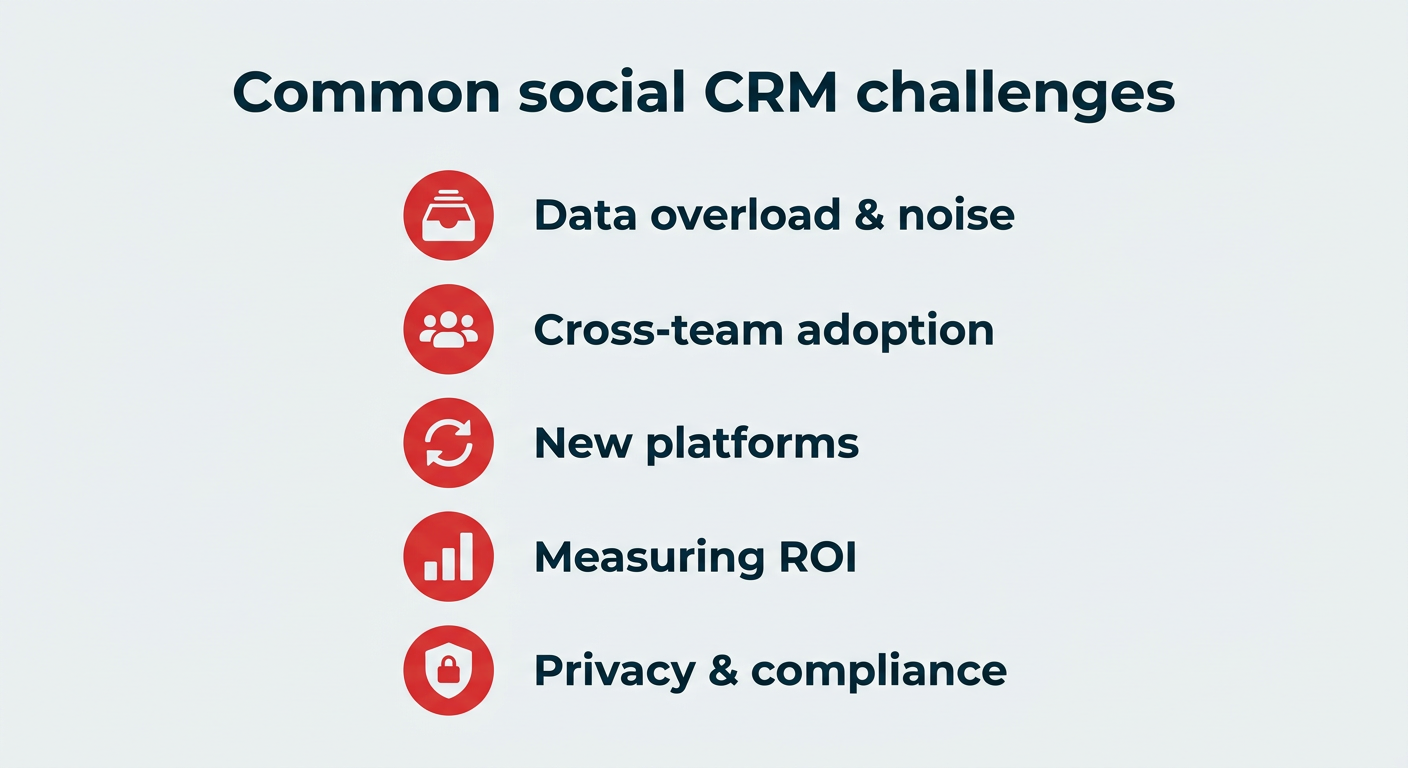
Volume has proven to be an equally formidable challenge. In the early eras of digital marketing, manual transcription of social media mentions into static CRM fields was marginally sustainable. At contemporary enterprise scale, manual data entry is obsolete. Automated integration of social data into core customer profiles has become a baseline operational requirement for maintaining brand reputation and customer retention.
The Integration Ecosystem: Built-in, Standalone, and Hybrid Models
Organizations looking to deploy Social CRM generally choose among three architectural approaches, each tailored to different operational needs and technical infrastructures.
Built-in options integrate basic social management tools directly into an existing CRM platform. While this approach keeps all contact data within a single system, it often lacks the deep social listening and publishing depth required by sophisticated marketing departments.
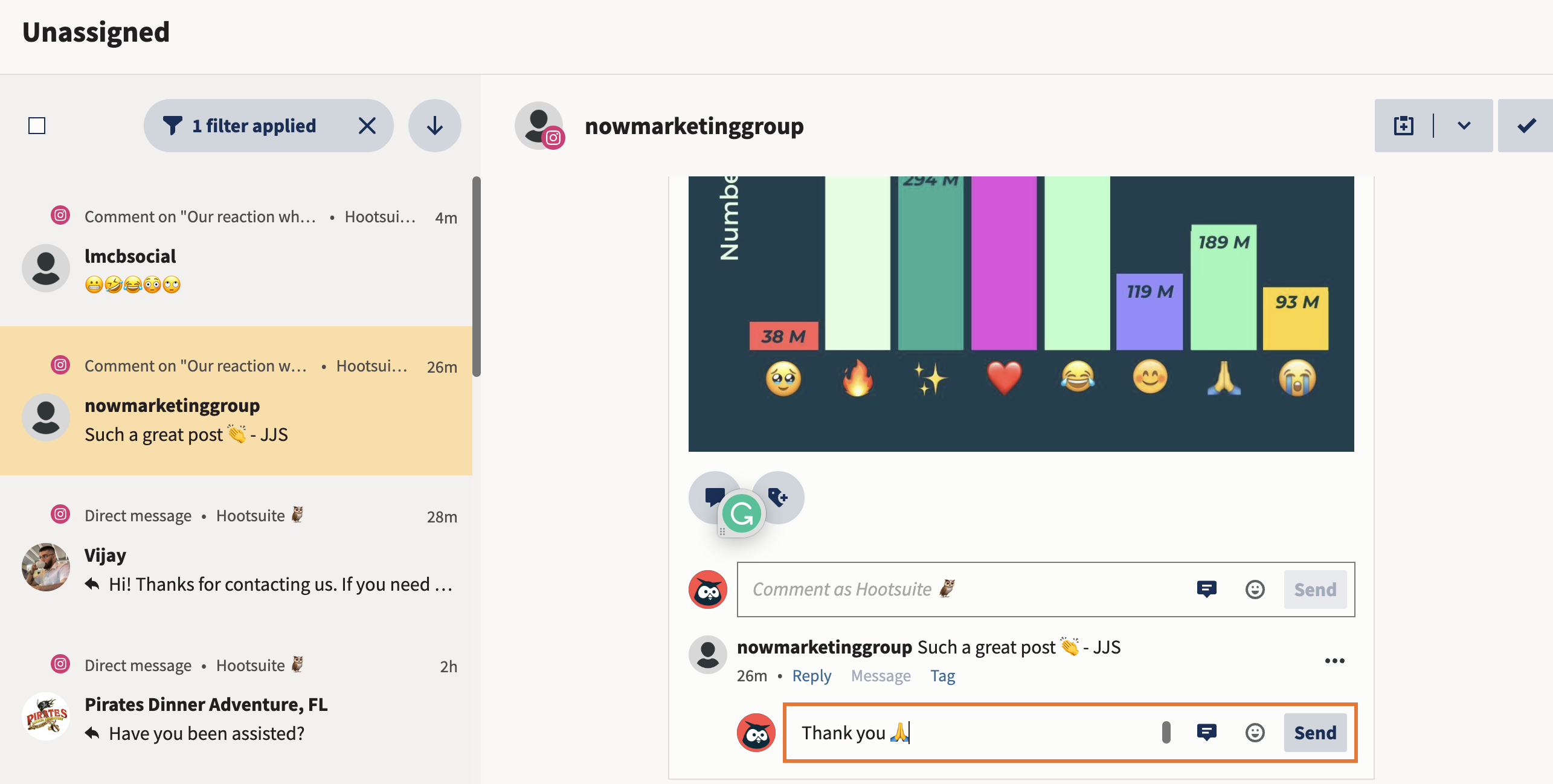
Conversely, standalone social CRM platforms specialize entirely in social media management, subsequently syncing captured data back to enterprise CRMs via API integrations. This model delivers robust social capabilities while preserving the integrity of central customer records.
A third, increasingly dominant hybrid model involves social operating systems—such as advanced platforms like Hootsuite Social OS—which sit fluidly between native social tools and enterprise databases. These systems handle listening, publishing, and engagement natively, layer advanced artificial intelligence on top of the data stream, and feed high-value intelligence directly into connected platforms like Salesforce and Microsoft Dynamics 365. This architectural convergence blurs the traditional line between a social tool and a CRM, providing enterprises with comprehensive operational flexibility.

The Transformative Role of Artificial Intelligence
The sheer velocity of social data has outpaced human capacity for manual sorting and triage. Consequently, artificial intelligence has become the core engine driving modern Social CRM systems. As noted by technology research firms like Gartner, contemporary CRM sales platforms are increasingly defined by their AI-driven capabilities.
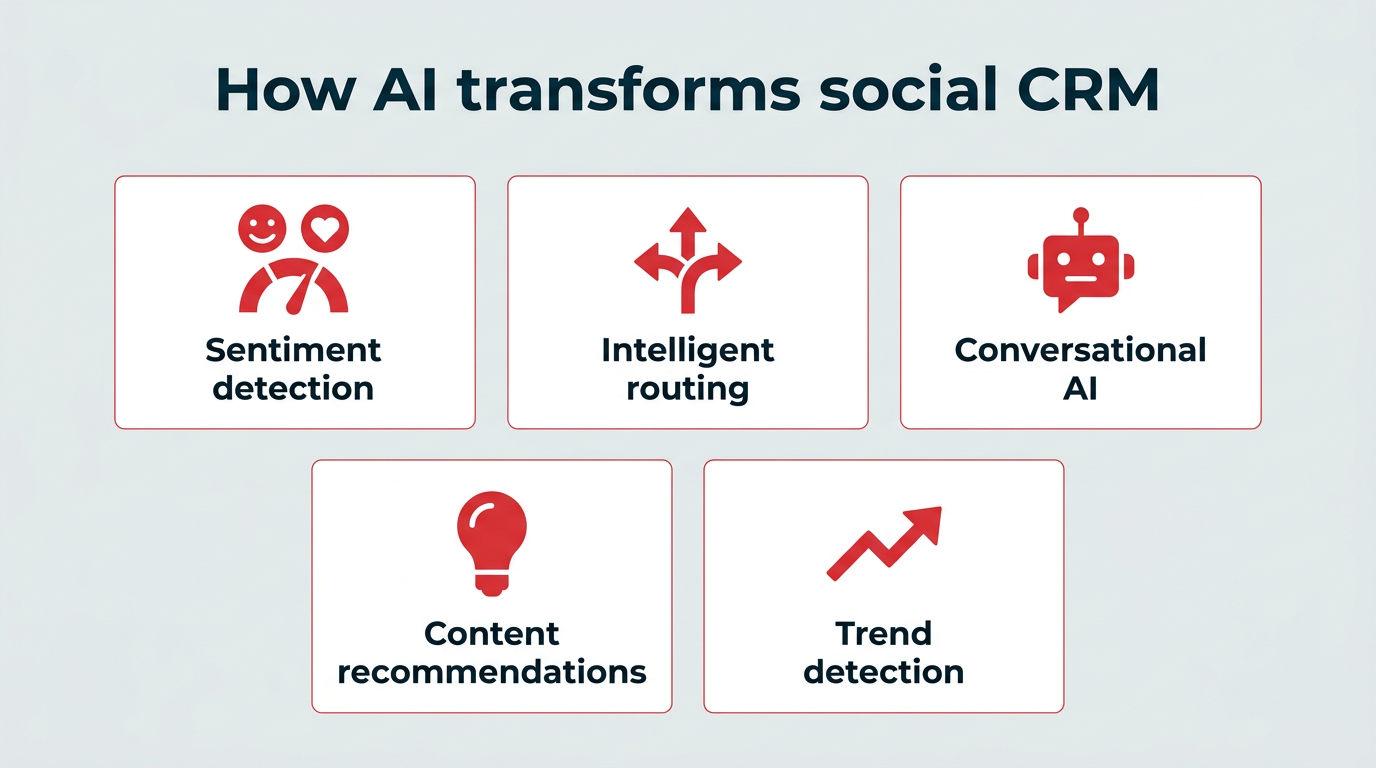
AI-powered Social CRM transforms workflows by automating critical preliminary tasks. Instead of customer service representatives opening an unorganized queue of hundreds of messages, AI models instantly triage incoming communications. Urgent complaints are elevated to the top of the queue, repeat questions are automatically answered or paired with suggested responses, and incoming inquiries are instantly matched with historical CRM profiles.
Advanced sentiment analysis goes a step further, detecting emotional tone, sarcasm, and intent across multiple languages and geographic regions. Platforms utilizing specialized intelligence layers—such as Lumen for multilingual listening and automated insight generation, combined with AI agent frameworks—enable businesses to spot emerging customer dissatisfaction trends before they escalate into global public relations issues. Rather than replacing human personnel, AI ensures that human agents possess complete, contextual intelligence before they begin typing a response.

Revis redefining Departmental Value: Service, Sales, and Marketing
The implementation of a robust Social CRM strategy generates measurable value across multiple organizational units, transforming how companies approach customer care, revenue generation, and brand messaging.

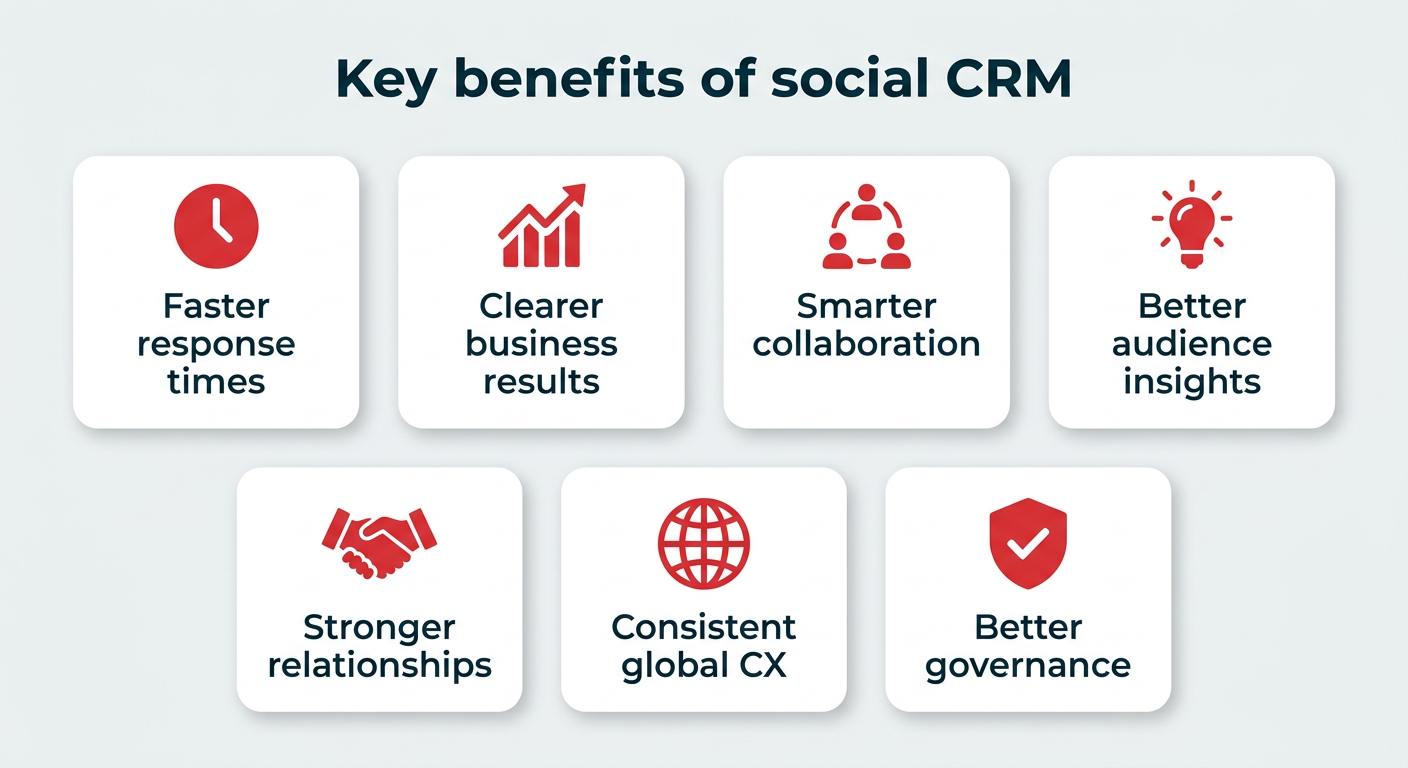
In customer service, Social CRM drastically reduces response times while elevating relationship quality. When support teams can view a customer’s entire history—including past purchases, previous support tickets, and recent social interactions—across a single interface, customers are never forced to repeat themselves. Intelligent routing mechanisms automatically direct specialized inquiries to the most qualified agent, minimizing resolution times and mitigating customer churn.
For sales teams, Social CRM converts passive social engagement into qualified pipeline opportunities. Social media is rarely the ideal environment for an aggressive, immediate sales pitch, but it serves as an invaluable listening post for buying intent. A prospect who repeatedly engages with product tutorials, saves comparative content, and inquires about pricing via direct message exhibits high purchase intent. By syncing these behavioral signals with core CRM databases, sales professionals can prioritize outreach based on demonstrated intent rather than cold, unsegmented contact lists.
In the marketing department, Social CRM data refines audience segmentation and content creation. Rather than relying on intuition or lagging monthly analytics reports, marketing teams utilize real-time social listening and CRM attribution data to understand what content resonates with high-value buyers. By linking social engagements directly to downstream business outcomes such as subscriptions and completed purchases, organizations can accurately calculate social return on investment (ROI) and optimize advertising budgets.
Strategic Implementation Framework
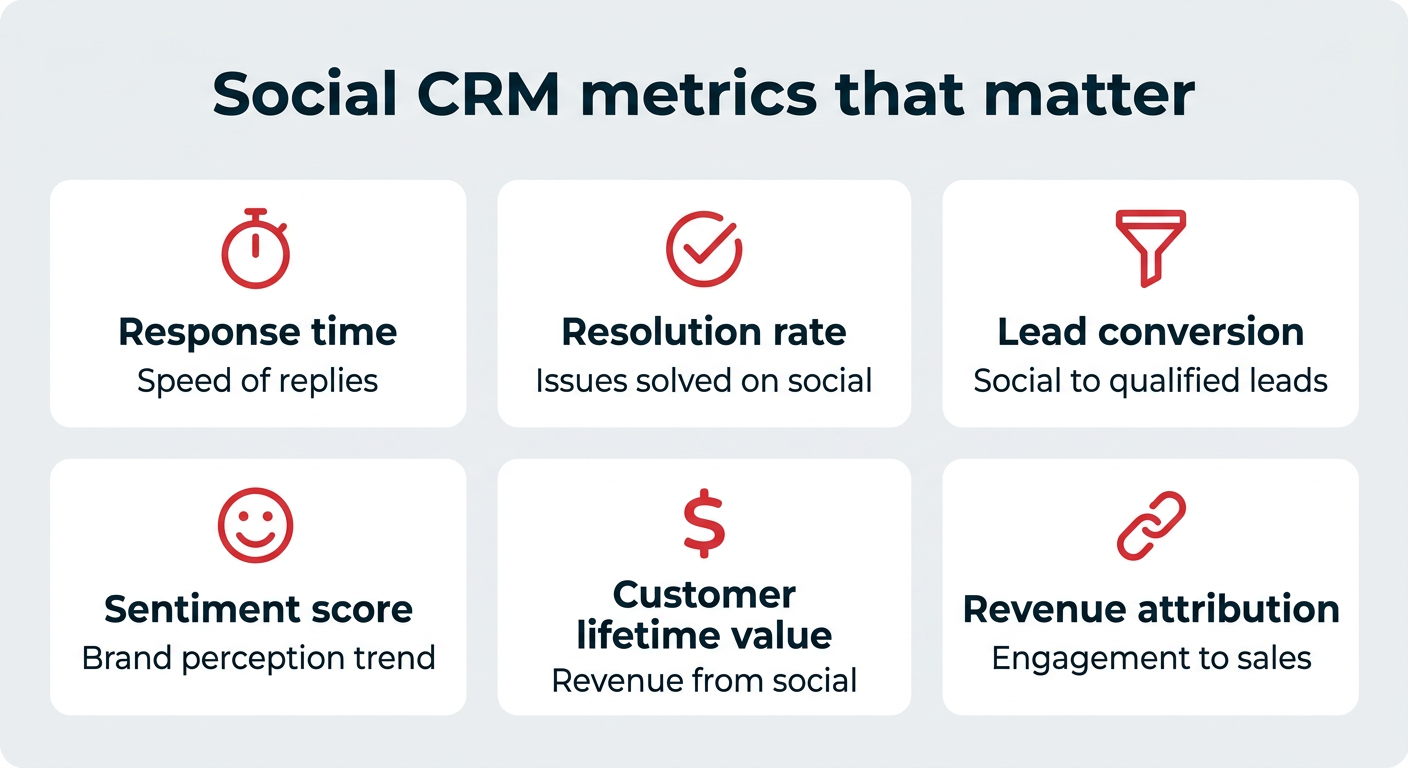
Deploying a successful Social CRM initiative requires a disciplined, step-by-step framework to ensure technological alignment and cross-departmental cooperation.
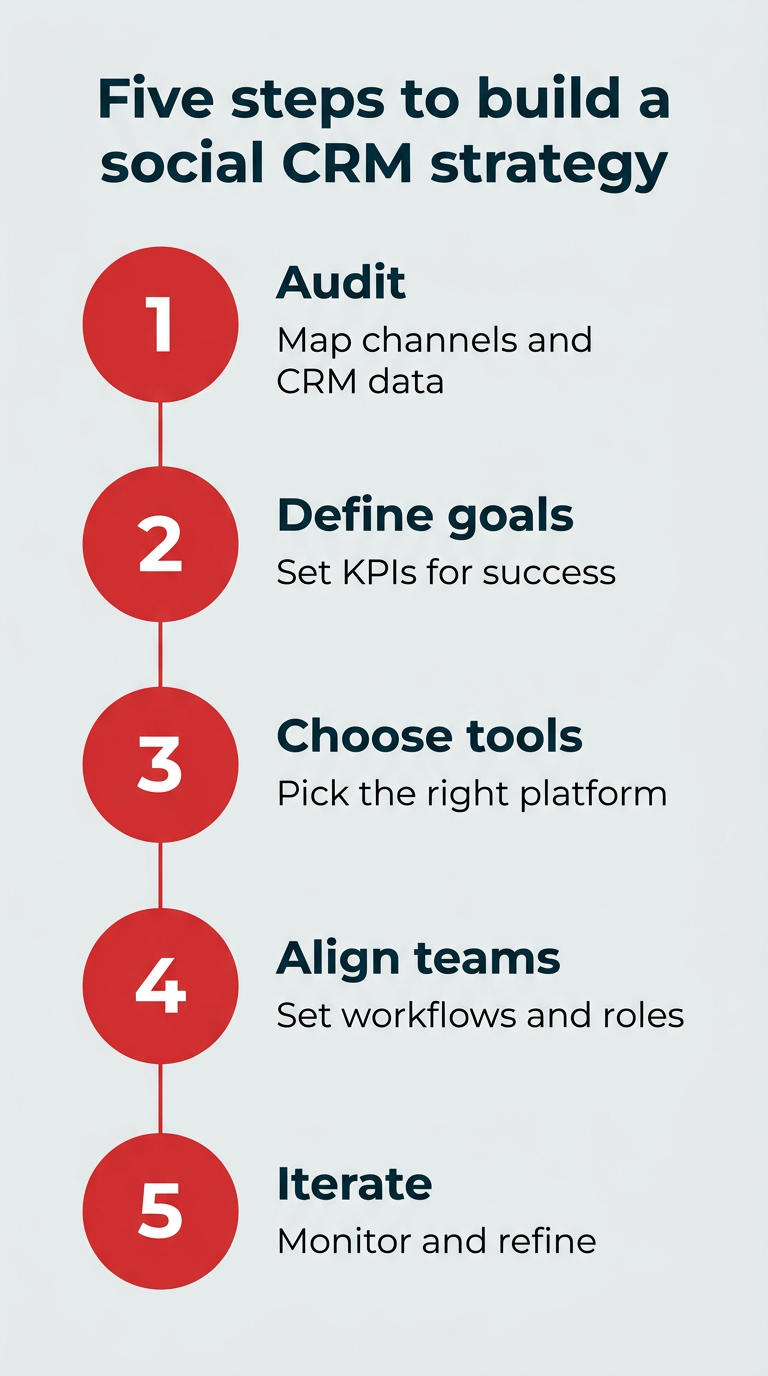
First, organizations must conduct a comprehensive audit of their existing social channels and current CRM data infrastructure to identify integration gaps. Second, leadership must define clear business goals and key performance indicators (KPIs), focusing on metrics such as average response time, customer resolution rate, lead conversion velocity, and sentiment score. Third, enterprises must select tools that integrate seamlessly with existing software stacks, ensuring automated data flow without manual transcription burdens. Fourth, cross-functional alignment is paramount; marketing, sales, and support teams must establish clear governance rules regarding ownership of specific social interaction workflows. Finally, organizations must maintain an iterative approach, continuously monitoring performance metrics and leveraging AI-driven insights to adapt strategies as digital consumer behavior evolves.
Conclusion
As social platforms solidify their role as the central nexus of consumer interaction, the traditional boundaries separating social media management from customer relationship management have effectively dissolved. Enterprises that successfully integrate social intelligence into core customer databases position themselves to navigate modern consumer expectations with agility and precision. By combining real-time conversation tracking, automated AI triage, and cross-departmental data sharing, organizations can bridge the perennial customer experience gap—turning transient digital mentions into lasting, profitable customer relationships.