The Evolution of Custom AI Personas
When Google first introduced Gems in 2024, the goal was to provide users with a mechanism to create personalized versions of Gemini. These "Gems" allowed users to define specific personas, set specialized instructions, and tailor the AI’s responses for recurring tasks such as coding assistance, creative writing, or data analysis. By allowing users to upload specific files for context and set default tools—such as image generation or the "Canvas" interface—Google enabled a level of customization that felt distinct and modular.
However, as the Gemini ecosystem has matured, user feedback indicated a desire for more fluid integration. The transition to “skills” suggests that Google is pivoting from a siloed approach—where a user must navigate to a specific “Gems manager” in a side panel—to an embedded approach where intelligence is accessible directly within the primary conversational thread.
Chronology of the Transition
The deprecation of Gems and the adoption of the skills architecture follows a strategic timeline that began earlier this year:
- 2024: Google launches Gems, allowing for the creation of custom-instructed Gemini versions.
- Early 2026: Google introduces Gemini Spark, a more advanced tier of the service, which serves as the testing ground for the new skills framework.
- September 2026: Preliminary indicators emerge regarding the sunsetting of Gems.
- November 17, 2026: The official date set for the automatic migration of all existing Gems into the new skills format.
As of the current announcement, the migration process is intended to be seamless. Google has indicated that users will be able to utilize their existing Gems until the migration date, at which point the system will automatically convert these legacy custom versions into the updated skills framework.
Understanding the Technical Shift
The core difference between the legacy Gems and the new skills lies in accessibility and interoperability. Under the previous system, users were required to visit a dedicated dashboard to select a Gem before starting a conversation. This created a friction point: if a user was in the middle of a complex workflow, they would have to exit their current chat, locate the Gem, and re-engage.
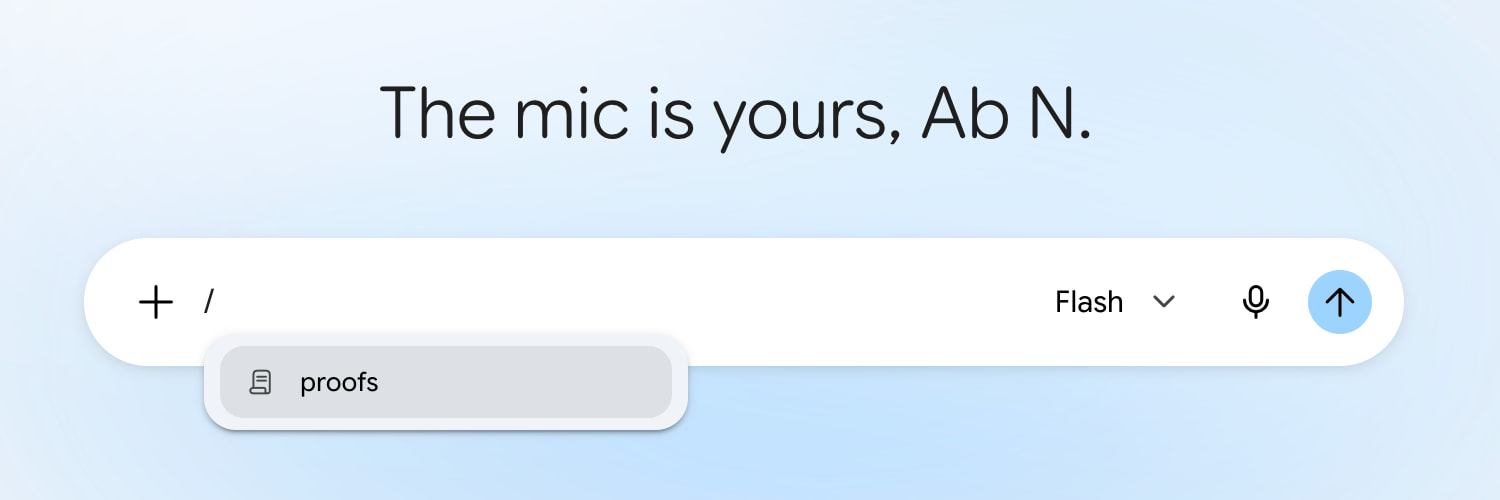
Skills are designed to be invoked on-the-fly. By utilizing a forward slash (/) command within the prompt box, a user can instantly pull up a list of available skills. This "command-line" style interface is a common design pattern in modern productivity software (such as Notion or Slack), and its implementation in Gemini suggests that Google is prioritizing speed and power-user workflows.
Furthermore, the new architecture allows for "multi-skill" invocation. Where Gems were largely isolated—meaning you could only use one at a time—the skills framework permits users to chain or combine multiple skills within a single prompt, significantly increasing the potential for complex, multi-stage task automation.
Supporting Data and Market Context
The shift to skills reflects a broader trend in the generative AI market: the move from "chatbots" to "agents." Data from industry analysts suggests that users are moving away from simple question-and-answer interactions toward multi-step workflows that require the AI to maintain context over longer periods while utilizing external tools.
According to internal usage metrics for large language model platforms, the "agentic" workflow—where an AI is given a specific set of tools and a narrow domain of expertise—is experiencing higher retention rates than general-purpose conversational interfaces. By consolidating custom instructions into a slash-command system, Google is aligning Gemini with these user preferences for high-efficiency, task-oriented AI.
Implications for Pro and Ultra Subscribers
The transition is currently being rolled out specifically for subscribers of the Google AI Pro and AI Ultra tiers. This segmentation highlights the importance of the skills feature as a premium value proposition. While the basic, free-tier Gemini remains a conversational tool, the "Spark" integration within the Pro/Ultra tiers is clearly intended to serve as a professional-grade workspace.
For professional users, the ability to trigger specific, pre-configured skills without leaving the chat window means less time managing the AI’s settings and more time executing tasks. For instance, a software engineer could trigger a "code-review" skill, a "documentation" skill, and a "debug" skill in sequence, all while staying within the same context window.
Potential Challenges and User Feedback
Despite the functional benefits, the transition is not without its hurdles. Early reports indicate that the documentation and "Create skills" buttons, which are intended to guide users through the new system, are not yet fully operational. This suggests that the rollout is still in its infancy and that the backend integration is currently in a "soft launch" phase.
There is also the matter of legacy data. Google has promised a "migration" of existing Gems, but power users who have built intricate, multi-file-backed Gems may be concerned about whether their specific configurations will translate perfectly into the new framework. Google’s support pages promise further clarity as the November 17 date approaches, but the lack of immediate documentation for power users could lead to temporary frustration among the user base.
Strategic Outlook
From an organizational standpoint, this move is a clear signal that Google is consolidating its AI development efforts under the Gemini brand identity. By phasing out distinct, secondary labels like "Gems" and unifying them under the "skills" umbrella, Google is simplifying its UI and reducing the cognitive load for new users.

This simplification is critical for mass adoption. As the generative AI market becomes increasingly crowded with competitors offering custom agents (such as OpenAI’s GPTs or Anthropic’s Projects), the winning platform will likely be the one that feels the most native to the user’s workflow. If Google can successfully integrate skills into the core Gemini experience, it will significantly narrow the gap between an AI chatbot and a fully realized operating system agent.
Looking Ahead: The Future of Gemini Spark
The introduction of skills via the Gemini Spark tab is likely just the beginning of a broader platform update. Industry observers expect that the skills system will eventually be extended to other Google Workspace products, such as Docs, Sheets, and Gmail. If a user can trigger a "skills" command within a Google Doc, the utility of the AI expands from a standalone chat window to a productivity layer that sits across the entire Google suite.
As November 17 approaches, the primary focus for Google will be ensuring that the automated migration is error-free. The company’s ability to transition its existing user base from the old Gem-based workflow to the new, more agile skill-based workflow without data loss will be a key indicator of the platform’s reliability.
For the time being, users are advised to review their existing Gems to ensure that all critical instructions are documented. While the transition promises a more robust and responsive AI experience, the shift in user interface habits will require a period of adjustment for even the most experienced AI users. By prioritizing accessibility and modularity, Google is betting that these "skills" will become the standard way we work with machine intelligence in the years to come.