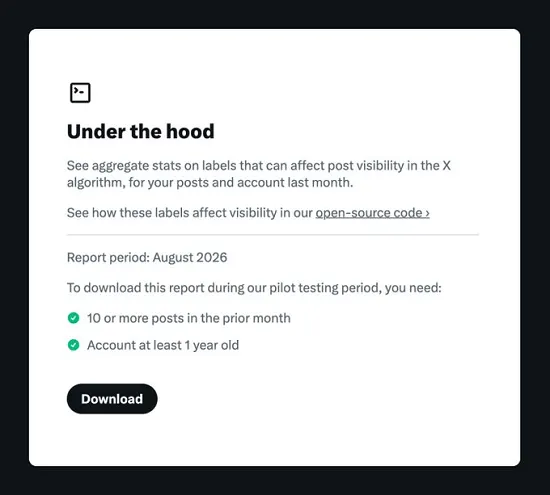
Social media platform X has announced a significant expansion of its user transparency framework, rolling out deeper analytical insights that will show account holders exactly how local laws and government-mandated content restrictions impact the reach of their posts. This update builds upon the initial rollout of the platform’s "Under the Hood" initiative introduced last month, marking a continued effort by the company to demystify its algorithmic processes, content moderation decisions, and visibility filters.
Under the newly expanded system, eligible users will now be able to view specific notifications if their profile or individual posts have had their visibility limited due to required compliance with regional legislation. This means creators, businesses, and everyday users can now see whether a particular post has been withheld in a specific country following a formal legal demand, complete with details regarding the jurisdiction involved. By pulling back the curtain on how geographic legal constraints influence platform distribution, X aims to provide unprecedented clarity around content suppression, addressing long-standing user grievances regarding ambiguous moderation practices and unverified shadowbans.
The Evolution of Transparency: From Source Code to Local Law Compliance
The journey toward enhanced transparency on X has evolved rapidly over the last several months. When billionaire entrepreneur Elon Musk acquired the platform formerly known as Twitter in late 2022, he repeatedly emphasized a commitment to open-source principles and algorithmic visibility. For years, users had complained about opaque moderation practices, often accusing the platform of arbitrarily suppressing content—a phenomenon commonly referred to as "shadowbanning."
In response to these persistent concerns, X launched the "Under the Hood" update. This initial feature release provided a streamlined reporting mechanism allowing users to check whether any penalties, labels, or restrictions had been applied to their accounts or specific pieces of content over the preceding month. It also offered glimpses into how the platform’s core source code functions, signaling a cultural shift toward open platform governance.
However, while the initial iteration of Under the Hood successfully diagnosed general account penalties, it left a significant blind spot regarding geo-targeted restrictions. Historically, when governments issued legal demands for content removal or geo-blocking, platforms would often comply to maintain local operations, but the affected creators were rarely given granular, easily accessible data explaining why their engagement metrics plummeted in specific regions. The latest update directly addresses this information gap by bridging local legal compliance with individual performance analytics.
How the New Insights Function and Who Qualifies
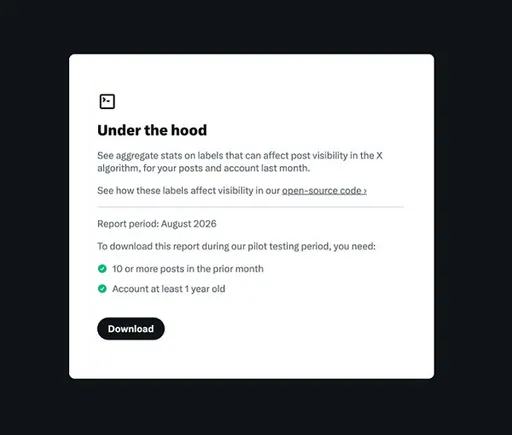
According to official communications from X, the expanded insights are designed to be both comprehensive and accessible, though they are subject to specific eligibility thresholds. To prevent data scraping and manage processing loads, the new transparency features will initially be available exclusively to accounts that meet two distinct criteria: the account must be at least one year old, and it must have published more than ten posts within the previous calendar month.
Eligible users navigating to their analytics or account health dashboards will now encounter detailed breakdowns of any government-required content filtering applied to their profiles. As X described in its release notes, the updated feature goes beyond merely displaying labels applied during the prior month. It actively clarifies whether an account or its corresponding posts experienced suppressed visibility driven strictly by the necessity to adhere to local laws. For instance, if a journalist, activist, or brand publishes content that triggers a legal takedown or withholding order in a specific nation, the author will receive a direct notification identifying both the impacted post and the exact country where the restriction was enforced.
This level of detail transforms how international communication is managed on the platform. Rather than guessing why a sudden drop in European or Asian engagement occurred, content creators can now cross-reference their performance analytics with tangible legal friction points, separating organic algorithmic decline from state-level regulatory interference.
Implications for Content Creators and Monetization Programs
The timing of this feature expansion is particularly crucial for the growing ecosystem of digital creators who rely on the platform for their livelihoods. In recent years, X has rolled out aggressive creator monetization programs, sharing ad revenue with high-performing accounts and introducing subscription models. When a creator’s reach is unexpectedly throttled, their revenue potential diminishes correspondingly.
For participants in these monetization initiatives, the ability to audit visibility restrictions is not merely a matter of curiosity—it is a vital financial tool. Creators who understand that a drop in reach is the result of a sovereign state’s legal demand rather than an internal algorithmic failure can adjust their strategies, manage sponsor expectations, or contest unwarranted legal overreach where appropriate. Furthermore, digital marketing professionals and corporate communications teams managing global brand accounts will find immense value in these insights. Navigating international compliance has always been a regulatory minefield; having a direct reporting mechanism that highlights where content is legally constrained allows compliance officers to align digital marketing campaigns with regional legal realities more effectively.
Addressing the Shadowban Debate and Rebuilding Trust
The broader digital landscape has long wrestled with the concept of the "shadowban"—a term describing the unannounced or hidden moderation of a user’s content so that it remains invisible to anyone other than the poster. While major social media companies, including Meta, TikTok, and legacy Twitter, historically denied the existence of intentional shadowbanning, users frequently pointed to unexplained drops in engagement as evidence of ideological censorship or algorithmic bias.
By introducing transparent labeling and localized restriction tracking, X is attempting to reframe the debate from speculative grievance to verifiable data. When users can see clear, itemized justifications for why content performance dipped—whether due to a community guidelines violation, a spam filter, or a government-mandated withholding order—the space for conspiracy theories narrows.
Industry analysts note that this strategy aligns with a broader industry trend toward regulatory compliance and user empowerment, particularly as governments worldwide introduce stricter social media governance laws, such as the European Union’s Digital Services Act (DSA). The DSA, for example, places heavy emphasis on platform transparency, requiring tech companies to provide clear explanations to users when their content is restricted or demonetized. By proactively exposing the mechanisms behind localized legal filtering, X is positioning itself ahead of regulatory curves, even as it navigates complex geopolitical tensions regarding free speech versus sovereign law.
Looking Ahead: The Future of Global Digital Discourse
As X continues to refine its Under the Hood framework, the platform faces the ongoing challenge of balancing its stated commitment to absolute free speech with the harsh realities of international jurisprudence. Different countries maintain drastically conflicting legal definitions concerning hate speech, defamation, national security, and political expression. Complying with these disparate laws often forces global platforms into difficult compromises.
By shining a light on these compromises through granular user insights, X is shifting the accountability outward. Instead of absorbing the blame for suppressed content silently, the platform is essentially telling its user base: "Here is the content, and here is the government that mandated its restriction."
Whether this radical transparency will satisfy creators, regulators, and international watchdogs remains to be seen. However, by giving users the tools to see behind the digital iron curtain of local compliance, X has taken a definitive step toward demystifying the modern mechanics of internet censorship. As the feature rolls out globally to eligible accounts over the coming weeks, digital rights advocates, researchers, and creators alike will be watching closely to see how these insights alter the dynamics of international online discourse.