Meta Platforms continues to accelerate its aggressive push into the artificial intelligence agent market with the official rollout of Muse for Mac alongside a suite of new third-party integration tools. These updates are designed to transform Meta’s AI assistant from a standard conversational chatbot into a proactive, system-level operator capable of managing complex workflows, organizing local files, and executing multi-step tasks across a user’s entire digital ecosystem. By bridging the gap between desktop operating systems and cloud-based large language models, Meta aims to capture a dominant share of the burgeoning personal productivity AI sector.
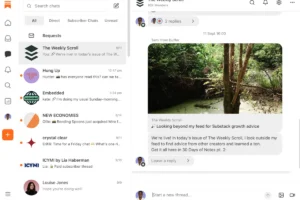
The debut of Muse for Mac late last week represents a pivotal strategic pivot for Meta, moving its AI technology beyond web browsers and mobile applications and directly into the heart of desktop computing environments. With explicit user authorization, the newly launched application links directly into the macOS architecture. This deep integration allows the personal agent to interact natively with local data structures, performing functions such as cleaning up cluttered downloads folders, tracking down misplaced documents buried deep within local directories, and generating concise summaries of extensive text notes and messages.
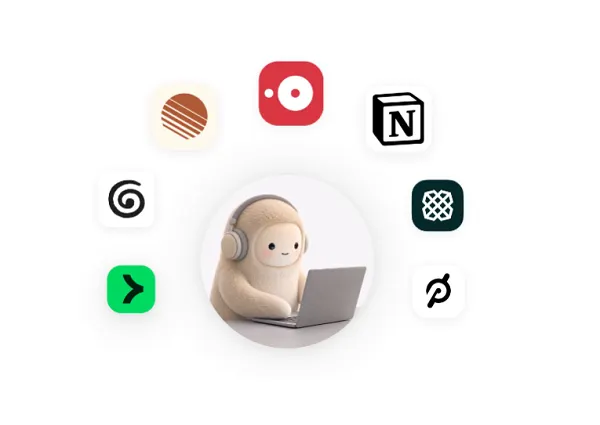
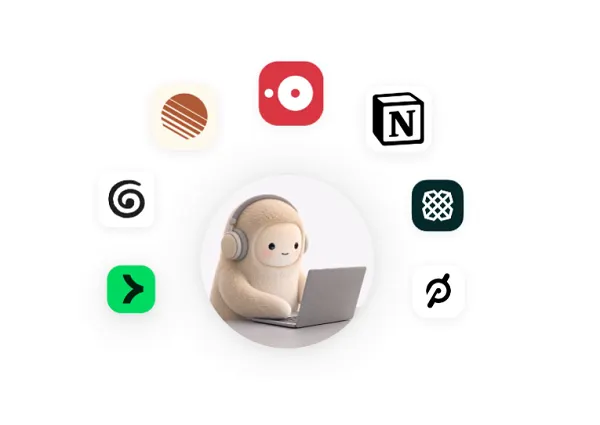
Simultaneously, the company introduced Muse Connectors, an extensible framework empowering software developers to integrate their proprietary applications directly into the Muse ecosystem. Through this developer portal, third-party tool creators can apply to bridge their platforms with Meta’s infrastructure. Approved applications will be featured in a dedicated Muse directory, enabling end-users to seamlessly link their external software accounts. This interconnected architecture drastically widens the operational scope of the AI agent, allowing it to orchestrate actions across disparate software platforms on behalf of the user.
Strategic Context and the Evolution of Agentic AI
To understand the weight of Meta’s latest announcements, one must examine the broader evolution of the artificial intelligence landscape over the past twenty-four months. The initial generative AI boom was characterized by conversational models capable of answering prompts, drafting emails, and generating basic code. However, the industry has rapidly shifted toward "agentic AI"—systems engineered not merely to converse, but to autonomously plan, execute, and monitor complex tasks across software boundaries.
Competitors across the technology sector have raced to capture this paradigm shift. Apple has integrated system-level intelligence via Apple Intelligence, Microsoft has heavily promoted its Copilot suite across Windows operating systems, and specialized startups like Anthropic and OpenAI have introduced computer-use capabilities that allow models to interact with graphical user interfaces much like a human operator. Meta’s introduction of Muse for Mac and Muse Connectors directly positions the social media giant in this high-stakes race for desktop and workflow dominance.
By moving beyond simple chat interfaces, Meta is betting that the true utility of artificial intelligence lies in automation and reduction of cognitive load. Rather than forcing users to manually open applications, search files, and transfer data between windows, Muse is engineered to act as a centralized digital concierge that unifies fragmented digital workspaces.
Data Privacy, User Permissions, and Security Concerns
Despite the alluring promise of streamlined productivity, the expansion of an AI agent’s access to local and cloud-based data introduces significant security and privacy challenges. Granting an artificial intelligence tool permission to scan local directories, read notes, and interact with messaging platforms creates a vast attack surface and raises legitimate concerns regarding surveillance and data governance.

Recent reports from early adopters indicate that Muse has, in certain instances, accessed direct messages on Mac systems and proactively offered suggested actions based on private conversations. This behavior has sparked considerable debate across technology forums and social media regarding the boundaries of digital privacy.
In response to these anxieties, Meta has issued clarifications emphasizing that Muse operates strictly on an explicit opt-in basis. The agent is technically constrained from accessing private data sources unless the user explicitly grants granular permissions. Nevertheless, industry analysts note that the burden of trust remains high. For many mainstream consumers, granting an AI algorithm unfettered access to personal messaging histories, professional documents, and system files feels intrusive, potentially stalling widespread adoption among privacy-conscious demographics.
The Challenge of Consumer Education and Value Proposition
Beyond security apprehensions, Meta faces a substantial marketing and educational hurdle. Unlike enterprise software where productivity gains translate directly to bottom-line financial metrics, consumer-facing AI agents must prove their indispensable value in daily life.
Many of the automated tasks currently championed by Meta—such as searching for relevant consumer products, planning holiday itineraries, or organizing personal media libraries—are activities that a significant portion of the population genuinely enjoys performing. Consequently, positioning an AI agent as a mandatory life assistant remains a difficult sell.
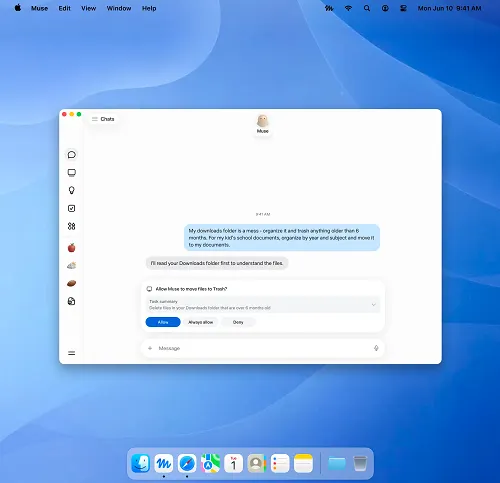
Furthermore, while Meta has published comprehensive documentation outlining the technical functions Muse can execute, the underlying mechanics often retain a degree of complexity that can alienate non-technical users. Bridging the gap between sophisticated agentic programming and intuitive, frictionless consumer utility will require continuous user interface refinement and clear, transparent demonstrations of real-world time savings.
Broader Industry Implications and Future Outlook
The launch of Muse for Mac and Muse Connectors signals a fundamental realignment in how software will be consumed and navigated in the coming decade. As AI agents evolve into primary interfaces between humans and digital systems, traditional application boundaries risk dissolving. Users may no longer interact directly with individual apps; instead, they will issue high-level directives to an overarching personal agent that interacts with backend APIs and application layers on their behalf.
For developers, platforms like Muse Connectors represent both an opportunity and a threat. While inclusion in the Muse directory could drive significant user acquisition and engagement, it also risks disintermediating the brand relationship. When an AI agent mediates the interaction between a user and a service, the underlying brand identity of the third-party application can easily become secondary to the intelligence orchestrating the experience.
As Meta continues to refine the capabilities of its Muse ecosystem, the company’s success will ultimately depend on its ability to strike a delicate balance between powerful autonomous functionality and uncompromising data security. If Meta can successfully convince consumers that Muse is both trustworthy and genuinely useful, it could cement its position as a dominant force in the post-app era of personal computing. Conversely, failure to navigate privacy pitfalls and consumer skepticism could relegate agentic AI to a niche tool favored primarily by developers and technology enthusiasts.