The modern food delivery ecosystem has fundamentally altered consumer dining habits, yet the financial architecture supporting these platforms remains opaque to the average user. While the convenience of on-demand meals is undeniable, the total cost of a single order—often obscured by fragmented pricing structures—frequently exceeds the sticker price by a significant margin. This phenomenon is driven by a combination of delivery fees, service charges, and systemic menu markups that effectively redistribute the cost of logistics from the platform to the consumer.
The Evolution of the Delivery Model
The rise of third-party delivery applications, including platforms like DoorDash, Uber Eats, and Grubhub, began in earnest around 2013-2015. Initially, these services operated on a thin-margin model, focusing on rapid user acquisition and market penetration. As these companies matured into publicly traded entities, the need for profitability led to a more sophisticated, albeit complex, pricing strategy.
Historically, the delivery fee was a straightforward transaction: a flat rate paid to the driver or the company for the transport of goods. Today, that cost has been unbundled and decentralized. The current model relies on "dynamic pricing," where delivery fees fluctuate based on real-time variables such as local demand, driver availability, and weather conditions. This algorithmic approach ensures that when a consumer is most likely to order—such as during inclement weather or peak dinner hours—the cost is at its highest.
Dissecting the Fee Structure
To understand why the final checkout total often surprises consumers, one must examine the three primary components that constitute the "hidden" cost of delivery.
First, there is the delivery fee itself, which is the most visible line item. However, it is rarely a fixed cost. Market data suggests that consumers pay a "convenience premium" that can be as much as 100% higher during peak periods compared to off-peak hours.

Second, the "menu markup" represents a significant, yet often overlooked, expense. Restaurants, facing commissions from delivery apps that can range from 15% to 30% of the total ticket price, often inflate the prices of individual items within the app to protect their margins. A burger that costs $12 at the physical restaurant may be listed at $15 or $16 on a third-party app. This creates a hidden tax on the consumer that does not appear on the receipt as a specific "fee" but is instead baked into the base cost of the food.
Third, the service and processing fees, coupled with the tip structure, complete the cycle. Default tipping suggestions, which are often calculated as a percentage of the inflated in-app price rather than the base menu price, lead to a compounding effect. Consumers are effectively paying a higher percentage of a higher base, which results in a significantly higher out-of-pocket expense than the same meal would cost at a dining table.

Economic Impact and Consumer Data
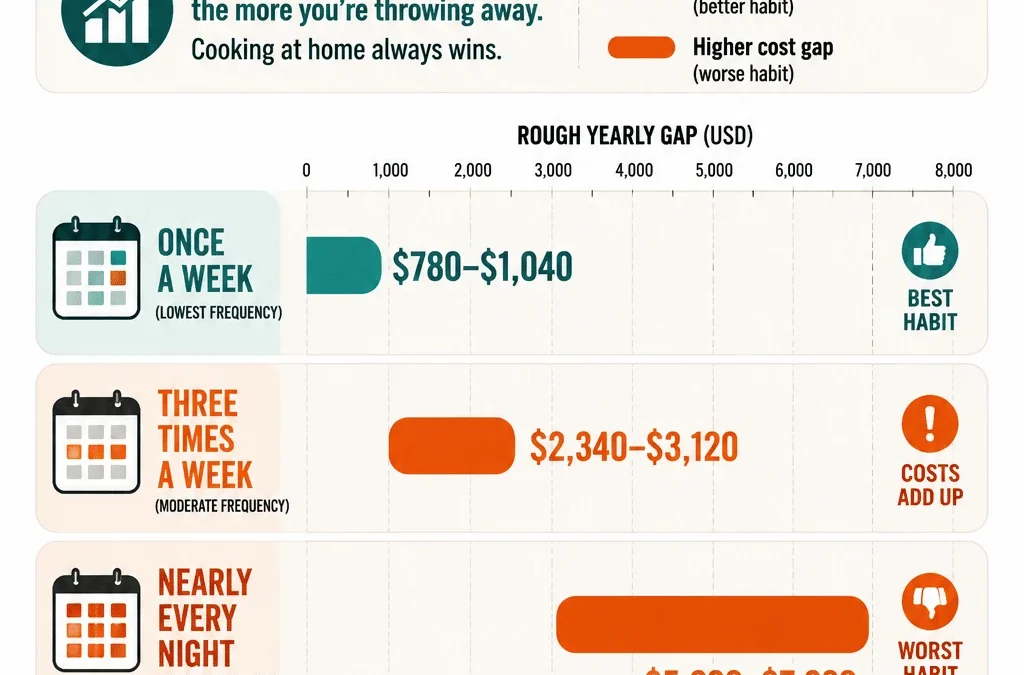
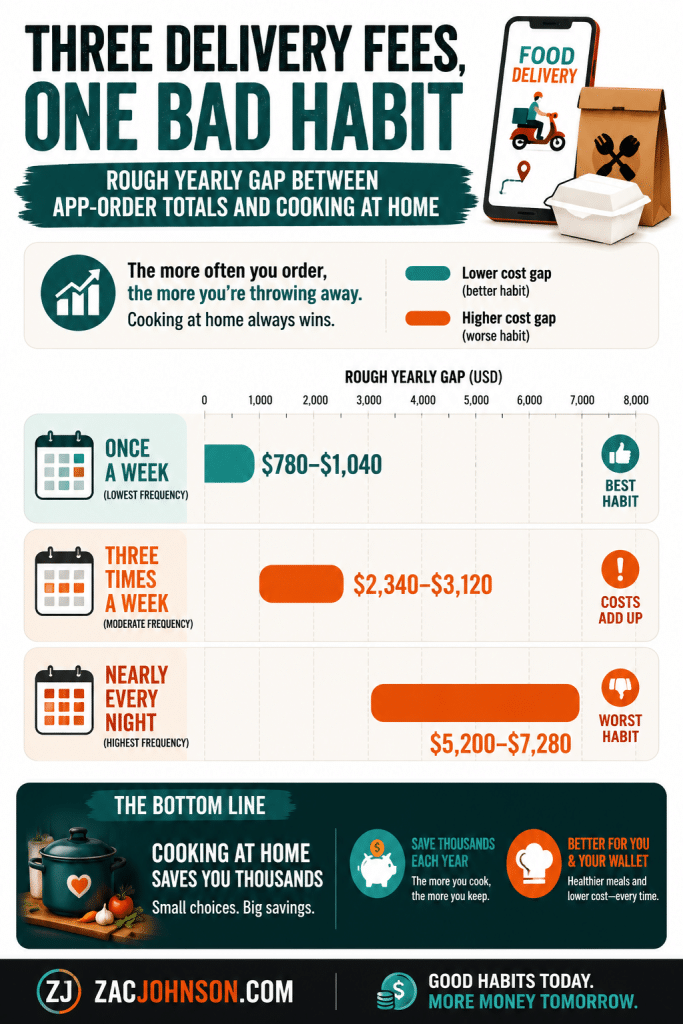
The financial implications of these habits are substantial when extrapolated over time. An analysis of average consumer spending indicates that a household ordering out three times per week, with an average base order of $35, can see that cost balloon to over $50 per order after all fees and tips are applied.
Over a 52-week period, this equates to an additional expenditure of approximately $2,300 to $3,100 per year—an amount that often goes unnoticed because the costs are decentralized. For many, this represents a "slow leak" in the household budget. While individual fees are often manageable—typically in the $2 to $8 range—the cumulative effect is a significant portion of a household’s discretionary income.

Industry Perspectives and Platform Strategy
Representatives from major delivery platforms often defend these pricing models as necessary to maintain a balanced marketplace. They argue that the fees cover the cost of maintaining the app’s software, the logistical support for the driver fleet, and the marketing required to keep the ecosystem functional.
Industry analysts suggest that the shift toward subscription-based services—such as DashPass or Uber One—is a direct response to consumer price sensitivity. By paying a monthly fee to waive delivery charges, users believe they are saving money. However, data shows that while these subscriptions may eliminate the delivery fee, they do not address the inherent menu markups or the inflated tip calculations. For the occasional user, the subscription fee often acts as an additional cost that requires a high frequency of orders to truly "break even."
Broader Implications for the Hospitality Industry
The rise of these apps has forced a permanent change in the relationship between restaurants and their customers. Some establishments have chosen to opt out of these platforms entirely to maintain price transparency and preserve the quality of the food, which can suffer during the transit process. Others have adopted a "dual-menu" strategy, where prices on third-party apps are higher than in-store prices to account for the platform’s commission.
This has led to a broader debate about the sustainability of the "gig economy" model. Critics argue that the current system relies on the financial opacity of the user experience to maintain growth. Conversely, proponents argue that the convenience provided is a valuable service that consumers are willing to pay for, provided they understand the trade-offs.

Practical Strategies for the Informed Consumer
For those seeking to optimize their spending without abandoning the convenience of delivery, financial experts recommend several strategies:
- Price Comparison: Regularly compare the prices listed on a delivery app with the prices on the restaurant’s official website or physical menu. Understanding the markup is the first step in making an informed purchase decision.
- Audit the Habit: Many consumers are unaware of their actual annual spending on delivery. Running a simple two-week audit—where the total of every order is tracked, including all fees and tips—often serves as a catalyst for behavioral change.
- Evaluate Subscription Value: Before committing to a monthly membership, calculate the average number of orders placed. If the total annual savings on delivery fees do not exceed the cost of the subscription, the service may be an unnecessary expense.
- Direct Ordering: Whenever possible, ordering directly from the restaurant’s own website or by phone often results in lower prices and ensures that a larger portion of the transaction goes directly to the restaurant and staff, rather than a third-party platform.
Conclusion
The convenience of having a meal delivered to one’s door is a luxury that has become a staple of modern life. However, the financial structure of these services is intentionally designed to minimize the user’s focus on the total cost. By recognizing the existence of hidden markups, understanding the impact of service fees, and questioning the value of subscription models, consumers can reclaim control over their discretionary spending.
Ultimately, the goal is not to eliminate convenience but to ensure that it is a conscious, intentional choice rather than a series of small, unnoticed financial leaks. As the digital economy continues to evolve, the ability to discern the true cost of service will remain a vital skill for personal financial management. The data suggests that while the individual fees are small, the aggregate effect is a significant line item that warrants closer scrutiny in every household budget.