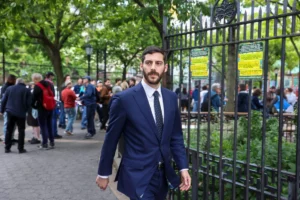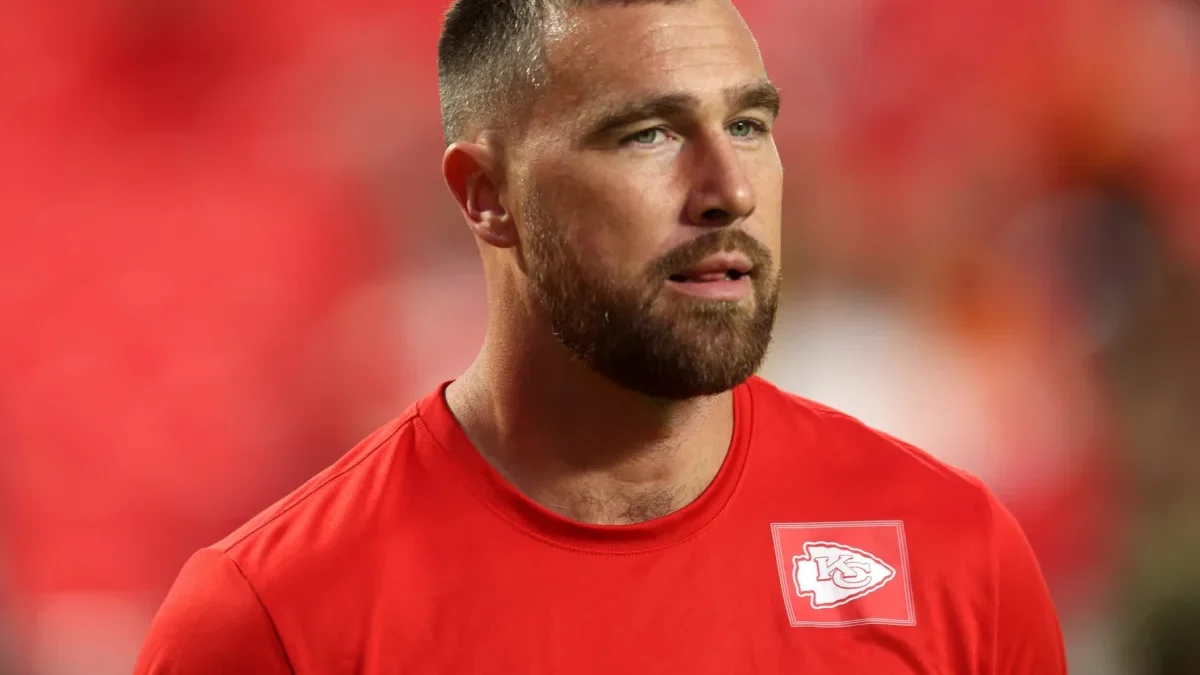
A federal judge in the Eastern District of Missouri has sentenced 38-year-old Siddharth Jawahar to 11 years in federal prison following his role in orchestrating a sophisticated, decade-long investment fraud scheme. The sentencing concludes a legal saga that exposed how Jawahar, the head of Swiftarc Capital LLC, defrauded investors of more than $35 million, utilizing a blend of classic Ponzi tactics and modern-day deceit to fund a lifestyle of extreme luxury. Among the victims named during the judicial proceedings was Kansas City Chiefs tight end Travis Kelce, whose involvement adds a layer of high-profile notoriety to an already egregious case of financial malfeasance.
The Anatomy of the Deception
Jawahar’s operation, Swiftarc Capital, was registered in Texas in 2010 and initially presented itself as a legitimate investment vehicle. However, court documents reveal that the firm was a facade designed to siphon capital for personal enrichment. Jawahar promised potential clients diversified investment portfolios across various sectors. In reality, investigators discovered that the vast majority of the funds—at one point nearly 99%—were funneled into a single, high-risk overseas asset: Philip Morris Pakistan.
When the investment in Philip Morris Pakistan plummeted, the scheme began to unravel. Rather than disclose the catastrophic losses to his clients, Jawahar doubled down on the deception. He fabricated performance reports, assuring investors that their portfolios were generating robust returns. When investors eventually attempted to liquidate their holdings, Jawahar used capital from new recruits to pay off previous clients, a textbook execution of a Ponzi scheme. Out of the approximately $35.6 million collected from victims, investigators found that only about $10 million was ever directed toward actual investments, with the remainder either lost in trading or misappropriated for Jawahar’s personal expenses.
A Pattern of Extravagance and Admission
The sentencing memorandum filed by federal prosecutors provided a stark breakdown of how the stolen funds were utilized. Jawahar lived a life of opulence, far removed from the financial reality he presented to his clients. The stolen capital bankrolled private jet travel, stays at five-star hotels, and exclusive memberships to elite social clubs including Zero Bond, Soho House, and Casa Cipriani in New York City. Additionally, the funds covered the costs of high-end real estate, including a $164,000 apartment in New York and a $363,280 residence in Austin, Texas.
When confronted by the FBI during the investigation, Jawahar offered a candid, albeit cynical, explanation for his conduct. He admitted to agents that his primary motivation was "greed," noting that "any other adjective would be incorrect." This confession, however, was later undermined by Jawahar himself in his own sentencing paperwork, where he attempted to walk back the statement, claiming he did not commit the crimes out of greed. This inconsistency served as a focal point for the prosecution, who highlighted his inability to take genuine responsibility for his actions.
Chronology of the Case and Obstruction
The timeline of the investigation and the subsequent legal fallout highlights a desperate attempt by Jawahar to evade justice.
- 2010: Siddharth Jawahar registers Swiftarc Capital LLC in Texas, initiating the decade-long fraudulent enterprise.
- May 2018: Jawahar sends fraudulent correspondence to investors, claiming a $525,000 investment in a specific company; in reality, no such transaction occurred.
- December 2023: A federal grand jury indicts Jawahar on three counts of wire fraud and one count of investment adviser fraud.
- January 2024: Jawahar enters a plea of guilty to the three counts of wire fraud, while prosecutors drop the investment adviser fraud charge as part of a negotiated plea agreement.
- September 2024: During his sentencing hearing in St. Louis, the court identifies Travis Kelce as one of the victims affected by the scheme.
- September 2024: Judge imposes an 11-year prison sentence.
Throughout the legal proceedings, Jawahar’s efforts to obstruct justice were well-documented. Prosecutors noted a recorded jailhouse call in which Jawahar pressured a victim who was scheduled to speak with federal investigators, urging the individual to "be dedicated," a phrase interpreted by the victim as a directive to withhold or obscure information. Furthermore, Jawahar allegedly instructed his sister to remotely wipe his mobile device and provided false statements to pretrial officers regarding his financial assets and immigration status.
The Role of Political Consulting and Legal Maneuvers
One of the more unusual aspects of the defense strategy involved Jawahar’s hiring of Axiom Strategies, a prominent political consulting firm. Documents filed with the court revealed a contract between Jawahar and the firm, led by Jeff Roe. Recorded jail calls captured discussions about "geofencing" the judge’s residence with targeted digital ads and soliciting sympathetic media coverage to influence the sentencing outcome. When Roe suggested that such a campaign might appear "overly calculated," Jawahar reportedly replied, "which of course it is," underscoring his awareness of the impropriety of the strategy.
In a final attempt to manipulate his circumstances while in custody, Jawahar requested permission to marry his fiancée, Caroline Tredway. Federal prosecutors vehemently opposed this request, arguing it was a "pretextual attempt" to secure immigration benefits. They pointed to recorded audio where Tredway and Jawahar discussed the possibility of his deportation, with Jawahar remarking, "if you don’t marry me, I guess that might happen."
Broader Implications and Restitution
The total restitution owed to the victims stands at approximately $31.35 million. Despite the magnitude of the loss, the outlook for recovery remains bleak. Prosecutors have cited recorded conversations where Jawahar expressed a callous disregard for the financial ruin of his victims, stating that "restitution never gets paid" and suggesting his belief that his debt would eventually be commuted.
The Jawahar case serves as a poignant reminder of the enduring prevalence of investment fraud, even in an era of heightened digital financial transparency. The inclusion of high-profile figures like Travis Kelce, who joins a list of celebrities—including Kevin Bacon, who famously fell victim to Bernie Madoff—underscores that no investor, regardless of status or professional background, is immune to the lure of sophisticated financial predators.
For the regulatory and legal community, the case highlights the necessity of rigorous due diligence and the limitations of existing protections when faced with a determined fraudster. As the legal system continues to grapple with the aftermath of the Swiftarc Capital collapse, the focus now shifts to the daunting task of asset recovery. For the victims, the 11-year sentence provides a measure of judicial closure, but the financial void left by Jawahar’s greed remains a significant hurdle. The case stands as a cautionary tale for the investment community, reinforcing the importance of verifying the legitimacy of investment firms and the danger of "guaranteed" returns that are too good to be true.