Managing affiliate marketing programs within a WordPress ecosystem has evolved from a simple manual task into a complex administrative requirement as digital content strategies become more sophisticated. For bloggers and e-commerce site owners, the transition from managing a single affiliate link to overseeing hundreds of tracking URLs necessitates specialized software to ensure revenue integrity, link health, and data accuracy.

The Evolution of Affiliate Link Management
In the early stages of blogging, affiliate marketing typically involved manual insertion of static tracking links into posts. However, as industry data suggests that affiliate marketing accounts for approximately 15% of total digital media revenue, the need for automated management systems has reached a critical threshold. The primary challenge for site owners is "link decay," where affiliate programs change their URL structures or discontinue products, leading to broken links that result in lost commissions and poor user experience.
Historical data from digital marketing research indicates that unmanaged affiliate links suffer from a 10% to 15% click-through failure rate annually due to outdated destination URLs. This reality has driven the adoption of centralized dashboard plugins that allow for global updates, where changing a single destination URL in a central repository automatically propagates the change across every post on a website.

Categorizing Affiliate Solutions
Professional affiliate tools in the WordPress marketplace generally bifurcate into two distinct categories: Link Management Tools and Affiliate Program Management (APM) systems.
Link Management tools, such as PrettyLinks, ThirstyAffiliates, and Lasso, are designed for the publisher—the content creator who earns a commission by promoting third-party products. These tools focus on link cloaking (turning long, ugly URLs into branded, user-friendly links), click tracking, and performance analytics.

Conversely, APM systems like AffiliateWP and Easy Affiliate are designed for the merchant—the site owner who creates products and recruits a network of third-party partners to drive sales. These platforms handle the backend complexities of commission calculation, fraud detection, and automated payouts, which were traditionally managed through external SaaS platforms.
Comparative Analysis of Leading Plugins
The selection of a plugin depends largely on the business model of the WordPress site. For those focusing on content monetization, the following tools represent the current industry standards:

- PrettyLinks: Widely regarded as the industry standard for link cloaking and redirection, its value proposition lies in its A/B testing capabilities. By comparing the conversion rates of two different landing pages for the same product, publishers can optimize their revenue per visitor.
- ThirstyAffiliates: Noted for its robust free version, this plugin excels in administrative organization, allowing users to categorize thousands of links by niche or product type, which is essential for sites with extensive archives.
- Lasso: This tool represents the modern shift toward visual-first marketing. Its ability to generate product display boxes and comparison tables directly from Amazon’s API is backed by data showing that visual call-to-action blocks consistently outperform text-based links by an average of 20% to 30% in conversion tests.
- MonsterInsights: While not an affiliate manager per se, its integration with Google Analytics provides the crucial "source of truth." By tracking outbound clicks and mapping them back to specific posts, it allows for a data-driven approach to content creation.
The Technical and Legal Landscape
The shift toward privacy-centric browsing and the deprecation of third-party cookies have fundamentally changed how affiliate conversions are tracked. Modern plugins have responded by implementing first-party cookie tracking and cookieless attribution methods. AffiliateWP, for example, has moved toward these server-side tracking methods to ensure that commissions are accurately attributed even as browsers like Safari and Chrome restrict traditional cross-site tracking.
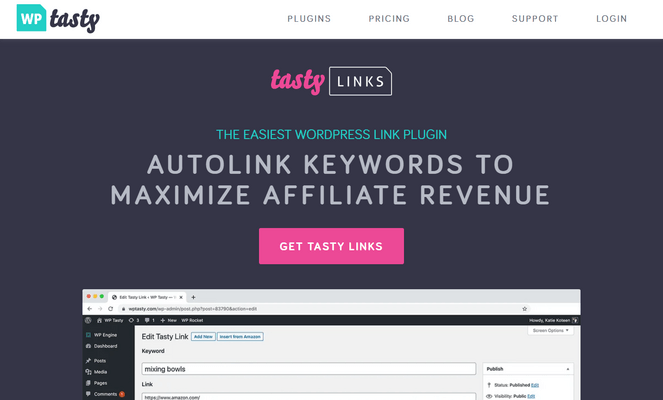
Furthermore, compliance is a significant driver for the adoption of these plugins. The Federal Trade Commission (FTC) requires clear disclosure of affiliate relationships. Many of the tools listed, such as WP Tasty Links, include automated disclosure features that ensure every affiliate link is tagged with "rel=sponsored" or "rel=nofollow" attributes, protecting site owners from potential search engine penalties and regulatory scrutiny.

Economic Implications for Bloggers
The financial impact of using professional-grade affiliate plugins is measurable in both time and revenue. A site owner managing 500 affiliate links manually would require approximately 10 to 15 hours per month to ensure all links remain active and compliant. Automated management reduces this overhead to less than one hour per month.
Beyond administrative efficiency, the capability to perform A/B testing and optimize placement through tools like OptinMonster—which utilizes exit-intent technology to convert abandoning visitors into affiliate leads—directly influences the bottom line. Recent case studies suggest that bloggers implementing strategic exit-intent pop-ups specifically targeted at product review pages have seen a 15% to 30% increase in affiliate conversion rates.
Strategic Selection for Growth
For a new entrant into the affiliate marketing space, the priority should be the installation of a foundational link manager. ThirstyAffiliates provides a viable entry point with its free version, offering the necessary features for cloaking and basic tracking. As a site grows and the content library expands, moving to a premium tier like PrettyLinks or Lasso is often a strategic necessity to access advanced features like auto-linking, which scans historical content and retroactively inserts relevant affiliate links into older, high-traffic posts.
For business owners launching their own product lines, the decision between AffiliateWP and Easy Affiliate often comes down to scale. AffiliateWP offers extensive integration with WooCommerce and MemberPress, making it the preferred choice for enterprise-level affiliate programs that require complex commission tiers and fraud detection. Easy Affiliate, by contrast, focuses on a streamlined user interface, lowering the barrier to entry for creators who may lack deep technical expertise but wish to establish a professional referral system.

Conclusion
The landscape of WordPress affiliate plugins has matured significantly, moving away from simple redirect tools toward comprehensive management suites. Whether the goal is to optimize a niche blog’s passive income or to scale a product-based business through a decentralized referral network, the current ecosystem offers high-performance tools that replace manual labor with algorithmic efficiency. As privacy regulations continue to evolve and user expectations for visual, high-speed content remain high, the integration of these specialized tools is no longer optional for those seeking to maximize their digital revenue potential.