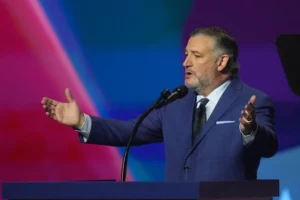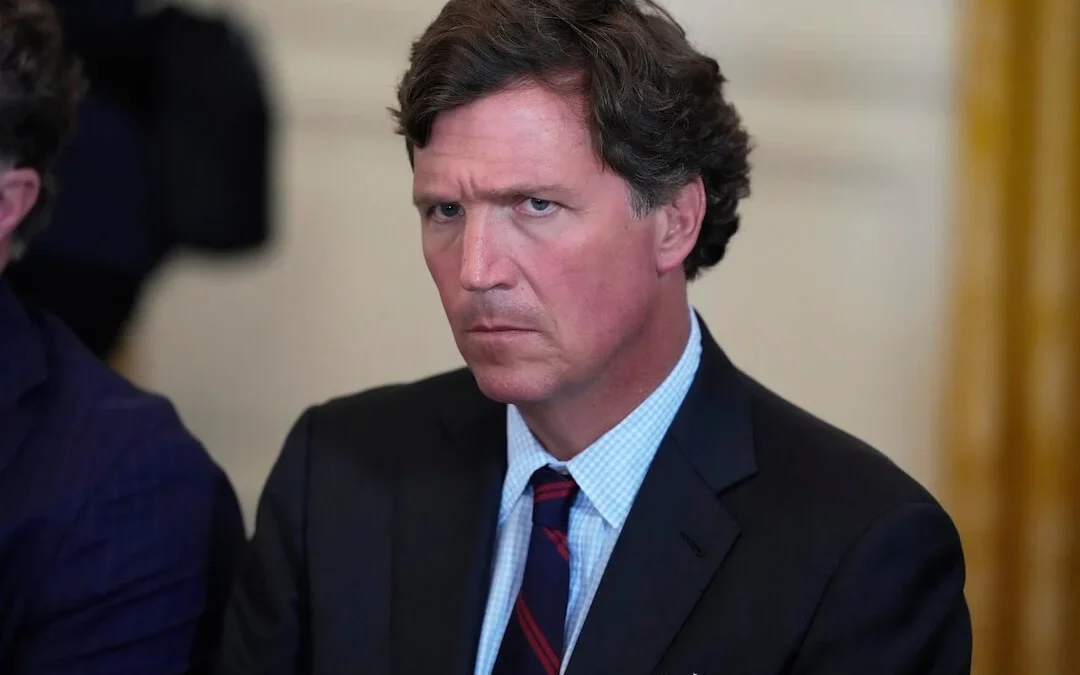
In 2008, during a political rally for former U.S. Representative Ron Paul, a young Tucker Carlson stood on stage as the event’s master of ceremonies. The atmosphere was charged with anti-establishment fervor, but when former Minnesota Governor Jesse Ventura took the microphone and began questioning the official U.S. government account of the September 11, 2001, terrorist attacks, the scene turned sour. Ventura’s assertion that the lack of an indictment against Osama bin Laden at that time signaled a deeper government deception proved too much for Carlson, who promptly walked off the stage.
Years later, in 2012, Carlson remained steadfast in his dismissal of such narratives. During a public appearance, he characterized the "9/11 truth" movement as fundamentally irrational, stating, "It wasn’t controversial, it was stupid. And if there’s any evidence that the government was behind 9/11, look, you know I’d believe anything, if there’s evidence. But there isn’t any. I hate that 9/11 crap."
Today, the landscape of Carlson’s rhetoric has undergone a radical transformation. Having transitioned from mainstream cable news at Fox to an independent, subscription-based digital empire, Carlson has become one of the most prominent amplifiers of the very theories he once disparaged. With a YouTube subscriber base exceeding 5.7 million as of September 2025, Carlson is no longer merely reporting on the fringes of political discourse; he is actively curating and legitimizing them for a massive, global audience.
A Chronology of Skepticism and Rhetorical Shifts
The evolution of Carlson’s position on 9/11 is not merely a change in personal opinion but a strategic pivot in content creation that aligns with the modern digital media economy.
- 2008: Carlson walks out of a Ron Paul rally in protest of Jesse Ventura’s 9/11 conspiracy comments.
- 2012: Carlson explicitly rejects 9/11 conspiracy theories, labeling figures like Alex Jones as individuals who "freak him out."
- 2023–2024: Following his departure from Fox News, Carlson begins to weave skepticism regarding federal transparency into his monologues, focusing on the declassification of government files.
- August 2025: Amidst political speculation, Carlson releases a 10-point platform, explicitly calling for the federal government to be "honest" and to declassify all remaining 9/11 records.
- September 2025: The launch of the five-part documentary series, "The 9/11 Files," marks the definitive solidification of his pivot. The series garners over 16.5 million views collectively.
The Mechanics of Modern Conspiracy Advocacy
Carlson’s current approach relies on a sophisticated mix of pseudo-documentary production and selective skepticism. In his series "The 9/11 Files," he systematically targets the foundational pillars of the 9/11 Commission Report. By framing the commission’s work as a "cover-up from beginning to end," he taps into a well-documented vein of American distrust in government institutions.
Experts in political science and conspiracy studies note that Carlson’s methodology involves a "heavy reliance on purported experts"—a strategy that provides a veneer of intellectual rigor to claims that lack scientific consensus. By platforming individuals who hold fringe views and presenting them alongside the widows of victims or former intelligence officers who feel marginalized, Carlson creates an emotional and anecdotal structure that overrides established evidence.
A central focus of his skepticism remains the collapse of World Trade Center 7. Despite the thorough investigation by the National Institute of Standards and Technology (NIST), which concluded that structural failure caused by uncontrolled fires led to the collapse, Carlson continues to argue that the event remains "totally confusing 25 years later." To bolster this, he cites the 2020 study led by J. Leroy Hulsey, which was funded by Architects & Engineers for 9/11 Truth—a group dedicated to challenging the official narrative.
Data, Demographics, and the Digital Pivot
The shift in Carlson’s focus is not occurring in a vacuum. As media consumption habits have fragmented, the "conspiracy-minded" audience has become a lucrative and loyal market. Joseph Uscinski, a University of Miami professor and author of several books on conspiracy theories, argues that Carlson’s move is a rational response to his new environment. "He is now out of mainstream and cable news, so he needs to appeal to audiences that aren’t going to those news sources," Uscinski notes. "That inevitably leaves him with a more conspiracy-minded audience, and he needs to appeal to them in a way that opens up different avenues for revenue."
The data suggests this audience is growing. According to an August 2026 survey of 1,000 U.S. adults, 25% of respondents agreed with the statement that the "U.S. government helped plan the attacks of 9/11." This represents a notable increase in institutional distrust compared to earlier decades. When a figure with the reach of Carlson validates these sentiments, the theories shift from the fringes of internet message boards into the mainstream political fabric.
The Role of Foreign Policy Skepticism
A recurring theme in Carlson’s recent investigations is the role of foreign entities, particularly Israel, in the lead-up to the attacks. By amplifying long-debunked rumors—such as the "dancing Israelis" narrative—Carlson connects 9/11 skepticism to broader anti-interventionist and populist sentiments.
His interviews, such as the July 2025 discussion with Pink Floyd co-founder Roger Waters, often conflate historical inquiry with conspiratorial tropes. Critics point out that Carlson frequently mixes factual incidents—such as the detention and subsequent release of five Israeli nationals on the day of the attacks—with unverified claims of "foreknowledge" or systematic espionage. Despite the FBI and other government agencies having investigated and dismissed these claims repeatedly over the past two decades, their re-emergence on a platform with millions of subscribers forces a cycle of misinformation that is difficult to correct.
The Broader Implications for American Democracy
The normalization of these narratives carries significant consequences. Kathryn Olmsted, a distinguished professor at the University of California, Davis, and author of Real Enemies: Conspiracy Theories and American Democracy, emphasizes the corrosive nature of this trend. "When someone as prominent as Tucker Carlson amplifies these theories, they gain more credibility. They become increasingly normalized," she states.
The implications extend beyond the events of 2001. By fostering an environment where the official accounts of major historical events are treated as inherently suspect, public discourse becomes less about the evaluation of evidence and more about the affirmation of identity and distrust. When the "official" version is framed as a "cover-up," the potential for civil debate on policy and governance is severely curtailed.
As Carlson continues to leverage his platform to promote these narratives, the distance between historical reality and popular belief continues to widen. While his team has declined to comment on these specific allegations, the output of his channel suggests that the "9/11 Files" are not the conclusion of his interest in the subject, but rather a central pillar of his ongoing editorial strategy. For those studying the intersection of media, populism, and historical memory, the rise of "truther" advocacy in mainstream digital outlets represents a new and challenging frontier in the American information ecosystem.