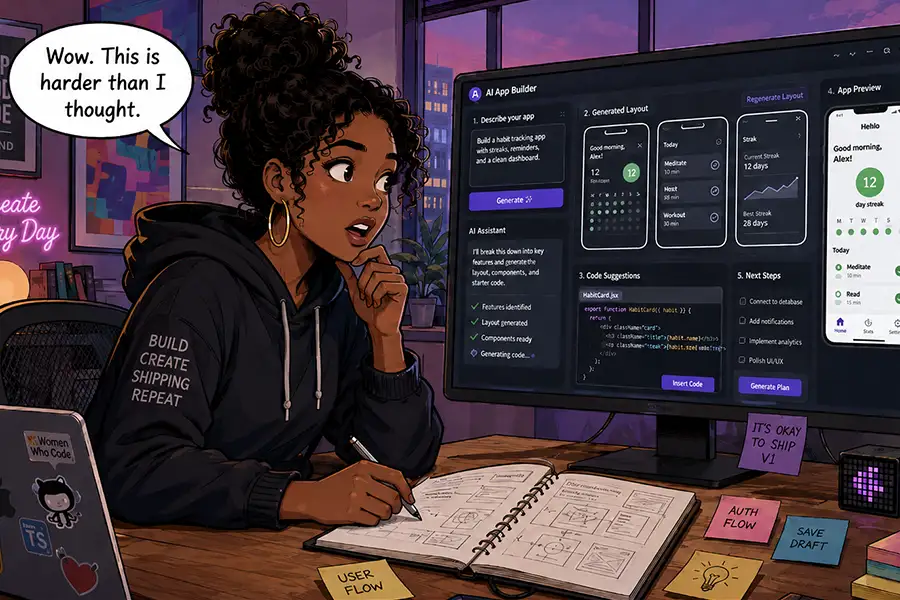
The rapid maturation of Large Language Models (LLMs) has fundamentally altered the barrier to entry for software development. Tools such as Claude, GPT-4o, and GitHub Copilot have transitioned from simple code-completion utilities to sophisticated architectural partners, allowing individual developers to generate complex codebases in fractions of the time previously required. This shift has empowered a growing segment of the technical community to pursue the "SaaS replication" model—an attempt to replace expensive, bloated, or proprietary enterprise software with custom-built, lean alternatives. However, as developers increasingly turn to "vibe coding"—a process of iterative prompting to achieve functional software—the industry is beginning to grapple with the divergence between code generation and long-term product maintenance.
The Evolution of the Developer-AI Dynamic
The trend toward self-built SaaS alternatives is rooted in broader economic and technical shifts. Since 2020, the software industry has seen a marked increase in "subscription fatigue," where businesses and individual professionals face rising costs for essential tools. Data from various cloud monitoring services suggest that the average enterprise subscription cost has increased by approximately 15–20% annually over the last three years, largely driven by price hikes from dominant platform providers.
For many developers, the motivation to build custom software is twofold: financial independence from recurring subscription fees and a desire for architectural control. The chronology of this shift began in earnest with the release of multimodal AI models capable of understanding entire project structures. Early adopters initially used these tools for debugging or snippet generation; by late 2024, the focus shifted to "greenfield" development, where an entire application—such as a CRM, an invoicing suite, or a project management tool—could be prototyped within a single afternoon.

Case Study: The Transition from Legacy to Custom Infrastructure
The decision to migrate from a legacy desktop application to a bespoke solution serves as a primary example of this trend. Many long-standing software users find themselves at a juncture where desktop-native software is sunsetted in favor of cloud-only, subscription-based models. This transition often forces users to sacrifice data ownership and pay for feature sets they do not utilize.
In the case of accounting and CRM systems, developers are increasingly leveraging the WordPress ecosystem or lightweight cloud frameworks to house their custom-built alternatives. By treating these tools as modular plugins, users can maintain data sovereignty and build only the specific functionalities required for their workflows. This "lean development" approach removes the overhead of extraneous features, yet it introduces significant technical debt, as the developer must now perform the roles of product manager, security officer, and system administrator.
The Hidden Complexity of Software Engineering
While AI models excel at generating syntactically correct code, they lack the holistic product-design intuition that defines professional-grade SaaS. Industry analysts note that while coding represents roughly 30% of the software development lifecycle, the remaining 70%—comprising requirements gathering, edge-case testing, security patching, and user experience (UX) optimization—remains heavily human-dependent.
The following table outlines the comparative responsibilities between using a third-party SaaS and maintaining an AI-generated replica:

| Responsibility | Third-Party SaaS | Self-Built AI Replica |
|---|---|---|
| Security | Managed by dedicated team | Developer’s sole responsibility |
| Compliance | Built-in (GDPR, CCPA) | Requires manual implementation |
| Updates | Automatic | Manual maintenance/AI prompts |
| Scalability | Enterprise-grade infrastructure | Dependent on host environment |
| Integration | Native, supported APIs | Custom development required |
The primary challenge lies in the "long tail" of software functionality. A developer might successfully generate a functional invoicing tool in an hour, but the subsequent requirements—such as integrating with Stripe’s dynamic API, handling multi-currency tax logic, or ensuring secure data encryption for sensitive financial records—require a level of rigor that AI models often overlook without meticulous human guidance.
Security and Maintenance Implications
Security experts have raised concerns regarding the proliferation of "vibe-coded" applications. When an individual developer relies on AI to write code, they often treat the output as a "black box." If the AI suggests a library or an authentication method that contains a vulnerability, the developer may not have the domain expertise to identify the risk.
Furthermore, the maintenance of these tools is a critical point of failure. Unlike enterprise software, where a dedicated team monitors for security exploits and API changes, a custom plugin relies on the original developer’s availability. If an API used for a third-party integration changes, the custom app will break, and the developer must manually refactor the code to restore functionality. This creates a hidden cost: the time invested in maintenance may eventually exceed the cost of the subscription the user originally sought to avoid.
Industry Perspectives and Future Projections
The software development industry is currently divided on the long-term viability of AI-led replication. Proponents argue that the democratization of software creation will lead to a more personalized digital landscape, where users are no longer forced into "one-size-fits-all" enterprise models. Conversely, critics argue that we are witnessing a return to the "fragile software" era of the early 2000s, where small, poorly documented, and unmaintained tools create systemic risks for businesses.

Official industry guidance from major framework maintainers suggests that while AI is an invaluable productivity multiplier, it should not be viewed as a replacement for architectural design. Organizations such as the Cloud Native Computing Foundation (CNCF) emphasize that "infrastructure as code" requires a level of oversight that goes beyond simple prompt engineering.
Strategic Recommendations for Developers
For those considering building their own SaaS alternatives, the following criteria should be evaluated:
- Complexity Analysis: Determine if the project is a "utility" (a tool with a clear, singular function) or a "platform" (a tool that requires external connectivity and high uptime). Utilities are excellent candidates for AI development; platforms are rarely sustainable as solo projects.
- Regulatory Burden: If the software handles PII (Personally Identifiable Information) or financial data, the legal and security requirements often outweigh the benefits of custom development.
- Integration Dependency: If the application relies on more than two third-party APIs, the maintenance burden will likely be unsustainable without a dedicated support team.
Conclusion
The allure of building a custom solution is understandable, particularly when AI makes the path of least resistance so accessible. However, the distinction between "a functional prototype" and "a professional-grade product" remains vast. While AI has undoubtedly democratized the ability to code, it has not yet eliminated the necessity of engineering discipline. Before embarking on a project to replace an established SaaS, developers must weigh the benefits of customization against the inescapable, long-term costs of ownership, security, and maintenance. As the tools continue to evolve, the most successful developers will be those who use AI to augment their expertise, rather than to replace the critical thinking required to sustain complex software systems.