The digital marketing ecosystem has evolved beyond simple keyword position monitoring, ushering in an era where enterprise rank-tracking software must process millions of data points across diverse devices, geographical locations, and an expanding array of search features. This shift necessitates sophisticated platforms capable of tracking AI Overviews, featured snippets, local packs, and a myriad of other dynamic Search Engine Results Page (SERP) elements. The intelligence gleaned from these comprehensive analyses is then integrated into enterprise dashboards, Customer Relationship Management (CRM) workflows, and executive reports, driving actionable strategies across large, complex organizations.
The Evolving Landscape of Search Visibility
The foundational premise of Search Engine Optimization (SEO) — understanding where a website ranks for specific keywords — has dramatically increased in complexity over the last decade. What began as a relatively straightforward assessment of "ten blue links" has transformed into a multifaceted challenge, particularly for large enterprises operating across multiple markets and product lines. The proliferation of mobile search, voice search, and location-based services, coupled with Google’s continuous algorithmic advancements and the recent emergence of generative AI in search, demands a level of granularity and integration that basic rank trackers simply cannot provide.
In the early 2000s, rank tracking was a nascent field, primarily focused on daily or weekly checks of a few hundred keywords. The goal was simple: climb to the top of the organic search results. However, with the introduction of universal search elements like images and videos (circa 2007), followed by rich snippets (2009), local packs (2012), and later, featured snippets and "People Also Ask" boxes, the SERP became a complex tapestry. The most recent and perhaps most disruptive development is the advent of AI Overviews and other large language model (LLM)-driven search experiences, fundamentally altering how users interact with search engines and how brands must strive for visibility. This chronological evolution underscores why enterprise-grade solutions are no longer a luxury but a strategic imperative.
Industry analysts consistently highlight the growing investment in SEO tools, with the global SEO software market projected to reach substantial figures by the end of the decade, reflecting enterprises’ recognition of organic search as a critical revenue driver. Marketing executives frequently emphasize that fragmented data is a major impediment to informed decision-making, driving the demand for integrated platforms that unify SEO insights with broader business intelligence.

Defining Enterprise-Grade Rank Tracking
Unlike basic tools designed for small websites monitoring a limited set of keywords, enterprise rank-tracking software is engineered for scale and complexity. It must handle high data volumes, offer granular location targeting (down to city or zip code), provide real-time or near-real-time refresh rates, and integrate seamlessly with an organization’s existing data infrastructure. For large, cross-functional teams, the data must not only be recorded accurately but also be readily actionable.
The true value of enterprise keyword ranking emerges when it is integrated into the wider data stack. On its own, ranking data provides visibility metrics, which are valuable. However, when paired with Business Intelligence (BI) tools, rank tracking begins to narrate stories of market opportunity and competitive risk. Connected to web analytics, it helps determine whether increased visibility is genuinely driving traffic and user engagement. Furthermore, a direct link between improved keyword positions and a measurable uptick in sales pipeline can be established when integrated with a Customer Relationship Management (CRM) system, demonstrating a clear return on investment for SEO efforts.
Key Criteria for Evaluating Enterprise Rank Tracking Software
Selecting the appropriate enterprise platform necessitates a thorough understanding of a business’s unique requirements and existing workflows. Engaging all relevant teams early in the evaluation process ensures seamless adoption and avoids costly integration hurdles. Several critical factors warrant consideration:
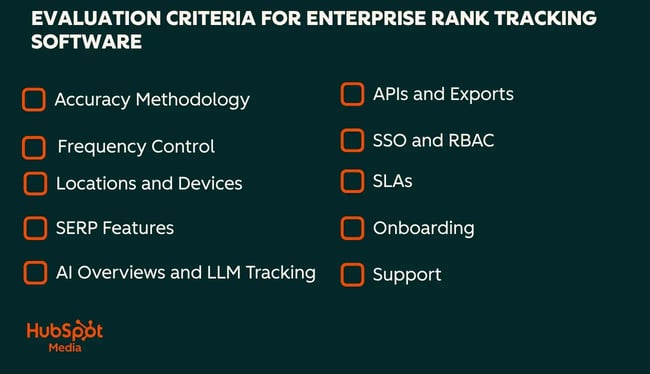
- Accuracy Methodology: A fundamental requirement, vendors must transparently detail their data collection methods. This includes whether they employ dedicated datacenter IPs, residential proxies, or a hybrid approach. Crucially, their methodology must account for personalization and localization to ensure results genuinely reflect what target users experience. Enterprises should request comprehensive methodology documents, moving beyond mere marketing claims.
- Frequency Control: Enterprise SEO teams often require highly flexible data refresh capabilities. While daily tracking is standard for ongoing performance, high-stakes periods such as product launches, major sale events, or rapidly evolving news cycles may necessitate hourly or on-demand refresh capabilities for specific keyword groups, campaigns, or markets.
- Locations and Devices: Global or multi-regional enterprises require granular multi-location and multi-device keyword tracking. Platforms must confirm support for tracking at the city, zip code, or even coordinate level, alongside independent tracking for both desktop and mobile rankings, as position disparities between these can be significant.
- SERP Features: The "ten blue links" no longer represent the entirety of search visibility. An effective enterprise platform must track a comprehensive range of SERP features, including featured snippets, local packs, People Also Ask boxes, image carousels, video results, and shopping units. Crucially, the system should trigger alerts when positions for these features improve or decline, providing proactive insights.
- AI Overviews and LLM Tracking: This capability is rapidly transitioning from an advanced feature to a non-negotiable requirement. Evaluation should focus on the platform’s ability to monitor AI Overview appearances, track cited URLs within these overviews, and capture prompt-level data for generative search environments. Effective AI Overviews tracking demands robust prompt libraries and historical snapshot capabilities to provide meaningful long-term utility.
- APIs and Exports: Enterprise teams often leverage data outside the rank tracker’s native user interface. Therefore, a platform must offer a well-documented API with sufficient rate limits for large data volumes. Flexible export options (CSV, JSON) and direct connectors to data warehouses or business intelligence tools are paramount for integration into existing reporting infrastructures.
- SSO and RBAC: For enterprise environments, Single Sign-On (SSO) integration with the organization’s identity provider and robust Role-Based Access Control (RBAC) are security essentials. Permissions must be scoped at the team, market, or campaign level, ensuring appropriate data access while maintaining stringent governance.
- Service Level Agreements (SLAs): A thorough review of the vendor’s SLA is critical. This includes guaranteed uptime, protocols for data handling during crawl failures, and contractual commitments to data freshness, along with defined remedies for non-compliance.
- Onboarding and Support: Deploying enterprise-grade software with large keyword sets, complex site architectures, and multi-market configurations requires significant support. Vendors should provide a dedicated onboarding team, structured implementation support, and a realistic timeline for achieving full production use, ensuring all critical integrations are supported. Ongoing support quality, including named account managers, defined response times, and technical support for API issues, is equally vital.
Leading Enterprise Rank Tracking Software Solutions
Several platforms stand out for their ability to meet the rigorous demands of enterprise-grade rank tracking and broader SEO management.
HubSpot’s Integrated Ecosystem (Marketing Hub, Content Hub, AEO Grader)
HubSpot offers a comprehensive suite that addresses enterprise SEO needs within a unified customer platform.
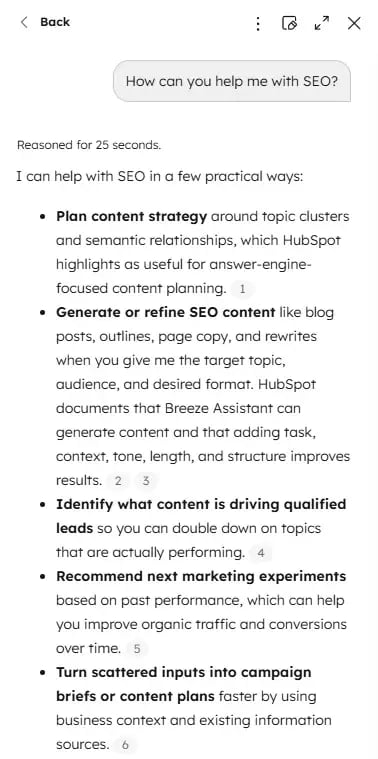
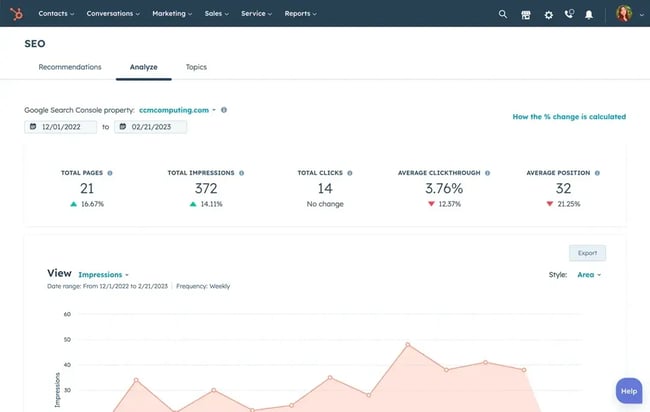
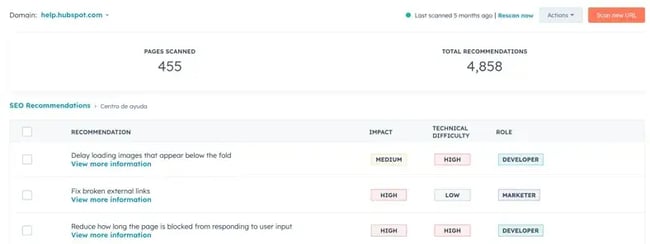
- HubSpot SEO Marketing Software (part of Marketing Hub): This software provides enterprise teams with a centralized solution for managing and enhancing organic search performance. Its key advantage lies in integration, allowing keyword data, content performance, and lead attribution to coexist within the same environment as the CRM, campaign tools, and analytics. This eliminates the need for manual data bridging, a common pain point in large organizations. The software surfaces prioritized keyword recommendations and topic suggestions, aiding in the strategic planning and optimization of extensive content libraries. Furthermore, it integrates with Google Search Console and HubSpot’s CMS tools, and its capabilities extend to AEO, helping structure content for AI-driven search results and featured snippets. The "Breeze Assistant," an AI-powered tool, further empowers marketing teams with real-time SEO support. A significant feature is the SEO Recommendations tool, which scans all live pages (even those hosted outside HubSpot) for optimization opportunities, categorizing them by priority and offering granular analysis at the website, subdomain, or page level. This is crucial for managing thousands of URLs efficiently. Content readability metrics, meta tag suggestions, and internal linking opportunities are also provided. The "SEO Analyze" tab tracks core search performance directly from Google Search Console, offering insights into total indexed pages, impressions, clicks, CTR, and average position, with side-by-side page comparisons and exportable reports.
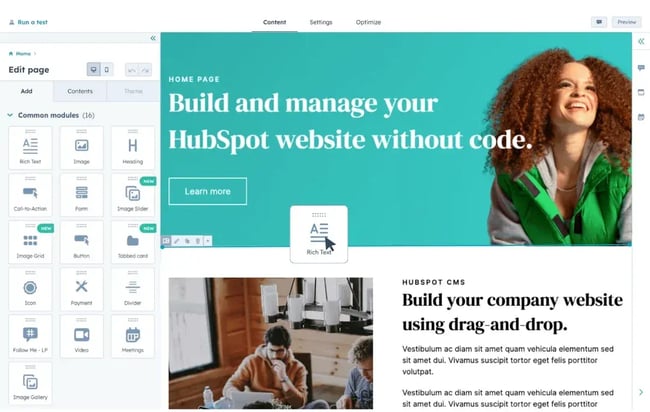
- HubSpot Content Hub: This CMS is designed for scaled content publication, embedding SEO guidance directly into the authoring workflow. Recommendations for internal linking and page structure appear during content creation, minimizing post-publication audits. Its advanced schema capabilities, supporting coded templates with HTML and HubL, and structured content via HubDB and custom modules, enable systematic schema implementation across large content libraries. Tools like "Content Remix" for repurposing content and "Brand Voice" for maintaining consistent tone in AI-generated content further enhance efficiency and brand consistency. The "AI Content Writer" integrates content creation directly within the CMS, streamlining workflows.
- HubSpot AEO Grader: Recognizing the shift towards AI-generated answers, HubSpot offers this free tool to measure brand appearance in AI responses from platforms like ChatGPT, Perplexity, and Gemini. It scores performance across five dimensions: Recognition, Sentiment, Market Position, Prominence, and Citation Volume. This tool provides invaluable competitive intelligence, allowing enterprises to benchmark their AI visibility against competitors and identify strategic areas for content and schema optimization. While a manual tool, its consistent use can establish a critical baseline for AEO measurement.
Semrush One
Semrush is a long-standing leader in SEO software, offering an integrated AI Visibility Toolkit within a single subscription. Its "Semrush One" offering combines traditional keyword rank tracking, keyword research, technical site audits, and on-page optimization with advanced GEO (Generative Engine Optimization) and prompt tracking. This unified environment helps brands maintain visibility across both traditional search and AI platforms. Its core strengths include comprehensive competitive intelligence, tracking competitor rankings, share of voice, and overall domain health at scale. Semrush’s long-term investment in data quality and keyword coverage positions it well for the evolving search landscape.
Profound AI
Profound is an enterprise-grade AI visibility platform purpose-built to understand and improve brand appearance across generative AI engines. Unlike other platforms that have added AI tracking as an adjunct, Profound was designed specifically for managing brand narratives across the entire AI ecosystem. It tracks brand presence in AI overviews, brand mentions in AI-generated content, competitive analysis of AI narratives, and the sentiment of AI characterizations. Its key features include prompt library management, real-time AI content generation analysis, and API access for data integration. Profound offers tiered pricing, with enterprise plans providing extensive coverage across multiple AI engines and dedicated support, catering specifically to large marketing and brand teams.
Strategic Considerations for Choosing Enterprise Rank Tracking Software
The decision-making process for enterprise software is complex and carries significant implications.

- Integration Fit Over Feature Count: A common pitfall is being swayed by an extensive feature list in a demo. In practice, a platform with fewer, but well-integrated, features will often outperform a more feature-rich solution that operates in isolation. For enterprise teams, rank data’s true utility is realized when it flows seamlessly into existing BI platforms, data warehouses, CRMs, or executive dashboards. Manual exports to bridge data gaps inevitably lead to deprioritization and inefficiency. Therefore, robust API documentation, webhook support, and native connectors should be non-negotiable requirements.
- Early Stakeholder Engagement: Excluding key stakeholders from the evaluation process is a costly mistake. Beyond the SEO team, IT, legal, finance, sales, and other departments will be impacted by new technology. Initiating conversations with these groups at the shortlisting stage, rather than at the contract stage, prevents delays and ensures broader organizational buy-in. Security reviews, in particular, should commence early.
- Pricing Tiers and Scalability: Enterprise rank tracking pricing models vary widely and rarely reflect the true cost at scale. Platforms may charge per keyword, user, domain, or location, with significant cost implications as operations expand. It is crucial to map anticipated growth over a two-to-three-year horizon against each vendor’s pricing model, identifying the realistic tier for current and future business requirements and understanding what triggers costly upgrades. Features like API access, historical data, or advanced user permissions are often reserved for higher-tier enterprise plans.
Advanced Competitive Intelligence at Enterprise Scale
At the enterprise level, competitor rank tracking transcends simple position monitoring. It encompasses a sophisticated analysis of market share, user experience, and strategic positioning.
- Share of Voice Tracking: This measures a domain’s appearance in search results relative to competitors across a defined keyword set. For enterprises, this means tracking share of voice across topic clusters, segmented by product line, market, or buyer stage. Analyzing trends over time provides deeper insights than mere point-in-time snapshots, revealing who is consistently gaining ground and why.
- Pixel Position Analysis: A rank-one position does not always equate to top-of-page visibility. Paid ads, AI Overviews, local packs, and shopping units can push organic results significantly down the page. Pixel position tracking measures the actual vertical distance from the top of the page to the first organic result, offering a more accurate assessment of true visibility. For high-value commercial keywords, tracking pixel position alongside rank position is critical for understanding actual SERP real estate capture.
- SERP Feature Ownership: Ownership of SERP features like People Also Ask boxes, image packs, video carousels, and local packs represents substantial visibility opportunities not captured by traditional rank position. Tracking feature ownership over time identifies competitive gains or losses, signaling opportunities to refine and update content strategies.
- Brand Variant and Affiliate Tracking: Large enterprises often manage multiple brand variants, sub-brands, regional domains, and affiliate or reseller partners that appear in search results. Tracking these variants as part of competitive monitoring provides a holistic view of the brand family’s search presence and helps identify instances where affiliates or resellers might be cannibalizing organic traffic or competing for branded terms at unfavorable positions. Where third parties are authorized, separate tracking segments should be established to monitor their positions alongside the brand’s own properties.
- Automation and Alerting: Manual competitor monitoring at enterprise scale is unsustainable. Automated alerts for significant position changes (gains or losses) across the competitor set, with defined thresholds to filter out normal fluctuations, are essential. Integrating competitive rank data into regular reporting cadences ensures that changes are visible to all relevant teams—content, product, and go-to-market—fostering proactive strategy adjustments.
The Future: AEO and the Non-Negotiable Role of Rank Tracking
The trajectory of search indicates a continuous evolution towards more interactive, AI-driven experiences. Enterprise rank tracking is no longer just about monitoring rankings but about understanding and owning the brand’s full search presence across traditional rankings, dynamic SERP features, and increasingly, AI-generated results. The implications of neglecting advanced rank tracking are substantial: missed revenue opportunities, inefficient allocation of marketing budgets, and a reactive rather than proactive competitive stance.
The right enterprise tracking platform must deliver accurate, scalable data and integrate seamlessly with the broader technology stack. This ensures that enhanced visibility translates directly into actionable insights and measurable revenue. Whether a business prioritizes unified SEO and CRM workflows through a platform like HubSpot, needs specialized AI visibility benchmarking with tools like HubSpot AEO Grader, or requires scalable content operations via HubSpot Content Hub, the chosen tools must reflect the intricate and dynamic nature of modern search. As search engines continue to innovate, sophisticated rank tracking remains a non-negotiable component of enterprise digital strategy.