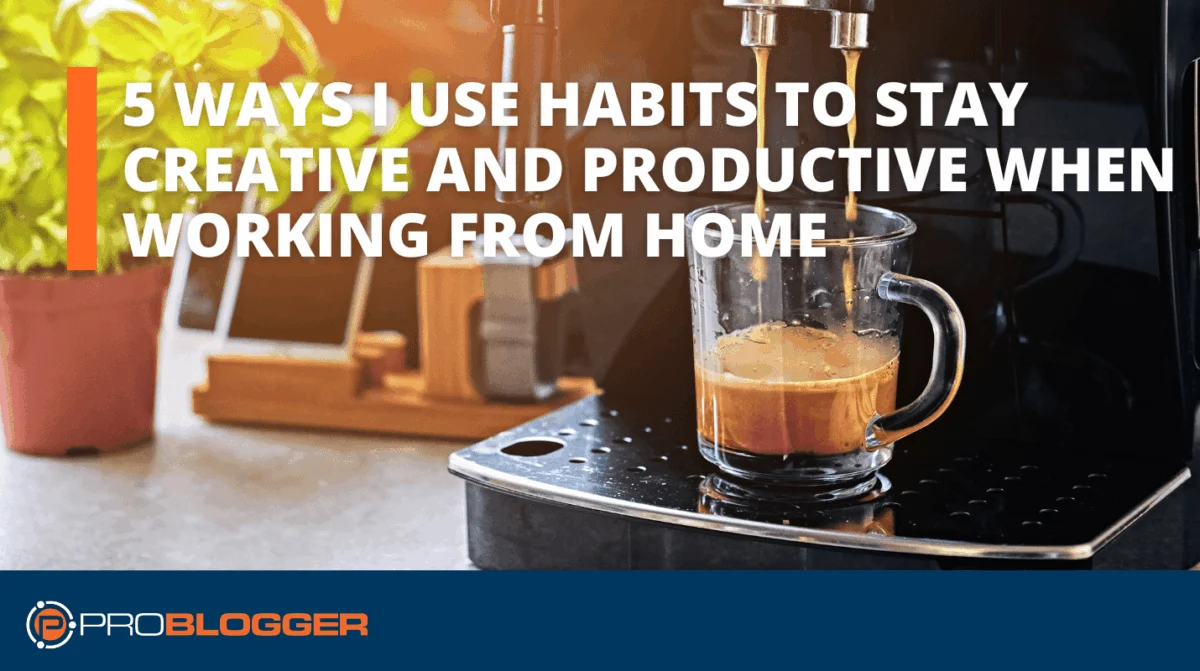
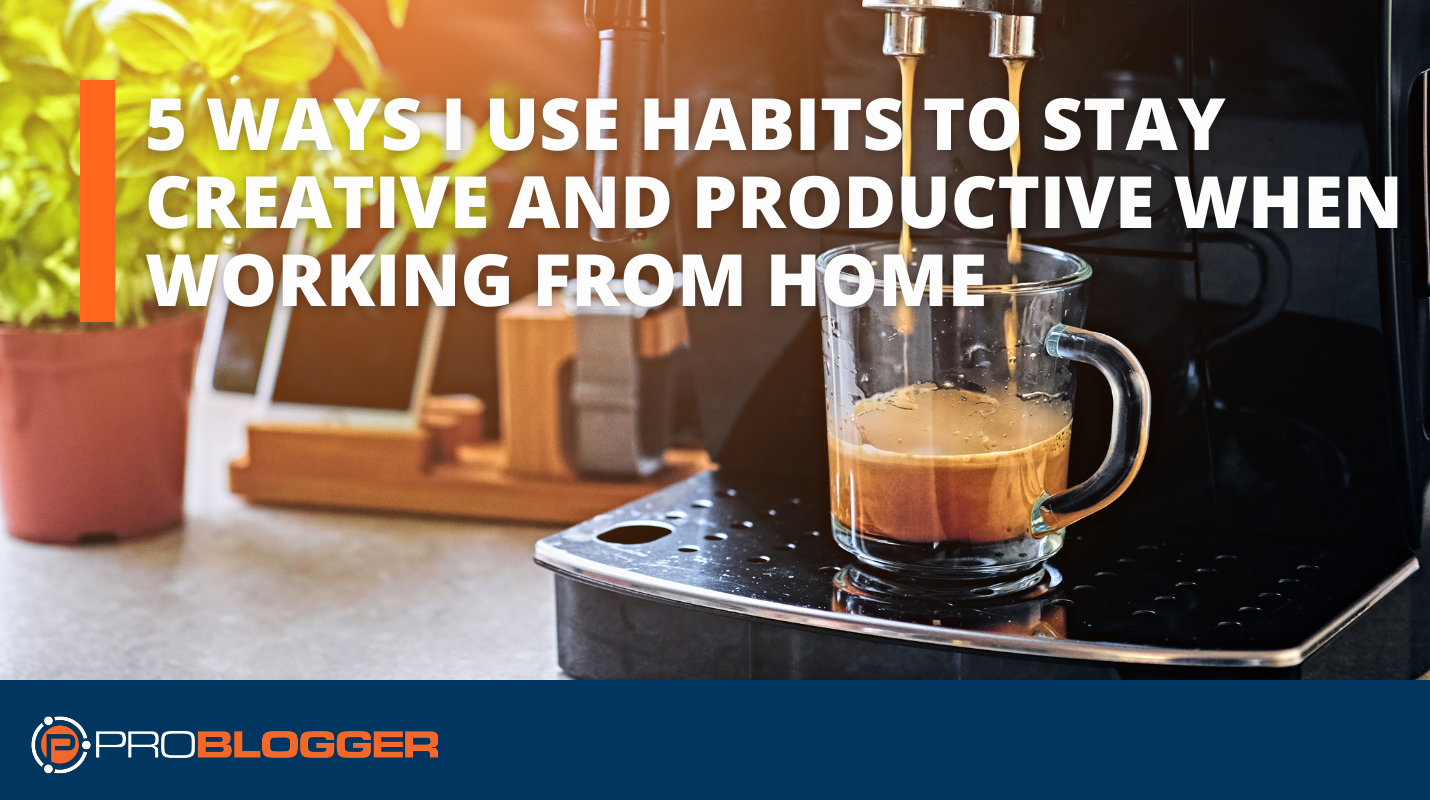
The landscape of professional work has undergone a significant transformation, with remote and hybrid models becoming increasingly prevalent across industries. In this evolving environment, the ability to maintain creativity and productivity while working from home presents unique challenges. Bestselling author and expert on happiness and habits, Gretchen Rubin, offers invaluable insights into navigating these complexities through the strategic application of habit formation. Known for her seminal works such as "Better Than Before," which delves into the science of habit mastery, and her popular podcast "Happier with Gretchen Rubin," Rubin provides a structured approach to leveraging daily routines for enhanced professional performance and personal well-being. Her methodologies, initially shared with ProBlogger readers, remain highly relevant for today’s remote workforce, particularly those in creative fields like blogging, content creation, and digital entrepreneurship.
The Evolving Workplace: A Context for Habit Formation
The shift towards remote work, significantly accelerated by global events in the early 2020s, has redefined traditional office paradigms. While offering unparalleled flexibility and autonomy, working from home introduces a new set of hurdles. The blurred lines between personal and professional life, the omnipresence of household distractions, the potential for isolation, and the absence of traditional office structures can undermine focus and motivation. For individuals whose livelihoods depend on consistent creative output, such as bloggers and writers, these challenges are particularly acute. The sofa beckons for a nap, household chores demand attention, and the internet offers an endless array of diversions.
Before the widespread adoption of remote work, habit science was already gaining traction as a critical component of personal and professional development. Psychologists and neuroscientists have long understood that habits, or automatic behaviors triggered by specific cues, play a profound role in reducing cognitive load. By automating routine decisions, individuals free up mental energy for more complex, creative, or strategic tasks. This principle is even more crucial in an environment lacking the external scaffolding of a traditional office, where self-discipline and self-management become paramount. Gretchen Rubin’s work, which distills complex behavioral psychology into actionable strategies, provides a timely framework for building this internal scaffolding.
Gretchen Rubin’s Framework: Mastering Habits for Optimal Performance
In her acclaimed book, "Better Than Before," Rubin meticulously identifies 21 distinct strategies individuals can employ to cultivate positive habits and break negative ones. These strategies are not one-size-fits-all but are designed to be adapted to individual temperaments and circumstances. Rubin’s framework emphasizes that successful habit change isn’t merely about willpower, which she argues is a finite resource, but about understanding one’s own nature and strategically designing one’s environment and routines. For the home-based professional, these strategies offer a roadmap to creating a productive and creatively stimulating workspace within the confines of their living environment.
Rubin’s five key strategies, augmented by a crucial bonus tip, are designed to counteract common pitfalls of remote work:
1. The Strategy of Safeguards: Eliminating Temptation
One of the most insidious threats to home-based productivity is the constant availability of distractions. For many, the internet, with its infinite scroll of social media, news, and entertainment, is the primary culprit. Gretchen Rubin champions the "Strategy of Safeguards" as a powerful antidote. Her personal practice involves physically relocating for her most demanding work: taking her laptop to a local library and deliberately abstaining from connecting to the internet. "It’s easier physically to remove myself from the lure of my three monitors than to use self-control," she explains.
This approach aligns with psychological research on environmental design and "friction." Studies by behavioral economists, such as those conducted by Cass Sunstein and Richard Thaler on "nudge theory," demonstrate that subtly altering the environment to make desired actions easier and undesired actions harder is often more effective than relying solely on willpower. When the internet is not physically accessible, the temptation to check emails, browse social media, or engage in "research" (often a euphemism for distraction) is significantly reduced. Data from productivity software companies frequently reveal that employees spend a considerable portion of their workday on non-work-related websites, highlighting the pervasive nature of digital distractions. A 2023 survey by NordLayer indicated that employees spend an average of 8.4 hours per week on non-work-related tasks, with social media being a top distraction. While self-control is valuable, creating an environment where it’s not constantly tested is a more sustainable strategy. Many remote workers now utilize software that blocks distracting websites or limits internet access for specific periods, echoing Rubin’s physical safeguard approach in a digital context.
2. The Strategy of Scheduling: The Power of Designated Time
Rubin identifies "working procrastination" as a significant trap for remote professionals. This phenomenon involves engaging in less important but still work-related tasks (like organizing files or checking routine emails) to avoid tackling more challenging, high-impact work (like original writing or complex problem-solving). Her solution is the "Strategy of Scheduling," which involves assigning specific tasks to designated time slots and rigidly adhering to them. "At 10:00 a.m., I’m going to write that blog post," she states, emphasizing that during that time, no other activity, no matter how work-related, is permitted.
This strategy leverages the psychological principle of time blocking, a productivity technique where individuals allocate specific blocks of time for specific tasks. Research published in journals like Organizational Behavior and Human Decision Processes has shown that individuals who plan their tasks in advance and commit to specific times are more likely to complete them. Parkinson’s Law, which posits that "work expands so as to fill the time available for its completion," also plays a role here. By scheduling a defined period for a task, one implicitly creates a deadline, fostering focus. Furthermore, the sheer boredom of staring at the ceiling when one is supposed to be working can act as a powerful motivator, pushing individuals to engage with the task at hand. This method not only ensures that crucial tasks are addressed but also helps in developing a structured routine, a cornerstone of effective remote work.
3. The Strategy of Foundation: Prioritizing Physical Well-being
The sedentary nature of desk work, especially in a home office, poses significant health risks and can diminish cognitive function. Rubin’s "Strategy of Foundation" underscores the importance of physical activity as a bedrock for both energy and focus. Her routine includes diverse forms of exercise, from gym visits and yoga classes to strength training and frequent walks with her new puppy. She highlights that exercise is not merely a health benefit but a direct enhancer of productivity: "Research shows that exercise helps me stay energized and focused—and for me, it also helps me keep my rear in the chair when I’m working, because otherwise I get very restless."
Numerous studies corroborate the profound link between physical activity and cognitive performance. A meta-analysis published in the British Journal of Sports Medicine indicated that regular exercise significantly improves memory, attention, and processing speed. Moreover, physical activity is a well-established antidote to stress and anxiety, common companions of demanding work. The World Health Organization recommends at least 150 minutes of moderate-intensity aerobic physical activity throughout the week for adults. Rubin’s emphasis on walking resonates with philosophical insights; as Friedrich Nietzsche famously penned, "All truly great thoughts are conceived by walking." Walking provides a low-impact way to stimulate blood flow to the brain, foster divergent thinking, and offer a change of scenery that can spark new ideas and connections, crucial for creative endeavors like blogging. Integrating movement throughout the workday combats the negative effects of prolonged sitting, enhancing both physical health and mental acuity.
4. The Strategy of Monitoring: Tracking Progress for Consistency
Consistency is often the hallmark of successful content creation, yet it can be elusive without a clear understanding of one’s output. Rubin’s "Strategy of Monitoring" involves meticulously tracking one’s progress, specifically how many blog posts she publishes each week. This practice, she argues, leads to better performance across various domains, from exercise and diet to financial management. She notes a peculiar but powerful observation: "it’s easier to post just about every day than to post some days." Her commitment to posting 5-6 times a week transforms it into an ordinary, non-negotiable part of her day, eliminating the mental gymnastics of deciding whether or not to write.
The effectiveness of self-monitoring is well-documented in behavioral science. The act of tracking itself can alter behavior, a phenomenon sometimes referred to as the Hawthorne effect. When individuals are aware that their actions are being observed (even by themselves), they tend to improve. Data from productivity apps and project management tools consistently show that when tasks and progress are visually tracked, individuals are more likely to complete them and maintain momentum. For content creators, this means setting clear posting schedules and using calendars or content management systems to log output. The elimination of daily decision-making around posting frequency reduces decision fatigue and builds a powerful "streak" mentality, where breaking the chain becomes undesirable. Rubin’s downloadable daily time log further supports this strategy, offering a practical tool for individuals to gain objective insight into how their time is actually spent.
5. The Strategy of Treats: Rewarding and Recharging
Sustainable productivity is not solely about relentless work; it also requires deliberate periods of rest and rejuvenation. Rubin’s "Strategy of Treats" highlights the importance of incorporating healthy rewards into one’s routine. For her, this "most fun" strategy involves dedicating ample time to reading purely for pleasure, not out of obligation. "When we give more to ourselves, we can ask more from ourselves," she posits. This approach ensures she feels "energized and cared for," which, in turn, fuels her creative output. Beyond personal gratification, this reading also serves as a wellspring for "new ideas, illustrations, and insights," making her blogging process smoother and richer.
Research on burnout consistently points to the necessity of breaks and leisure activities for long-term productivity and mental health. A study published in the Journal of Applied Psychology found that employees who take regular, meaningful breaks experience less fatigue and higher job satisfaction. Treats, in Rubin’s context, are not merely indulgences but vital components of a balanced work life. They provide intrinsic motivation and prevent the depletion of cognitive resources. For creative professionals, engaging in activities that stimulate the mind without the pressure of direct work, such as reading diverse genres or pursuing hobbies, can significantly enhance problem-solving abilities and foster innovative thinking. It underscores the idea that a well-nourished mind, not an exhausted one, is the most productive.
BONUS: The Strategy of Accountability: The External Push
While Rubin primarily relies on internal strategies, she acknowledges that a significant portion of the population requires external motivation. This brings us to the "Strategy of Accountability," a crucial component for individuals she categorizes as "Obligers" within her "Four Tendencies" framework. Rubin classifies people into Upholders, Questioners, Obligers, and Rebels based on how they respond to inner and outer expectations. Obligers, the largest demographic, excel at meeting external expectations but struggle to meet self-imposed ones. For them, accountability is "crucial. Key. Essential!"
For Obligers, the challenge of working from home—where external oversight is minimal—can be particularly daunting. Rubin advises that "you must give yourself outer accountability." This can manifest in various forms: joining an accountability group, working with a coach, reporting to a client, or simply finding a dedicated buddy to check in with. Social psychology research has long demonstrated the power of social commitment and peer pressure in goal attainment. When individuals publicly declare their intentions or are responsible to another person, their likelihood of follow-through significantly increases. For example, studies on weight loss and exercise programs often show higher success rates for participants who engage in group settings or have a designated accountability partner. In a professional context, this might involve setting up regular check-ins with a mentor, participating in a mastermind group, or even publishing a content calendar publicly. Recognizing one’s "Tendency" and proactively building an accountability structure around oneself is a powerful way to ensure consistent progress, especially in the solitary environment of remote work.
Broader Impact and Implications for the Future of Work
Gretchen Rubin’s habit strategies offer more than just personal productivity hacks; they provide a blueprint for resilience and sustained performance in the modern work landscape. As remote and hybrid work models continue to evolve, the onus of structuring one’s workday increasingly falls on the individual. Organizations, recognizing the mental health and productivity implications, are also beginning to integrate habit-forming principles into their remote work support systems, offering tools, training, and encouraging practices like digital detoxes and structured breaks.
The implications extend beyond mere task completion. By fostering healthy habits, remote workers can mitigate the risks of burnout, maintain mental clarity, and preserve the creative spark essential for innovation. The blurring of work-life boundaries, a common complaint among remote employees, can be managed more effectively through intentional habit creation, separating work time from personal time. Ultimately, Rubin’s work underscores a fundamental truth: productivity and creativity are not solely products of innate talent or sheer effort, but are deeply intertwined with the routines and systems we cultivate. Understanding oneself, designing an enabling environment, and strategically leveraging the power of habits are not just ways to stay on track; they are essential skills for thriving in the decentralized, dynamic world of work. As the professional world continues to adapt, the mastery of habits, as articulated by experts like Gretchen Rubin, will remain an indispensable tool for individual success and organizational effectiveness.