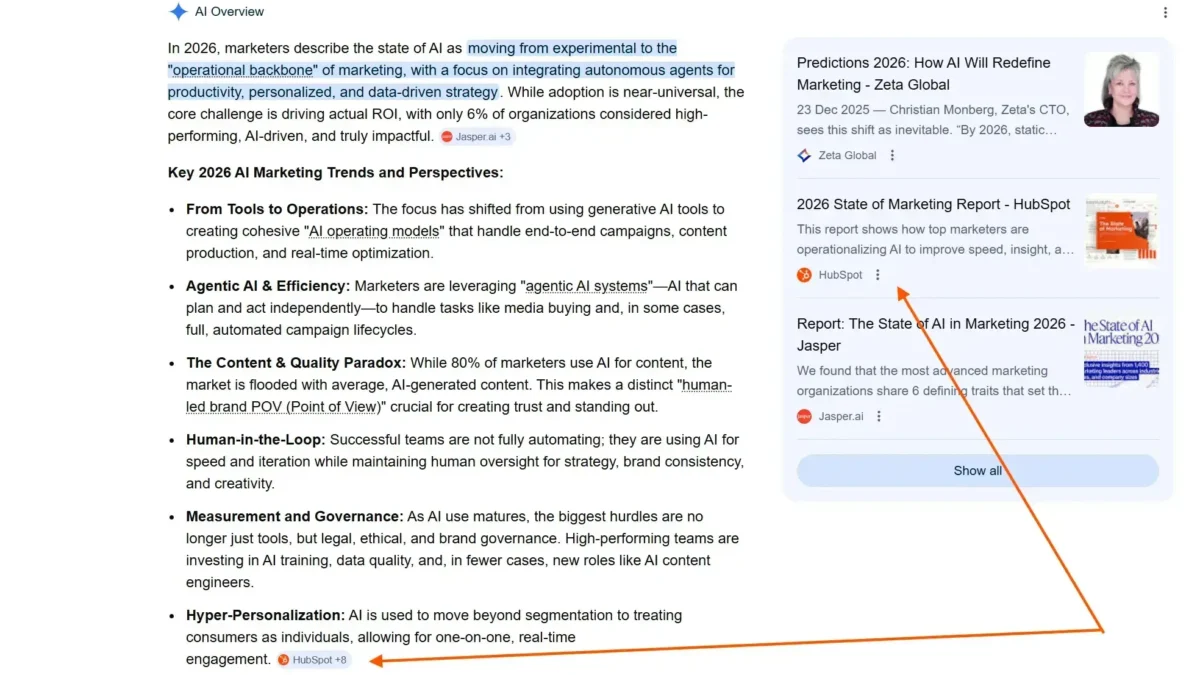
The fundamental mechanics of how consumers discover brands, products, and services have undergone a seismic shift. Traditional search engines, once defined by blue links and click-through metrics, now share the digital discovery stage with generative artificial intelligence. AI-generated answers routinely appear at the very top of the search journey, presenting synthesized, direct responses before a user ever scrolls down to conventional search results. This evolution has forced marketing departments to rethink foundational strategies, transforming the race for visibility into a complex battleground known as Answer Engine Optimization (AEO) or Generative Engine Optimization (GEO).

Recent industry data underscores the velocity of this transition. Research indicates that nearly a third of Gen Z consumers—approximately 31%—default to conversational chatbots and generative AI platforms to source information online. Furthermore, major technology platforms report staggering adoption rates for conversational features. Google has confirmed that its AI Mode exceeds one billion monthly users, with user queries doubling every single quarter since its initial rollout. For modern brands, failing to secure placement within these AI Overviews, or across prominent conversational systems like ChatGPT, Perplexity, and Claude, translates to an immediate loss of audience connection, eroded conversion potential, and direct downstream revenue decline.
Understanding the Anatomy of AI Search and Visibility
Unlike classical search engine architecture, which functions primarily as an index routing traffic to external destination links, generative AI search engines synthesize and summarize information directly within the interface. These dynamic responses draw upon a network of authoritative sources, parsing and paraphrasing data to deliver an all-in-one answer.

Within this paradigm, brand visibility is no longer measured solely by a static position on a search engine results page (SERP). Instead, it encompasses a multi-dimensional footprint that includes explicit brand mentions, authoritative domain citations, qualitative sentiment, and factual accuracy. When an AI platform includes a brand in its synthesized narrative, that brand possesses visibility. The overarching strategic objective for modern enterprises is to maximize this presence so that their domain and narrative are cited frequently, accurately, and favorably.
The absence of a brand from these AI-generated responses carries profound commercial consequences. Brands that fail to integrate into the generative discovery phase effectively vanish from the prospective buyer’s consideration set. They accumulate zero impression counts, hold no measurable ranking positions, and often leave analytics teams blind to the exact moments they were excluded from a high-intent consumer query.

The Pitfalls of Manual Tracking and the Rise of Dedicated Infrastructure
In the early stages of the generative search transition, marketing teams attempted to measure visibility through manual spot checks. Analysts would systematically open interfaces such as ChatGPT, Perplexity, Gemini, and Microsoft Copilot, executing standardized prompt sets across each platform to record whether their brand appeared.
While manual spot checks provide a rudimentary baseline, the methodology collapses under operational scale. A manual query captures a single, highly localized snapshot in time, often skewed by individual user search history, personalization algorithms, and regional parameters. Furthermore, empirical marketing experiments evaluating hundreds of queries across various conversational tools reveal a critical vulnerability: AI platforms handle broad, generalized queries with relative ease, but struggle significantly with specific, niche information, such as precise details regarding local service providers or complex enterprise specifications.

Manually replicating thousands of prompt variations across multiple engines daily is practically impossible for modern marketing teams. Consequently, the industry has transitioned toward automated tracking infrastructure. Dedicated visibility tools now run scheduled, programmatic prompt executions across multiple engines simultaneously, organizing fragmented data into actionable, longitudinal metrics.
Establishing Key Performance Indicators for the Generative Era
To navigate this new data landscape without succumbing to conflicting metrics, marketing executives must align around a standardized set of Key Performance Indicators (KPIs). Because third-party tracking tools rely on different foundational models, their raw outputs should be interpreted as directional indicators rather than absolute digital truths.

Brand Mention Rate and Citation Rate
The brand mention rate calculates how frequently a brand name appears within AI-generated responses, derived by dividing total qualifying mentions by the aggregate number of tracked prompts. However, marketing professionals draw a strict distinction between mentions and direct citations.
An AI model may mention a brand name within its conversational text without providing an outbound hyperlink, or it may attribute a claim to a third-party review site rather than the brand’s owned domain. The citation rate specifically measures how often AI responses link directly to brand-owned web assets. Tracking this metric isolates the exact pages and content structures earning authority within neural networks. Advanced teams correlate these citation rates with direct referral traffic captured via analytics platforms to prove tangible return on investment to executive stakeholders.

Sentiment, Accuracy, and Share of Voice
Sentiment analytics score how conversational platforms describe a brand, typically moving across a spectrum from negative to positive. Notably, negative sentiment is not always detrimental if it remains factually accurate—for instance, if an AI engine accurately notes that a software suite carries a premium price point compared to open-source alternatives.
Concurrently, share of voice measures a brand’s frequency of appearance relative to direct competitors across an identical prompt taxonomy. A high isolated mention rate can easily deceive a marketing team; measuring share of voice against primary market rivals reveals true competitive positioning and highlights strategic content gaps.

Implementing a Repeatable AEO Framework
Transitioning from ad-hoc observation to a systematic, data-driven AEO program requires a structured, five-step operational framework.
- Establish a Baseline Assessment: Before executing ongoing campaigns, organizations must evaluate their current standing. Free diagnostic frameworks, such as HubSpot’s AI Search Grader, allow teams to benchmark their presence across sentiment, brand recognition, and market position against key competitors without query limitations.
- Standardize Prompt Taxonomies: Consistency is paramount. Marketing teams must document precise prompt structures—incorporating long-tail problem-solution keywords derived from Google Search Console and customer success dialogues—and reuse identical phrasing during every monitoring cycle to ensure accurate trend analysis.
- Map Core Platforms: While tools exist to monitor dozens of engines, organizations frequently prioritize platforms driving verified traffic. Analytics data often reveals that a single engine, such as ChatGPT, accounts for the vast majority of AI-driven referral traffic, guiding budget allocation for premium tracking software.
- Automate Tracking Cadences: Weekly reviews provide a steady baseline for long-term trend analysis, whereas daily monitoring supports active optimization sprints during product launches or algorithmic volatility events.
- Integrate Data into CRM Workflows: Standalone visibility dashboards frequently fail because they operate in an operational vacuum. Routing AI visibility metrics directly into customer relationship management (CRM) systems allows revenue leaders to trace a generative citation directly through the pipeline to closed-won deals.
Remediation Strategies for Inaccurate AI Answers
When automated tracking reveals factual errors or unfavorable brand distortions within AI responses, digital teams must execute systematic remediation plans. Because artificial intelligence models aggregate data from a wide footprint—including review aggregates, social channels, and public databases—brands must enforce rigorous entity consistency across the digital ecosystem.

Furthermore, content teams must restructure owned web pages to answer consumer queries with absolute clarity, supporting claims with structured data and concrete evidence that generative systems can easily parse. When an AI hallucination or outdated pricing metric circulates, teams can isolate the source via targeted web searches, updating owned assets and lodging correction requests to realign the underlying model training data.
Analytical Implications for Enterprise Strategy
The maturation of generative search platforms marks the permanent end of traditional search engine optimization as an isolated discipline. As consumer discovery habits increasingly bypass conventional links in favor of direct, synthesized answers, executive leadership must treat AI visibility as a core component of enterprise brand equity. Organizations that invest in automated tracking, maintain rigorous entity accuracy, and connect generative visibility metrics directly to revenue pipelines will maintain a decisive competitive advantage in the digital marketplace.