The mobile landscape has witnessed a significant shift with the arrival of the Motorola Signature 27, a device that marks the manufacturer’s most ambitious attempt to reclaim its status in the premium smartphone segment. Historically recognized for its mid-range offerings and budget-friendly powerhouses, Motorola has pivoted toward a high-end strategy with this launch, positioning the Signature 27 at a $1,599 price point. This move is widely viewed by industry analysts as a strategic attempt to bridge the gap between legacy brand recognition and modern flagship performance, echoing the design-forward philosophy of the iconic Moto X series.

The introduction of the Signature 27 follows a period of corporate restructuring and a renewed focus on hardware innovation under Lenovo’s stewardship. While the company has maintained a presence in the foldable market with its Razr lineup, the Signature 27 represents the first instance in years where Motorola has deployed top-tier, non-folding hardware without compromises.
Design Philosophy and Build Quality

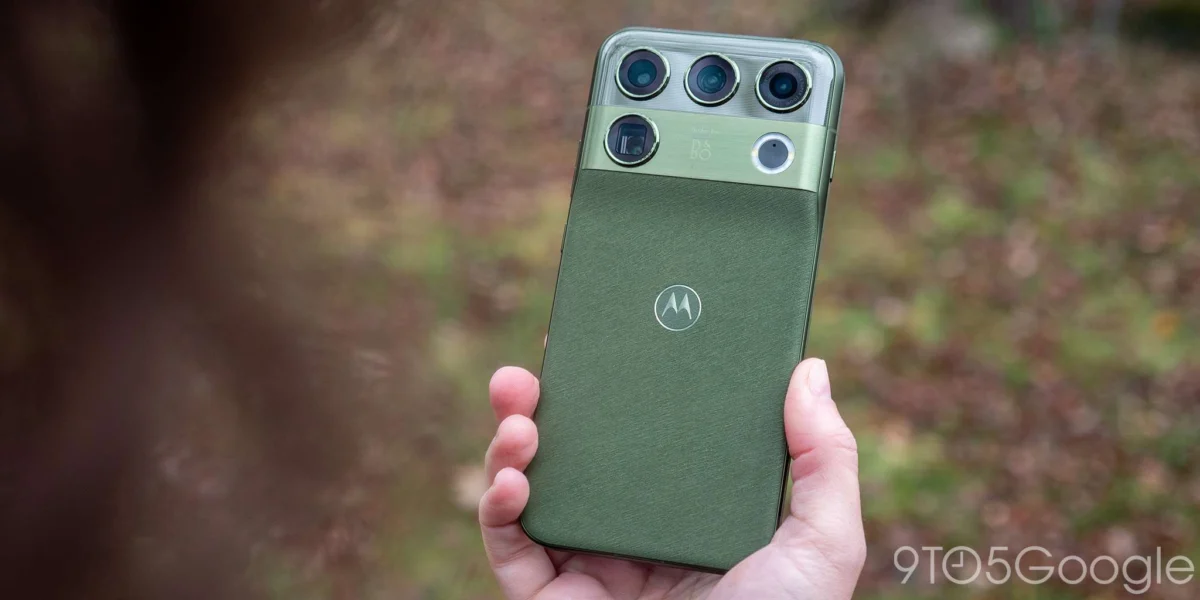
The industrial design of the Motorola Signature 27 departs from the current industry trend of creating "flat, slab-like" devices. Instead, the hardware features a sophisticated aesthetic characterized by a textile-clad back panel in the "Capulet Olive" colorway, a ribbed metal frame, and contoured edges that facilitate improved ergonomics. This tactile approach to design suggests a deliberate effort to differentiate the device in a crowded market where glass-and-metal sandwiches have become the standard.
Despite housing a substantial battery and a complex camera array, the device maintains a balanced weight distribution. The camera housing, while protruding, is designed to minimize device instability when placed on flat surfaces, a common complaint with modern high-end handsets. The structural integrity is further complemented by a high-refresh-rate LTPO tandem OLED display. Technical specifications for the screen include advanced dimming protocols, utilizing DC dimming for high-brightness scenarios and a 2160Hz PWM dimming frequency for low-light environments, specifically engineered to reduce eye strain and flicker-related fatigue.

Chronology of Development and Market Entry
The development of the Signature 27 can be traced back to early 2025, when Motorola signaled a shift in its R&D budget toward "Signature" branding—a moniker intended to signify the company’s highest tier of engineering. The device officially entered the North American market in late November 2026, coinciding with the peak of the Q4 holiday shopping season.

This launch timeline was meticulously planned to compete directly with established flagship incumbents, including the latest iterations of the Apple iPhone and Google Pixel series. By launching during the Black Friday period, Motorola aimed to leverage increased consumer spending, though the $1,599 entry price remains firmly in the "ultra-premium" tier, placing it in direct competition with high-end foldable devices and top-tier camera-centric phones.
Performance and Software Integration

Under the hood, the Signature 27 operates on a highly optimized iteration of the Android 17 operating system. Early performance benchmarks indicate a focus on system responsiveness, with rapid app launch times and fluid animation transitions. However, the software layer introduces aesthetic changes, such as subtle gradients in the quick-toggle menus, which have drawn mixed feedback. Critics argue that these elements conflict with the established "Material Design" language preferred by the broader Android ecosystem.
A core component of the device’s value proposition is its deep integration with advanced software features, including "Rambler," "Sign to Text," and "Create My Widget." Motorola has also confirmed that the device is on the roadmap for full "Gemini Intelligence" support, Google’s latest generative AI suite. While the exact deployment date for these features remains subject to ongoing updates, the hardware is confirmed to be fully compliant with the computational requirements of these AI tools. This alignment with Google’s software roadmap is a departure from previous years, suggesting a deeper technical partnership between the two companies.

Camera Hardware and Industry Benchmarking
Perhaps the most significant metric for the Signature 27 is its performance in objective imaging tests. According to recent data from DXOMark, the Signature 27 holds the second-highest global ranking for smartphone camera performance, trailing only the Huawei Pura 80 Ultra and outperforming several recent iPhone Pro models.

This ranking is based on a multifaceted evaluation of dynamic range, color accuracy, and low-light performance. Motorola’s marketing campaign for the device has leaned heavily into these scores, aiming to shift consumer perception from "good enough" photography to professional-grade capability. The camera system’s ability to process images in real-time is supported by a dedicated ISP (Image Signal Processor), which facilitates the "zippy" performance noted by early reviewers.
Broader Implications for the Smartphone Market

The release of the Signature 27 carries broader implications for the global smartphone market. For years, Motorola’s market share in North America was heavily skewed toward prepaid and mid-range carrier-subsidized devices. By introducing a $1,599 flagship, the company is testing the elasticity of its brand loyalty. If successful, this could signal a long-term shift where Motorola re-establishes itself as a premium Tier-1 manufacturer.
However, the high price point also introduces significant risk. In a market where consumers are increasingly holding onto their devices for three to four years, the value proposition must extend beyond hardware specifications. The long-term success of the Signature 27 will depend on Motorola’s commitment to software support cycles, security updates, and the actual utility of its AI-driven features.

The industry is currently observing whether consumers are willing to invest at this price point for a non-folding device in 2026. If the Signature 27 achieves strong sales, it may force competitors to rethink their own premium pricing strategies and design priorities. Conversely, if the device struggles, it may reinforce the narrative that the "ultra-premium" market is effectively a duopoly between the dominant iOS and Android market leaders.
In summary, the Motorola Signature 27 stands as a milestone in the company’s recent history. While it faces a challenging market environment and intense competition, its focus on ergonomic design, display technology, and high-ranking camera performance provides a strong foundation for its flagship ambitions. Whether the device can sustain its momentum will be determined by the reception of its software ecosystem and the long-term reliability of its high-end components.