The landscape of modern web development continues to evolve at a rapid pace, driven by collaborative efforts across browser vendors, standards bodies, and front-end engineering communities. Over recent weeks, a series of notable advancements, proposals, and feature releases have reshaped how developers approach user interface design, layout engineering, and progressive enhancement. From innovative interaction models such as delayed-to-instant tooltips and interest invokers, to groundbreaking additions like the native <geolocation> element and the Custom Highlight API, the web platform is equipping developers with more native, performant tools than ever before. This report examines the most significant updates, technical implications, and expert discourses circulating within the CSS and front-end ecosystem.
Interactive UI Patterns: Refining Tooltips and Interest Invokers
User experience (UX) micro-interactions often present subtle engineering challenges, particularly regarding tooltips. Historically, developers faced a dichotomy: tooltips either appeared instantly—causing visual clutter and accidental triggers when users rapidly moved their cursors across a page—or they suffered from uniform delays that made closing them frustratingly sluggish.
Addressing this usability hurdle, developer Abhishek Jakhar recently published a technical breakdown demonstrating how tooltips should ideally function: delayed upon initial hover to prevent accidental activation, but immediate upon dismissal once the user moves away. Building upon this concept, developer Chris Coyier introduced a modern, standards-based implementation leveraging "interest invokers." This emerging browser capability introduces two critical CSS properties: interest-delay-start and interest-delay-end.
While interest invokers currently enjoy exclusive support within Chromium-based browsers, the technique exemplifies the core tenet of modern web engineering: progressive enhancement. By implementing these native properties where supported while maintaining fallback logic for other rendering engines, developers can ensure a resilient user experience across diverse browser environments.
Progressive Enhancement and the New <geolocation> HTML Element
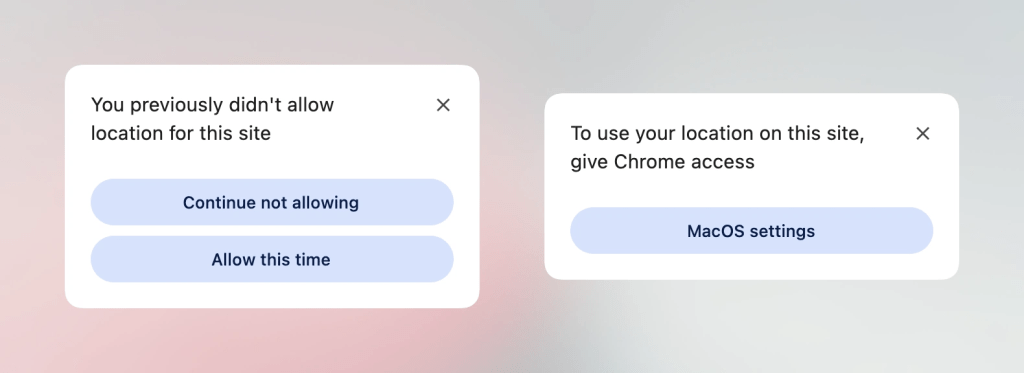
Managing geolocation data has historically been one of the more cumbersome tasks in web development. The traditional Geolocation API relies heavily on complex underlying hardware ecosystems—including GPS satellites, Wi-Fi triangulation, and cellular tower proximity—frequently resulting in cumbersome permission prompts and rigid permission-management workflows that frustrate end users.
To streamline this process, browser engineers have introduced the experimental <geolocation> HTML element. Designed to abstract and simplify location requests, the element integrates location-fetching capabilities directly into the Document Object Model. However, pioneering developers have noted early quirks, most notably specific styling restrictions that limit how deeply engineers can customize the native permission dialogs and rendered components.
Because adoption remains restricted primarily to Chrome, community experts like Piccalilli have outlined robust strategies for utilizing the <geolocation> element alongside legacy Geolocation API methods. This dual-approach architecture allows forward-thinking teams to adopt new web standards safely today without breaking core functionality for visitors using browsers that have yet to implement the specification.
High-Performance Syntax Highlighting via the Custom Highlight API
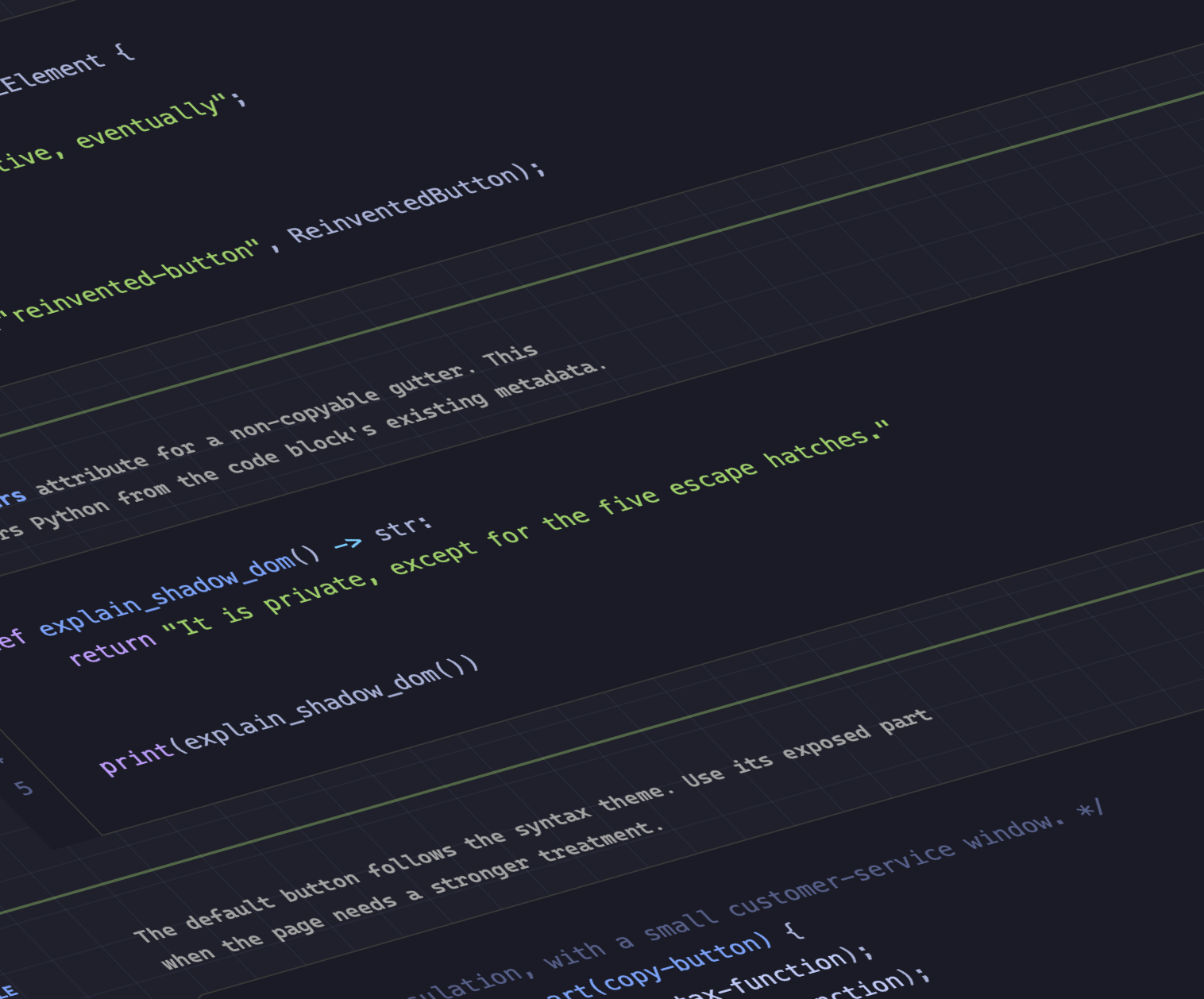
Syntax highlighting has traditionally relied on heavy JavaScript parsers that inject numerous HTML span elements into the DOM, consuming significant memory and increasing processing overhead during page rendering. A paradigm shift is currently underway, however, thanks to the wider adoption of the CSS Custom Highlight API.
Illustrating the practical application of this specification, developer Dave Rupert recently unveiled "MicroLighter," a lightweight syntax highlighter built entirely around the ::highlight() pseudo-element. By decoupling styling from the underlying DOM structure, MicroLighter applies syntax coloration dynamically without modifying the node tree. Industry analysts note that this approach drastically reduces memory consumption and execution time, particularly on content-heavy documentation pages and code repositories, marking a significant win for overall web performance.
Extracting CSS Grid Layout Metrics into Custom Properties
For years, a persistent limitation of CSS Grid has been the inability to easily query runtime layout information—such as the exact number of rows, columns, or the precise X and Y coordinates of individual grid items—and feed that data back into CSS custom properties.
Front-end architect Temani Afif recently bridged this capability gap by demonstrating innovative techniques to map CSS grid geometry directly into CSS variables. Although current implementations require columns to maintain equal widths, the implications of this breakthrough are profound. Afif subsequently demonstrated how this layout awareness can be utilized to calculate hover proximity dynamically via modern CSS, enabling complex spatial interactions that previously demanded heavy JavaScript event listeners.
Architectural Debate: Two-State Versus Tri-State Dark Mode Toggles
As dark mode preference becomes a baseline expectation for modern web applications, architectural discussions surrounding user interface toggles have intensified. A notable debate has emerged between prominent web standards advocates regarding the ideal state-management model for theme switching.
Lea Verou has strongly advocated for a streamlined two-state toggle system, while fellow standards expert Bramus has made a comprehensive case for a tri-state approach (incorporating explicit light, dark, and system-default operating modes). Meanwhile, community perspectives—such as those synthesized by Vale.Rocks—highlight the growing popularity of an "auto-until-overridden" two-state paradigm. This model respects the user’s operating system preferences by default while allowing manual overrides to persist seamlessly, offering a balanced compromise between automated convenience and user agency.
Performance Optimization: The Class Prefix Selector Proposal
Class selection in large-scale CSS architectures has long relied on attribute selectors to target elements sharing common naming conventions. However, attribute selectors can introduce noticeable performance overhead during the browser’s style calculation phases because they force engines to scan string attributes rather than optimized class structures.
Bramus recently introduced a formal proposal for the "class prefix selector," a syntax designed to streamline pattern-based class matching. By utilizing a concise syntax such as .something-*, developers can target multiple classes natively and efficiently. Comparative benchmarks indicate that this proposed selector is significantly faster and cleaner than legacy attribute selectors like [class^="something--"] or [class*=" something-"]. Although browser support is not yet established, the simplicity and performance benefits of the proposal suggest strong potential for rapid standardization.
Advanced Feature Detection with @supports named-feature()
Feature detection in CSS has historically relied on property-value pairs within @supports rules. However, testing complex browser behaviors—such as whether a rendering engine correctly respects CSS transforms when applied to anchor-positioned elements—has remained difficult or impossible to query reliably.
To solve this, browser vendors have introduced the @supports named-feature() function. Currently supported in Chrome, this capability permits developers to query highly specific browser behaviors and sub-features that were previously undetectable. By expanding the scope of conditional CSS rules, named-feature() empowers developers to deploy sophisticated layout enhancements safely, ensuring graceful degradation across disparate browser versions.
Layout Balancing: The Arrival of flex-wrap: balance
Addressing typographic and layout aesthetics, the CSS working group has expanded layout balancing capabilities. Following the successful deployment of text-wrap: balance for typography, Chromium-based browsers are now implementing flex-wrap: balance.
Highlighted extensively by developer Ahmad Shadeed, flex-wrap: balance automatically distributes wrapped flex items evenly across rows or columns, preventing awkward layouts where a final row contains only a single, isolated element. This native layout property eliminates the need for manual margin hacks or complex JavaScript calculations, ensuring visually harmonious interfaces across varying viewport sizes.
Broader Industry Implications and Future Outlook
The rapid convergence of these CSS and HTML specifications underscores a broader industry trend: the transition of complex layout, state management, and performance-critical operations from JavaScript frameworks into native browser engines.
As features like the Custom Highlight API, interest invokers, layout-aware CSS variables, and native feature detection mature, developers are empowered to write cleaner, more maintainable code with substantially reduced external dependencies. Industry analysts project that as these experimental features transition into baseline web standards over the coming quarters, the overall performance, accessibility, and resilience of the global web ecosystem will experience a marked and lasting improvement.