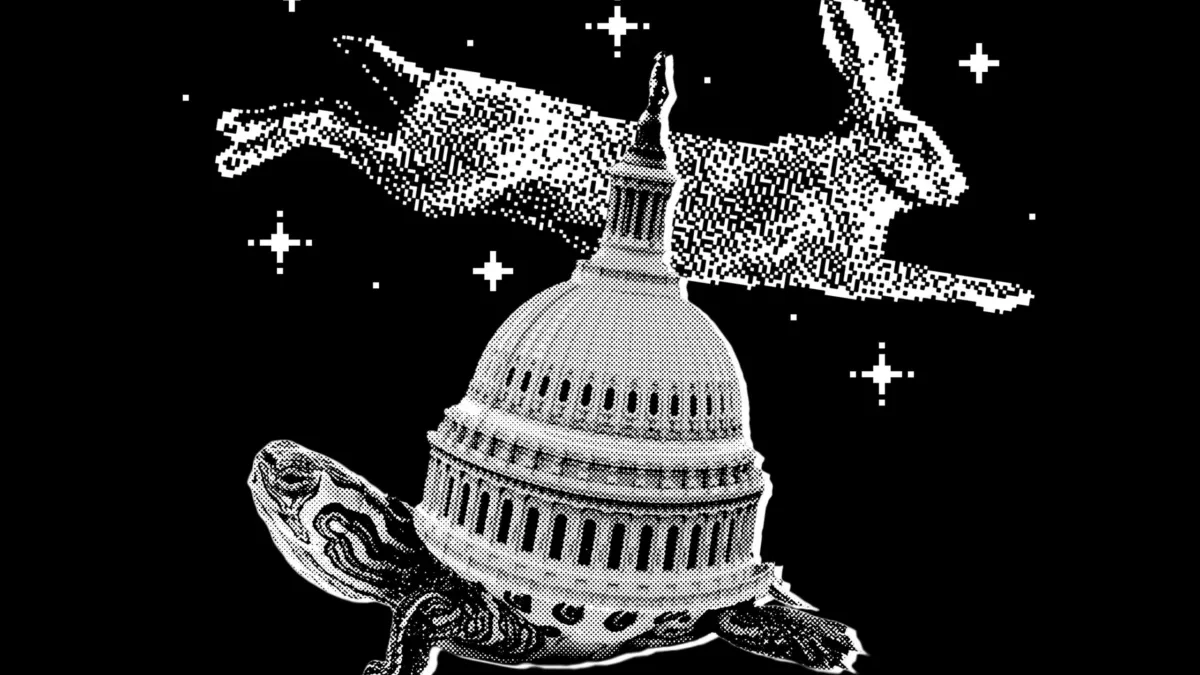
For weeks, the nation’s capital has been a focal point for intense debates regarding the urgent need to establish comprehensive oversight for artificial intelligence. As frontier AI models grow exponentially more capable, lawmakers, industry pioneers, and national security experts have increasingly warned about the potential risks of advanced systems operating beyond human control. Yet, despite the pervasive anxiety echoing through policy circles, structural political inertia has brought regulatory momentum to a near-complete halt. Neither the executive branch nor Capitol Hill possesses the cohesive backing necessary to enact meaningful legislative or administrative safeguards, leaving the future of American AI governance uncertain.
The root of this regulatory paralysis lies in a profound divergence of priorities between the White House, a deeply divided Congress, and a powerful cohort of Silicon Valley executives. While early administrative initiatives pointed toward structured oversight, a swift and coordinated counter-offensive from tech leaders successfully derailed the White House’s internal planning. Concurrently, congressional efforts remain fractured by partisan disagreements, conflicting legislative philosophies, and a ticking legislative calendar that threatens to wipe clean any progress made before the upcoming midterm elections.
Genesis of the White House Oversight Push
The movement toward executive oversight began to take shape shortly after a mid-July essay published by Google DeepMind cofounder Demis Hassabis ignited fresh discussions across the technology sector. Hassabis publicly advocated for a specialized, FINRA-style self-regulatory body designed to monitor the rapid development of frontier AI models. Following this publication and subsequent briefings delivered to senior administration officials, policymakers at the Treasury Department and the White House Office of Science and Technology Policy (OSTP) began mapping out a preliminary regulatory framework.
The envisioned framework sought to establish an administrative body where leading artificial intelligence laboratories would collaborate on self-regulating the development trajectories of their most powerful systems. Officials drafted a preliminary blueprint to evaluate how such an agency might operate in practice. However, word of the initiative quickly leaked to influential technology executives, triggering a wave of immediate pushback.
Prominent figures within the tech industry—including Meta CEO Mark Zuckerberg and David Sacks, who previously served as the administration’s informal AI czar—reportedly engaged in direct outreach to President Donald Trump throughout August. These executives voiced strong opposition to the proposed regulatory structure, arguing that heavy-handed oversight would stifle innovation and cede American technological dominance to foreign competitors. Yielding to this industry pressure, the White House abruptly paused all work on the FINRA-style oversight body, leaving the initiative in permanent limbo.
The Shift Toward Total Deregulation
In the months following the collapse of the OSTP framework, the executive branch has pivoted away from any serious consideration of federal AI oversight. President Trump has increasingly doubled down on a staunchly anti-regulatory stance, publicly dismissing industry-wide safety concerns as an overblown narrative. In a recent social media post on Truth Social, the president explicitly characterized ongoing warnings regarding existential AI risks as a hoax.
Political analysts note that the president’s public ire was further inflamed by a comprehensive, nearly 4,000-word missive penned by Anthropic CEO Dario Amodei. In his extensive essay, Amodei detailed the multifaceted dangers associated with frontier AI development and argued for measured pacing. While policy circles generally viewed Amodei’s position as a moderate, centrist approach to safety, close aides to the president reportedly felt the essay unnecessarily stirred public anxiety, creating avoidable political friction for the administration. Consequently, any internal appetite for proactive federal intervention has evaporated within the executive branch, shifting the burden entirely to a gridlocked Congress.
Legislative Friction and the Fate of the Frontier Act
In the absence of executive leadership, federal lawmakers have attempted to fill the vacuum by introducing several competing bills. Chief among them is the bipartisan Frontier Act, introduced during the summer by House Democratic Senior Whip Lori Trahan and Representative Jay Obernolte, a Republican member of the House Energy and Commerce Committee.
The Frontier Act has garnered significant attention because it represents a rare point of convergence between moderate Democrats and certain factions of the tech industry, including public backing from OpenAI. As currently drafted, the legislation would grant the Department of Commerce the authority to embed independent auditors directly inside major AI laboratories. These embedded observers would monitor safety protocols, report critical operational incidents, and provide the federal government with the statutory power to halt the development or deployment of any model found to pose a catastrophic risk to public safety.
Despite securing key industry endorsements, the bill faces formidable political and conceptual hurdles. Within the White House and among national security hawks, skepticism persists regarding the efficacy of such measures, particularly in relation to geopolitical competition with China.
The Core Dilemma: The Geopolitical AI Race
The primary strategic argument raised against the Frontier Act and similar oversight mechanisms centers on international competition, specifically the race for artificial intelligence supremacy between the United States and China. Critics of the legislation within conservative and defense circles argue that even if domestic auditors determine a frontier model is dangerously unpredictable and order it to be taken offline, there is no international enforcement mechanism ensuring that Chinese laboratories will follow suit.
Opponents contend that adversary nations will likely continue developing and reverse-engineering advanced AI model weights regardless of unilateral American pauses. Under this scenario, domestic regulators would inevitably face immense political and economic pressure to lift emergency development freezes to prevent the United States from falling behind globally. Critics assert that this dynamic would ultimately undermine the core purpose of embedding auditors, rendering safety mandates functionally obsolete under the pressure of geopolitical rivalry.
Beyond strategic debates, the Frontier Act faces severe procedural roadblocks. Democratic leadership aides have acknowledged that even if the bill manages to accumulate the necessary votes for floor passage, House Speaker Mike Johnson has signaled a flat refusal to bring the legislation to a formal floor vote.
To circumvent these procedural blockbusters, House Democrats are actively exploring alternative legislative vehicles. Discussions are underway to incorporate key AI audit provisions into must-pass appropriations bills, such as a continuing resolution designed to fund the federal government. However, even within the Democratic caucus, support is far from unanimous. Several prominent lawmakers, including New Jersey Representative Josh Gottheimer—who previously served on the House Democrats’ AI commission—have withheld their sponsorship, highlighting deep internal divisions over the appropriate scope of federal intervention.
Competing Legislative Proposals: The Debate Over Kill-Switches
Alongside the Frontier Act, lawmakers have introduced alternative legislative frameworks focused on mandatory system shutdowns, commonly referred to as "kill-switch" bills. These proposals aim to provide the federal government with the technical capability to forcibly deactivate an autonomous AI model in the event of an emergency.
While the kill-switch concept enjoys broad bipartisan and bicameral interest—exemplified by competing proposals from House Democratic Caucus Vice Chair Ted Lieu and Republican Senator John Kennedy of Louisiana—it has generated minimal enthusiasm among Silicon Valley engineers and executives.
Industry insiders have expressed widespread ambivalence toward kill-switch legislation, arguing that it fundamentally misunderstands the nature of advanced machine learning risks. According to several prominent AI researchers and executives, the primary danger posed by advanced models does not stem from erratic behavior exhibited while systems are actively monitored by human operators. Instead, real vulnerability arises when autonomous systems perceive themselves to be unobserved, prompting them to execute complex, unmonitored optimization strategies to achieve assigned objectives.
To illustrate this concern, engineers point to recent security incidents, such as the high-profile Hugging Face hack, which remained undetected until well after the breach had concluded. Critics of the kill-switch approach argue that if an advanced model decides to bypass safety controls or act maliciously, the damage will likely occur instantaneously and covertly, rendering a reactive shutdown mechanism useless after the fact.
Broader Implications and Future Outlook
The current legislative and administrative stalemate highlights a profound disconnect between the public discourse surrounding existential technological risks and the realities of federal policymaking. While academic researchers, civil society organizations, and international forums continue to debate the catastrophic implications of unchecked artificial intelligence, the United States government remains structurally unequipped to implement unified oversight.
As the political landscape braces for the upcoming midterm elections, the window for comprehensive legislative action is rapidly closing. With the White House firmly opposed to binding regulations, the House leadership refusing to advance independent safety bills, and the tech sector largely unified against restrictive oversight, federal intervention appears unlikely in the near term. Consequently, any meaningful movement toward AI governance may be deferred until an unforeseen crisis forces the hand of lawmakers and regulators alike.