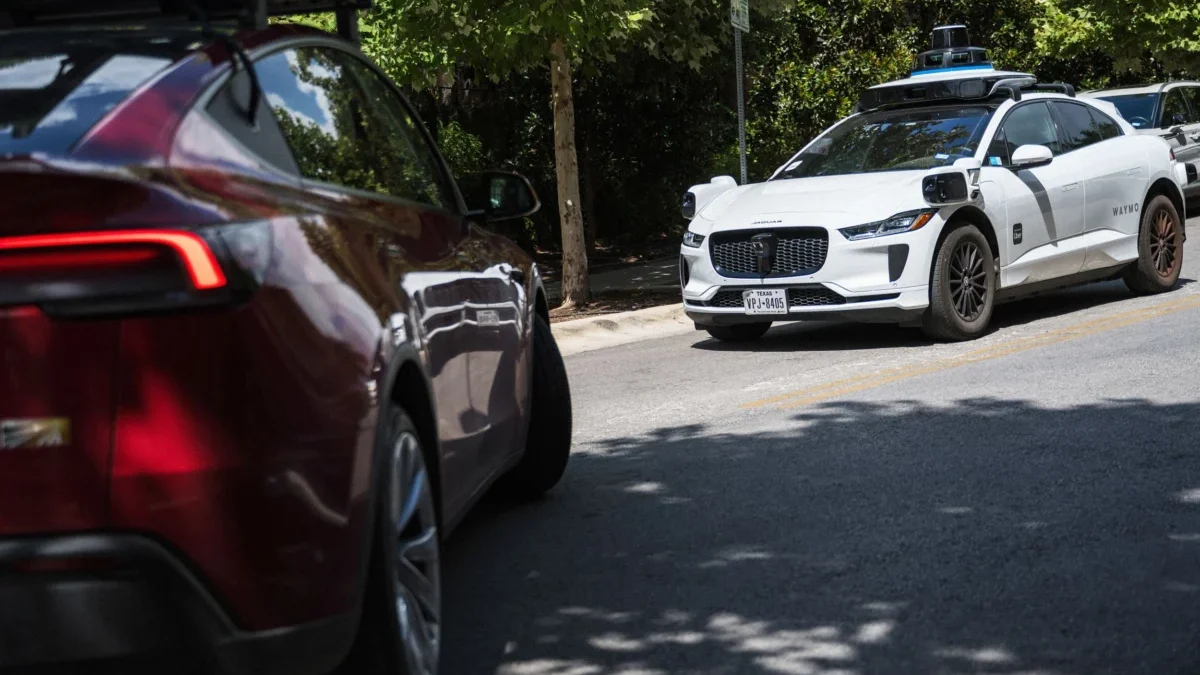
The United States federal government has escalated its scrutiny of the autonomous vehicle industry, launching a formal regulatory investigation to determine whether a software recall executed by Alphabet-owned Waymo successfully resolved critical safety failures involving autonomous robotaxis improperly passing stopped school buses. The inquiry, spearheaded by the National Highway Traffic Safety Administration (NHTSA), underscores mounting federal vigilance over the deployment of artificial intelligence and machine-learning systems on public roadways. At the core of the investigation is whether Waymo’s software remediation actually prevented its autonomous fleet from unlawfully bypassing school buses displaying flashing red lights and extended stop arms—universal legal indicators that children are actively boarding or disembarking.
Passing a stopped school bus is a severe traffic infraction illegal in all fifty states, carrying strict penalties designed to protect vulnerable pedestrians. The NHTSA’s decision to open a formal query marks a significant milestone in the regulatory oversight of autonomous driving systems (ADS). While traditional automotive recalls typically involve physical mechanical failures, software-driven autonomous fleets present entirely novel challenges for regulators. Software patches can be deployed rapidly over the air, but verifying their efficacy across complex, unpredictable real-world driving environments remains a formidable task for federal oversight bodies.
Chronology of Events and the Software Recall
The sequence of events leading up to the federal investigation highlights a persistent operational challenge for Waymo’s engineering teams. The issue first surfaced publicly in the fall, when a series of incidents involving Waymo vehicles failing to recognize or appropriately respond to school buses came to light. These infractions drew immediate concern from safety advocates, local school districts, and federal regulators who view the safety of children near roadways as a paramount priority.
In mid-November, according to regulatory filings, Waymo rolled out an internal software modification intended to address the gap in vehicle perception and decision-making regarding school buses. Following this initial deployment, the company issued an official voluntary safety recall a month later in mid-December. However, subsequent data reviewed by federal safety officials indicated that a troubling majority of the reported school bus passing incidents actually occurred after the implementation of these purported fixes.
The timeline became even more complicated early the following year. A formal incident report released by the National Transportation Safety Board (NTSB)—the independent federal agency responsible for investigating civil transportation accidents—revealed that yet another school bus passing incident involving a Waymo vehicle occurred in mid-January. This event transpired several weeks after both the November software update and the official December voluntary recall. Consequently, the NTSB initiated its own parallel investigation into the school bus passing phenomena, compounding the regulatory pressure facing the autonomous vehicle developer.
Industry-Wide Implications and Regulatory Precedent
The implications of the NHTSA’s investigation extend far beyond Waymo, casting a spotlight on how federal regulators evaluate software-based recalls in the rapidly expanding autonomous vehicle sector. Historically, recall queries initiated by the NHTSA carry substantial regulatory weight and have frequently resulted in civil penalty settlements. In past cases involving major automakers and technology developers, failure to adequately address safety defects or delayed reporting has led to multimillion-dollar financial penalties.
As autonomous vehicles transition from controlled testing environments to widespread commercial deployment in dense urban areas, regulatory frameworks are evolving in real time. The NHTSA is increasingly scrutinizing how companies validate software updates before and after deployment. Unlike mechanical components that wear out predictably, AI-driven software continuously learns, adapts, and updates, making traditional safety validation methodologies obsolete. The current investigation into Waymo serves as a litmus test for how federal agencies will police software updates that fail to achieve their intended safety outcomes on the first attempt.
Field Testing and Data Collection Efforts
The difficulty of training autonomous systems to correctly interpret human-driven commercial vehicles and specialized traffic control devices is well-documented within the engineering community. Late last year, the complexity of this task was underscored when the Austin Independent School District in Texas directly assisted Waymo in a specialized data collection effort.
In an extraordinary cooperative measure, the school district coordinated a half-day data collection event for Waymo vehicles in an empty parking lot. Real school buses and authentic stop-arm signals were brought to the site to provide Waymo’s engineering team with controlled, high-fidelity data. The objective was to help the company’s machine-learning algorithms better recognize and respond to the specific visual cues of school buses. Notably, this data collection event took place after Waymo had already issued its software fix and its official voluntary recall, illustrating that the company recognized ongoing gaps in its vehicle perception models even after public remediation steps had been taken. Despite these targeted training exercises, the operational incidents persisted, prompting the heightened federal response now underway.
Corporate Response and Ongoing Engagement
Waymo has strongly defended its safety record and emphasized its proactive approach to collaborating with regulatory bodies. In an official written statement, Waymo spokesperson Dana Gallagher addressed the ongoing investigations, highlighting the technological progress the company has achieved.
"Waymo has made significant improvements to vehicle behavior around school buses," Gallagher stated, noting that the company has not received a single citation for passing a school bus since the previous March—months after the mid-December software recall was processed. Furthermore, Gallagher expressed optimism regarding the company’s ongoing relationship with federal regulators, writing that Waymo looks "forward to continuing our engagement on recall processes for AV software that continues to learn and improve."
This statement reflects the delicate balance autonomous vehicle developers must maintain: acknowledging regulatory oversight while emphasizing the iterative, self-improving nature of machine-learning architecture. For companies like Waymo, proving that an autonomous system can adapt faster than regulatory enforcement mechanisms is essential for maintaining public trust and securing commercial expansion permits across major metropolitan markets.
Looking Ahead for Autonomous Vehicle Oversight
The formal NHTSA investigation into Waymo’s school bus recall represents a critical juncture for the autonomous vehicle industry. As regulatory bodies adapt to the realities of software-defined vehicles, the outcome of this inquiry will likely establish new precedents for how software recalls are monitored, tested, and enforced.
For Waymo, successfully navigating this federal scrutiny requires demonstrating clear, verifiable proof that its autonomous fleet can consistently comply with the most fundamental rules of the road. For the broader industry, the investigation serves as a stern reminder that federal safety mandates apply equally to lines of computer code as they do to steel bumpers and braking systems. As the NHTSA and NTSB continue their respective reviews, the findings will undoubtedly shape the regulatory landscape for autonomous mobility for years to come.