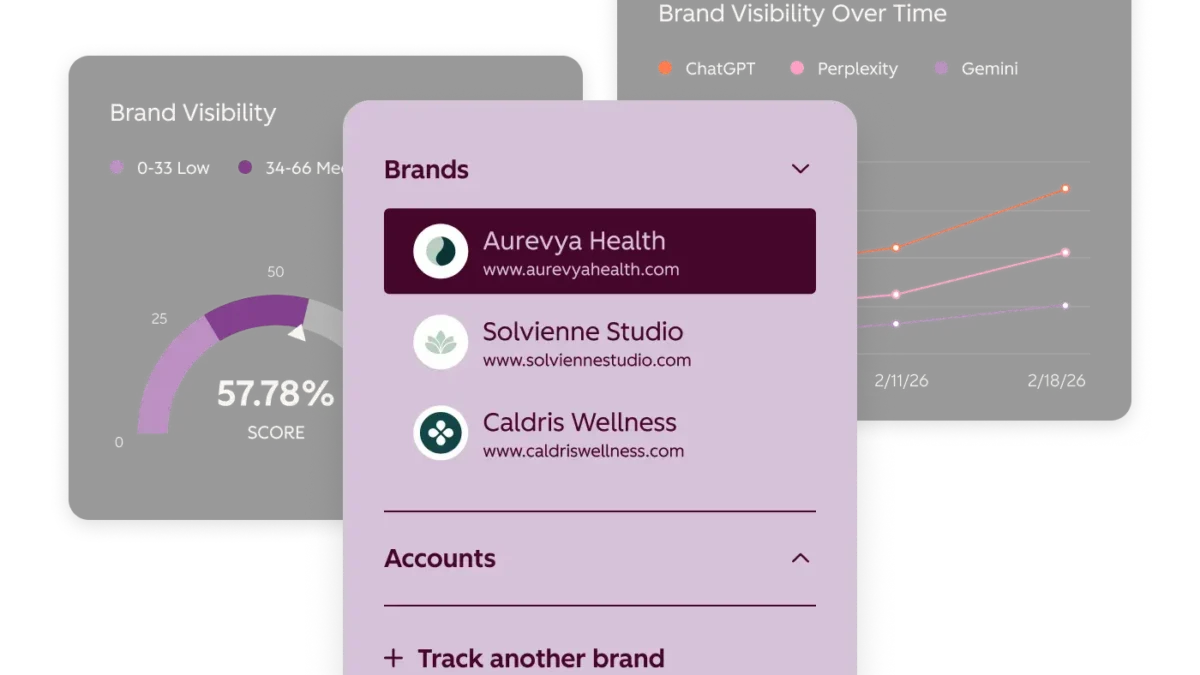
The digital marketing landscape is undergoing its most profound structural shift since the mainstream adoption of search engines two decades ago. As consumers increasingly bypass traditional search result pages in favor of synthesized, conversational responses from artificial intelligence platforms such as OpenAI’s ChatGPT, Google’s Gemini, and Perplexity, the metrics governing brand visibility have fundamentally changed. Marketing teams no longer measure success solely by keyword rankings on a standard search engine results page (SERP). Instead, they are urgently seeking visibility into whether, and how favorably, their brands are recommended within AI-generated narratives.
This technological evolution has propelled Answer Engine Optimization (AEO) from a speculative experiment into a core boardroom priority. Consequently, software procurement specialists are scrambling to evaluate specialized solutions. Among the frontrunners in this emerging category are Profound and Semrush, two distinct platforms offering robust capabilities for tracking brand representation across large language models (LLMs). Alongside these platforms, native solutions like HubSpot AEO have entered the fray, complicating procurement decisions for enterprise marketing departments. Selecting the appropriate platform requires a careful, methodical evaluation of engine coverage, prompt intelligence, crawler analytics, workflow integration, and overall total cost of ownership.
Understanding the Paradigm Shift: Traditional SEO Versus AEO
To comprehend why software tools like Profound and Semrush have become indispensable, one must examine the macro-level transformation of user behavior. Recent empirical research underscores the urgency of this transition. Data published by the Pew Research Center indicates that users click on a traditional organic search link in only 8% of web visits when a Google AI summary is present, compared to 15% of visits when no such summary appears. Furthermore, industry projections from research and advisory firm Gartner indicate that traditional search engine volume could drop by as much as 25% by 2026, as virtual agents and conversational chatbots absorb routine informational and commercial queries.
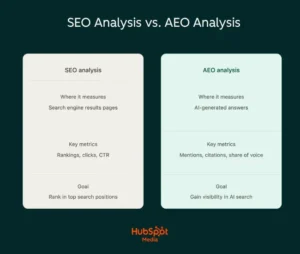
In this new paradigm, AEO focuses on earning accurate, favorable mentions, citations, and product recommendations directly inside AI-generated answers. While search engine optimization (SEO) optimizes web pages for algorithmic ranking based on keywords and backlinks, AEO must account for how probabilistic language models synthesize vast swathes of training data and real-time web crawls to formulate direct recommendations.
The core division in the marketplace currently lies between dedicated, purpose-built AEO platforms and comprehensive, multi-channel marketing suites that incorporate AI visibility into pre-existing toolsets. Profound represents the specialist route, engineered from the ground up for server-log crawler analytics, SKU-level AI shopping data, and no-code content automation. Semrush, conversely, approaches AEO by embedding AI visibility features within its expansive traditional SEO suite, directly tying LLM tracking to its massive keyword databases, technical site audits, and backlink analysis tools.
Comprehensive Feature Evaluation: Engine Coverage and Prompt Intelligence
When evaluating AEO software, engine coverage serves as the foundational metric. A tool that monitors only a single LLM leaves marketing teams vulnerable to blind spots across competing ecosystems.
Profound structures its engine coverage across tiered plans. Its Starter tier monitors ChatGPT exclusively, while the Growth tier expands monitoring to three major engines: ChatGPT, Perplexity, and Google AI Overviews. The Enterprise tier scales coverage up to ten distinct engines, incorporating Gemini, Claude, Copilot, Meta AI, Grok, and DeepSeek. Profound captures these insights through browser-based execution runs that closely mirror what actual consumers experience on daily cadences.

Semrush takes a broader initial approach. Its base configurations monitor five critical engines out of the box: ChatGPT, Perplexity, Gemini, Google AI Overviews, and Google AI Mode. Advanced enterprise variants expand this monitoring to specialized models like Grok and Claude.
Beyond tracking where brands appear, prompt intelligence dictates how effectively marketing teams can plan content strategies. Profound leverages double opt-in consumer panel data to discover authentic AI queries, classifying buyer intent into informational, commercial, conversational, or generative categories, while breaking down prompt volumes by demographic markers such as age, income bracket, and geographic region. Semrush approaches prompt research through its extensive database of over 239 million LLM prompts, supported by a foundational repository encompassing 26.8 billion keywords and 808 million domain profiles. This vast dataset allows organizations starting with zero historical data to quickly identify prompts already driving category-level answers.
Technical Analytics, AI Crawlers, and Server-Log Verification
Technical execution represents one of the most significant divergences between specialized platforms and generalist suites. Profound distinguishes itself through advanced server-log analytics. Its Agent Analytics feature reads raw server logs from major infrastructure providers—including Cloudflare, Vercel, Akamai, AWS, and Fastly—allowing digital teams to track the precise frequency of AI crawler visits, differentiate legitimate AI bots from malicious scrapers, measure human referral traffic originating from generative engines, and actively submit new content variations to AI web agents. For ecommerce organizations, Profound’s specialized ChatGPT Shopping module tracks product recommendations, attribute accuracy, and consumer sentiment down to the individual SKU level.
Semrush addresses technical readiness through an integrated site audit methodology. Its AI-Ready Site Audit inspects website architecture to ensure compatibility with emerging AI crawlers, flagging potential blocks, rendering errors, and structural issues. Ecommerce monitoring within Semrush is handled through its broader Traffic, Market Insights, and SERP toolkits, providing high-level contextual awareness rather than deep, SKU-level attribution.
Industry analysts emphasize that technical accessibility is a necessary precondition, not a guaranteed catalyst, for citation. Webmasters must carefully configure robots.txt directives and structured schema markup to ensure that legitimate crawlers like GPTBot and PerplexityBot can effortlessly ingest product specifications, pricing data, and editorial content.
Dashboards, Workflows, and Content Automation
Once visibility is measured, organizational workflow dictates how efficiently a marketing team can operationalize those insights.
Profound offers sophisticated workflow tools, including Profound Agents—a drag-and-drop automation builder—and Profound Sheets, a specialized spreadsheet environment where individual columns function as automated agents capable of generating AEO content briefs, frequently asked questions, and optimized drafts. These workflows incorporate human-in-the-loop approval gates and support direct publishing integrations with major content management systems such as WordPress, Contentful, Framer, and Sanity.
Semrush approaches workflow through its comprehensive Content Toolkit, which generates unified SEO and AEO briefs, enforces brand voice guidelines, and manages multi-channel distribution. Furthermore, Semrush features a Model Context Protocol (MCP) server that allows engineers and marketers to query live Semrush data conversationally inside development environments like Claude, ChatGPT, Cursor, or VS Code. Additional toolkits cover adjacent marketing disciplines, including local SEO, social media management, advertising, and AI Public Relations—a vital tactic aimed at securing mentions in media outlets frequently cited by LLMs.

Financial Considerations and Total Cost of Ownership
Pricing models across the AEO software sector reflect the specialized nature of the technology. Profound operates on a monthly subscription model with tiered capabilities:
- Starter Tier: Priced at $99 per month, this tier includes 100 Agent credits, access to Profound Sheets, 1 user seat, 1 geographic region, and 1 language, though it is limited to monitoring a single engine (ChatGPT).
- Growth Tier: Priced at $399 per month, this tier expands to 400 Agent credits, CSV and JSON data exports, and up to 3 user seats, while monitoring three major engines.
- Enterprise Tier: Available via custom quote, this tier unlocks full engine coverage (up to 10 platforms), advanced API access, single sign-on (SSO/SAML), and compliance infrastructure such as SOC 2 Type II documentation.
Semrush offers its AI Visibility capabilities as standalone packages or bundled within comprehensive suites like Semrush One, with entry-level pricing generally aligning with broader enterprise SEO packaging starting around $199 to $499+ per month depending on domain allowances and user limits.
Additionally, alternative solutions such as HubSpot AEO provide streamlined entry points at approximately $50 per month (or $45 billed annually), bundling prompt tracking across ChatGPT, Gemini, and Perplexity for teams prioritizing seamless integration with existing customer relationship management (CRM) workflows over deep enterprise log analytics.
Strategic Implications and Industry Verdict
As generative search continues to mature, marketing executives must carefully align their software investments with their organizational maturity and strategic goals.
Organizations operating in highly regulated industries, enterprise SaaS sectors, or complex ecommerce environments—where SKU-level tracking, log-file bot verification, and strict compliance controls are paramount—will find specialist platforms like Profound to be indispensable. Conversely, marketing teams that require a unified dashboard consolidating traditional rank tracking, backlink analysis, technical site auditing, and AI visibility under a single subscription will find Semrush to be the more practical, cost-effective solution.
Ultimately, the proliferation of AEO tooling marks the definitive close of the era when simple keyword optimization guaranteed digital visibility. As artificial intelligence redefines how information is discovered, evaluated, and consumed, brands that fail to measure and optimize their presence within conversational engines risk fading into digital obscurity, regardless of their standing in traditional search indexes.