The conventional wisdom surrounding investigative journalism often frames "impact" as a transformative, singular event—a legislative repeal, a resignation, or a total overhaul of a corrupt system. However, in the current political climate, where sweeping systemic change is frequently obstructed by gridlock, the most effective investigations are those that identify precise, actionable gaps within existing frameworks. By shifting the focus from grand ambition to granular structural analysis, journalists can catalyze tangible improvements that save lives and protect vulnerable populations, even when the broader political environment remains stagnant.
Beyond the Headline: Defining Success in Investigative Reporting
For many newsrooms, the success of an investigation is measured by immediate, headline-grabbing political consequences. Yet, the most enduring impact often stems from a deep-dive, "under the hood" understanding of how institutions function. When reporters act as structural engineers rather than mere observers, they can isolate specific failures—bureaucratic oversights, conflicting regulations, or misunderstood statutory exceptions—that policymakers are actually capable of addressing.
This approach requires a paradigm shift: journalists must treat the investigation not as an act of advocacy, but as a technical audit. By mapping the mechanical failure points of a system, reporting becomes a tool for reform that does not require ideological consensus to be effective.
Case Study: The Life of the Mother and Texas Abortion Exceptions
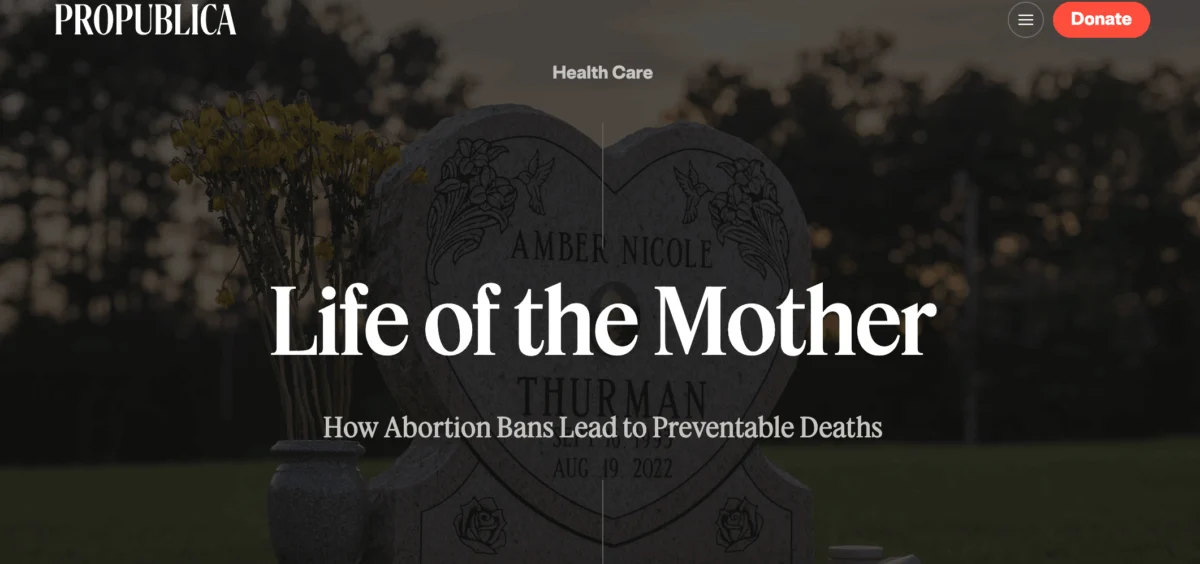
The necessity of this surgical approach was underscored by ProPublica’s recent investigation into the consequences of abortion bans in states like Texas. Following the U.S. Supreme Court’s decision in Dobbs v. Jackson Women’s Health Organization, many states enacted near-total abortion bans. While these laws included specific language intended to provide "life-saving exceptions" for pregnant patients, the practical application was fraught with confusion, fear, and medical delays.
A Chronology of Clinical Confusion
The impact of this reporting did not come from a repeal of the ban itself—a political impossibility in the current Texas legislature—but from exposing the disconnect between legislative intent and clinical reality.
- 2022: Post-Dobbs, Texas law enforcement and medical boards begin enforcing strict bans with vague language regarding "medical emergencies."
- 2023: Reports emerge of physicians delaying care for patients with non-viable pregnancies or life-threatening complications due to fear of felony prosecution.
- 2024: ProPublica publishes evidence documenting that the "exceptions" written into law were failing to protect women, leading to preventable morbidity and, in some documented cases, death.
By documenting specific instances where doctors were forced to wait until a patient was "near death" before intervening, the investigation provided a precise roadmap for lawmakers. The result was a targeted legislative response: Texas officials passed new laws designed to clarify the medical exceptions and mandated that the state medical board provide concrete training for physicians. This was not a change to the fundamental status of abortion access, but it was a critical procedural fix that directly addressed a lethal gap in the state’s healthcare system.
The Regulatory Void: A Historical Perspective on Oversight
The strategy of identifying "fixable cracks" is a proven methodology, as evidenced by earlier investigative work regarding unregulated facilities for children. In a landmark investigation into Florida’s reform schools, reporters uncovered how a 1984 state statute inadvertently created a "black hole" of accountability.
The law allowed reform homes for troubled youth to operate under a religious exemption, effectively bypassing state oversight. The lack of external scrutiny created an environment where physical, sexual, and psychological abuse could thrive undetected.
The Data of Neglect
When the investigation began, the public was outraged by the conditions reported by survivors. However, political leaders remained hesitant to challenge the religious exemption itself, fearing a protracted battle over constitutional rights. To achieve change, the reporting focused on two distinct, evidence-based avenues:
- Systemic Mismanagement: The investigation revealed that the state was unknowingly placing foster children—wards of the state—into these unregulated, high-risk facilities. Once this administrative failure was exposed, the state was compelled to immediately withdraw these children, removing them from harm’s way without needing to dismantle the religious exemption framework.
- Regulatory Benchmarking: By comparing the internal rules of the unregulated facilities against the strict state-mandated safety codes for licensed homes, the investigation exposed the absence of basic human rights protections. In regulated facilities, for instance, isolation and physical restraint were capped at one hour. In the exempt facilities, children were held in solitary confinement for weeks at a time. By identifying these specific discrepancies, the reporting provided state officials with a clear, administrative list of protections that could be applied through executive action rather than legislative overhaul.
Fact-Based Analysis: The Mechanic’s Approach to Journalism
The "mechanic’s approach" requires a departure from the traditional adversarial model. Instead of solely focusing on who is to blame, the investigative journalist must focus on how the machinery of the state is failing its citizens.
Identifying Failure Points
- The Intent vs. The Practice: In both the medical and child welfare examples, the problem was not necessarily a lack of law, but a failure of implementation. The legislation often intended to protect (e.g., life-saving exceptions, child safety codes), but the execution was flawed.
- The Information Asymmetry: Often, policymakers are unaware of the granular failures occurring at the ground level. A reporter who provides detailed evidence of these failures fills a knowledge gap that allows for immediate bureaucratic remedy.
- The Incremental Roadmap: By creating a list of "low-hanging fruit"—specific policy shifts that are technically feasible—journalists empower decision-makers who might be afraid of radical change but are often willing to support common-sense fixes to prevent tragedy.
The Ethical Boundary: Reporting vs. Lobbying
A critical distinction must be maintained: the reporter’s role is to illuminate the mechanism of failure, not to advocate for a specific legislative outcome. When journalists step into the role of lobbyists, they risk losing the objectivity that gives their reporting its weight.
However, providing data-rich, context-heavy reporting is not the same as lobbying. By meticulously documenting how a system fails—where the bottlenecks occur, which regulations are ignored, and which individuals are left unprotected—the reporter provides the raw material necessary for informed governance. The impact is a byproduct of the precision of the work. If the facts are undeniable and the structural failures are clearly identified, the pressure on policymakers to enact change becomes an objective necessity rather than a political choice.
Broader Implications for Modern Newsrooms
As the media landscape continues to fragment and political polarization complicates the path to legislative success, the "fix-it" model of investigative journalism offers a sustainable path forward. It allows newsrooms to deliver tangible value to their communities, fostering a sense of agency among readers who might otherwise feel powerless in the face of systemic dysfunction.
Furthermore, this method forces a higher standard of rigor. It is not enough to find a victim; the reporter must understand the law, the administrative rules, the chain of command, and the specific loophole that allowed the suffering to occur. It demands that journalists be as comfortable reading statute books and board minutes as they are interviewing sources.
Conclusion
The future of high-impact investigative journalism lies in the mastery of detail. By abandoning the pursuit of the "single silver bullet" solution and instead focusing on the repair of broken internal processes, journalists can secure meaningful improvements in the lives of citizens. Whether it is clarifying medical exceptions to save lives or closing regulatory gaps in child welfare, the ability to identify specific, fixable problems remains the most powerful tool in the reporter’s arsenal.
Ultimately, if the goal is to drive real-world change, the journalist must act as both a witness to injustice and an analyst of the system that permits it. By meticulously documenting the cracks in the foundation, we provide the blueprints for the repairs that are not only possible but necessary.
Alexandra Zayas, the deputy managing editor at ProPublica, brings these methodologies to the forefront in her training series, "Will Work for Impact: Fundamentals of Investigative Journalism." The program, aimed at refining the skills of modern investigative reporters, provides the tactical framework for navigating complex systems and securing structural reform through meticulous documentation.