The ambitious push by several major technology companies to establish artificial intelligence-powered glasses as the next transformative consumer innovation is facing significant headwinds, as a growing wave of negative consumer feedback regarding privacy infringements and practical wearability threatens to derail this nascent market. This evolving narrative echoes past failures in the smart glasses sector, raising critical questions about the viability of such devices in the public sphere.
Meta’s Privacy Conundrum: A Chronology of Concerns
Meta Platforms, Inc., a primary proponent of this technology, has found itself at the epicenter of these privacy debates. The company’s journey with its AI glasses, initially branded as Meta Ray-Bans and later as Meta AI glasses, has been marked by a series of incidents that underscore the inherent tension between advanced functionality and individual privacy.
In a concerning development, Meta was compelled to issue an update for its Meta AI glasses following reports that some users were actively seeking illicit means to tamper with the devices. Specifically, users were reportedly paying hackers to remove the crucial recording indicator lights, which are designed to signal when the glasses are actively recording video or capturing images. This deliberate circumvention of a fundamental privacy safeguard allowed wearers to record their surroundings surreptitiously, raising immediate red flags about consent and surveillance.
This incident was not an isolated occurrence but rather the latest in a series of privacy-related challenges for Meta’s camera-equipped eyewear. Earlier, reports, notably by Wired magazine, highlighted a rise in what came to be known as "Meta Ray-Ban creeps" – individuals recording others without their explicit knowledge or consent. Such incidents fueled public discomfort, transforming what was intended as a convenient personal recording device into a tool perceived by many as enabling surreptitious surveillance, with hours of potentially sensitive content streamed back to Meta’s systems.
The scope of these privacy concerns broadened dramatically in March, when U.K. regulators launched a formal investigation into Meta. This inquiry was prompted by alarming reports, initially detailed by the Swedish publication Svenska Dagbladet, which alleged that Meta’s content review contractors were accessing and viewing highly intimate footage captured by users through their glasses. This footage reportedly included "bathroom visits, sex, and other intimate moments," exposing a profound breach of user trust and data security. The investigation highlighted critical vulnerabilities in Meta’s content moderation and data handling protocols, questioning the extent of oversight and the ethical implications of human review of such deeply personal data.
Despite these escalating privacy concerns, Meta appeared to press ahead with even more potentially invasive features. The Financial Times reported that Meta was actively experimenting with a version of its AI glasses capable of recording user actions 24/7. This "always-on" recording capability, potentially operating without any visible recording indicators, was envisioned as part of a system to feed users’ daily activities into a personalized AI training model. The prospect of continuous, non-consensual data capture for AI development ignited widespread apprehension, with critics drawing parallels to dystopian surveillance scenarios and raising serious questions about data ownership, consent, and the boundaries of corporate data collection.
Further compounding these fears, Meta’s Chief Technology Officer confirmed the company’s exploration into adding facial identification capabilities to the device. The integration of facial recognition technology into wearable cameras would transform the glasses into powerful, portable surveillance tools, capable of identifying individuals in real-time. This potential feature immediately sparked renewed concerns among privacy advocates and civil liberties organizations, who warned of the severe implications for anonymity, public space, and the potential for misuse in tracking and profiling individuals without their knowledge or permission.
Market Reception and the Shifting Tides of Public Sentiment
Initially, Meta’s AI glasses had experienced a significant boost in sales. Following a rebranding effort that emphasized the integration of new Meta AI features, sales reportedly more than tripled in 2025. This surge suggested an initial enthusiasm for the augmented capabilities promised by the new iteration of the glasses. However, this commercial success is increasingly overshadowed by a rapidly growing storm of negative public sentiment, which now threatens to undermine long-term device adoption.
The cultural tide against AI glasses appears to be turning, with even prominent figures beginning to voice their disapproval. Pop singer Lorde, for instance, reportedly told a crowd at Madrid’s Mad Cool festival that the proliferation of AI glasses made it increasingly difficult to know when she was being recorded. Her blunt advice, "Don’t get the glasses. Not sexy," delivered by a cultural icon known for her discerning taste and influence on youth culture, marked a symbolic shift. While a single celebrity endorsement or criticism might not immediately cripple sales, such pronouncements can profoundly impact a product’s "cool factor" and public perception, making it socially undesirable or even stigmatized.
Indeed, reports from publications like Engadget indicate that Meta’s glasses are already acquiring an unenviable moniker: "pervert glasses." This pejorative term reflects the public’s growing discomfort and suspicion regarding the devices’ recording capabilities. The negative association has become so potent that some users are reportedly ashamed to wear them in public, fearing social ostracization or being perceived as engaging in unethical behavior. This psychological barrier to adoption could prove far more damaging than any technical limitation, as consumer products often live and die by their social acceptance.

The Wearability Challenge: Snapchat’s AR Specs and the Echo of Google Glass
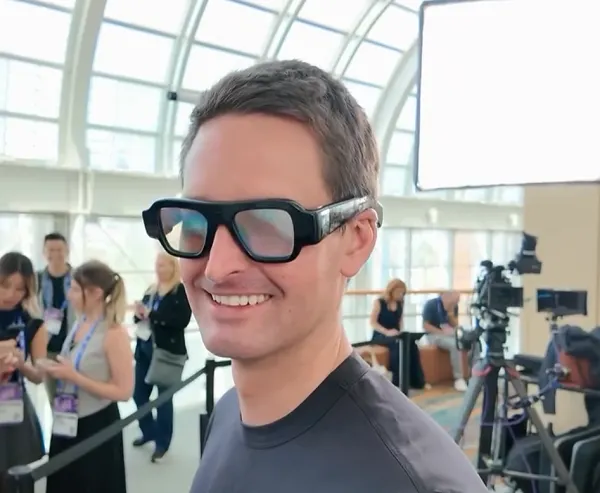
The challenges facing AI glasses extend beyond privacy concerns to fundamental issues of design and functional wearability. Snapchat’s entry into the AR glasses market with its "AR Specs" provides a stark illustration. Previewed at a recent launch event, the devices were met with widespread criticism, primarily focused on their "absurdly big" and unwieldy design. An image depicting company CEO Evan Spiegel modeling the glasses, with his ear visibly folded under the weight of the massive frames, became a viral symbol of the product’s design shortcomings.
This visual critique underscored a critical lesson in consumer electronics: aesthetics and comfort are paramount, especially for devices worn on the face. The expanded functionality promised by Snapchat’s AR Specs appears unlikely to outweigh the significant lack of a "cool factor" or ergonomic appeal. Coupled with a hefty $2,000 price tag, despite efforts to promote the offering with celebrity collaborations, market demand for Snap’s AR glasses is anticipated to be muted.
This scenario brings to mind the cautionary tale of Google Glass. Launched to much fanfare in 2013 with an "Explorer Edition" for early adopters, Google Glass aimed to integrate digital information seamlessly into daily life. However, after just two years, Google discontinued consumer sales of the device in 2015. The reasons for its failure were multifaceted but resonate strongly with the current challenges. Hardware limitations and a nascent ecosystem of applications played a role, but the primary drivers of its demise were its prohibitive $1,500 price tag and, crucially, the profound social stigma that quickly attached itself to wearers. The distinctive, somewhat futuristic look of Google Glass rapidly lost its novelty and became a target of scorn, leading to the derogatory term "Glasshole."
Beyond the social stigma, Google Glass devices faced outright bans in various public and private spaces, including bars, movie theaters, and casinos, precisely because of their recording capabilities. This historical precedent casts a long shadow over Meta’s and Snap’s current endeavors. It suggests that functionality alone, no matter how advanced, cannot overcome fundamental societal objections to pervasive, unannounced recording.
The Regulatory Hammer: Restricting Utility and Shaping the Future
The regulatory landscape is rapidly evolving in response to the ethical and privacy challenges posed by AI glasses. The New York Office of Court Administration recently announced a ban on all camera-equipped glasses from all its courts, effective immediately. This decisive move is widely anticipated to be the first of many such restrictions across various jurisdictions and institutions. The legal basis for such bans typically rests on protecting privacy, ensuring the integrity of proceedings, and preventing unauthorized recording or data collection in sensitive environments.
As more places — from schools and hospitals to private businesses and public venues — consider implementing similar prohibitions, the utility and market appeal of AI glasses could be severely curtailed. If users cannot wear their glasses in a significant portion of their daily lives, the "always-on" convenience that tech companies are striving for becomes impractical, diminishing the value proposition for consumers. This fragmented usability could significantly impede widespread adoption and relegates the devices to niche applications, rather than the ubiquitous personal computing platforms envisioned by Meta.
Broader Implications for the Wearable Tech Industry and Meta’s Vision
The combined force of negative public perception, social stigma, and increasing regulatory restrictions could very well sound an early death knell for the entire AI glasses industry in its current form. This prospect poses a significant threat to Meta’s ambitious long-term strategy, which posits AI glasses as potential successors to smartphones as the primary connective devices for individuals. Mark Zuckerberg, Meta’s CEO, has staked much of the company’s future on AI and the metaverse, viewing these technologies as catalysts for a transformative shift in human interaction and computing. If AI glasses fail to gain mainstream acceptance, it would represent a major setback for this overarching vision.
While AI tools have certainly proven valuable in specific applications, their broader consumer appeal and transformative impact have yet to fully materialize. As Alexandr Wang, head of Meta’s Superintelligence unit and one of its highest-profile AI recruits, acknowledged in a May interview on The Core Memory podcast, overall user experiences "are not overwhelmingly better" as a result of AI implementation. Wang stressed that the onus is on Meta to develop more genuinely valuable AI tools and to win over users by demonstrating tangible benefits that outweigh the perceived risks and inconveniences. The AI glasses push is central to this effort, intended to provide users with an omnipresent AI assistant.
Despite the reported increase in AI glasses sales, the persistent and escalating negative sentiment casts a long shadow over this optimism. The fundamental problem lies in the dominance of negative use cases in public perception. The potential benefits of AI glasses – such as overlaying information, providing valuable real-time insights, or offering hands-free assistance – are struggling to compete with concerns about surveillance, privacy invasion, and social awkwardness.
This imbalance could significantly slow down consumer uptake and adoption rates. If the criticism continues to gain traction, and if companies fail to address the core privacy and wearability issues effectively, many current projects in the AI glasses space could indeed follow the path of Google Glass, ending up as expensive, niche devices or outright market failures. The industry faces a critical juncture: either innovate to build trust, prioritize privacy by design, and achieve genuine social acceptance, or risk being relegated to a technological curiosity rather than a mainstream revolution. The coming years will determine whether AI glasses can overcome these formidable challenges to truly redefine personal computing, or if they are destined to remain a cautionary tale in the annals of tech innovation.