For the past several years, the global discourse surrounding artificial intelligence has been dominated by a singular, narrow preoccupation: the race for supremacy between Washington and Beijing. Analysts and policymakers have obsessively tracked the “gap” between American frontier labs and their Chinese counterparts, frequently debating whether the lead held by the United States should be measured in weeks or months. However, this fixation on a linear race obscures a much more profound reality. The American and Chinese AI landscapes are not mirror images of one another. They are fundamentally distinct in their architecture, their economic drivers, and their strategic deployment. As these two ecosystems evolve, these structural differences—not just the raw speed of innovation—will likely determine the long-term trajectory of the global AI economy.
A Tale of Two Architectures
In the United States, the development of frontier-grade intelligence has been characterized by extreme consolidation. The nation’s capabilities are concentrated within a highly exclusive club. The primary architecture consists of three "model-first" frontier labs—OpenAI, Anthropic, and xAI—supported by a handful of established technology giants like Google, Meta, and Amazon that possess the capital to sustain massive, compute-heavy R&D cycles. For the average observer, the U.S. frontier is essentially a three-horse race between Anthropic, OpenAI, and Google. This structure reflects a venture-capital-backed model, where high-risk, high-reward bets are placed on achieving Artificial General Intelligence (AGI).
China’s approach, by contrast, is characterized by radical dispersion. Rather than funneling all resources into a few flagship companies, China has cultivated a “swarm” of developers. While the global media frequently highlights names like DeepSeek, Moonshot AI, and Z.ai, these entities are merely the tip of a much larger iceberg. Behind them, a diverse array of firms—including Alibaba, ByteDance, Tencent, Baidu, Huawei, iFlytek, SenseTime, StepFun, Baichuan, and MiniMax—are actively maintaining their own proprietary model families.
This is not a peripheral effort by amateurish outfits; these firms are producing competitive, high-performance systems that frequently challenge the status quo. The Chinese strategy emphasizes the diffusion of technology throughout the broader economy, prioritizing practical, industry-specific applications over the singular, monolithic pursuit of AGI.
A Chronology of the Dispersed Frontier
The emergence of this Chinese swarm has been anything but linear, often catching Western observers off guard due to the opaque nature of their development cycles.
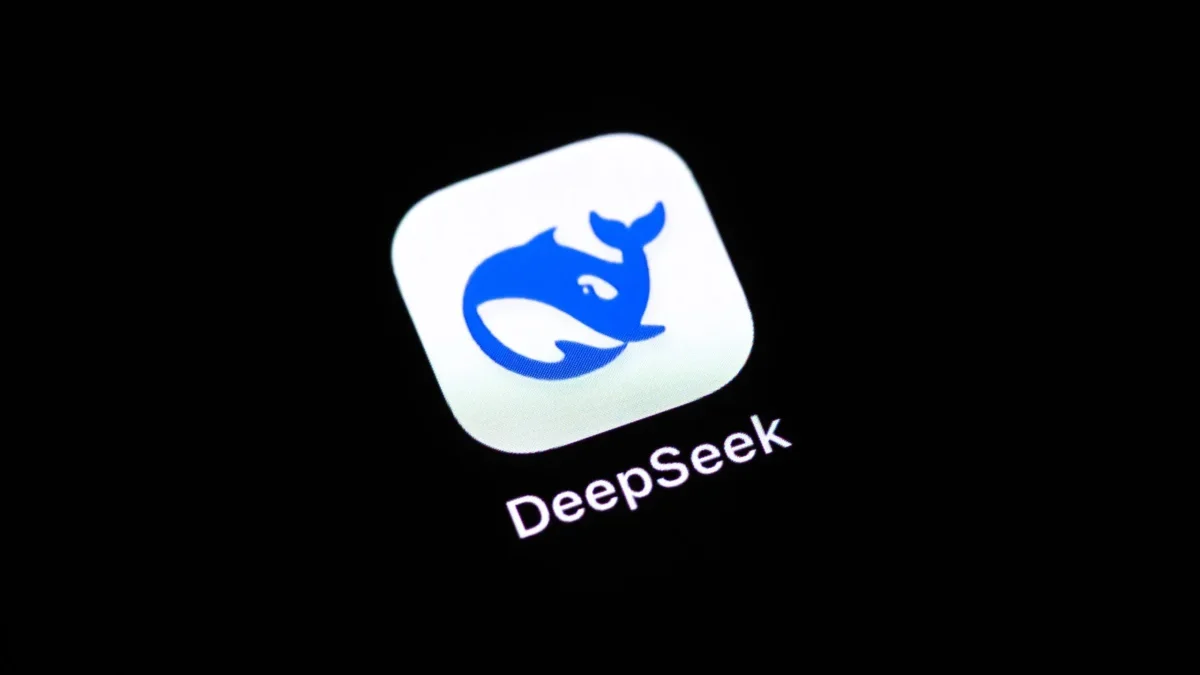
- Early 2025: The world was shaken when DeepSeek, a relatively unknown entity that originated as a side project at a quantitative hedge fund, released a model that triggered a massive revaluation of U.S. tech stocks, wiping nearly $1 trillion in market capitalization across the sector.
- Late 2025: The release of Xiaomi’s MiMo series marked a turning point. Within a year of its debut, the model captured nearly 20% of the token volume on OpenRouter, a global marketplace for AI models, signaling that non-AI giants were successfully pivoting into the space.
- April 2026: DeepSeek released its fourth-generation model, further solidifying its presence in the open-weight ecosystem. While the launch generated less immediate hype than its predecessor, it highlighted the sheer consistency of Chinese output.
- June 2026: Meituan, the Chinese food-delivery conglomerate, entered the fray with its LongCat 2.0 model. Within weeks, it reached the top three on global performance rankings—a feat particularly noteworthy because the model was trained entirely on domestic chips, bypassing reliance on Nvidia hardware.
- October 2026: ByteDance’s Seedance video generator triggered an international firestorm after a hyper-realistic, AI-generated clip of Brad Pitt and Tom Cruise went viral. The incident led to threats of legal action from major Hollywood studios and prompted U.S. senators to call for the model’s immediate suspension, highlighting the geopolitical friction inherent in Chinese AI innovation.
The Myth of Scarcity
The current valuations of Western AI labs rest on a foundational assumption: that frontier-grade intelligence is a scarce, high-barrier resource that only a few entities can produce. This “scarcity model” suggests that enterprise clients will continue to pay massive premiums to access these exclusive capabilities.
However, the Chinese model is proving that intelligence may not be inherently scarce. When a company like Meituan—a firm fundamentally rooted in logistics and delivery—can train a high-performance model on domestic hardware and provide it at a fraction of the cost, it challenges the financial logic of the American AI boom. If "good-enough" models become a commodity, the high-margin business models of many U.S. AI labs could face significant downward pricing pressure.
Strategic Implications: Resilience vs. Centralization
The structural difference in China’s AI ecosystem creates a distinct strategic advantage: the absence of a single point of failure. In the U.S., a significant regulatory hurdle, a financial crisis, or a technical setback at one of the "big three" frontier labs could derail the entire national AI project.
Conversely, China’s dispersed approach creates a "swarm" effect. If one firm fumbles, ten others remain active. This dispersion also widens the surface area for strategic surprise. Because the innovation is happening across dozens of disparate companies—ranging from research-heavy spin-offs like Z.ai (from Tsinghua University) to massive consumer-facing platforms like ByteDance—Western analysts struggle to map the threat landscape.
Furthermore, the Chinese tendency toward open-weight AI development has made its models, such as the Qwen family, the default base for developers worldwide. By providing the foundational infrastructure for global open-source AI, China is effectively embedding its technology into the software stacks of Western corporations, including giants like Apple and Airbnb.
Reactions and Regulatory Realities
The reaction from the West has been a mix of caution and legislative maneuvering. U.S. policymakers have moved to tighten export controls on high-end GPUs, aiming to stymie the training capacity of Chinese firms. However, as the performance of the Meituan LongCat series suggests, these controls have not stopped the progress of the swarm. Instead, they have acted as a catalyst for domestic innovation in chip architecture and model efficiency.
In the industry, there is an unspoken recognition that the playing field has changed. While American firms still hold a lead in raw, multi-modal AGI capabilities, the "swarm" strategy allows China to compete on specific vectors—coding, long-context analysis, and high-fidelity video generation—rather than attempting to win a general, all-encompassing war of attrition.
Conclusion: The Future of Global Intelligence
The debate over whether China will "catch up" to the United States is increasingly viewed by experts as a misdirection. The question is not when China will mirror the U.S. path, but how the two different systems will coexist in a global market.
If the U.S. continues to field one or two massive, capital-intensive champions, it may win on sheer peak capability. But if China continues to deploy a diverse, dispersed, and cost-efficient swarm, it may win on ubiquity and resilience. As we move into the latter half of the decade, the global AI landscape is likely to be characterized by this divergence: a centralized, high-cost American frontier competing against a chaotic, high-speed, and deeply embedded Chinese network.
The financial and strategic logic of the 2020s is being rewritten. For American companies, the challenge is no longer just about beating a competitor—it is about justifying the premium of their models in a world where Chinese AI is rapidly becoming cheap, abundant, and impossible to ignore.