
Social media marketing for financial services encompasses the strategic deployment of social platforms to educate audiences, cultivate trust, generate leads, and provide robust customer support within an inherently highly regulated industry. This critical application extends across a diverse spectrum of organizations, including traditional banks, credit unions, insurance companies, wealth management firms, and innovative fintech companies. What uniquely defines this sector’s approach to social media, distinguishing it from other industries, is the delicate balancing act required: financial brands must remain genuinely engaging and personable while rigorously adhering to stringent regulatory requirements, safeguarding sensitive customer data, and consistently earning trust in what is fundamentally an advisory relationship. Every single piece of content published carries significant compliance weight, underscoring why a meticulously crafted strategy and robust governance protocols are just as vital as creative prowess. When executed effectively, social media transforms into an invaluable conduit for connecting with individuals early in their financial journeys and maintaining brand prominence as their financial needs evolve and expand.

A Shifting Paradigm: Why Financial Services Embrace Social
The financial services industry, historically characterized by conservative marketing approaches and a cautious stance on public digital engagement, has undergone a profound transformation. For decades, direct mail, branch visits, and traditional media advertising formed the bedrock of client acquisition and retention. However, the advent of the digital age, particularly the widespread adoption of social media, has necessitated a radical rethink. Financial institutions are increasingly recognizing that neglecting social channels means ceding ground to more agile competitors and failing to connect with a significant portion of the modern populace. The shift is not merely about presence; it’s about proactively addressing evolving consumer expectations and market dynamics. Industry analysts highlight the dual challenge of meeting a digitally native customer base while maintaining stringent oversight.

-
Reaching the Digital-Native Generations:
One of the most compelling drivers for financial services to embrace social media is the imperative to connect with younger generations. Millennials and Gen Z, often dubbed "digital natives," rely heavily on online platforms for information, interaction, and decision-making. Data from early 2025 reveals that approximately 80% of 18-29-year-olds are active on Instagram alone, highlighting the sheer scale of potential reach. More critically, Gen Z is already leveraging social platforms to deepen their understanding of financial concepts, and they are rapidly approaching or experiencing major life milestones – such as first jobs, purchasing homes, or planning for retirement – that demand informed financial advice. A significant 72% of Gen Z reportedly uses social media as a source for financial advice, making it crucial for financial brands to establish an early and authoritative presence in these digital spaces. This demographic also exhibits high engagement with digital tools, with 99% of Gen Z utilizing mobile banking applications to manage their finances, underscoring their comfort and preference for digital interactions. Furthermore, studies indicate that 47% of Gen Z workers are already on track for a successful retirement, demonstrating their proactive approach to financial planning and their readiness to engage with relevant content.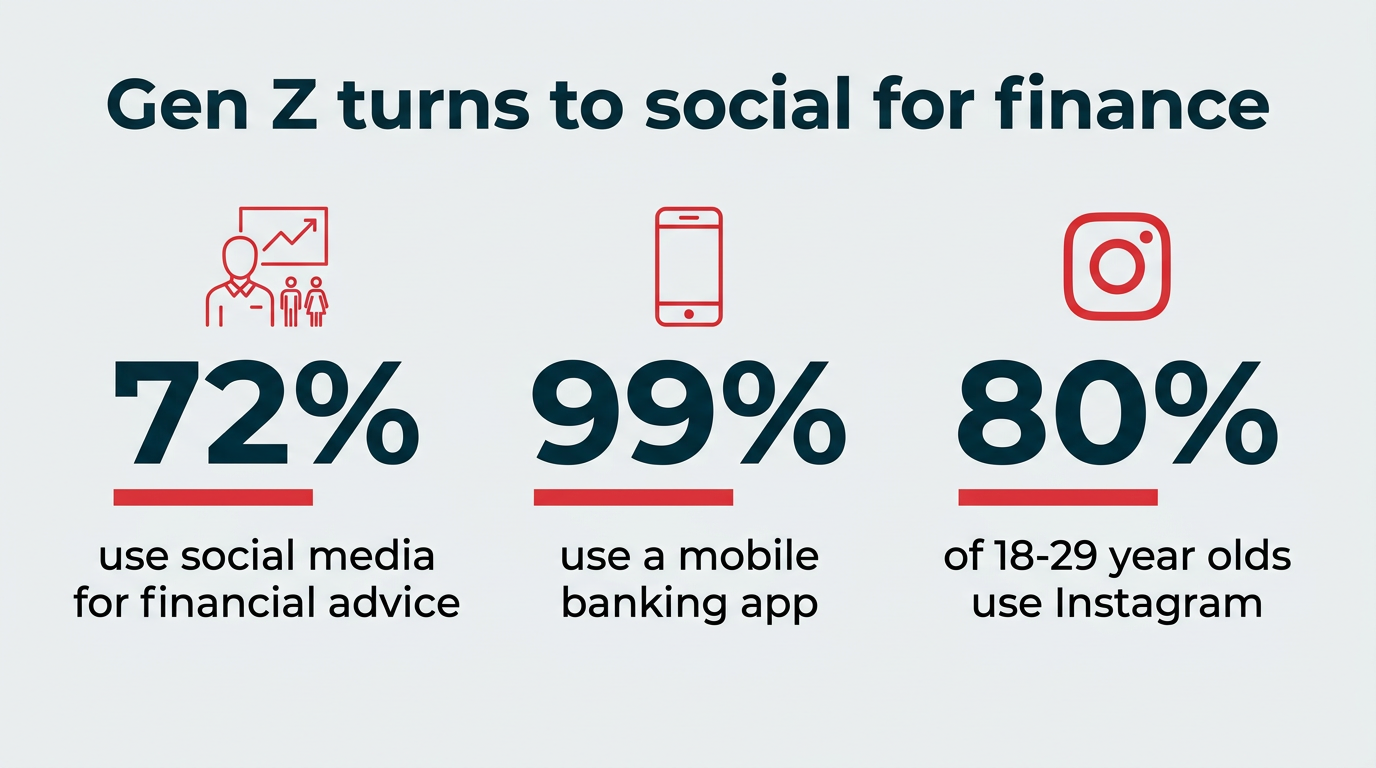
-
Building Trust in a Skeptical Era:
Trust remains the cornerstone of the financial services industry, yet it has historically been one of the least trusted sectors. While trust levels have seen improvement over the past decade, as indicated by the 2026 Edelman Trust Barometer, there remains a substantial gap to bridge. Social media offers a unique opportunity to directly address this challenge. By engaging transparently and authentically, financial brands can demystify complex financial products, explain institutional decisions, articulate their core values, and respond to customer concerns in real-time. This direct engagement fosters a sense of transparency and accountability that traditional advertising often struggles to convey. Moreover, there is a growing demand for values-aligned financial services. A recent Morgan Stanley report highlights that 99% of Gen Z and 97% of millennials express interest in sustainable investing, indicating a clear desire to understand the ethical and social impact of their investments. Social media provides the ideal platform for institutions to showcase their commitment to Environmental, Social, and Governance (ESG) principles, thereby resonating with values-driven clients and building a deeper, more meaningful form of trust.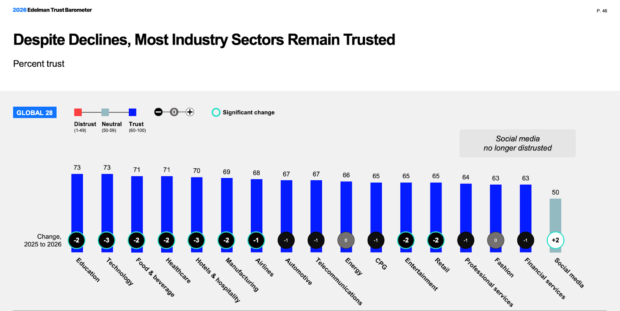
-
Humanizing the Brand and Cultivating Relationships:
In an industry often perceived as impersonal and transaction-focused, humanizing the brand through social media is paramount. Customers prefer to interact with trusted financial experts rather than faceless corporate entities. Social platforms provide avenues for financial institutions to project a more human voice, showcase their employees, and allow executives to engage directly with the public. Research suggests that 82% of individuals are more likely to trust a company when its senior executives maintain an active presence on social media. This "social selling" approach, where advisors and leaders share insights and build rapport without immediately pitching products, is crucial. Observing life events like new jobs, retirements, or business launches on platforms like LinkedIn allows for timely, personalized outreach, fostering long-term relationships that eventually convert into business.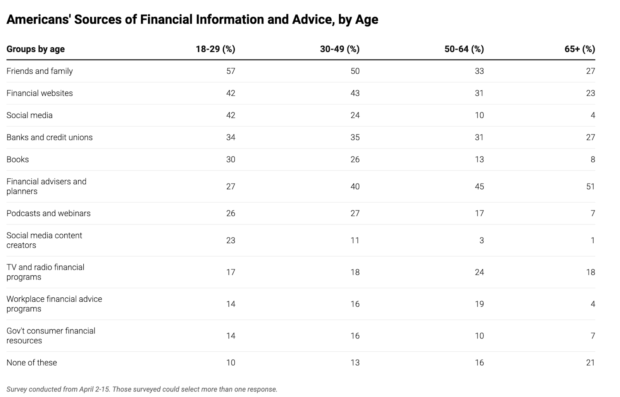
-
Operational Efficiency and Strategic Insights:
Beyond direct customer engagement, social media serves as a powerful cross-functional tool that enhances marketing, sales, and customer experience teams simultaneously. Social listening tools, such as Lumen within Hootsuite Social OS, act as an early warning system, enabling brands to monitor industry trends, competitor activities, and shifts in public sentiment in real-time. This proactive intelligence gathering informs product development, marketing campaigns, and risk management strategies. Furthermore, a unified social media management platform facilitates content creation, streamlines approval workflows, and empowers employee advocacy programs. By providing pre-approved, compliant content to employees, platforms like Parliament (part of Hootsuite Social OS) reduce the burden on marketing teams, ensure consistent messaging, and expand the brand’s authentic reach, ultimately leading to reduced operational effort and costs.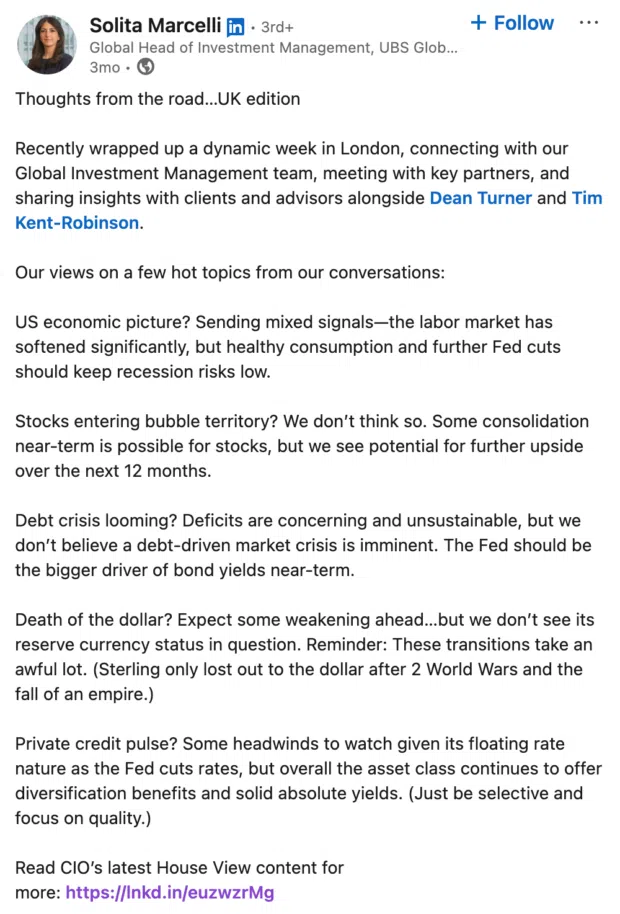
The Multi-Platform Approach: Where FinServ Brands Connect
Effective social media marketing in financial services necessitates a nuanced understanding of each platform’s unique audience, content style, and conversational dynamics. A tailored approach ensures that content resonates with the intended demographic and aligns with strategic objectives.

-
LinkedIn: The Professional Nexus:
LinkedIn stands as an indispensable platform for financial services, boasting a vast and active community of finance professionals and decision-makers. Members are reportedly twice as likely to seek financial advice on the platform, making it a prime channel for thought leadership, lead generation, and B2B engagement. Its strength lies in its professional context, supporting long-form posts, articles, and expert commentary. Financial leaders can leverage LinkedIn to share detailed analyses, industry insights, and link to comprehensive research reports, thereby driving traffic and positioning themselves as authoritative voices.
-
Meta Platforms: Breadth and Engagement:
Meta’s ecosystem, comprising Facebook and Instagram, offers a broad spectrum of engagement opportunities. Facebook remains the most frequently used platform by financial institutions for posting, excelling in community building, customer service, and establishing local branch presences. Its messaging capabilities often serve as an informal support channel for customers. Instagram, on the other hand, leads in engagement metrics for financial services, exhibiting an average engagement rate of 3.8% and a follower growth rate of 2.26% in early 2025. It is ideal for visual storytelling, brand awareness campaigns, and reaching younger demographics through Reels, images, and Stories. Together, these platforms allow financial brands to balance essential service and support functions with broad awareness and reach.
-
X (Twitter): Real-time Pulse and Commentary:
X (formerly Twitter) operates as a fast-paced platform for real-time conversations and immediate updates. It is best suited for timely reactions to news and market trends, providing quick customer support, and fostering direct dialogue. The platform rewards concise opinions and strong points of view, enabling executives to share immediate observations and spark broader discussions, thereby increasing engagement and visibility in a dynamic financial news cycle.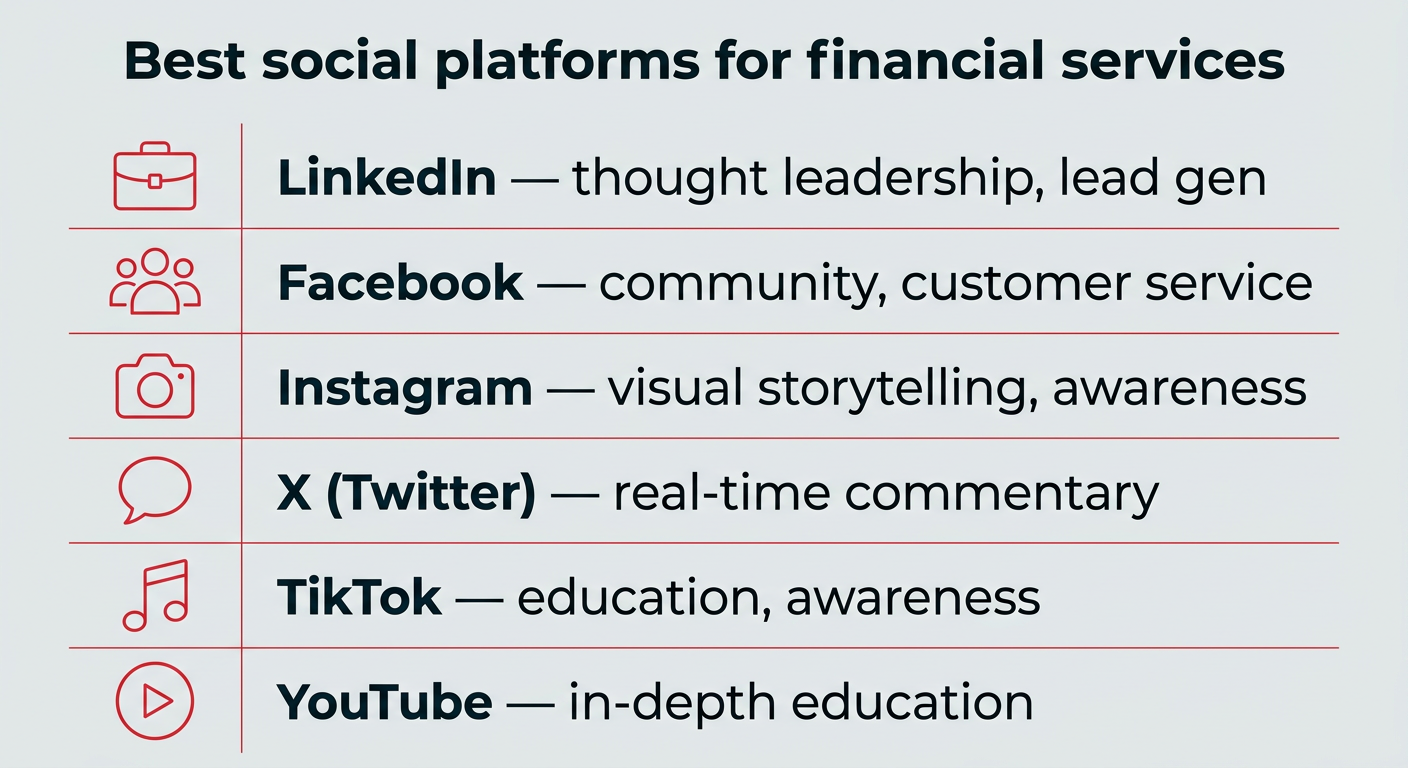
-
TikTok: Engaging the Next Generation with Short-Form Video:
TikTok has rapidly become a crucial platform