Unpacking American Public Engagement: A Deep Dive into Pew Research Center’s Methodologies and Findings

Measuring the intricate tapestry of American public engagement presents a multifaceted challenge, transc one-dimensional metrics to capture the diverse ways individuals interact with their communities, political landscape, and social institutions. While some citizens might deeply immerse themselves in local community initiatives or religious organizations, others dedicate their attention to news consumption and public discourse. Still others choose avenues like charitable giving or volunteering for political campaigns as their primary mode of civic contribution. Recognizing this inherent complexity, the Pew Research Center, in collaboration with the Pew-Knight Initiative, embarked on a groundbreaking study to meticulously map these varied forms of public engagement, employing a sophisticated methodological framework distinct from typical survey approaches.
A Novel Approach to Understanding Civic Life
The genesis of this comprehensive study was rooted in the understanding that a superficial glance would fail to reveal the nuanced patterns of civic involvement across the United States. Researchers at the Pew Research Center acknowledged that traditional survey designs often inadvertently skew results by disproportionately capturing the responses of already highly engaged individuals. To counteract this inherent bias and ensure a truly representative picture of the American public, the Center developed a rigorous, multi-stage process encompassing innovative data collection and analytical strategies.
The cornerstone of the data collection was a national multimode survey, leveraging address-based sampling (ABS). This approach is particularly effective in reaching populations that might otherwise be underrepresented in online-only or phone-only surveys, including those who are less engaged in public life and thus less likely to volunteer for surveys. The survey meticulously explored a broad spectrum of behaviors, categorizing them into key domains: political activity, civic involvement, news consumption, and religious participation.
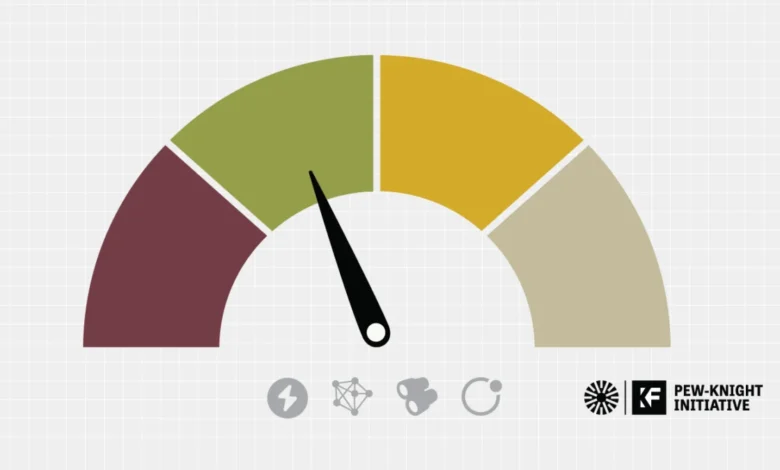
Following data acquisition, the analytical phase employed cluster analysis, a powerful statistical technique. Unlike methods that presuppose categories or aggregate diverse behaviors into a single, potentially reductive scale, cluster analysis allows natural groupings of individuals to emerge based on their shared patterns of responses. This methodology enabled the Pew Research Center to classify U.S. adults into four distinct engagement groups, offering a granular and insightful segmentation of the American populace.
Methodological Rigor: Crafting the Survey Instrument

The development of the survey instrument itself was a critical phase, meticulously designed to overcome common pitfalls in measuring public engagement. Acknowledging that surveys often inflate reported engagement due to self-selection bias, the Pew team implemented several strategic steps to ensure a comprehensive and accurate depiction of respondents’ involvement in public life.
The process commenced with the compilation of an expansive list of potential survey questions. This initial pool drew heavily from the Center’s extensive archive of prior surveys, academic studies on civic engagement, and newly formulated questions designed to capture the broadest possible range of engagement facets. This exhaustive approach ensured that no significant form of public participation was overlooked in the initial conceptualization.
To refine this broad set of questions, a large-scale test survey was fielded using an online opt-in sample comprising over 8,000 U.S. adults. While the Pew Research Center explicitly states that opt-in samples are not utilized for its substantive reporting due to their potential for misleading results, particularly among younger and Hispanic adults, they serve as an invaluable, cost-effective tool for preliminary question testing. This phase allowed researchers to evaluate the efficacy of individual questions, assess the relationships between different measures, and identify opportunities for streamlining the questionnaire before deployment in the final, nationally representative survey.
A notable example of this refinement process involved questions pertaining to group membership. The test survey initially asked respondents about their participation in nine specific types of groups, ranging from sports and hobby clubs to labor unions and professional organizations. Through careful analysis, the researchers discovered a strong correlation between participation in these specific groups and responses to a more general question from the U.S. Census Bureau’s Civic Engagement and Volunteering (CEV) Supplement, which inquired about being part of "groups, organizations, or associations." Given the similar outcomes, the simpler, broader CEV question was adopted for the final survey, demonstrating a pragmatic approach to questionnaire optimization without sacrificing data quality.
Based on the insights gleaned from the test phase, a refined and concise set of questions was finalized for the main ABS survey. These measures were strategically grouped into four core domains:
- Political activity: Encompassing behaviors such as volunteering for political campaigns, donating to candidates or causes, and publicly displaying support for political figures.
- Civic involvement: Including volunteering in non-political capacities, membership in community groups, and other forms of local engagement.
- News consumption: Covering habits like closely following the news, discussing current events with others, and engaging with news content online.
- Religious participation: Primarily focused on the frequency of attending religious services, whether in person or online.
The comprehensive list of questions is publicly available in the study’s full questionnaire, underscoring the transparency and methodological rigor of the research.
The final multimode survey was conducted from July 9 to December 5, 2025, involving 5,393 U.S. adults through address-based sampling. This method was specifically chosen to ensure representation across the entire spectrum of public engagement, including hard-to-reach populations often missed by other sampling techniques. To maximize participation and minimize non-response bias, respondents were offered multiple modes for completing the survey—online, paper, or telephone—and received multiple follow-up contacts if they did not initially respond. This robust approach to data collection is a hallmark of Pew Research Center’s commitment to producing reliable and representative findings.
The Power of Cluster Analysis: Unveiling Hidden Patterns
Once the extensive data had been collected, the subsequent analytical challenge was to synthesize this wealth of information into meaningful insights. Several analytical paths were considered, each with its own advantages and limitations.
One straightforward option was to report each measure separately, detailing demographic differences for each individual engagement behavior. While useful for specific domain-focused research, such as prior Pew studies on online civic engagement, local news habits, voting, religious attendance, or news consumption, this approach fell short of the study’s primary objective. A major goal was to understand the interconnectedness of different forms of engagement. With 19 distinct behavioral variables, reporting each in isolation would make it exceedingly difficult to discern overarching patterns or typologies of engagement.
Another consideration was to combine all measures into a single, aggregated scale, effectively counting the number of activities each respondent reported. However, this method presented a significant drawback: it would treat all engagement behaviors as equal. Clearly, contacting an elected official or volunteering for an extended period demands a different level of commitment and resource allocation than, say, liking or sharing a news post online. A simple cumulative count would obscure these critical nuances, implying an equivalence where none exists. Furthermore, it would necessitate arbitrary thresholds to define what constitutes "engagement," potentially distorting the interpretive value of the scale.
Cluster analysis emerged as the optimal solution, directly addressing the limitations of the alternative approaches. This advanced statistical method is designed to group individuals who exhibit similar patterns across a multitude of survey questions. Critically, it does not impose predefined categories; instead, the categories (or clusters) emerge organically from the common combinations of responses within the data. The specific type of cluster analysis employed by Pew Research Center was capable of handling questions with varied response options, from simple binary (yes/no) to complex scaled responses, thereby preserving the richness of the collected data.
By allowing distinct types of engagement to surface naturally, cluster analysis provides a nuanced understanding that avoids forcing individuals onto a monolithic scale. This methodology has been successfully applied in previous Pew Research Center studies, notably in identifying groups of people who share similar political views, highlighting its utility in segmenting populations based on complex behavioral and attitudinal patterns.
The Iterative Process of Cluster Model Construction

Building a robust cluster model is inherently an iterative and exploratory process. The outcomes can vary significantly based on several methodological choices, including the specific algorithm used for grouping, the coding of variables, the selection of measures included in the model, the chosen number of clusters, and even the order in which respondents are processed.
To navigate this complexity and ensure the validity of their findings, the researchers rigorously tested various strategies, initially focusing solely on the engagement behavior variables. They ultimately selected Gower’s distance, a statistical metric adept at computing similarities or differences between individuals across diverse question types, even when some respondents have not answered every question. This flexibility was crucial for a multimode survey with varied response patterns. The team then experimented with different combinations of engagement measures and meticulously assessed how the results shifted with varying numbers of hypothesized groups.
The evaluation process extended beyond purely statistical criteria. While some models might have performed well statistically, they failed to produce groups that were clear, coherent, or intuitively meaningful in a substantive sense. For instance, some emergent groups displayed overlapping behavioral patterns or did not align with demographic characteristics in ways consistent with prior research or logical understanding. In such instances, the researchers leaned on their extensive prior research and substantive knowledge of civic engagement to discern whether the generated groups offered meaningful insights into American public life. The convergence of results across many different models ultimately provided confidence in the selected final model.
Unveiling America’s Engagement Spectrum: The Four Groups
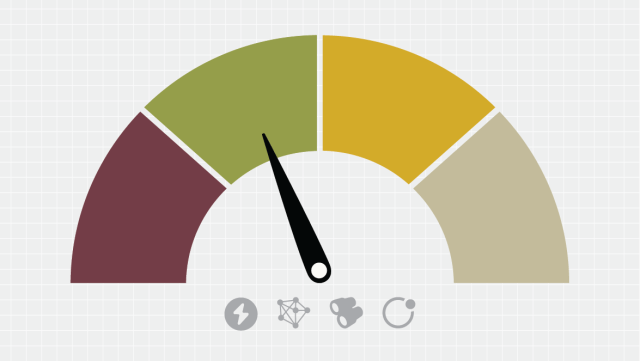
The selected model successfully categorized Americans into four distinct engagement groups, each representing a unique pattern of participation in public life. These groups offer a valuable framework for understanding the diverse ways individuals contribute to, or remain detached from, the broader societal fabric.
-
Mobilizers: Doing It All. This group, though the smallest in size, represents the pinnacle of public engagement. Mobilizers are exceptionally active across all domains of public life: politics, civics, news consumption, and religion. They are the most likely to volunteer for political campaigns, participate in community groups, closely follow and discuss news, and regularly attend religious services. Their pervasive involvement suggests a deep-seated commitment to shaping their communities and influencing public discourse. They are the exemplars of broad and intense civic participation, often serving as catalysts for collective action within their spheres of influence.
-
Connectors: Involved, but Less Political. Connectors constitute a highly engaged segment of the population, demonstrating strong participation in various forms of civic and community life. They are characterized by their active involvement in groups, consistent charitable donations, and other forms of community service. However, a distinguishing feature of Connectors is their comparatively lower involvement in explicitly political activities compared to Mobilizers. While they are deeply invested in their communities and contribute significantly to social capital, their engagement tends to be more localized, issue-focused, or community-oriented, rather than centered on partisan politics or electoral campaigns. They represent a vital network of social cohesion, bridging different community segments through their diverse activities.
-
Spectators: Keeping an Eye on Things. As their name suggests, Spectators primarily engage with public life through observation and information gathering. This group exhibits high rates of news consumption, closely following current events and staying informed about political and social developments. However, in stark contrast to Mobilizers and Connectors, Spectators are significantly less likely to directly participate in other forms of public life, such as volunteering, joining community groups, or actively engaging in political campaigns. Their engagement is largely intellectual and informational, suggesting a desire to be aware of societal happenings without necessarily translating that awareness into direct action. This group highlights the importance of information access and media literacy as a form of civic engagement, even in the absence of more overt participation.
-
Outsiders: Less Involved in Most Ways. This group represents the segment of the American population that exhibits the lowest levels of engagement across nearly all measured activities. Outsiders are less likely than any other group to participate in foundational civic behaviors such as voting, volunteering, following the news, or attending religious services. Their limited involvement suggests a detachment or disinterest from traditional avenues of public life. Understanding the characteristics and motivations of Outsiders is crucial for broader discussions about civic health and democratic participation, as their disengagement can have significant implications for social cohesion and political representation.
It is important to emphasize that these groups represent patterns of engagement at a specific point in time and are not immutable, rigid categories. Individuals’ levels and forms of engagement can evolve throughout their lives, influenced by personal circumstances, life stages, and broader societal dynamics. The fluidity of these groups underscores the dynamic nature of public participation. The full details of these engagement groups and their demographic profiles are elaborated in the comprehensive report, "How Americans Are Engaged With News, Politics, Religion and Civic Life."
Linking Engagement to Attitudes and Knowledge
Beyond merely categorizing behavioral patterns, a key objective of the study was to explore whether these distinct engagement groups also differed in their opinions, attitudes, and levels of civic knowledge. To achieve this, the engagement groups identified in the main ABS survey were applied to data from a separate September 2025 survey of 5,195 U.S. adults conducted via the American Trends Panel (ATP). The ATP, Pew Research Center’s nationally representative online panel, allowed for the inclusion of a much wider array of questions concerning civic attitudes (e.g., trust in news organizations, feelings about the country) and political knowledge.
Two primary approaches were considered for linking the engagement groups to the ATP data. The first involved re-running the cluster analysis directly on the ATP data using the same engagement measures. This test yielded very similar groups, with comparable engagement patterns and demographic characteristics to those found in the ABS survey, providing significant validation for the initial findings. However, even minor discrepancies between the two analyses could introduce unnecessary confusion in reporting.
Therefore, the researchers opted for a more consistent approach: they retained the original cluster definitions derived from the ABS survey. Since ATP respondents had answered the identical engagement questions, they could be assigned to the ABS engagement group that best matched their pattern of responses. This strategy allowed for a seamless integration, enabling the analysis of ATP respondents’ attitudes and knowledge within the established framework of the ABS engagement groups. This application confirmed that the ATP groups closely mirrored the original ABS survey groups in terms of engagement behaviors and demographic makeup, reinforcing the robustness of the classification.

The findings from this cross-survey analysis revealed compelling correlations. Americans who exhibit higher levels of public engagement, particularly the Mobilizers and Connectors, were found to be significantly more interested in politics and possessed a greater breadth of political knowledge compared to their less engaged counterparts. Conversely, the Outsiders, those least involved in most aspects of public life, also tended to express lower levels of trust in news organizations. These insights highlight a critical link between active participation in civic life and fundamental attitudes towards political processes and information sources.
Broader Implications and Future Outlook
The meticulous methodology and the resulting four engagement groups identified by the Pew Research Center’s study offer invaluable insights into the health and dynamics of American public life. This granular understanding is crucial for a wide array of stakeholders, from policymakers and educators to community organizers and media professionals.
For policymakers, the findings underscore the varied pathways through which citizens engage, suggesting that one-size-fits-all strategies for fostering civic participation may be ineffective. Policies aimed at encouraging political engagement might need different approaches than those designed to bolster community involvement, given the distinctions between Mobilizers, Connectors, and Spectators. The existence of a significant "Outsider" group also presents a profound challenge, indicating a segment of the population that may feel disconnected from or disaffected by traditional institutions, warranting targeted efforts to re-engage them.
Educational institutions can leverage these typologies to design more effective civic education programs, recognizing that students may fall into different engagement categories and require tailored curricula to foster active citizenship. Media organizations, in turn, can gain a deeper understanding of their audiences, particularly the "Spectators" who consume news voraciously but may not participate in other ways, and the "Outsiders" who are least likely to follow news. This knowledge can inform strategies for content creation and distribution aimed at increasing media literacy and bridging information gaps.
Community leaders and non-profit organizations can use these insights to better identify and mobilize volunteers, donors, and participants, understanding that "Connectors" are a fertile ground for civic involvement, while "Mobilizers" might be natural leaders for broader initiatives. The study also provides a robust framework for academics studying political science, sociology, and communication, offering a validated typology that can be used as a baseline for future research on civic behavior and its determinants.
In conclusion, the Pew Research Center’s multi-modal, cluster analysis-driven study on American public engagement stands as a significant contribution to understanding the complex landscape of civic life. By employing sophisticated methods to overcome inherent survey biases and by allowing engagement patterns to emerge empirically, the research has unveiled a nuanced spectrum of participation. The "Mobilizers," "Connectors," "Spectators," and "Outsiders" are more than mere labels; they represent distinct modes of interaction with society, each with unique implications for democratic health, social cohesion, and the future of American civic involvement. The ongoing challenge remains to translate these profound insights into actionable strategies that can foster a more engaged and informed citizenry across all segments of society.
Related posts: