The Enduring Power of Specificity: From Homer’s Argos to Modern Journalism’s "Get the Name of the Dog"

The timeless art of storytelling, whether ancient epic or contemporary news report, finds its profound resonance in the meticulous attention to detail. This principle, encapsulated in the journalistic maxim "Get the name of the dog," is experiencing a renewed spotlight as Homer’s seminal epic, The Odyssey, re-enters the cultural lexicon, particularly with the highly anticipated Christopher Nolan adaptation slated for a July 17 release. This cinematic event provides a potent backdrop for revisiting one of journalism instructor Roy Peter Clark’s most cherished and fundamental writing lessons, a principle that underscores the enduring power of specific, evocative details in crafting compelling narratives.
The Foundation of Journalistic Detail: "Get the Name of the Dog"
Roy Peter Clark, a distinguished faculty member at the Poynter Institute and a veteran of the former St. Petersburg Times (now the Tampa Bay Times), formalized the "Get the name of the dog" dictum as a cornerstone of effective reporting. Originating from the informal wisdom imparted by seasoned editors to nascent reporters, the instruction was simple yet profound: no journalist should return from an assignment without gathering the seemingly minor, yet often most humanizing, details. This directive, more than a mere anecdote, became a synecdoche for comprehensive reporting—a part representing the whole of journalistic curiosity, diligence, and empathy. If a reporter remembers to inquire about the name of a family pet, they are inherently demonstrating the attentiveness required to unearth other crucial, illuminating specificities that elevate a mere account to a vivid story.
Clark’s affection for this strategy was so deep that he initially envisioned it as the title for his acclaimed book, Writing Tools: 50 Essential Strategies for Every Writer. However, publishing considerations, driven by search engine optimization trends, led to the more descriptive title, relegating "Get the Name of the Dog" to chapter 14. Despite its numerical placement, Clark consistently emphasizes its primacy, considering it the "No. 1 in [his] heart" and the foundational "Fido theorem" from which all other writing strategies emanate. This principle, Clark argues, cultivates a mindset of relentless inquiry, urging writers to delve beyond superficial facts to uncover the "epiphanic particularity" that makes a narrative memorable and impactful.
Argos: The Ancient Epic’s Testament to Canine Loyalty
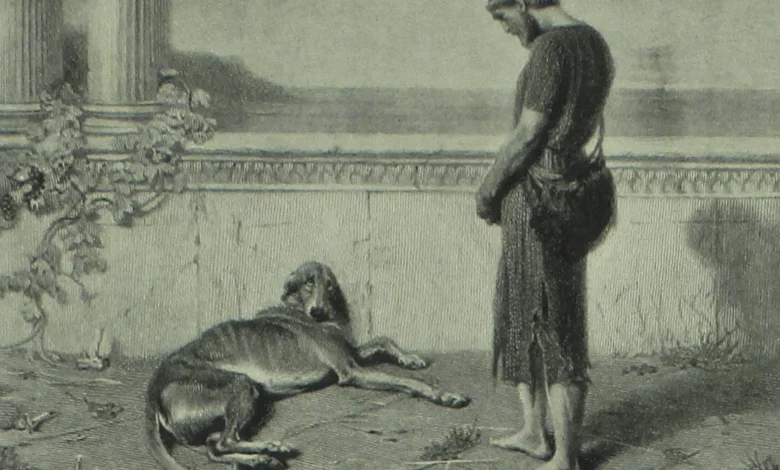
The profound impact of naming the dog is not a modern journalistic invention but a narrative technique woven into the very fabric of Western literature. Homer’s The Odyssey, one of the twin pillars of Greek epic poetry, offers perhaps the earliest and most poignant illustration of this principle through the character of Argos. Composed around the 8th century BCE, the epic recounts the arduous, twenty-year journey of Odysseus, the resourceful king of Ithaca, as he strives to return home following the Trojan War. His return is fraught with peril; his kingdom is besieged by insolent suitors vying for his wife Penelope’s hand and his throne, forcing Odysseus to re-enter his own land in disguise to assess the loyalty of his household and prepare for retribution.
It is during this clandestine return that Odysseus encounters Argos, his faithful hound, in a scene of unparalleled pathos. The renowned translation by Robert Fitzgerald captures the heartbreaking detail:
… an old hound, lying near, pricked up his ears
and lifted up his muzzle. This was Argos,
trained as a puppy by Odysseus,
but never taken on a hunt before
his master sailed for Troy. The young men, afterward,
hunted wild goats with him, and hare, and deer,
but he had grown old in his master’s absence.
Treated as rubbish now, he lay at last
Upon a mass of dung before the gates —
Manure of mules and cows, piled there until
fieldhands could spread it on the king’s estate.
Abandoned there, and half destroyed with flies,
old Argos lay.
But when he knew he heard
Odysseus’ voice nearby, he did his best
to wag his tail, nose down, with flattened ears,
having no strength to move nearer his master.
And the man looked away, wiping a salt tear from his cheek…
…but death and darkness in that instant closed
the eyes of Argos, who had seen his master,
Odysseus, after twenty years.
This passage, nearly three millennia old, is a masterclass in the power of specific detail. Homer doesn’t merely mention "a dog"; he names him Argos, imbuing him with individuality and significance. The description of Argos’s pitiful state—abandoned on a dung heap, "half destroyed with flies"—vividly portrays the decay of Odysseus’s household and the depths of neglect that have befallen his kingdom in his absence. Yet, it is Argos’s unwavering recognition of his master’s voice after twenty years, his feeble attempt to wag his tail, and his subsequent death, that elevates the scene to a moment of profound emotional catharsis. Odysseus’s "salt tear" is a testament to the deep, unspoken bond between humans and animals, a bond that transcends time and cultural shifts. This single, detailed encounter not only humanizes the epic hero but also underscores the universal themes of loyalty, loss, and the bittersweet nature of return. The upcoming Christopher Nolan adaptation, by bringing such foundational narratives to a new generation, highlights the timeless relevance of these human-animal connections in epic storytelling.
Rex: A Modern Canine Muse and the Human-Animal Bond
Roy Peter Clark’s own Jack Russell terrier, Rex, serves as a contemporary embodiment of the "Get the name of the dog" principle. Rex, who reached the venerable age of 18, became an unexpected celebrity when Clark was quoted in The New York Times stating that he and his wife, Karen, loved Rex "more than we loved each other." This seemingly audacious statement, made in the context of discussing the profound loyalty many showed towards their pets during the Hurricane Katrina evacuations—with many refusing to leave without their animals—elicited varied reactions. While a friend expressed incredulity, Clark’s wife, Karen, upon hearing the quote read to her, focused not on the comparative love but on Rex’s journalistic debut: "Oh… oh… oh, wow! Rex made The New York Times!" This reaction, as Clark noted, underscored the unique place pets hold in human affections, often eliciting pride and devotion that can sometimes overshadow even spousal dynamics, particularly in moments of shared excitement.

The naming of Rex itself is a narrative rich with personal significance. Born into an adorable yet "ferocious package" during the peak of "Jurassic Park" popularity, his name was a playful nod to the "T. rex" heart in his tiny two-pound body. The name "Rex," meaning "king" in Latin, also resonated with Clark’s own name, "Roy," which means "king" in French, creating a familial bond as Rex became "the son I never had." Such stories of pet naming, as Clark has observed in countless writing workshops, are miniature revelations of personal history, culture, and identity, illustrating everything from family heritage and school loyalties to popular cultural influences, as seen in the Notre Dame student who named their dog "Rudy" after the legendary football player.
The human-animal bond, as exemplified by Rex and Argos, is a well-documented phenomenon. Research consistently shows that pets provide significant emotional support, reduce stress, and foster companionship. According to the American Pet Products Association (APPA), over 86.9 million U.S. households owned a pet in 2023, with dogs being the most popular choice. This pervasive presence of pets in daily life underscores why details about them resonate so deeply with audiences; they tap into a universal experience of affection, loyalty, and companionship.
The Michael Vick Scandal: A Call for Empathetic Reporting
The "Get the name of the dog" lesson found a stark and critical application in the reporting surrounding the 2007 Michael Vick dog-fighting scandal. The case involved the NFL quarterback’s "Bad Newz Kennels" operation, where pit bulls were bred, trained, and fought. The initial wave of news reports, while detailing the shocking cruelty and legal ramifications, often omitted a crucial element: the names of the victimized dogs. Clark observed this omission with dismay, posing to writers: "I’ve read dozens of stories about the scandal, but I’ve never seen the name of a single dog. Did the dogs not have names? If so, I want to know them. Were they called Mauler, Killer and Spike? Was there a Bruce or Fluffy in the group? I really wanted to know."
This absence of specific identification, Clark argued, dehumanized the victims, reducing them to an anonymous collective rather than individual sentient beings who suffered. The implication was clear: without their names, the dogs remained abstract, making it harder for the public to fully grasp the extent of their suffering and the moral outrage of their exploitation.
However, subsequent investigative journalism, particularly Jim Gorant’s comprehensive work, which culminated in the Sports Illustrated cover story and later the book The Lost Dogs, rectified this oversight. Gorant’s reporting revealed that the 51 dogs rescued from "Bad Newz Kennels" indeed had names, such as Sweet Jasmine, Zippy, Little Red, Ellen, and Google. By naming these dogs and tracking their rehabilitation and eventual adoption, Gorant humanized them, transforming them from statistics into individuals with stories of survival and resilience. This shift in reporting profoundly impacted public perception, fostering greater empathy and galvanizing support for animal welfare efforts. The ability to connect with individual stories, even those of animals, proved instrumental in highlighting the systemic cruelty of dog fighting and advocating for stronger protections. This case vividly demonstrated the ethical imperative of detail in journalism, particularly when reporting on victims.
Broader Implications for Journalism and Storytelling
The "Get the name of the dog" principle extends far beyond canine companions. It is a powerful metaphor for the core tenets of effective communication:
- Cultivating Curiosity: It encourages reporters to be inherently curious, to ask follow-up questions, and to seek out the unique elements that define a story.
- Empathy and Humanization: By focusing on specifics, journalists can humanize subjects, whether they are people, animals, or even inanimate objects. This fosters empathy in the audience, allowing them to connect with the narrative on a deeper emotional level.
- Credibility and Authenticity: Specific details lend credibility to a story. Generic statements often feel abstract and less trustworthy. When a reporter can provide precise names, dates, locations, and sensory details, the narrative becomes more authentic and verifiable.
- Avoiding Abstraction: In an age of information overload, where news can often feel generalized or overwhelming, specific details cut through the noise. They ground the story in tangible reality, making it more digestible and memorable.
- Crafting Vivid Imagery: Good writing paints pictures. Naming a dog, describing its behavior, or detailing its surroundings creates a vivid mental image for the reader, enhancing their engagement and understanding.
This lesson resonates not only in journalism but across all forms of narrative. From novelists meticulously crafting character backstories to historians unearthing obscure personal letters, the power of specific detail is undeniable. It transforms abstract concepts into relatable experiences, dry facts into compelling narratives.
Conclusion: The Timeless Resonance of Detail
From the ancient Greek shores of Ithaca to the modern newsrooms and digital platforms, the imperative to "Get the name of the dog" remains a guiding star for storytellers. Whether it is Homer’s poignant depiction of Argos, Roy Peter Clark’s personal connection to his beloved Rex, or the crucial naming of the victims in the Michael Vick scandal, the lesson is clear: specificity breathes life into narrative. As audiences prepare to engage with The Odyssey anew through Christopher Nolan’s cinematic lens, the emotional weight of Argos’s final moments will undoubtedly endure, demonstrating that even the smallest, most particular details can carry the greatest narrative and emotional heft. In a world awash with information, the ability to discern and articulate these precise, humanizing elements is not merely a journalistic technique but an essential act of storytelling that ensures relevance, fosters empathy, and etches narratives into the collective consciousness.