The Escalating Rhetoric of Treason: Donald Trump’s Persistent Attacks on the Independent Press and Democratic Institutions

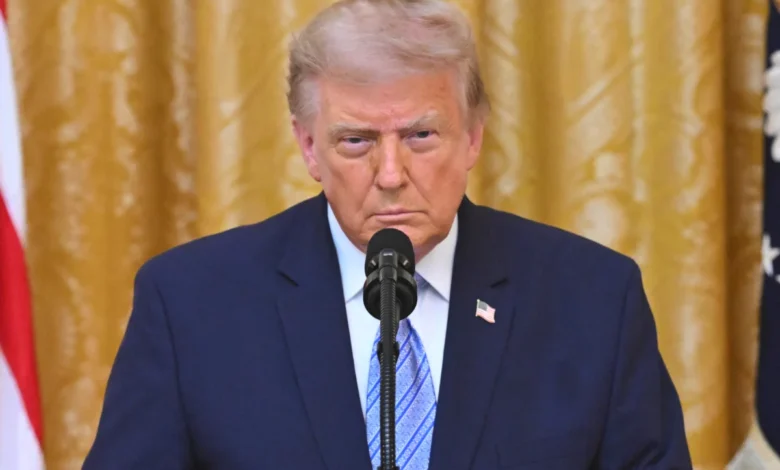
On a notable occasion on May 15, aboard Air Force One, as Donald Trump concluded a state visit to China and began his return journey to the United States, a revealing exchange unfolded with the traveling press corps. Engaging in a "gaggle"—an informal briefing—Trump confronted David E. Sanger, a veteran White House and national security correspondent for The New York Times. As Sanger held his phone, seemingly recording the president’s words, he probed about the ongoing "war with Iran," remarking on the futility of repeating past military actions without achieving desired political changes. Trump swiftly interjected, asserting, "No, I got, I had a total military victory," before pivoting to a vehement attack on the press. He declared, "I actually think it’s sort of treasonous what you write. And you should know better, David. You know better. Your editors tell you what to write, and you write it, and you should be ashamed of yourself. I actually think it’s treason." This incident, while specific, encapsulates a broader and increasingly alarming pattern of rhetoric employed by the former president, characterized by the casual yet potent accusation of "treason" against a diverse array of perceived adversaries, most notably the independent media.
The Constitutional Definition of Treason: A Narrow Framework
To fully grasp the gravity and inherent inaccuracy of Trump’s accusations, it is essential to understand the precise legal definition of treason under U.S. law. The framers of the Constitution, acutely aware of the historical abuses of power and the use of treason charges to suppress political dissent, deliberately crafted an exceptionally narrow definition. Article III, Section 3 of the United States Constitution is the only criminal offense explicitly defined within the document, a testament to its significance and the desire to prevent its misuse. It states: "Treason against the United States, shall consist only in levying War against them, or in adhering to their Enemies, giving them Aid and Comfort."
This definition requires two key elements: an overt act of levying war against the U.S. or aiding its declared enemies, and the intent to betray the nation. Furthermore, conviction requires the testimony of two witnesses to the same overt act, or a confession in open court. This stringent legal standard was designed to be a bulwark against authoritarian tendencies, ensuring that criticism, dissent, or even opposition to a particular administration could never be equated with an act of betrayal against the nation itself. Legal scholars universally agree that journalistic reporting, even if critical or perceived as unfavorable by an administration, does not, under any interpretation, meet this constitutional threshold for treason. The act of reporting on geopolitical events, analyzing policy decisions, or holding power accountable falls squarely within the protected realm of free speech and press, foundational to American democracy, rather than an act of sedition or betrayal.
A Pattern of Accusations: A Chronology of Rhetoric
The Air Force One confrontation on May 15 was far from an isolated incident; it was one in a long series of instances where Donald Trump has invoked the term "treason" to describe actions or individuals he views as undermining his authority or agenda. Over the past decade, this rhetoric has been consistently directed at journalists, political opponents in Congress, officials within the White House bureaucracy, federal employees, and various activists.
Earlier in the political cycle, in a notable instance, Trump targeted Democratic lawmakers who had disseminated a video reminding military service members of their right to refuse illegal orders. This video, intended to uphold constitutional principles, was met with a furious reaction from Trump, who publicly accused the lawmakers of "SEDITIOUS BEHAVIOR, punishable by DEATH!" This alarming declaration prompted an attempt by his administration to pursue federal indictments against the individuals involved, an effort that ultimately failed and was subsequently abandoned due to lack of legal merit.
The independent press has frequently found itself in the crosshairs of this rhetoric. In the preceding months, the White House, through an official release, accused CNN of attempting to "undermine our decisive victories" in the U.S.-Israeli war on Iran, a conflict described by the administration as "Operation Epic Fury." Concurrently, Trump took to his social media platform, Truth Social, to post that certain news outlets "should be brought up on Charges for TREASON for the dissemination of false information!"
This pattern continued, with Trump again lashing out at The New York Times for an analysis exploring the limited geopolitical impact of the decision to wage the war with Iran. He branded their stories as "TREASONOUS" and escalated his threats, stating, "I will be adding all of their false and ridiculous reporting to my multi Billion Dollar lawsuit against them. They are Criminals!"
According to data compiled by Roll Call, Donald Trump has authored or reshared social media posts containing the word "treason" more than fifty times since 2016. These accusations, often legally incoherent or delivered as clumsy asides, consistently betray a profound rage at anyone perceived as challenging his personal authority or narrative. The sheer volume and consistency of these charges underscore a deliberate strategy rather than mere rhetorical flourishes.
Reactions and Official Responses: Upholding Press Freedom
The repeated and legally baseless accusations of treason have not gone unchallenged. Media organizations, press freedom advocates, and legal experts have consistently pushed back against what they view as a dangerous erosion of democratic norms and a direct assault on the First Amendment.
Following the Air Force One incident, David E. Sanger, the journalist targeted, reshared a statement from The New York Times Public Relations account on X (formerly Twitter). The statement, attributed to Times spokesperson Charlie Stadtlander, unequivocally declared, "Reporting isn’t treason. It’s foundational to a free press and the work that America’s founders wrote the First Amendment to protect. We will continue this important, constitutionally protected work." This robust defense emphasizes the core role of journalism in a democratic society and reaffirms the institution’s commitment to its mission despite political pressure.
Earlier in Trump’s political career, A.G. Sulzberger, the publisher of The New York Times, articulated the gravity of such accusations. He wrote, "There is no more serious charge a commander in chief can make against an independent news organization," highlighting the profound implications when the highest office in the land targets a fundamental pillar of democracy with such inflammatory language. Prominent media critics, such as Margaret Sullivan, writing in The Guardian, have similarly warned that this rhetoric is characteristic of "the language and the strategy of authoritarian states," drawing parallels to regimes that routinely criminalize dissent and independent reporting.
Legal scholars and constitutional law experts have consistently dismissed Trump’s claims as utterly without legal merit. Organizations like the Committee to Protect Journalists and Reporters Without Borders have also frequently condemned such rhetoric, emphasizing its chilling effect on press freedom globally and its potential to incite hostility against journalists. These groups routinely highlight that such attacks not only endanger individual reporters but also undermine public trust in objective reporting, which is crucial for an informed citizenry.
Analysis of Implications: A Strategy of Delegitimization and Exclusion
Donald Trump’s consistent drumbeat of treason accusations serves multiple strategic objectives, extending beyond mere expressions of frustration or thin-skinned reactions to negative publicity. These pronouncements represent a calculated effort to reshape public perception of the press and define the boundaries of political belonging.
One primary goal, as many observers have noted, is to bully, threaten, and shame news organizations into softening their scrutiny of his administration and actions. The hope is that through sheer ferocity of attack, the press might self-censor or temper its reporting to avoid becoming a target. There is evidence that this strategy has, in some instances, yielded results. Reports have indicated that certain media entities, such as CBS News and its parent company, Paramount Skydance, have sought to "curry favor" with the Trump administration, potentially influenced by the hostile environment created by such rhetoric. This dynamic highlights a dangerous erosion of the adversarial role traditionally played by the press.
Beyond mere intimidation, the accusations are integral to Trump’s long-standing push to delegitimize the independent press entirely. As recounted by Lesley Stahl, the veteran 60 Minutes correspondent, Trump reportedly told her in 2016, "You know why I do it? I do it to discredit you all and demean you all so when you write negative stories about me, no one will believe you." This candid admission reveals a cynical strategy: to sow such deep distrust in journalistic institutions that the public dismisses any critical reporting as inherently biased or false, thereby insulating himself from accountability.
However, the "treason" charges carry a far more sinister impulse and represent a more profound assault on democratic principles than simply discrediting the press. By accusing an opponent of the highest crime, or smearing them as a traitor, Trump attempts to enforce a very particular, exclusionary vision of "political belonging." This rhetoric creates a stark division within the body politic, clearly delineating who is considered part of the national collective and who is banished as disloyal and an "enemy within."
When journalists are branded as traitors, Trump is signaling to his base that the press, far from being a load-bearing pillar of America’s ongoing experiment with democracy, is, in fact, a "fifth column"—an internal enemy, a parasite that must be purged. This framing casts independent media not as a watchdog, but as a saboteur. In this way, Trump’s exclusionary language illuminates the underlying currents of aggression and animosity that have often been necessary to bind his political movement. As various internal and external pressures—such as controversies surrounding figures like Jeffrey Epstein, the complexities of the Iran conflict, rising costs of living, and questions of political succession—threaten to loosen the intertwined threads of the MAGA coalition, Trump’s language has become increasingly martial. This escalation in rhetoric serves to reinforce loyalty, consolidate his base, and prevent internal dissent from unraveling his political support.
The Enduring Challenge for Democracy
The repeated invocation of "treason" against the press and political opponents poses a significant and enduring challenge to American democracy. It normalizes language typically reserved for despotic regimes, blurring the lines between legitimate dissent and outright betrayal. This rhetoric not only chills speech but also fosters an environment where political violence becomes a more conceivable outcome.
The First Amendment, guaranteeing freedom of speech and the press, was enshrined in the Constitution precisely to protect against such abuses of power. It recognizes that a robust, independent press is not an enemy of the people, but an essential guardian of liberty, holding power accountable and informing the public. When this role is systematically undermined by accusations of treason, the very foundation of democratic governance is weakened.
The consistent pushback from journalists, legal experts, and civil society organizations is therefore not merely a defense of a profession but a defense of democratic principles themselves. As the political landscape continues to evolve, the ability of the independent press to report without fear of being labeled a traitor, and the public’s capacity to discern factual reporting from politically motivated attacks, will remain critical benchmarks for the health and resilience of American democracy. The battle against the weaponization of language, particularly terms as potent as "treason," is an ongoing struggle for the soul of the nation’s political discourse.