Apple Intelligence and the Paradox of Control: How Siri’s Evolution Redefined the Tech Giant’s Strategy

For nearly half a century, Apple Inc. has meticulously constructed a corporate empire predicated on the principle of absolute vertical integration. From the proprietary architecture of its A-series and M-series silicon to the curated confines of the App Store, the company’s value proposition has always been centered on the "walled garden"—a seamless, high-performance ecosystem where Apple controls every variable. However, the rapid ascent of generative artificial intelligence has forced a significant fissure in this philosophy. The evolution of Siri, Apple’s long-standing virtual assistant, has moved from being a symbol of Apple’s integrated future to a case study in the limitations of isolated development. As the company navigates the complexities of the AI era, it has found itself in an uncharacteristic position: requiring the assistance of competitors like Google to maintain the relevance of its most personal interface.
The Erosion of the Sovereignty Narrative
The core of Apple’s brand identity has historically been "control." This control was not merely a technical preference but a marketing promise. By owning the hardware, the software, and the services, Apple guaranteed a level of privacy, security, and performance that "fragmented" ecosystems—most notably Android—could not match. This strategy allowed Apple to command premium pricing and foster unparalleled brand loyalty.
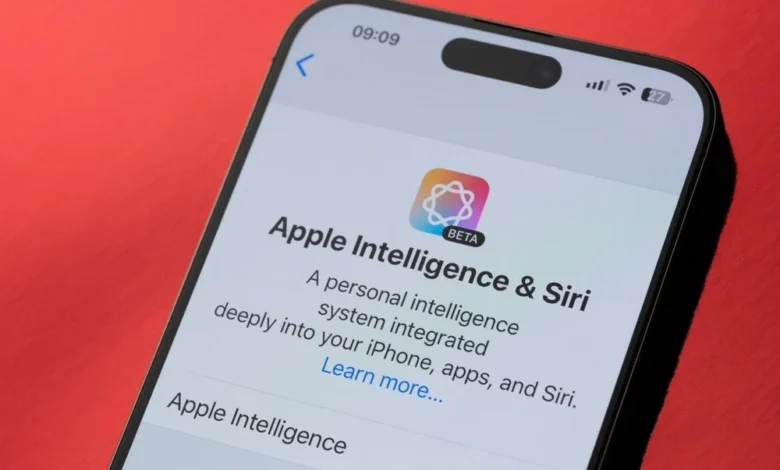
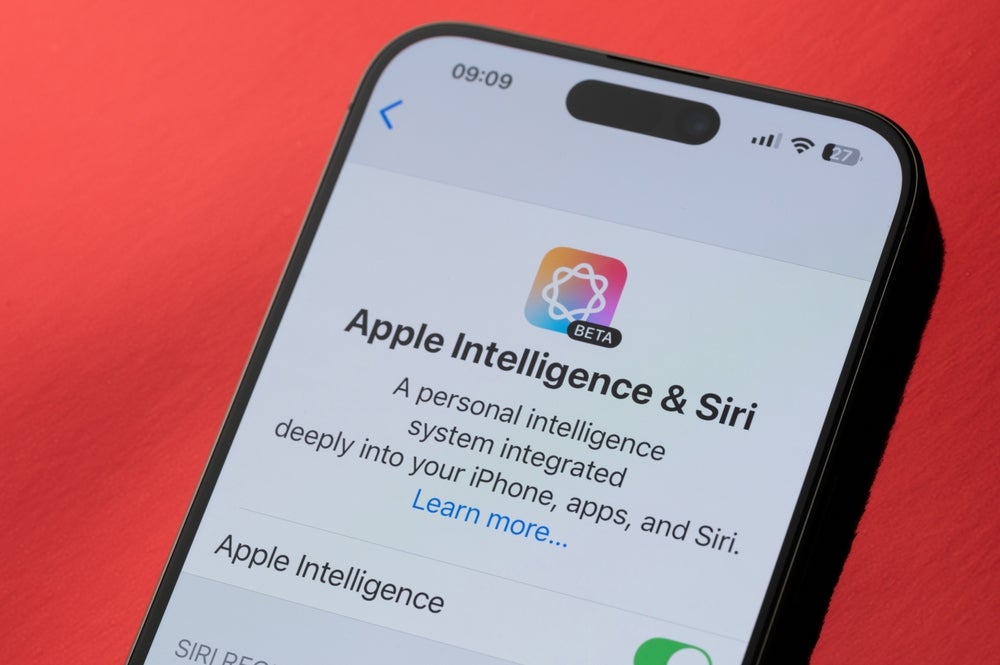
The launch of "Apple Intelligence" in 2024 was intended to be the ultimate expression of this control. It was marketed as AI that was deeply integrated into the operating system, capable of understanding personal context while maintaining the industry’s highest privacy standards. Siri was positioned as the primary gateway to this intelligence. According to Apple’s initial announcements, the "new" Siri would possess enhanced natural language processing, the ability to take actions across different applications, and a "personal context" engine that could cross-reference emails, calendar events, and messages to provide bespoke assistance.
However, the reality of the rollout proved more complex than the marketing narrative suggested. By early 2025, the cracks in the mythology became visible. Reports began to circulate that the most transformative features of Siri—those involving multi-step execution and deep app integration—were being pushed back.
A Chronology of Delays and Strategic Pivots
The timeline of Apple’s AI journey reflects a company struggling to reconcile its high standards for privacy and integration with the breakneck speed of the generative AI market.
- June 2024: Apple officially unveils Apple Intelligence at the Worldwide Developers Conference (WWDC). The company promises a smarter Siri and a partnership with OpenAI to provide ChatGPT access for general knowledge queries.
- Late 2024: Initial beta releases of iOS 18 show limited AI functionality. While basic writing tools and photo editing features appear, the "next-generation" Siri remains largely absent or restricted to basic UI changes.
- March 2025: Apple acknowledges that several advanced Siri capabilities have been postponed. Reuters reports that key improvements to Siri’s reasoning and contextual awareness are not expected to reach a polished, public state until 2026.
- Mid-2025: The Wall Street Journal and other major financial outlets publish critical analyses of Apple’s AI strategy, highlighting that Siri continues to struggle with tasks that competitors like Google’s Gemini and OpenAI’s GPT-4o handle with ease.
- Late 2025: Apple begins more aggressive integration of Google’s Gemini model into its ecosystem, signaling a shift from internal development to a hybrid model of outsourced intelligence.
The Google Partnership: A Philosophical Conflict
The decision to leverage Google’s Gemini to power specific facets of Siri’s intelligence is perhaps the most significant departure from Apple’s historical playbook. For decades, Google has been Apple’s primary rival in the mobile space. While the two companies have a long-standing agreement regarding search engine defaults on Safari, the integration of Google’s AI into the heart of the iPhone’s user interface represents a different level of dependency.
This partnership highlights a strategic realization within Cupertino: the compute requirements and data sets necessary to train world-class Large Language Models (LLMs) are so vast that even a company with Apple’s resources cannot catch up overnight. By turning to Google, Apple essentially admitted that its internal efforts were insufficient to meet the market’s immediate expectations.
From a communications perspective, this created a "narrative problem." Apple had to explain to its user base why the company that prides itself on "owning the whole widget" was suddenly outsourcing the "brain" of its devices. While Apple emphasized that these external requests were handled via "Private Cloud Compute" to ensure data security, the market perception remained that Apple had lost its lead in innovation.
The Strategic Utility of the "Leak" Ecosystem
As criticism of Siri’s performance and the Google partnership intensified throughout 2025, a curious phenomenon occurred within the tech media: a surge of highly detailed leaks regarding Apple’s future hardware. Reports concerning touchscreen MacBooks, foldable iPhones, and augmented reality (AR) smart glasses began to dominate the news cycle.
In the world of corporate communications, leaks are typically viewed as a failure of internal security. However, for Apple, leaks have long functioned as a secondary marketing channel. By allowing—or strategically facilitating—information about future hardware, Apple successfully shifted the conversation away from its current software deficiencies.
The "anticipation engine" is a powerful tool. When the public begins to obsess over the possibility of a "cheap MacBook" or a revolutionary foldable device, the immediate frustration over Siri’s inability to handle complex calendar requests is mitigated. This sleight of hand allowed Apple to maintain its stock price and consumer interest despite a lackluster AI rollout. The narrative shifted from "Apple is failing at AI" to "Apple is preparing for the next hardware revolution."
Supporting Data and Market Reaction
The impact of Apple’s AI strategy is reflected in both consumer sentiment data and market analysis. In early 2025, consumer surveys indicated that "AI capabilities" had risen to the top three reasons for smartphone upgrades, alongside battery life and camera quality. Apple’s delay in delivering these features led to a temporary stagnation in iPhone upgrade cycles in certain markets.
Furthermore, technical benchmarks revealed the gap Apple was trying to close. In comparative testing of virtual assistants conducted in mid-2025:
- Success Rate on Multi-step Queries: Google Gemini and ChatGPT-4o maintained a success rate of over 85%, while Siri (without external model support) hovered around 60%.
- Contextual Retention: Siri frequently lost the thread of conversation after two follow-up questions, whereas competitors could maintain context through extended interactions.
These data points underscore why the pivot to Google was not just a choice, but a necessity for survival in the premium device market.
Broader Implications for the Tech Industry
Apple’s struggle with Siri and its subsequent reliance on Google mark the end of the era of total tech isolationism. If a company with a nearly $3 trillion market cap and total control over its supply chain cannot build a competitive AI in a vacuum, it suggests that the future of technology will be defined by "interdependent ecosystems" rather than "walled gardens."
For consumers, this shift is a double-edged sword. On one hand, it ensures that iPhone users will eventually have access to the best AI tools available, regardless of who builds them. On the other hand, it complicates the privacy narrative. As Apple integrates more third-party models, the "privacy-first" brand becomes harder to defend, requiring increasingly complex technical explanations to maintain user trust.
Conclusion: From Control to Pragmatism
The story of Siri’s evolution in 2024 and 2025 is the story of a titan adapting to a new reality. Apple’s empire was built on control, but the AI revolution is built on scale, data, and rapid iteration—fields where the traditional Apple model of slow, secretive perfectionism is a liability.
By delaying Siri’s most advanced features to 2026 and bridging the gap with Google’s technology, Apple has chosen pragmatism over purity. Simultaneously, by leaning into its "leak" culture, the company has managed to keep the "visionary" aspect of its brand alive through the promise of future hardware. Apple didn’t need to fix Siri immediately; it just needed to ensure that the world remained more interested in what Apple might do next than what it was failing to do now. As the company moves toward 2026, the success of this strategy will depend on whether the "new" Siri can finally live up to a decade of promises, or if the era of Apple’s absolute control has truly passed.