Lessons from the Pitch: How the FIFA World Cup 2026 Redefines Strategic Success in Affiliate Marketing

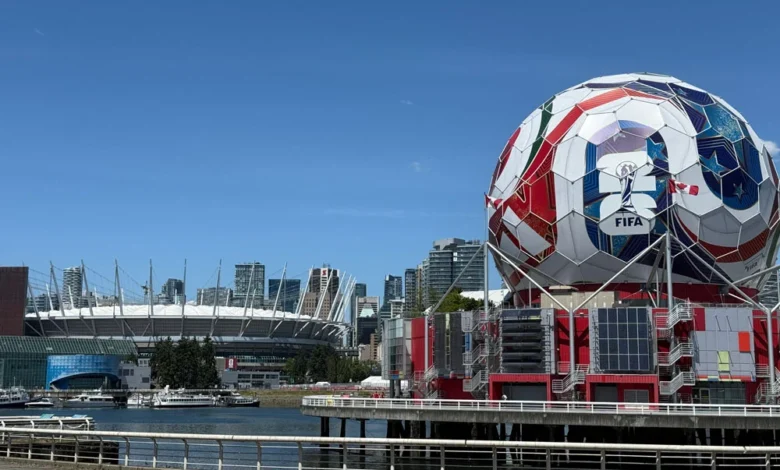
The FIFA World Cup 2026, a sprawling tournament hosted across the United States, Canada, and Mexico, has provided more than just a spectacle of athletic prowess; it has served as a masterclass in the complexities of modern performance marketing. As the tournament unfolded, drawing massive crowds and global viewership, industry analysts and marketing veterans began to identify profound parallels between the high-stakes world of international soccer and the competitive landscape of affiliate marketing. From the logistical challenges of a 48-team expansion to the tactical upsets on the field, the 2026 tournament offers a blueprint for brands seeking to navigate an increasingly volatile digital economy.
The 2026 Expansion: A New Context for Global Competition
The 2026 iteration of the FIFA World Cup marked a historic shift in the tournament’s structure. By increasing the field to 48 teams and utilizing 16 host cities across three nations, FIFA fundamentally altered the competitive dynamics of the sport. This expansion mirrors the growth of the affiliate marketing sector, which has evolved from a niche performance channel into a multi-billion-dollar industry integrated into the core of global e-commerce.
As the "Tartan Army"—the dedicated supporters of the Scottish national team—descended upon North American hubs like Boston, the atmosphere underscored a critical reality: success in a crowded market requires more than just participation; it requires a sophisticated understanding of audience engagement and localized strategy. The parallels between managing a diverse roster of world-class athletes and a diverse portfolio of affiliate partners are becoming increasingly clear to industry leaders, such as those at the helm of AM Navigator, an agency with over a quarter-century of experience in the field.
The Power of Collective Action: Moving Beyond Individual Brilliance
One of the most striking lessons from the 2026 World Cup is the limitations of individual talent when divorced from a cohesive team structure. Despite the presence of legendary figures like Croatia’s Luka Modrić and Portugal’s Cristiano Ronaldo, both nations faced premature exits when confronted with more unified opponents. Croatia’s inability to bypass Portugal, and Portugal’s subsequent loss to Spain in the Round of 16, highlighted a fundamental truth: individual genius cannot consistently overcome a well-coordinated collective.
In the realm of affiliate marketing, this principle translates directly to program management. An affiliate program is only as robust as the "team" of partners it recruits and retains. While a single high-traffic influencer or a dominant coupon site might drive significant initial volume, relying on a "star player" creates a single point of failure.
To ensure long-term sustainability, marketing experts advocate for a diversified affiliate base. This involves:
- Marketing Channel Diversification: Utilizing a mix of content creators, review sites, email marketers, and social media influencers.
- Affiliate Type Variety: Balancing traditional loyalty and cashback partners with "top-of-funnel" editorial publishers.
- Geographic Spread: Leveraging the global reach of the internet to mitigate regional economic downturns, much like how the World Cup leverages host cities across a continent.
Data from recent industry audits suggests that programs with a diversified partner mix (where no single affiliate accounts for more than 20% of total revenue) are 40% more resilient to market fluctuations and algorithm updates.
The Rise of the Underdog: Disrupting Established Hierarchies
The 2026 tournament will be remembered for the "underdog" narratives that challenged the hegemony of traditional soccer powers. The Group Stage provided a significant shock when Curaçao, making a high-profile appearance, held Ecuador to a 0-0 draw. Even more dramatic was the Round of 16 encounter between Egypt and Argentina. Egypt, perceived as a significant underdog against the defending champions, held a 2-0 lead for the majority of the match, forcing the world’s elite to reconsider their defensive strategies.
This phenomenon of the underdog is equally prevalent in the affiliate marketing ecosystem. A prominent case study involves the mattress-in-a-box brand Nectar Sleep. In 2017, when the brand launched its affiliate program, it entered a market already saturated by well-funded giants such as Casper, Saatva, and Purple. Despite being the "underdog," Nectar Sleep utilized a highly aggressive and data-driven affiliate strategy.
Within one year and five days of its launch, Nectar Sleep’s affiliate program ascended to the number one position on the ShareASale network, surpassing over 5,000 other brands, including household names like Wayfair, Reebok, and the NFL. This success demonstrates that in both sports and marketing, being an underdog is not a sentence to mediocrity. Rather, it is an opportunity to utilize agility and innovative tactics to outmaneuver larger, slower-moving competitors.
Maintaining Competitive Edge: The Perils of Stagnation
The 2026 World Cup also served as a cautionary tale for those who rest on past achievements. Italy, a four-time world champion, failed to qualify for the tournament entirely, a stunning fall from grace for a traditional powerhouse. Similarly, the Netherlands was eliminated by Morocco in the Round of 32, and Brazil—the most successful nation in World Cup history—was knocked out by Norway in the Round of 16.
Norway’s advancement to the Quarterfinals, after a nearly 30-year absence from the world stage, illustrates the rewards of persistence and adaptation. For affiliate marketers, the lesson is clear: the digital landscape is inherently dynamic. Tactics that generated high returns five years ago—such as basic banner advertising or unoptimized search arbitrage—are often no longer viable in an era defined by privacy regulations, AI-driven search, and shifting consumer behavior.
Industry analysts emphasize that "online education is a journey, not a destination." Continuous professional development, participation in industry conferences like the Affiliate Summit, and staying abreast of technological shifts are mandatory for maintaining market share. The failure of "blue blood" soccer teams to adapt to the high-pressing, data-reliant tactics of modern squads serves as a direct metaphor for brands that fail to update their affiliate commission structures or attribution models.
Chronology of Strategic Shifts: World Cup 2026 vs. Affiliate Evolution
To better understand the intersection of these two worlds, it is helpful to look at the timeline of events that have shaped both the 2026 tournament and the performance marketing industry:
- 2017-2018: Nectar Sleep launches its affiliate program, proving that a newcomer can disrupt an established category through strategic partnerships.
- 2022-2024: FIFA confirms the 48-team expansion, signaling a move toward a more inclusive, albeit more complex, global competition.
- 2025: Leading affiliate networks report a 30% increase in "content-first" partnerships, mirroring the tactical shift in soccer toward technical, possession-based play.
- June 2026: The World Cup kicks off. Early upsets (Curaçao vs. Ecuador) signal that traditional scouting and "brand power" are no longer enough to guarantee victory.
- July 2026: Norway’s victory over Brazil and Egypt’s near-defeat of Argentina highlight the importance of tactical flexibility and the "underdog" advantage.
Official Responses and Expert Analysis
In response to these trends, performance marketing executives have called for a "total overhaul" of how brands view their affiliate relationships. "We are seeing a shift from transactional management to relational management," says a senior strategist at AM Navigator. "Just as a coach must understand the psychological and physical state of every player on the pitch, an affiliate manager must understand the unique needs and audience demographics of every partner in their program."
The broader implications for the industry are significant. As the 2026 World Cup concludes, the data suggests that the most successful marketing programs of the next decade will be those that:
- Prioritize Teamwork over "Hero" Affiliates: Building a sustainable ecosystem rather than chasing short-term spikes from single sources.
- Respect the Competition: Monitoring emerging brands and "underdog" startups that may be using more efficient technology or better incentive structures.
- Embrace Constant Evolution: Treating marketing strategy as a living document that must be refined in response to real-world performance data.
Conclusion: The Final Whistle
The FIFA World Cup 2026 has provided a vivid backdrop for understanding the complexities of the modern business environment. Whether on the grass of a stadium in Mexico City or the digital interface of a global affiliate network, the requirements for success remain the same: a disciplined team, a healthy respect for the underdog, and a relentless commitment to improvement. As the curtains close on this historic tournament, the lessons learned on the pitch will continue to resonate across the boardrooms and marketing departments of the world’s most forward-thinking brands. For those who paid attention, the 2026 World Cup was more than just a series of matches—it was a definitive guide to winning in the 21st century.