The world’s energy consumption has reached unprecedented levels, marking a pivotal era in global electricity production. While fossil fuels continue to dominate the energy mix, a remarkable acceleration in the adoption of renewable sources, particularly wind and solar power, is reshaping the landscape. This profound shift, analyzed by the Pew Research Center based on data from Ember and Our World in Data, highlights both significant progress in decarbonization efforts and the complex, uneven nature of the global energy transition. As of 2025, the overall trend points towards a cleaner energy future, yet the surging global demand, largely propelled by rapid industrialization and population growth in Asia, underscores the monumental challenge of fully phasing out traditional energy sources.
The Evolving Global Energy Mix: A Declining Reliance on Fossil Fuels
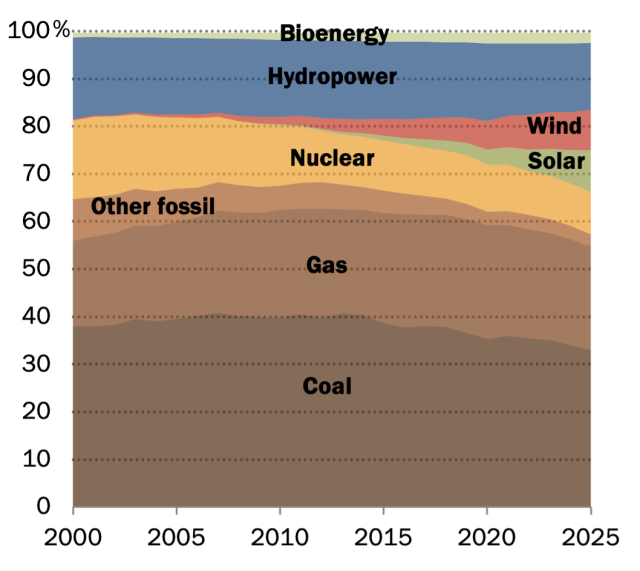
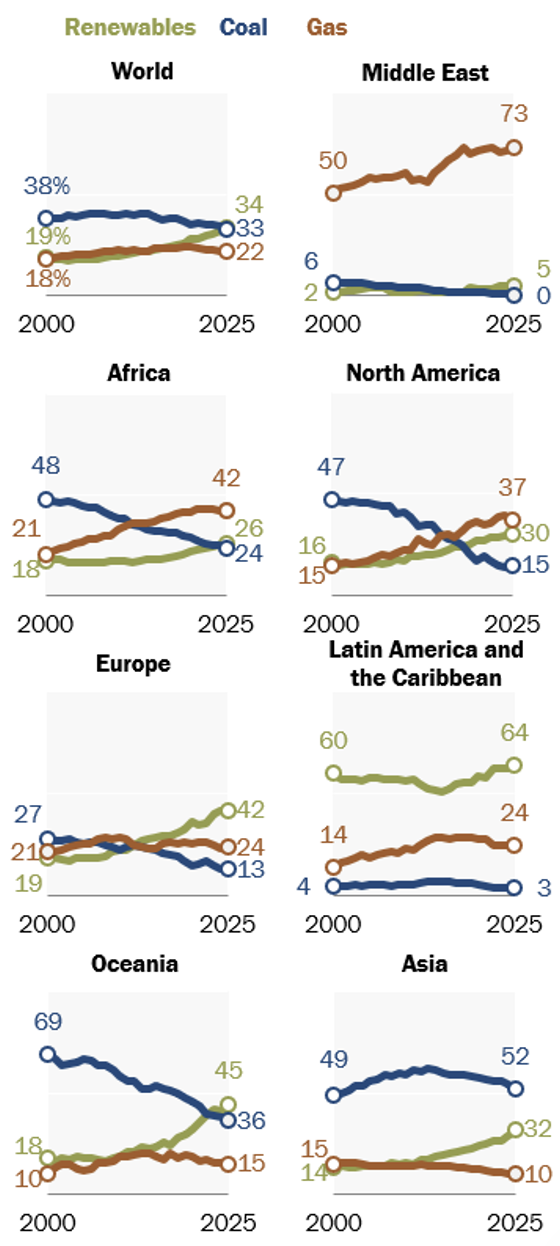
The latest analysis reveals a clear trajectory away from fossil fuels, albeit a gradual one. In 2025, fossil fuels—primarily coal, natural gas, and other petroleum products—still accounted for 57% of global electricity generation. This figure, however, represents a notable decrease from 65% in 2000, illustrating a quarter-century of concerted, if sometimes slow, effort to diversify energy sources. Coal, historically a backbone of industrial power, has experienced the most significant proportional decline within the fossil fuel category. Its share in global electricity generation fell to a third (33%) in 2025, down from a peak of 41% in 2013. This reduction is largely attributable to environmental policies, economic shifts, and the competitive rise of natural gas and renewables.
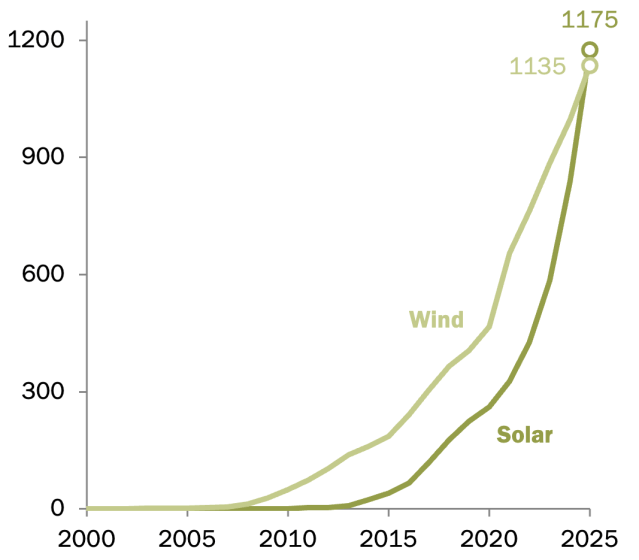
In stark contrast, wind and solar power have emerged as the vanguard of the renewable revolution. These two intermittent but increasingly reliable sources collectively supplied 17% of the world’s electricity in 2025, a dramatic increase from less than 5% just a decade prior in 2015. This exponential growth marks a critical milestone: for the first time, in 2025, the combined share of all renewable sources—including wind, solar, bioenergy, hydropower, geothermal, tidal, and wave power—marginally surpassed coal’s contribution to global electricity production, standing at 34% versus 33%. This symbolic overtaking underscores a fundamental shift in energy priorities and technological capabilities.
Nuclear energy, once seen as a key bridge to a low-carbon future, has experienced a proportional decline. From accounting for 17% of global generation in 2000, its share dropped to 9% by 2025. This downturn can be attributed to a combination of factors, including high construction costs, safety concerns, and the aftermath of significant events like the Fukushima Daiichi accident. Despite this, nuclear power continues to be a crucial component in the energy strategies of several nations.
It is vital to contextualize these percentages against the backdrop of rapidly escalating global electricity demand. The total volume of electricity consumed worldwide has increased sharply over recent decades. This means that while some energy sources, such as hydropower, may have seen their share of total electricity production decline, their absolute output has in fact grown substantially to meet the burgeoning demand. This dynamic highlights the immense scale of the energy transition, requiring not only a shift in energy sources but also a massive increase in overall generating capacity.
The Solar Revolution and Cost Dynamics
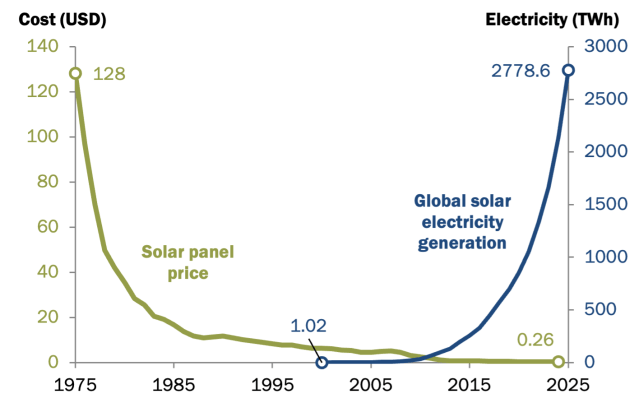
Among renewables, solar power stands out for its meteoric rise. In 2025, solar photovoltaics (PV) contributed 9% of the world’s electricity, a staggering increase from 3% in 2020 and a mere 0.01% at the turn of the century. This exponential growth is inextricably linked to a profound economic transformation: the dramatic reduction in the cost of solar panels. Over the past five decades, the average price of a single solar panel has plummeted by more than 99%, from approximately $128 per watt in 1975 to just $0.26 per watt in 2024 (in constant 2024 U.S. dollars). This unprecedented cost reduction, driven by technological advancements, economies of scale, and supportive policies, has made solar power increasingly competitive with traditional energy sources, catalyzing its widespread adoption across diverse geographical and economic contexts. The visual correlation between falling solar panel prices and soaring global solar electricity generation is one of the most compelling narratives of the current energy transition.
Regional Divergences in Energy Transition
The global energy transition is not a monolithic phenomenon; rather, it manifests as a mosaic of regional and national strategies, influenced by unique resource endowments, economic priorities, and policy frameworks.
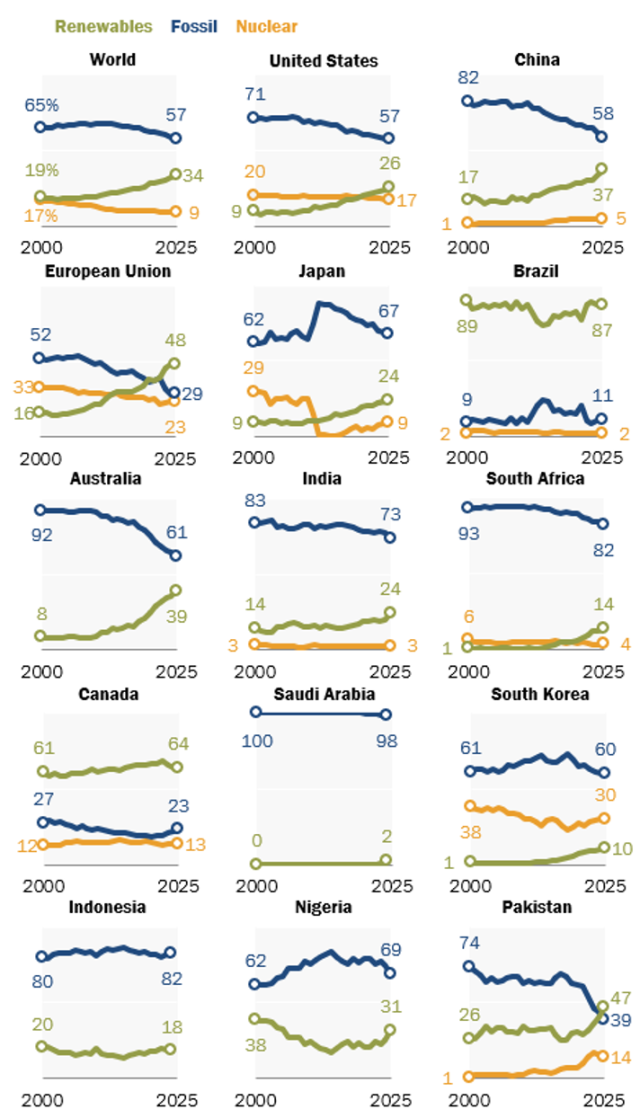
European Union: The EU has positioned itself as a global leader in renewable energy adoption. In 2025, nearly half (48%) of all electricity generated within the EU originated from renewable sources. This impressive figure contrasts with 29% from fossil fuels and 23% from nuclear power, reflecting the bloc’s ambitious climate targets and robust policy support for green technologies. The EU’s journey has involved significant investment in wind and solar infrastructure, coupled with market mechanisms designed to accelerate decarbonization.
The Americas:
- Brazil and Canada have historically relied heavily on renewables, predominantly hydropower, owing to their vast river systems. In 2025, renewables constituted 87% of Brazil’s and 64% of Canada’s electricity mix. While hydropower remains dominant, both nations are increasingly integrating wind and solar to further diversify their renewable portfolios and enhance energy security.
- The United States has also seen a significant shift, with renewables now accounting for 26% of its electricity generation, alongside a decrease in reliance on fossil fuels. This transition is marked by the rapid deployment of wind and solar, alongside a sustained role for natural gas as a bridge fuel, replacing coal in many areas.
Asia: Asia presents a complex and varied energy landscape, characterized by both rapid growth in renewables and continued, and in some cases increasing, reliance on fossil fuels.
- China has dramatically increased its renewable energy capacity, with 37% of its electricity now coming from renewable sources. This growth is unparalleled globally, positioning China as a clean energy superpower.
- India is also investing heavily in renewables, though its energy demand growth means that fossil fuels, particularly coal, still play a substantial role.
- Japan’s energy trajectory was significantly altered by the Fukushima accident in 2011. Following the widespread shutdown of its nuclear power plants, Japan initially increased its fossil fuel imports. However, in recent years, it has cautiously returned to nuclear power while also accelerating its investment in renewables, seeking a balanced and resilient energy supply.
- Southeast Asia (ASEAN nations) presents a contrasting trend. Despite global pressures for decarbonization, countries in this region collectively more than doubled their reliance on coal electricity between 2000 and 2025 (from 20% to 45%). This is often driven by the need to meet rapidly growing electricity demand at the lowest possible cost, underscoring the complexities of energy transitions in developing economies.
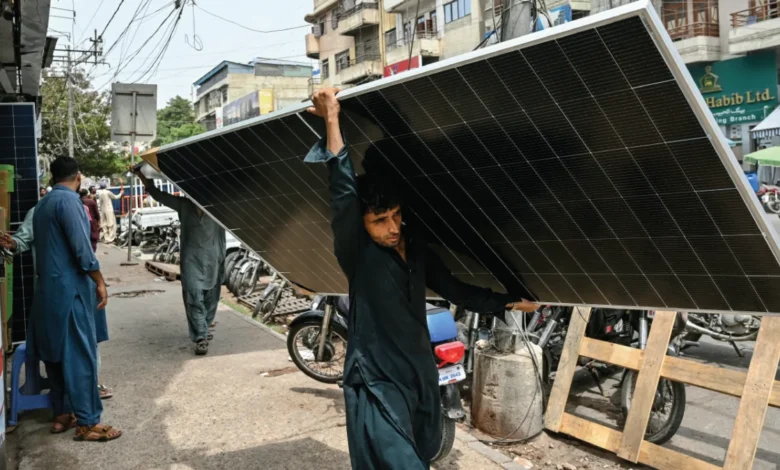
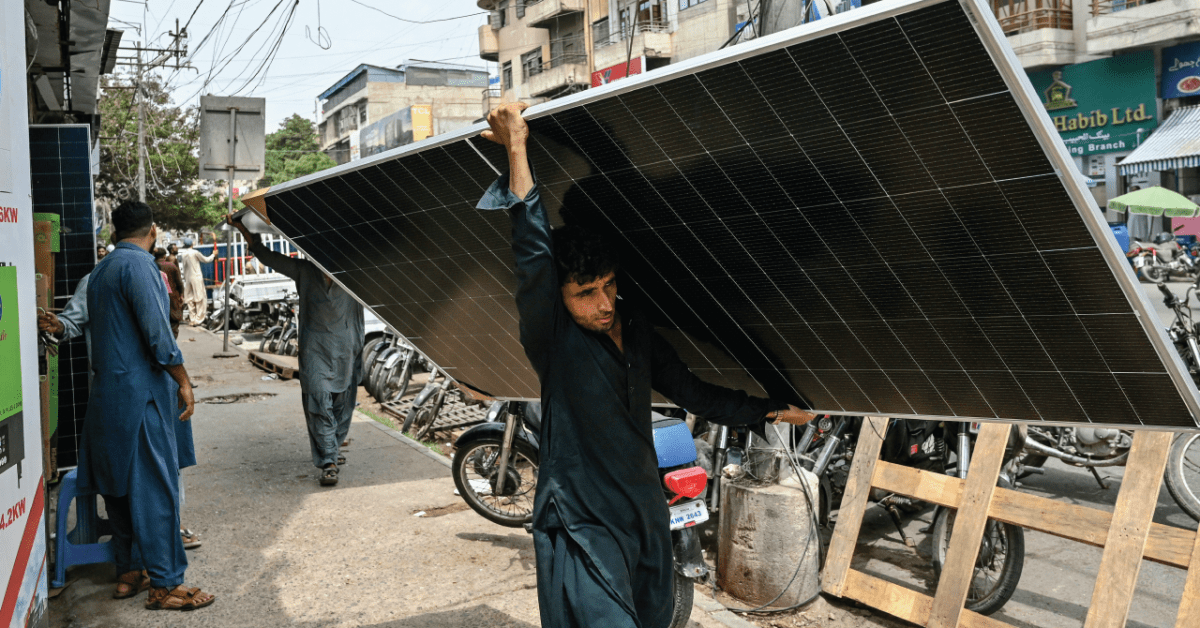
- Pakistan has witnessed a remarkable "people-led solar boom" in recent years. By 2025, renewable sources, largely solar, had surpassed fossil fuels as the primary source of electricity, a significant achievement for a nation where three-quarters of electricity came from fossil fuels in 2000. This demonstrates the potential for rapid transformation driven by decentralized solutions and favorable economics.
Africa and the Middle East:
- Africa has seen natural gas largely replace coal as a primary electricity source. Natural gas generation on the continent surged from 92 terawatt-hours (TWh) in 2000 to 419 TWh in 2025. This shift is partly due to the expansion of fracking infrastructure, allowing for greater exploitation of gas reserves. While coal generation saw only a slight increase, renewables are also gaining traction, offering a path to sustainable development.
- The Middle East has similarly increased its reliance on natural gas, with nearly three-quarters (73%) of the region’s electricity coming from this source in 2025, up from half at the turn of the century. This reflects the region’s abundant gas reserves and the desire to use it for domestic power while conserving oil for export.
- Saudi Arabia, a major oil and natural gas producer, currently generates almost all (98%) of its electricity from fossil fuels. However, under its ambitious Vision 2030 plan, the kingdom aims to diversify its economy and reduce fossil fuel dependency, including developing a civil nuclear program.
Australia: Australia maintains a strict ban on nuclear energy, implemented in 1998. While coal has historically dominated its energy mix, the country is rapidly expanding its renewable energy capacity, particularly solar and wind, to meet climate targets and replace aging coal infrastructure.
China’s Ascendancy in Renewable Energy and Global Manufacturing
China’s role in the global energy transition is unparalleled. Beyond its massive domestic growth in renewable energy generation, China has established itself as the world’s dominant manufacturer and exporter of clean-energy technologies, including solar panels, wind turbines, batteries, and electric vehicles. This strategic positioning has significant geopolitical and economic implications, as China now largely dictates the global supply chains for critical components of the green economy.
In terms of sheer output, China’s clean energy growth is staggering. In 2025, it generated more solar and wind power than all 38 nations in the Organisation for Economic Co-operation and Development (OECD) combined. China’s solar electricity generation has seen phenomenal growth, with annual production increasing by at least 25% every year since 2020. In 2025 alone, China added 336 TWh of solar electricity, an amount equivalent to the United Kingdom’s entire electricity production from all sources in the same year. Wind energy production in China has also grown substantially, adding over 100 TWh annually since 2020. When accounting for hydropower, bioenergy, and other renewables, China added more than 500 TWh of renewable electricity in both 2024 and 2025, dwarfing the contributions of most other nations. This immense scale of deployment and manufacturing capability positions China as a critical driver of the global energy transition, both as a consumer and a provider of green technologies.
Surging Global Electricity Demand
Underpinning these shifts in energy sources is a relentless increase in global electricity demand. The world generated 108% more electricity in 2025 than in 2000, effectively more than doubling its power output in a quarter-century. This demand growth is not evenly distributed. Asia has been the primary engine, accounting for a remarkable 76% of the world’s total electricity demand growth between 2000 and 2025. China alone was responsible for more than half (56%) of this global increase, driven by its rapid economic expansion, industrialization, and improving living standards for its vast population. India also contributed significantly, with its electricity generation growing by 264% in the same period. This concentrated growth in demand, particularly in developing economies, adds immense pressure to balance economic development with environmental sustainability.
Challenges and the Road Ahead
While the data paints a picture of undeniable progress towards a cleaner energy future, significant challenges remain. The intermittency of wind and solar power necessitates advancements in energy storage solutions and grid modernization to ensure stable and reliable electricity supply. The integration of diverse renewable sources into existing grids requires substantial investment and innovative technological solutions. Furthermore, the reliance on natural gas as a transition fuel, while cleaner than coal, still contributes to greenhouse gas emissions and raises concerns about methane leakage, a potent greenhouse gas.
The geopolitical implications of China’s dominance in clean energy technology manufacturing are also a growing consideration for nations seeking energy independence and supply chain resilience. Moreover, ensuring equitable access to clean energy, particularly in developing countries, remains a pressing global issue, requiring international cooperation and financial mechanisms to facilitate technology transfer and infrastructure development.
Expert Perspectives and Outlook
Energy experts largely concur that the pace of transition needs to accelerate further to meet ambitious climate targets, such as those outlined in the Paris Agreement. Dr. Anya Sharma, a leading energy economist, states, "The progress in renewables is encouraging, but the sheer scale of global demand means we are essentially running a race on two fronts: decarbonizing existing energy systems while simultaneously expanding overall capacity. The continued reliance on fossil fuels in certain regions highlights that the transition is complex, intertwined with development goals, and requires tailored solutions rather than a one-size-fits-all approach."
Looking ahead, the trajectory of global energy production will likely be defined by continued innovation in renewable technologies, breakthroughs in energy storage, and evolving policy frameworks. The decreasing cost of renewables, coupled with growing environmental awareness and international commitments, suggests that the shift away from fossil fuels will only gain momentum. However, managing the transition effectively, ensuring energy security, and addressing the persistent disparities in energy access and development will be critical to achieving a truly sustainable and equitable global energy future. The period from 2000 to 2025 serves as a powerful testament to the capacity for change, but also a stark reminder of the immense journey still ahead.
Related posts: