HubSpot Pioneers New Era of Search Visibility with Groundbreaking AI Optimization Strategy.

In a significant strategic pivot reflecting the rapidly evolving digital landscape, HubSpot, a leading customer relationship management (CRM) platform, has successfully implemented and validated an innovative Answer Engine Optimization (AEO) strategy. This initiative, launched in June 2025, represents a proactive response to the growing trend of consumers initiating their product research not with traditional search engines, but directly with AI-powered "answer engines" such as ChatGPT, Google’s AI Overview, Gemini, and Perplexity. The company’s pioneering work, undertaken in partnership with AEO specialist tool XFunnel, has yielded measurable improvements in AI visibility and citation, offering a crucial blueprint for businesses navigating the future of online discovery.
The Paradigm Shift: From Search Engines to Answer Engines
The digital consumer journey has undergone a profound transformation. Historically, a buyer’s initial interaction with a brand or product often began with a keyword search on platforms like Google, leading them through a labyrinth of organic search results, paid advertisements, and direct website clicks. However, the advent and rapid proliferation of sophisticated generative AI models have introduced a new intermediary: the answer engine. These platforms, capable of synthesizing information from vast datasets and presenting concise, conversational responses, are increasingly becoming the first port of call for users seeking product comparisons, problem solutions, or industry insights.
This shift presents both a challenge and an opportunity for marketers. While AI promises highly personalized and efficient information delivery, it fundamentally alters how brands achieve visibility. Traditional Search Engine Optimization (SEO) metrics, heavily reliant on link clicks and organic rankings, often fall short in measuring a brand’s presence within AI-generated answers, which prioritize direct factual citations and contextual relevance over outbound links. Recognizing this impending paradigm shift, HubSpot identified a critical void: the absence of reliable tools and methodologies to measure and optimize for "AI visibility."
"We observed a clear and undeniable trend," stated Sarah Chen, Head of Marketing at HubSpot, in a recent industry brief. "Our potential customers were moving beyond simply ‘Googling’ offerings; they were asking AI platforms directly, expecting immediate, curated answers. The traditional SEO playbook, while still valuable, wasn’t equipped to track or influence these new interaction points. We realized that if HubSpot wasn’t present in those AI-generated answers, we were effectively invisible to a growing segment of our audience." This realization catalyzed HubSpot’s urgent foray into AEO.
The Genesis of HubSpot’s AEO Strategy: A Partnership with XFunnel
To address this emerging challenge, HubSpot’s Marketing team initiated a strategic partnership in June 2025 with XFunnel, an advanced AEO tool specifically designed to measure and optimize AI visibility across leading answer engines. The collaboration marked a pivotal moment, providing HubSpot with the necessary analytics infrastructure to understand its footprint in this nascent digital space. The goal was multifaceted: to establish a baseline of current AI visibility, identify gaps, and develop actionable strategies to enhance HubSpot’s presence in AI-generated responses.
The initial phase focused on building a robust measurement system. HubSpot understood that without precise data, any optimization efforts would be speculative. This involved defining what constituted a "buyer’s journey" within an answer engine environment and establishing quantifiable metrics for success.
Building the AEO Measurement Framework: Defining the Buyer’s Journey for AI
![How HubSpot became the #1 CRM in AI search [A case study]](https://53.fs1.hubspotusercontent-na1.net/hubfs/53/How-HubSpot-became-the-%231-CRM-in-AI-search.png)
The fundamental question HubSpot sought to answer was: "When a potential customer queries an answer engine about a problem our products solve, is HubSpot prominently featured in the response?" To systematically address this, the team meticulously defined the buyer’s journey across answer engines, recognizing that it differed from conventional search. This journey was conceptualized around specific "prompts" – the questions or statements users posed to AI.
HubSpot implemented a "Product-Led AEO" approach, setting up distinct XFunnel containers for each of its product lines, such as Marketing Hub, Sales Hub, Service Hub, and CMS Hub. This granular structure allowed sub-teams to conduct targeted experiments, track improvements specific to their product, and optimize performance, while simultaneously providing a holistic, bird’s-eye view of the company’s overall AEO strategy. The architecture included sophisticated prompt tracking, citation analysis, and sentiment analysis tools within XFunnel, ensuring comprehensive data collection.
Once the relevant prompts were defined and tracking mechanisms were in place, HubSpot established four core AEO Key Performance Indicators (KPIs) to monitor and improve:
- AI Visibility Score: This metric measured how often HubSpot was mentioned or referenced in AI-generated answers for tracked prompts. It reflected the overall presence of the brand in AI responses.
- Citation Share: This KPI quantified the percentage of AI answers that directly cited HubSpot’s own website or official resources as a source, indicating authority and direct influence over the answer.
- Sentiment Analysis: Beyond mere presence, this metric evaluated the tone and favorability of mentions within AI responses, ensuring that HubSpot was not just mentioned, but mentioned positively.
- Answer Quality Influence: This measured the degree to which HubSpot’s content shaped the factual accuracy and comprehensiveness of the AI’s answer, reflecting the brand’s thought leadership.
"Establishing these KPIs was foundational," explained David Lee, AEO Lead at HubSpot. "Traditional metrics like click-through rates are less relevant when AI synthesizes information. We needed to understand brand presence, authority, and influence within the AI response itself. XFunnel provided the granularity to track these nuanced interactions, allowing us to move beyond anecdotal evidence to data-driven optimization."
The Three-Pillar AEO Strategy: A Blueprint for AI Success
After several months of data collection and analysis through XFunnel, HubSpot identified three critical pillars for a successful AEO strategy. These pillars formed the bedrock of their comprehensive approach:
- On-site Content Optimization: Enhancing HubSpot’s own digital assets to be more "AI-friendly."
- Off-site Amplification: Strategically expanding HubSpot’s presence and influence across the third-party digital ecosystem.
- Forum Growth: Leveraging community platforms and user-generated content, particularly high-citation sources like Reddit.
Pillar 1: On-site Content Optimization – Tailoring Content for Answer Engines
HubSpot’s initial AI visibility scores were robust, indicating a general awareness of the brand within AI models. However, XFunnel data revealed a significant weakness: citation scores. Answer engines were not frequently referencing HubSpot’s specific web pages as authoritative sources. While brand awareness was important, being directly cited was crucial for influencing the answer’s content and potentially driving direct traffic from AI-generated responses.
The Growth team, armed with XFunnel’s insights, concluded that HubSpot needed to create "ultra-specific content" capable of matching the hyper-personalized and detailed answers AI typically generates for users. This meant moving beyond broad topics to address highly specific buyer questions and industry-fit assessments, where AI previously struggled to surface HubSpot content worthy of direct citation. The core question became: "Will HubSpot work for my business?"
-
Industry-Specific Content at Scale: To address the need for hyper-personalization, HubSpot embarked on a massive project to create industry-specific solutions pages. Recognizing the scalability challenges, they leveraged an internal AI content generation system, feeding it HubSpot’s extensive library of case studies, customer success stories, and product documentation. Human editors then meticulously reviewed and refined the AI-generated content for accuracy, tone, and brand consistency before publication. Crucially, these pages were designed with structured data in mind, utilizing Breadcrumb and FAQ schema to make them easily parsable by AI. This strategy proved immensely successful: 92% of these new industry pages were subsequently cited by answer engines, leading to an impressive 49% lift in overall AI visibility for relevant prompts. For instance, a page detailing "CRM Solutions for Small-to-Medium Construction Businesses" would now frequently appear as a citation when users queried AI about software for that specific industry.
![How HubSpot became the #1 CRM in AI search [A case study]](https://53.fs1.hubspotusercontent-na1.net/hubfs/53/CRM-in-AI-search-1-20260414-7418567.webp)
-
Software Comparison Articles: Building on the success of industry-specific pages, HubSpot also published targeted software comparison articles, such as "5 Best CRMs for Construction Businesses." These articles were designed to directly address buyer questions at the evaluation stage. The results were dramatic: a 642% increase in citations for these posts and a 58% increase in overall mentions, demonstrating the AI’s preference for comparative, solution-oriented content.
-
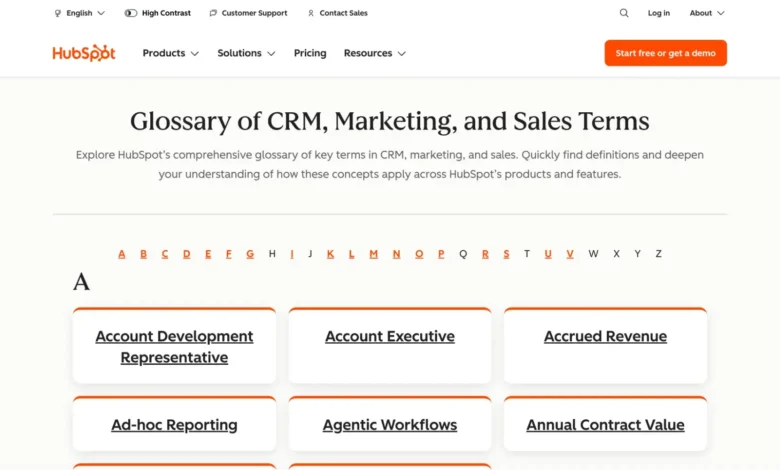
FAQ Glossary for Problem Exploration: XFunnel data also highlighted a gap in HubSpot’s appearance during the "Problem Exploration" stage of the buyer’s journey, where users were seeking definitions or explanations of core marketing, sales, and CRM concepts. To capture this critical top-of-funnel engagement, HubSpot launched an extensive FAQ glossary. This resource covered fundamental terms like "what is marketing automation?" and "how does lead scoring work?" Each page provided a concise definition, related common questions, and relevant links to HubSpot features or deeper content. Answer engines frequently pull from definition content, and by "owning" these foundational terms, HubSpot ensured it was part of the very first answer a prospect received. As a direct consequence, citation share for related prompts surged by over 60%, and brand visibility for awareness-stage prompts increased by an average of 35 percentage points when the glossary was cited.
-
Optimizing Product Pages for AEO: Beyond new content creation, HubSpot undertook a comprehensive optimization of its existing product feature pages. This involved rewriting headlines to directly address common buyer questions, improving formatting with tables and lists for enhanced readability by AI, and adding structured data to help answer engines categorize and retrieve content more efficiently. The results were significant: a 56% increase in citations from AI answer engines for these optimized pages, and a notable improvement in average ranking position within AI answers from 1.5 to a top-tier position of 1.
Pillar 2: Off-site Amplification – Influencing the Ecosystem
HubSpot’s AEO benchmarks revealed a crucial insight: third-party content played a substantial role in shaping AI answers about HubSpot’s products. This underscored the necessity of building HubSpot’s presence and influence across the broader third-party digital ecosystem, including industry publications, review sites, and partner blogs.
Leveraging XFunnel data, HubSpot’s partnership team identified publishers and influencers who were already frequently cited by AI for relevant prompts but were not yet consistently mentioning HubSpot. This created a strategic opportunity. HubSpot engaged these partners, providing them with AEO recommendations, content templates, and best practices to help them create answer-engine-friendly content that would win even more citations, with HubSpot prominently featured.
This program scaled rapidly. By the end of 2025, HubSpot had established partnerships with hundreds of websites globally, resulting in the creation of nearly a thousand new pages of optimized content. This initiative garnered hundreds of thousands of new AI citations, all strategically mentioning HubSpot in relevant contexts. "It was about co-creation," stated Maria Rodriguez, Head of Partnerships at HubSpot. "We empowered our partners with data and guidance, transforming them into extensions of our AEO strategy. The exponential growth in citations demonstrated the power of a collaborative ecosystem."
Pillar 3: Forum Growth – Harnessing the Power of Community
One of the most surprising and impactful revelations from XFunnel benchmarks was the significant role of community forums, particularly Reddit, as a highly cited source for HubSpot’s tracked prompts. Reddit, with its authentic user discussions and detailed problem-solving threads, proved to be an unexpected but powerful influencer of AI answers.
In response, HubSpot integrated always-on Reddit citation monitoring into its reporting using XFunnel. This allowed the team to weekly identify high-impact subreddits, recurring buyer questions, and specific "HubSpot mention gaps" where the brand was absent from relevant discussions. HubSpot then mobilized its extensive network of community advocates and product experts, encouraging them to engage authentically on these subreddits, posting helpful content and addressing top buyer questions where HubSpot’s solutions were relevant.
![How HubSpot became the #1 CRM in AI search [A case study]](https://53.fs1.hubspotusercontent-na1.net/hubfs/53/CRM-in-AI-search-2-20260414-1844703.webp)
The impact was immediate and substantial. For instance, XFunnel benchmarks revealed that while German (DE) and French (FR) markets showed significant Reddit citation growth for general CRM and marketing topics, HubSpot’s mention rate in these discussions was virtually zero. HubSpot quickly launched localized campaigns, deploying native-speaking community advocates. Within just one month, HubSpot’s mention rate on relevant French subreddits surged from 0% to 33.5%, and in German subreddits, it climbed to 17.1%. Overall, Reddit-driven citations for HubSpot exploded from a mere 178 in May 2025 to an astounding 146,000 by December 2025, underscoring the platform’s critical role in AI’s information retrieval process.
Key Learnings and Strategic Implications
HubSpot’s comprehensive AEO journey began with a fundamental question: "When buyers asked AI, was HubSpot an answer?" The overarching lesson was clear: measurement precedes optimization. Before any content could be created or partnerships forged, a deep understanding of which prompts mattered, where HubSpot appeared (or didn’t), who was being cited, and where the critical gaps lay was paramount. The data-driven insights provided by XFunnel were the catalyst for every strategic move.
This pioneering effort by HubSpot has profound implications for the broader marketing industry. It signals a definitive shift from merely optimizing for search algorithms to actively influencing the "answer generation" process of AI. This new frontier demands:
- A Content Strategy Focused on Authority and Specificity: Generic content will be overlooked. Brands must create highly specific, authoritative, and structured content that directly answers user questions and provides value.
- Emphasis on First-Party Data and Expertise: AI models increasingly favor verifiable, expert-backed information. Brands that are recognized as thought leaders in their domain and provide structured data will win.
- Ecosystem Influence: The battle for AI visibility extends beyond a brand’s own website. Influencing third-party sources, partners, and community discussions becomes integral.
- The Rise of the "Citation Economy": Direct links may become less critical than direct citations. Marketers must strategize on how to be the "source of truth" for AI.
- Continuous Monitoring and Adaptation: The AI landscape is dynamic. AEO is not a set-it-and-forget-it strategy but requires continuous monitoring, analysis, and agile adaptation.
HubSpot’s AEO Tool Offering: Democratizing AI Visibility
Building on the success of its internal strategy, HubSpot has now integrated these powerful AEO capabilities directly into its platform, making them accessible to its customers. The new HubSpot AEO tools offer real-time visibility into how a brand appears across answer engines like ChatGPT, Gemini, and Perplexity.
These tools provide:
- Real-time AI Visibility Monitoring: Track brand presence and citation share across key AI platforms.
- Prompt and Citation Analysis: Understand which prompts are most relevant and identify key citation sources.
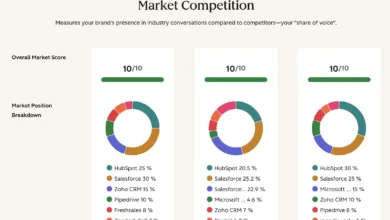
- Competitor Benchmarking: Gain insights into how competitors are performing in the AI answer landscape.
- Prioritized Recommendations: Receive actionable, data-driven recommendations built on HubSpot’s own successful AEO tactics.
Furthermore, for users of Marketing Hub Pro or Enterprise, the AEO tools offer CRM-powered prompt suggestions. This ensures that tracking is informed by specific business context, customer data, and sales insights from day one, rather than building from scratch. This integration allows businesses to align their AEO efforts directly with their customer journey and sales objectives, fostering a more holistic and effective digital strategy.
"Our journey into AEO wasn’t just about adapting to a new technology; it was about reimagining how businesses connect with their customers in an AI-first world," added Sarah Chen. "We’ve proven that with the right measurement and strategic approach, any business can establish and grow its presence where the next generation of buyers are starting their journey. We’re excited to empower our customers with the same capabilities that have driven our success." As AI continues to reshape the digital landscape, HubSpot’s proactive and data-driven AEO strategy positions it, and its customers, at the forefront of this new era of online visibility.
Related posts: