Managing digital media in modern web and mobile application development has long presented a formidable operational hurdle for engineering teams. As user-generated content scales exponentially—spanning unoptimized high-resolution photographs, diverse video codecs, and massive document files submitted in erratic formats—developers are continuously tasked with building or maintaining complex infrastructure to ingest, process, and distribute these assets. Historically, engineering departments either dedicated valuable internal sprints to coding bespoke upload pipelines and image-processing microservices, or cobbled together disparate third-party application programming interfaces (APIs) for storage, content delivery networks (CDNs), and image manipulation. This fragmented approach frequently introduced latency, security vulnerabilities, and maintenance debt. In response to these persistent industry pain points, specialized utilities such as Filestack have emerged as comprehensive, end-to-end media management solutions, offering integrated pipelines designed to handle upload, transformation, and delivery workflows through a unified architecture.
The technological landscape of file handling has evolved dramatically over the past two decades. In the early eras of web development, simple HTML file inputs combined with rudimentary server-side validation scripts were sufficient to capture user uploads, which were then stored directly on local web server file systems. However, as cloud computing matured, storage paradigms shifted decisively toward scalable object storage solutions like Amazon Simple Storage Service (S3). While cloud storage solved the problem of infinite scalability and durability, it did not address the high friction involved in processing files. Developers still had to write custom scripts to interface with cloud buckets, manage thumbnail generation queues, handle multi-part uploads for large video files, and secure endpoints against malicious payloads. Furthermore, the rise of multi-platform user acquisition meant that applications needed to ingest files not just from local device storage, but seamlessly from third-party cloud drives and social media repositories. The complexity of establishing OAuth authentication flows and parsing distinct APIs for Google Drive, Dropbox, GitHub, Facebook, and Instagram further compounded engineering overhead, making a unified ingestion layer an increasingly critical requirement for modern software architecture.
To evaluate the operational mechanics of contemporary file management platforms, it is instructive to examine the standard developer onboarding and integration lifecycle. Typically, the process begins with provisioning an account and obtaining API credentials, accompanied by a trial period to test integration depth across various environments. Comprehensive technical documentation serves as the cornerstone of any developer-focused utility, providing standardized code samples, software development kits (SDKs), and detailed usage specifications that minimize integration friction. In the case of frontend implementations, initializing a cloud-backed file picker often requires only a few lines of JavaScript. By invoking client initialization methods and triggering a modal picker, developers can instantly deploy a sophisticated, feature-rich graphical user interface (GUI) capable of handling local drag-and-drop actions alongside direct integrations with more than twenty popular cloud and social services. This abstraction layer eliminates the necessity of building custom modal interfaces, progress bars, and client-side validation logic from scratch.
For back-end engineering teams operating outside the browser environment, server-side SDKs—such as those available for Python—provide programmatic control over ingestion and cloud routing. Developers can instantiate client objects using secure API keys and define specific storage parameters, including destination cloud buckets, custom folder hierarchies, and granular upload metadata or tags. This dual-capability approach ensures that whether an asset originates from a client-side user interface or an automated server-side batch script, it enters the system through a secure, standardized pipeline.
Once media assets are successfully ingested, the core engineering challenge shifts from storage to transformation. Users routinely upload raw files of arbitrary sizes, dimensions, and color profiles, whereas the consuming application typically requires strict adherence to specific visual and structural guidelines. Without automated transformation layers, applications risk serving bloated media files that severely degrade page load performance and impair user experience. Modern media utilities address this by offering real-time transformations and asynchronous workflows capable of processing images, videos, and documents on the fly.
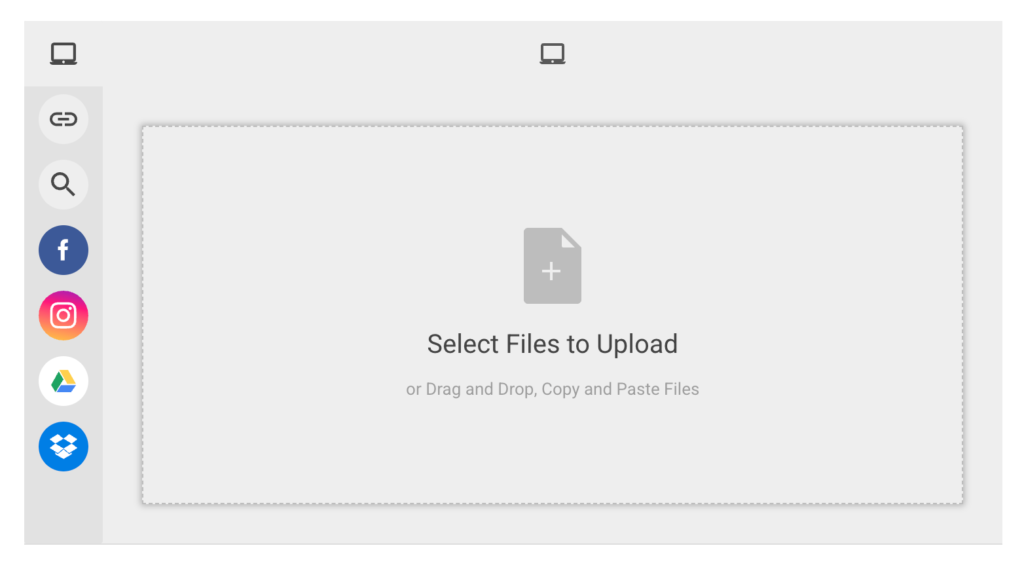
Image manipulation within these architectures is frequently handled via declarative URL parameters or API payloads, allowing developers to dynamically resize images, adjust aspect ratios, apply complex color filters, rotate orientations, and generate stylized borders without writing dedicated image-processing code. For instance, appending specific structural directives to a base content delivery network (CDN) URL instructs the underlying edge servers to instantly render a scaled and filtered variant of the original asset. Beyond simple image resizing, advanced transformation pipelines support video transcoding, optical character recognition (OCR), document conversion, and security features such as malware scanning and virus detection. Additionally, many platforms extend these capabilities to end-users directly via interactive transformation user interfaces, empowering non-technical users to crop, rotate, and edit their own media prior to final submission.
The final and arguably most critical phase of the media lifecycle is delivery. In an era where web performance metrics directly correlate with user retention, search engine optimization (SEO) rankings, and business conversion rates, the speed and reliability with which media assets are rendered to the end-user can make or break a digital product. Content Delivery Networks play an indispensable role in this phase by caching assets at globally distributed edge locations, drastically reducing latency for international audiences.
Advanced media delivery pipelines utilize sophisticated caching strategies to optimize performance and reduce origin server load. When an asset is requested—whether in its raw format or as a dynamically transformed variant—the CDN caches the resulting file upon its initial access. Subsequent requests for the identical unique URL are served instantly from the edge cache, maintaining high availability and rapid response times. To balance storage efficiency with asset freshness, platforms often implement retention policies where cached copies persist for a designated window—such as thirty days—before requiring re-validation or re-caching upon subsequent requests. This architecture ensures that updated assets or modified transformations propagate effectively while maintaining optimal delivery speeds for steady-state traffic.
Industry analysts and software engineering leaders frequently emphasize the broader economic and operational implications of adopting managed media pipelines over bespoke internal development. From a financial perspective, building an in-house file management system involves substantial sunk costs in engineering hours, infrastructure provisioning, security auditing, and ongoing maintenance. Furthermore, as data privacy regulations become increasingly stringent globally, handling user uploads introduces significant compliance obligations, including secure data transmission, encryption at rest, robust access controls, and adherence to regional data residency laws. By offloading these responsibilities to specialized, SOC-compliant cloud infrastructure providers, organizations can significantly reduce their attack surface and minimize liability.
From a productivity standpoint, utilizing an integrated platform frees engineering teams to focus on core product differentiation rather than infrastructure plumbing. In highly competitive market sectors where time-to-market is a primary determinant of commercial success, the ability to rapidly deploy robust file uploading, real-time transformation, and high-performance delivery can provide a decisive competitive advantage. Rather than allocating scarce engineering resources to troubleshoot edge cases in multi-part file uploads, manage distributed storage clusters, or optimize video encoding codecs, development teams can leverage battle-tested services that scale automatically with user growth.
In summary, the evolution of digital asset management reflects a broader industry trend toward modularization and the abstraction of complex infrastructure. As the volume, variety, and velocity of digital media continue to accelerate, the reliance on specialized cloud utilities will likely become standard operating procedure for software development organizations of all sizes. By seamlessly bridging the gap between raw file ingestion, dynamic real-time transformation, and high-speed global delivery, platforms like Filestack illustrate how modern cloud engineering can transform a historically cumbersome operational burden into a streamlined, reliable, and high-performance component of the modern digital ecosystem.