
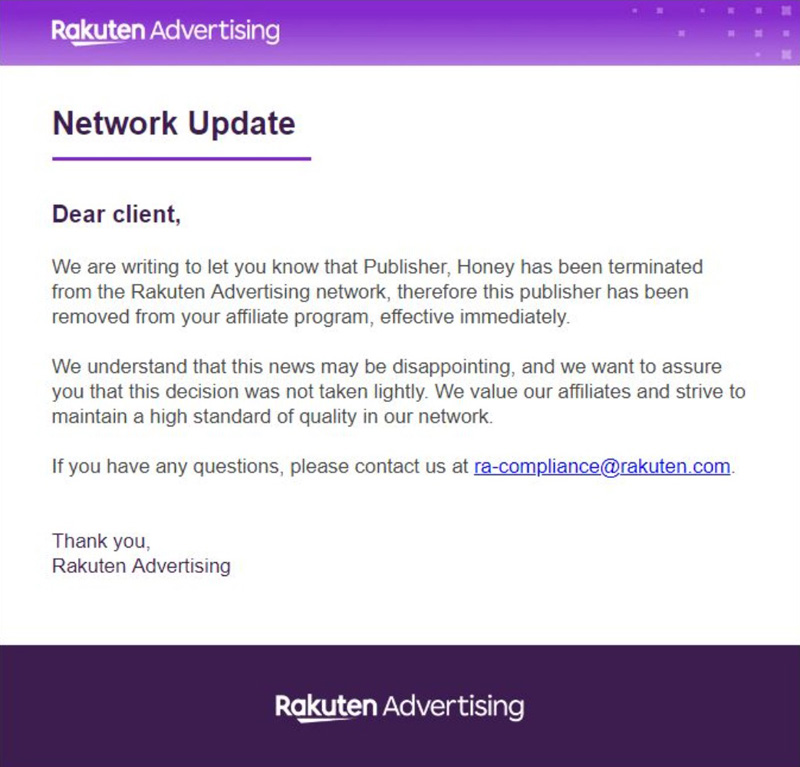
The landscape of digital partnership marketing experienced a profound shockwave following the unprecedented removal of PayPal Honey, a major affiliate publisher, from two of the largest United States affiliate marketing networks: Rakuten Advertising and impact.com. The swift regulatory and network-level actions followed rigorous public investigations by digital security analysts and independent watchdogs, culminating in severe penalties for alleged attribution manipulation and the intentional circumvention of established browser extension rules.
The high-profile exclusion of a marquee affiliate—acquired by financial technology giant PayPal for $4 billion six years prior—has triggered widespread industry discourse regarding conversion tracking transparency, last-click attribution models, and the ongoing compliance challenges associated with downloadable software publishers (DSPs) in the modern e-commerce ecosystem.
Chronology of Events and Network Actions
The sequence of enforcement actions unfolded rapidly during mid-January, coinciding with the timing of major industry gatherings. On Monday, January 12, Rakuten Advertising made the formal announcement that PayPal Honey had been terminated from its network. Industry insiders noted the striking coincidence that this enforcement action was enacted on the opening day of Affiliate Summit West, the largest annual gathering of affiliate marketing professionals in the United States. Rakuten’s management framed the termination as a necessary measure to maintain rigorous standards of quality and network integrity, stating that the publisher was ousted to uphold the ecosystem’s foundational values.
Days later, on Friday, January 16, additional enforcement measures materialized when impact.com determined that PayPal Honey was out of compliance with its platform policies. Unlike Rakuten’s permanent termination, impact.com implemented a temporary suspension of the publisher, removing it from its Discovery Marketplace. The actions by both networks were publicly attributed to noncompliance with network policies, specifically focusing on behavior that undermines trust in the partnership economy. Platform executives explicitly highlighted "attribution manipulation" as the core catalyst driving the disciplinary actions.
The investigations that catalyzed these network suspensions were significantly propelled by independent audits and technical breakdowns. Notably, investigative reports by security researcher Ben Edelman and technical breakdowns by content creators such as MegaLag exposed vulnerabilities and intentional noncompliance regarding how browser extensions interact with user clickstreams. These investigations brought long-standing industry debates regarding cookie-stuffing, link hijacking, and stand-down protocol violations into the mainstream digital marketing spotlight.

Technical Background: Stand-Down Rules and Attribution Manipulation
At the heart of the controversy lies the structural mechanic of modern affiliate attribution. The vast majority of contemporary affiliate marketing programs operate on a "last-touch-wins-all" compensation framework. Under this model, the entirety of the financial commission for a completed transaction is awarded to the final affiliate publisher whose tracking link or cookie was engaged by the consumer immediately prior to checkout.
Browser extensions, such as shopping assistants, coupon finders, and cashback tools, occupy a unique and often contentious position within this framework. Because they frequently operate natively within the user’s browser, these extensions have the technical capability to inject tracking cookies or override existing referral links late in the consumer journey. To maintain fairness among publishers—particularly content creators and top-of-funnel affiliates who introduce consumers to brands—networks and programs enforce strict "stand-down" rules. These protocols dictate that if an affiliate cookie or tracking identifier already exists within a consumer’s clickstream from an earlier interaction, the browser extension must stand down and refrain from firing its own tracking code to prevent overwriting the prior attribution.
According to investigative findings, PayPal Honey faced disciplinary action due to intentional violations of these stand-down rules, coupled with concealment mechanisms designed to obscure the behavior. By failing to step aside when a consumer had arrived via another publisher’s link, the extension allegedly hijacked the conversion credit, taking financial attribution away from the rightful partner who initiated the consumer’s purchase journey.
Broader Implications for Affiliate Program Management
The expulsion of a multi-billion-dollar corporate asset from top-tier networks serves as a watershed moment for affiliate program managers, merchant brands, and digital publishers. Industry experts emphasize five critical takeaways that redefine how brands must approach partnership marketing oversight moving forward.
First, the presence of a noncompliant affiliate can severely damage a brand’s entire program ecosystem. Premium, rule-abiding publishers—including top-tier content creators, media outlets, and review sites—frequently audit merchant programs using advanced tracking and policing tools. When high-performing partners identify rule-violating entities that aggressively overwrite cookies, they routinely choose not to join or actively promote that brand. Consequently, tolerating a single bad actor alienates legitimate partners, leading to a degraded publisher base and depressed long-term revenue.
Second, merchant brands must undertake proactive self-policing rather than relying exclusively on affiliate networks for compliance enforcement. While comprehensive terms and conditions (T&Cs) are foundational, having rules in place does not automatically guarantee adherence. Furthermore, affiliate network compliance departments primarily monitor adherence to network-wide policies rather than specific, nuanced program agreements. Given that brand reputation and bottom-line revenue are at stake, independent program managers are urged to prioritize internal compliance monitoring and swift enforcement.
Third, industry stakeholders must develop a granular, highly technical understanding of how different technology types operate. Broad categorizations—such as grouping all downloadable software publishers or browser extensions into a single prohibited category—often fail to account for technical nuances. Recent audits by organizations such as the Performance Marketing Association (PMA) and the UK’s Affiliate & Partner Marketing Association (APMA) underscore the complexity of distinguishing between strict stand-down rules, soft clicks, and other attribution mechanisms. Maintaining up-to-date awareness of these technical standards is essential for intelligent, fair enforcement.
Fourth, avoiding generalization is vital for the healthy growth of digital marketing ecosystems. Just as blanket bans on paid search affiliates or loyalty platforms can stifle legitimate revenue channels, penalizing entire classes of technology due to the infractions of a single prominent player can harm overall program performance. Every publisher ought to be evaluated on individual merit, technical transparency, and adherence to established guidelines.
Finally, the incident highlights the critical importance of publisher diversification. Programs that suffer substantial revenue drops following the removal of a single dominant publisher reveal a dangerous reliance on concentrated traffic sources. Industry best practices dictate maintaining a balanced affiliate mix across numerous categories. Modern merchant programs are encouraged to explore an expanded portfolio of publisher types, spanning affinity groups, card-linked offers, charities, content producers, complementary brands, connected TV (CTV) partnerships, datafeed-driven websites, educators, email marketers, brand advocates, closed user group (CUG) loyalty solutions, mass media, mobile-oriented publishers, online communities, paid search affiliates, podcasters, post-checkout solutions, review sites, retargeting solutions, social media influencers, sub-affiliate networks, and video marketers.
Industry Outlook Following the Enforcement Actions
As the affiliate marketing industry absorbs the ramifications of the PayPal Honey suspensions, digital marketing professionals anticipate heightened regulatory scrutiny and stricter automated compliance checks across all major tracking environments. The events of January signal a decisive shift toward protecting the integrity of the partnership economy, ensuring that top-of-funnel content creators and early-stage influencers receive fair attribution for their role in the consumer purchase journey.
For merchant brands, the mandate moving forward is clear: robust internal governance, deep technical comprehension of tracking mechanics, and a diversified publisher portfolio are no longer optional best practices, but essential safeguards for long-term commercial viability in the digital marketplace.