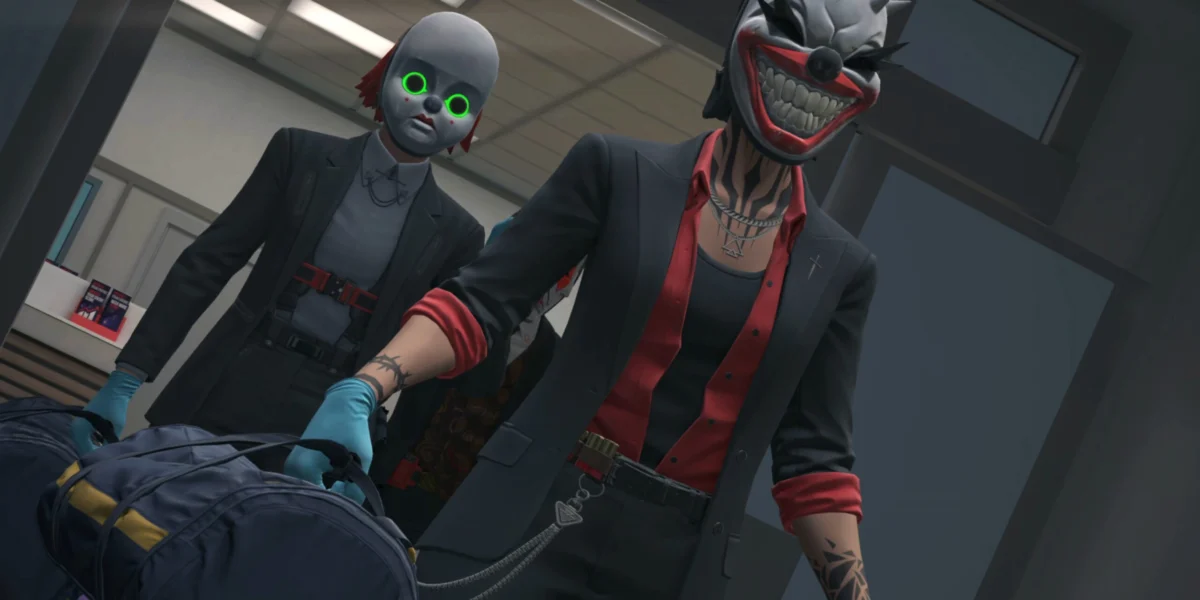
The tactical cooperative shooter genre has officially expanded into the virtual reality landscape with the launch of Payday Aces High. Developed by Fast Travel Games, a studio with a significant pedigree in immersive VR titles, the game is now available across Meta Quest, SteamVR, and Steam Frame. This release represents a strategic pivot for the long-running Payday franchise, moving away from traditional flat-screen inputs to leverage the tactile, high-intensity potential of room-scale virtual reality. Players assume the roles of four distinct operatives—the Ace of Hearts, Clubs, Diamonds, and Spades—as they execute a campaign of revenge against Warren Jupiter, a fictional billionaire antagonist who serves as the catalyst for the game’s narrative arc.
A New Chapter for a Legacy Franchise
The Payday franchise has maintained a complex relationship with its community over the past decade. Following the immense popularity of Payday 2, which set a high bar for cooperative heist mechanics, the subsequent release of Payday 3 faced significant criticism regarding its launch state and server stability. While the developers of Payday 3 have implemented consistent post-launch updates to stabilize and improve that experience, the community’s sentiment has remained anchored in the mechanics and atmosphere of the second entry.
Payday Aces High seeks to bridge this divide by returning to the series’ roots—focusing on tight, objective-based cooperative gameplay—while stripping away the bloat that hindered more recent iterations. The game centers on a narrative of retribution. The protagonists, having been framed by the billionaire Warren Jupiter, must navigate a series of high-stakes environments, ranging from secure financial institutions and art museums to remote, sub-zero scientific compounds. The shift to VR is not merely aesthetic; it fundamentally changes the mechanical loop of the "heist," requiring players to manually manipulate locks, manage on-body inventories, and engage in physics-based gunplay.

Technical Architecture and VR Integration
The development team at Fast Travel Games has focused heavily on utilizing VR-native mechanics to differentiate the title from its flat-screen predecessors. In the standalone version for the Meta Quest 3, the game demonstrates a high level of optimization, maintaining fluid frame rates despite the complexity of multiple enemy AI entities and physics-heavy environmental interactions.
Key technical features include:
- On-Body Inventory System: Players manage equipment, ammunition, and loot through spatial interaction rather than menu navigation, increasing the sense of presence.
- Physics-Based Interaction: Environmental details, such as complex security locks, require tactile input, forcing players to engage with the world rather than simply pressing a button to interact.
- Multitasking Mechanics: The game enables "dual-tasking" capabilities, such as performing a hacking minigame on a console while simultaneously maintaining cover fire, a mechanic designed to reward spatial awareness and coordination.
Despite these advancements, the game represents a streamlined experience compared to its predecessors. Notably, some features common to the franchise, such as the ability to take hostages, have been excluded. Analysts suggest this design choice likely stems from the limitations of current VR motion-tracking hardware and the necessity of keeping AI pathfinding stable in a virtual environment where players have 360-degree agency.
The Roadmap and Post-Launch Strategy
Fast Travel Games has outlined a clear content roadmap intended to keep the player base engaged through the winter of 2026 and into 2027. The game launched with six core missions, with a seventh, titled "Coup de Grace," scheduled for a free release on December 14, 2026. This content strategy mirrors successful "live-service" models, where continuous updates serve to maintain retention rates in a competitive VR market.

The studio has confirmed that the title features full crossplay support, allowing users on Meta Quest to coordinate with players on PC-based SteamVR platforms. This is a critical development for the longevity of the game, as the cooperative nature of the title relies on a healthy, active player pool. By removing the barriers between hardware ecosystems, the developers aim to lower the entry threshold for potential users, regardless of their preferred VR setup.
Comparative Analysis: VR vs. Flat-Screen Heisting
The shift to virtual reality fundamentally alters the psychological profile of the heist genre. In traditional gaming, the player’s avatar is a digital proxy; in VR, the player’s physical body becomes the input. This creates a heightened sense of tension when executing high-stakes objectives.
However, the transition is not without its limitations. Early feedback from the community and reviewers indicates that while the gunplay and environmental interactions are robust, the stealth mechanics feel less refined than those found in traditional stealth-action games. The inability to physically manipulate certain objects—such as throwing a distraction to divert guard attention—creates a "mechanical gap" that immersion-focused players have noted. For a genre that thrives on the tension of staying hidden versus going loud, the lack of nuanced interaction with non-player characters (NPCs) is a noted point of friction.
Market Implications and Future Outlook
The launch of Payday Aces High signals a broader trend in the gaming industry: the migration of established "AAA" or "AA" franchises into the VR space as a secondary, premium tier of content. With the maturation of standalone headsets like the Meta Quest series, developers are finding it increasingly viable to port or build original iterations of popular IPs specifically for the platform.

From a commercial standpoint, Payday Aces High serves as a litmus test for the viability of cooperative, mission-based shooters in the VR market. If the game sustains a strong, concurrent player count, it may encourage other publishers to invest in similar adaptations. The success of this title is likely tied to the efficiency of its community-led initiatives, such as the announced community challenges, which offer specialized, time-limited loot. These engagement loops are essential for maintaining a sense of community in a medium that is often criticized for its isolation.
Conclusion: A New Standard for Cooperative VR
Payday Aces High does not attempt to be a direct 1:1 conversion of the entire franchise’s history. Instead, it acts as a refined, concentrated distillation of the series’ core tenets: teamwork, high-pressure objective management, and the satisfaction of a successful extraction. While it lacks some of the complexity found in earlier, non-VR entries, it compensates with an increased sense of physical presence and agency.
As the industry moves forward, the success of titles like this will be measured by the studio’s ability to iterate on feedback. The upcoming December update will be a significant indicator of whether Fast Travel Games is prepared to address the current "immersion gaps" or if they intend to double down on the high-intensity, action-first design philosophy. For fans of the franchise and VR enthusiasts alike, the game represents a notable leap forward in how cooperative experiences are designed for the virtual medium, proving that even a decade-old formula can find new life when placed into the hands of the player, quite literally.