The landscape of modern journalism is undergoing its most profound transformation in decades, driven by rapid technological advancements and changing consumer habits. According to the landmark Ofcom News Report 2026, approximately one in five adults in the United Kingdom now turns to artificial intelligence applications as a primary or supplementary source for news. This milestone marks the first time the communications regulator has formally tracked AI consumption metrics across its expansive surveys, shedding light on a cultural shift that is reshaping how citizens interact with current events.

Based on interviews with nearly 5,400 UK adults, the comprehensive study paints a picture of an "always-on" media ecosystem where traditional, direct pathways to journalism are increasingly being bypassed in favor of algorithmic intermediaries, social networks, and generative AI tools. While this evolution offers unprecedented convenience for consumers, it introduces complex challenges for traditional publishers, ranging from declining referral traffic to heightened vulnerabilities regarding misinformation.
The Rise of Generative AI in Daily Information Consumption
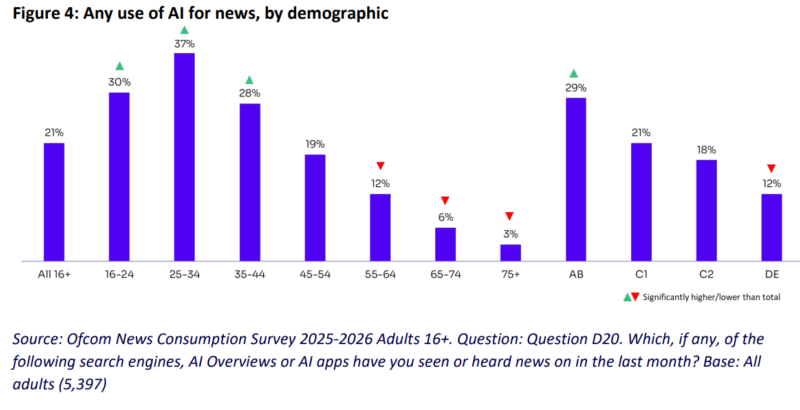
The integration of artificial intelligence into the daily news diet of British citizens is no longer a futuristic prospect; it is a measurable reality. Ofcom’s 2026 data indicates that 21% of surveyed UK adults have used AI applications to access news content over the past month. Adoption rates are heavily skewed toward younger demographics, with digital-native generations leading the charge. Among individuals aged 25 to 34, usage spikes to 37%, demonstrating a generational pivot away from legacy broadcast and print mediums toward conversational search and synthesis tools.
Among the various platforms available, OpenAI’s ChatGPT has emerged as the dominant gateway for AI-assisted news consumption. Roughly 13% of all respondents reported using the platform specifically to retrieve information about ongoing current events over a 30-day period. Other emerging tools and bespoke AI assistants also captured notable market shares, signaling a broader consumer appetite for synthesized, conversational summaries rather than traditional long-form reporting.
This reliance on generative AI poses an existential threat to the economic foundations of original journalism. Unlike traditional search engines or social media feeds, which typically direct users to publisher websites via hyperlinks, generative AI models synthesize information and present direct answers to users. This mechanism results in negligible click-through rates to original sources, depriving publishers of vital ad impressions and subscription conversions. Furthermore, the inherent risk of algorithmic "hallucinations"—where AI models generate plausible-sounding falsehoods—amplifies concerns over the potential spread of unverified misinformation during critical news cycles.
Changing Daily Habits and the Dominance of Online Intermediaries
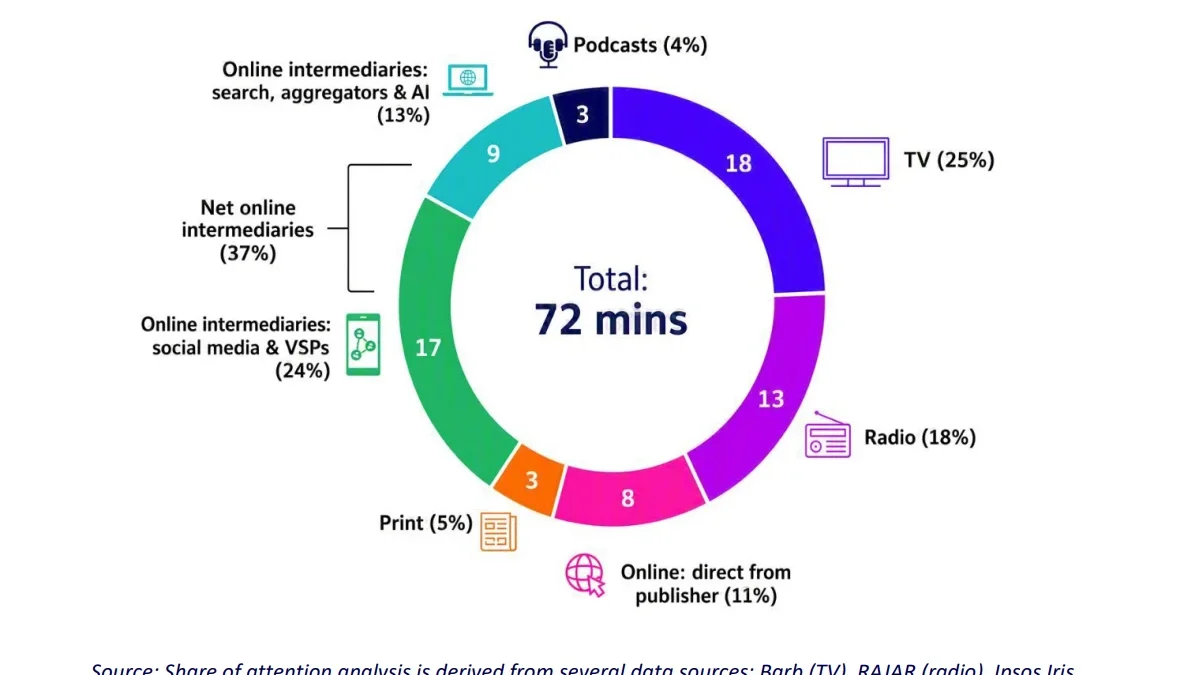
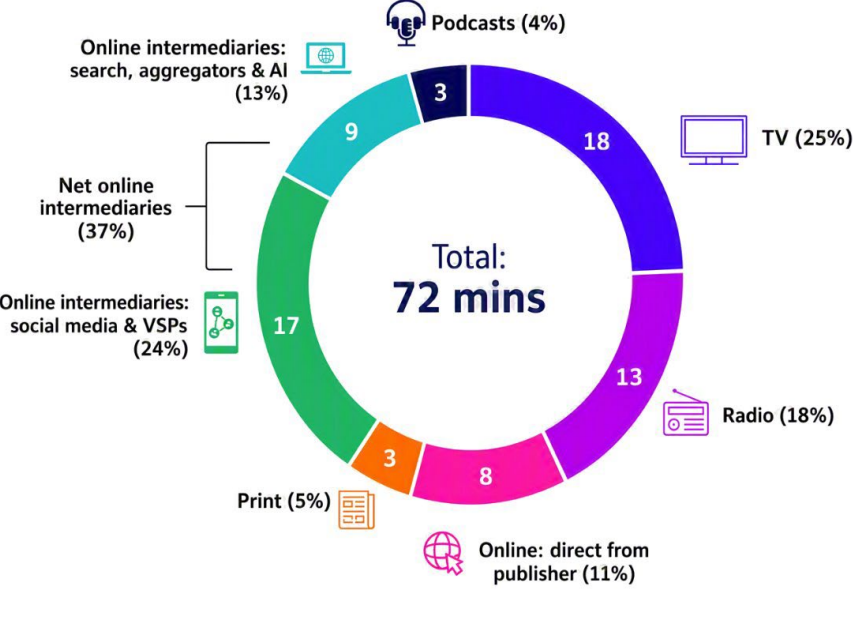
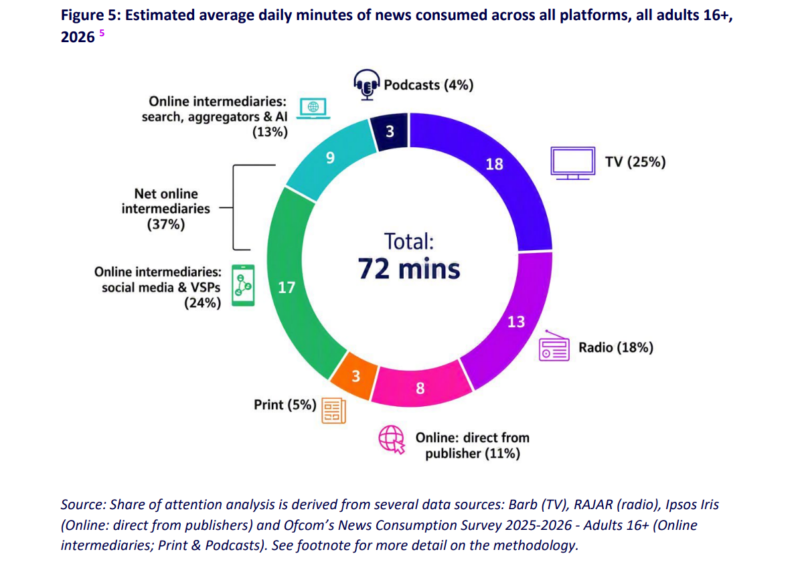
Beyond artificial intelligence, the broader metrics of news consumption in the UK reveal a population that is spending more time engaging with information, albeit through fragmented channels. Ofcom estimates that UK adults spend an average of 72 minutes per day consuming news, though methodological adjustments compared to previous years mean direct year-on-year comparisons require careful contextualization.
The methodology reveals a striking imbalance between how news is discovered and where it is originally produced. Search engines, online aggregators, social media networks, video-sharing platforms, and AI services collectively known as "online intermediaries" account for 37% of the total time Britons spend with news—amounting to an average of 26 minutes per day. By contrast, dedicated publisher websites and native digital apps account for a modest eight minutes per day, representing just 11% of total consumption time.
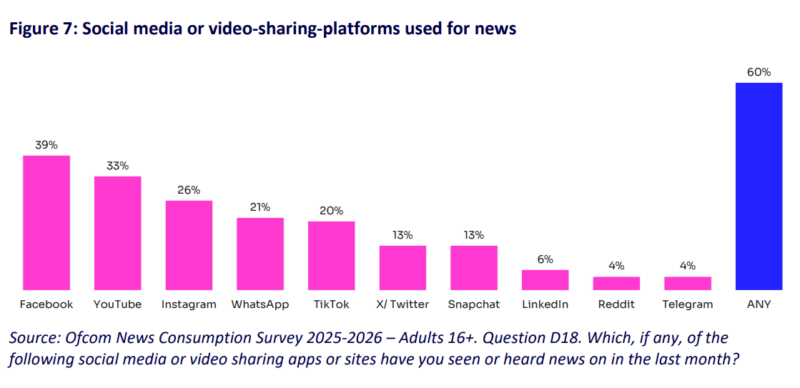
Social media platforms remain entrenched as primary vectors for news discovery. Facebook retains its crown as the leading social network for news distribution in the UK, with 39% of adults stating they utilized the platform to encounter current events over the past month. Video-sharing giant YouTube closely follows, capturing 33% of respondents. These platforms act as powerful gatekeepers, determining which stories gain visibility based on opaque engagement algorithms rather than traditional editorial judgment.
Legacy Resilience and the Continuing Authority of Public Service Media
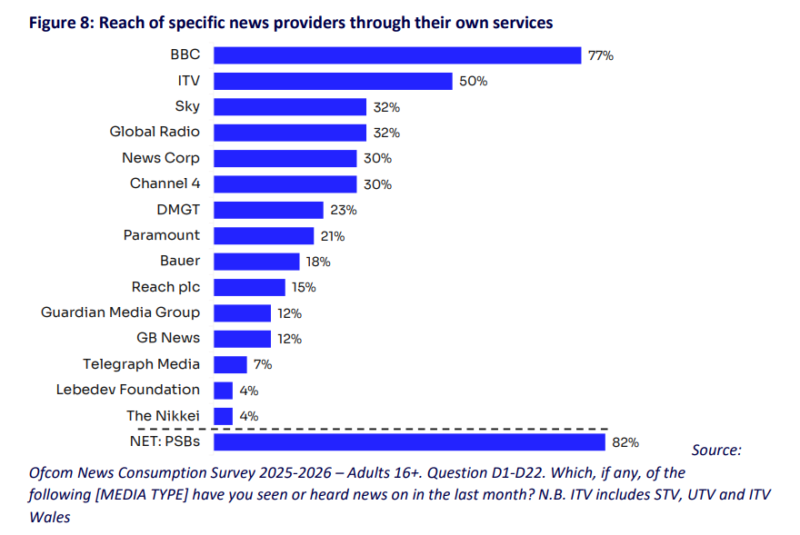
Despite the fragmentation caused by digital platforms, traditional institutions retain a formidable presence in the British media diet. When Ofcom examined specific news providers, the British Broadcasting Corporation (BBC) stood out as the dominant force in the UK market. A remarkable 77% of Britons reported using the BBC to find news over the preceding month, underscoring the enduring public trust vested in public service broadcasting.
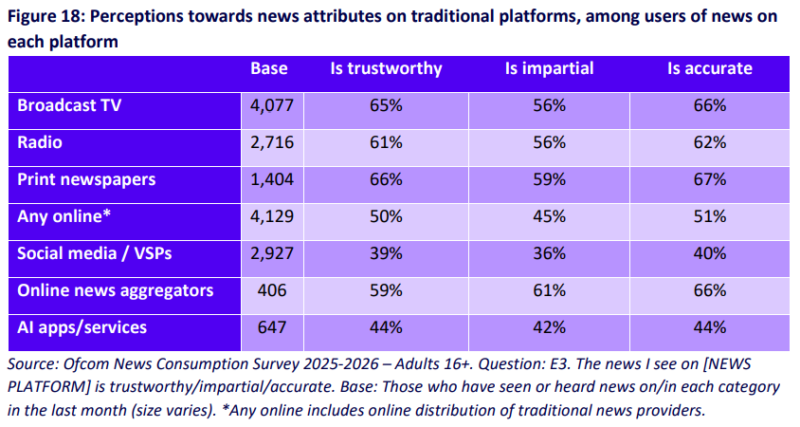
However, a stark divide persists between legacy and digital platforms when it comes to user trust. Ofcom’s trust metrics indicate that consumers perceive news accessed via traditional broadcast, print, and radio outlets as significantly more accurate and trustworthy than information sourced from newer digital platforms, particularly social networks and unverified AI services. This trust deficit highlights a paradox in modern media consumption: while audiences increasingly gravitate toward convenient, algorithmically curated digital spaces, they remain acutely aware of the potential quality and reliability disparities inherent in those channels.
The tension between convenience and credibility was further illustrated during Ofcom’s focused research into the May 2026 local and devolved parliament elections across England, Scotland, and Wales. Surveying over 5,500 participants regarding how they gathered information about the electoral contests, researchers discovered that direct communications from political parties and traditional broadcast news dominated the information landscape. UK national newsbrands, encompassing both print and online editions, were cited as an election news source by 9% of respondents, demonstrating that voters still seek out authoritative, institutional reporting when high-stakes democratic decisions are on the line.
Regulatory Perspectives and the Strategic Challenge Ahead
Ian Macrae, Director of Market Intelligence at Ofcom, encapsulated the dual pressures facing the contemporary media landscape in his commentary accompanying the report.
"In today’s ‘always on’ environment, many people don’t go direct to the news; the news is coming to them through different online intermediaries, increasingly AI-enabled," Macrae observed. He emphasized that while audiences are embracing novel discovery mechanisms, their underlying demand for reliable journalism remains steadfast, particularly during pivotal events such as elections, where public service media brands continue to fulfill an indispensable role.
The primary strategic challenge moving forward, according to industry analysts, lies in adaptation. As digital gatekeepers and generative AI tools continue to reshape user intent, public service media and commercial publishers alike are forced to rethink their distribution frameworks. To avoid being drowned out by the sheer volume of digital noise, legacy institutions must evolve their engagement strategies, ensuring their verified reporting is successfully delivered to audiences wherever they happen to be scrolling, searching, or prompting.
Ultimately, the Ofcom 2026 News Report serves as both a snapshot of an industry in transition and a warning flare for stakeholders. As artificial intelligence solidifies its place in the daily media habits of millions—particularly younger demographics—policymakers, regulators, and publishers must navigate an increasingly complex terrain where the line between curated journalism and algorithmic synthesis grows ever more blurred.