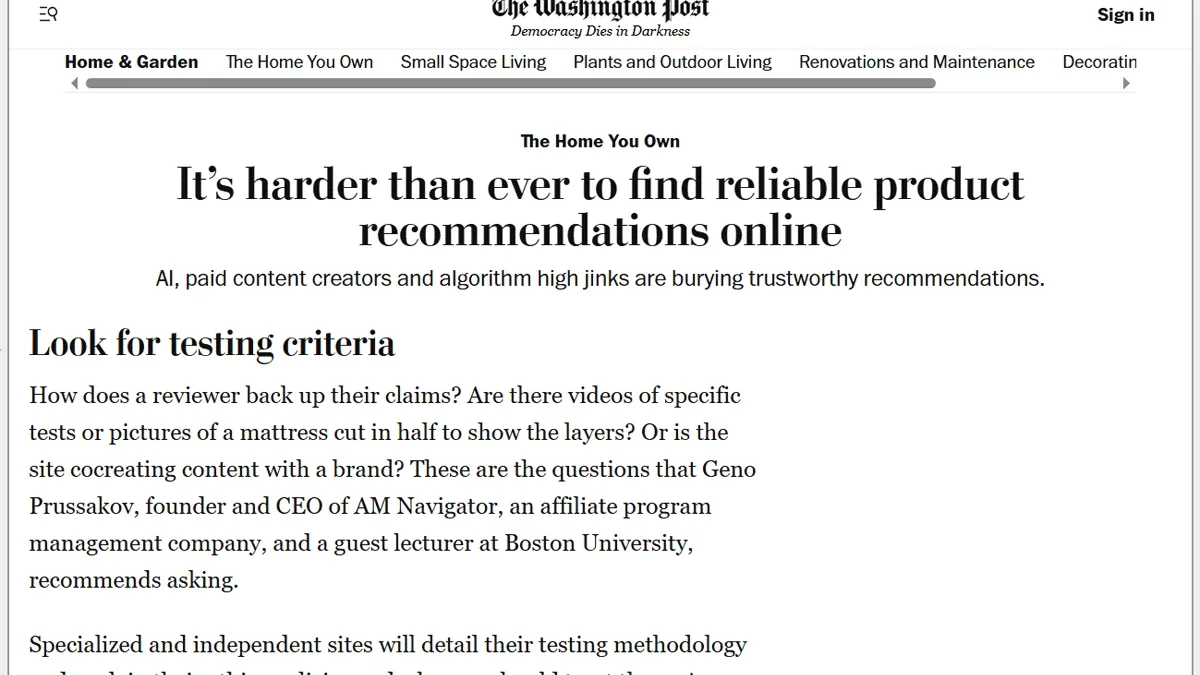
The intersection of journalism, commerce, and digital search authority has undergone a profound transformation over the past decade. Earlier this year, prominent industry expert and affiliate marketing veteran Geno Prussakov provided critical insights to The Washington Post regarding the commercialization of online product recommendation lists published by major media outlets. While that initial feature synthesized complex industry dynamics into concise takeaways, a deeper examination reveals a multi-billion-dollar ecosystem where traditional editorial boundaries frequently blur with performance-based marketing.
For decades, consumer trust was anchored in the perceived independence of mainstream journalism. Today, however, legacy print publications, broadcast networks, and digital-first publishers have systematically turned their hard-earned brand equity and search engine optimization (SEO) dominance into high-yielding monetization engines. Understanding how these systems operate, how editorial integrity is maintained or compromised, and what consumers can do to protect themselves requires a comprehensive look at the mechanics of modern digital commerce.
The Evolution of Media Monetization and Search Authority
The shift began in earnest during the 2010s as traditional advertising revenues plummeted due to the migration of print readers to digital platforms and the dominance of tech duopolies like Google and Meta in digital display advertising. Media organizations faced an existential financial crisis. To survive, publishers looked for alternative revenue streams that could leverage their primary asset: audience trust and high domain authority.
Domain authority is a metric developed by search engine optimization software companies that predicts how well a website will rank on search engine result pages (SERPs). Major news organizations naturally possess exceptionally high domain authority because they have been online for decades, generate massive volumes of inbound links from other reputable sources, and are regularly crawled by search engines. When a household-name newspaper publishes an article titled “The Best Mattresses of 2025,” search engines often place that article at the very top of the results page.
Recognizing this immense commercial leverage, publishers began integrating affiliate marketing links into their product reviews and roundup articles. When a reader clicks on a link within a media-published recommendation list and purchases an item, the publisher earns a commission—typically a percentage of the sale value.
Examples of this strategy are ubiquitous across the media landscape. Major legacy newspapers, once strictly focused on hard news and cultural critique, now maintain dedicated commerce desks staffed by product testers and SEO specialists. Digital-native publishers have similarly structured their entire business models around commerce content, sometimes generating a substantial majority of their total revenue through affiliate partnerships.
Inside the Publisher’s Playbook: How Big Media Vets Products
Given that the monetization of search authority is now a primary financial pillar for many media companies, a critical question emerges: How can consumers trust reviews and product recommendations published by big media?
Industry professionals who manage affiliate programs on behalf of merchants note that most reputable media publishers take this commercial venture remarkably seriously. Far from engaging in haphazard cash grabs, established media organizations typically implement stringent safeguards before turning their brand into an endorsement mechanism. Based on industry practices observed by agencies like AM Navigator, publishers generally adhere to several rigorous vetting procedures:

- Centralized Editorial Independence: Many reputable outlets separate their commerce and editorial teams entirely. Journalists who write news or investigative pieces have no say in, or financial incentive from, the product recommendations published by the commerce division. This structural firewall is designed to prevent commercial pressures from bleeding into journalistic reporting.
- Hands-On Product Testing: Rather than merely aggregating manufacturer claims, established commerce teams frequently acquire physical samples of products. Testers put these items through standardized, rigorous testing protocols over weeks or months to evaluate durability, functionality, and value relative to competitors.
- Transparent Methodology Disclosures: Trustworthy publishers routinely publish their testing criteria, explaining to the reader exactly how a product earned its spot on a list. This might include specific metrics such as price-to-performance ratios, ease of use, customer service responsiveness, and warranty coverage.
- Compliance and Legal Oversight: Major media brands maintain robust legal and compliance departments that monitor FTC (Federal Trade Commission) guidelines. These regulations require clear, conspicuous disclosure of affiliate relationships, ensuring that readers are immediately informed if the publisher stands to financially benefit from a purchase.
The Financial Pressures Compromising Editorial Integrity
Despite these institutional safeguards, the commercial reality of affiliate marketing introduces inherent conflicts of interest. The pursuit of revenue can occasionally create vulnerabilities within the review process.
Industry analysts point out that, at times, a product’s ranking or inclusion on a prominent list can be influenced by behind-the-scenes financial arrangements between the advertiser and the publisher. These arrangements can manifest in several ways:
- Placement Fees: Advertisers pay upfront fees to guarantee that their product is featured in a high-visibility roundup or holiday gift guide, regardless of whether it outperforms competitors in objective testing.
- Inflated Commission Rates: An advertiser might offer a significantly higher-than-average commission rate to a publisher, incentivizing the commerce team to prioritize that specific brand over superior alternatives.
- Earnings Per Click (EPC) Guarantees: Publishers and merchants sometimes negotiate performance thresholds where specific conversion metrics dictate ongoing prominent placement.
- Exclusive Promotional Partnerships: Publishers may agree to feature a brand exclusively during peak shopping periods, such as Black Friday or Amazon Prime Day, in exchange for enhanced financial terms.
When these financial incentives outweigh objective editorial standards, the consumer bears the brunt of the compromise, receiving biased recommendations disguised as independent journalism.
Consumer Action Plan: Navigating Online Recommendations
With the lines between objective journalism and commercial marketing thoroughly blurred, consumers must adopt a proactive, critical approach to online shopping. Relying blindly on a listicle published by a trusted media brand is no longer a safe strategy.
To make more informed and objective purchasing decisions, consumers can utilize four key strategies:
- Cross-Reference Multiple Sources: Never rely on a single recommendation list. Look for consensus across multiple independent testing sites, enthusiast forums, and user review aggregators. If a product is consistently praised across entirely different platforms with varying monetization models, its quality is far more credible.
- Scrutinize the Testing Methodology: Check whether the publisher actually tested the product or merely summarized manufacturer descriptions. Legitimate reviews will detail specific testing conditions, measurements, and direct comparisons with competing models. If an article lacks these details, approach its conclusions with skepticism.
- Distinguish Between Editorial and Sponsored Content: Pay close attention to disclosures. Understand the difference between an organic editorial roundup and a sponsored post or native advertising feature, which is paid for directly by the brand.
- Read Consumer Reviews with a Critical Eye: While big media provides broad market overviews, user review platforms offer real-world longevity data. Look for verified purchaser reviews that highlight long-term durability, customer support experiences, and recurring defects that short-term media testing might miss.
Broader Industry Implications and Future Outlook
The maturation of affiliate marketing within big media has permanently altered the digital publishing landscape. For media organizations, commerce content has evolved from an experimental side hustle into a vital financial lifeline necessary to sustain newsrooms in an era of declining subscription and traditional ad revenues.
However, this reliance carries long-term reputational risks. When consumers discover that a trusted publication has promoted substandard products simply due to lucrative affiliate terms, brand equity erodes rapidly. Regulators, including the Federal Trade Commission, are also tightening scrutiny on undisclosed affiliate links and deceptive native advertising, signaling that the era of the wild west in digital product recommendations is drawing to a close.
Ultimately, the symbiosis between big media and affiliate commerce is here to stay. As the ecosystem continues to evolve, the onus falls on both publishers to maintain uncompromising editorial standards and on consumers to remain vigilant, skeptical, and well-informed participants in the modern digital marketplace.