In the contemporary digital ecosystem, the ingestion, processing, and delivery of user-generated and third-party media assets represent some of the most persistent engineering challenges for web and application developers. Applications today are expected to accept files of virtually any format, dimension, and state—ranging from high-resolution RAW photographs and multi-gigabyte video files to complex document formats—and instantly render them in a standardized, optimized format tailored to specific interface requirements. Historically, achieving this level of dynamic flexibility required engineering teams to build, scale, and maintain complex, bespoke infrastructure involving custom backend storage buckets, server-side image processing libraries, third-party content delivery networks (CDNs), and intricate security protocols.
Building such a pipeline from scratch introduces substantial technical debt, security vulnerabilities, and ongoing maintenance overheads. In response to these industry-wide friction points, managed file infrastructure platforms have emerged as critical components of the modern software stack. Among these, Filestack has established itself as an enterprise-grade utility designed to abstract away the complexities of file uploading, real-time transformation, and global delivery. By providing robust client-side and server-side libraries, pre-built user interfaces, and seamless integrations with more than twenty major cloud storage and social media providers, the platform enables development teams to bypass infrastructural hurdles and focus entirely on core product development.
The Origins and Evolution of Managed Media Pipelines
The demand for sophisticated file management utilities has escalated in direct correlation with the expansion of rich media on the web. A decade ago, basic image uploads handled via standard HTML forms were sufficient for the majority of web applications. However, the proliferation of smartphones, high-definition digital cameras, and social media platforms fundamentally altered user expectations. Modern users anticipate the ability to upload content seamlessly from any device, whether they are accessing an application from a local desktop, a mobile browser, or cloud repositories such as Google Drive, Dropbox, iCloud, Facebook, Instagram, or GitHub.
Furthermore, the modern web demands rigorous optimization. Unoptimized images and heavy media assets remain leading causes of slow page load times, which directly correlate with diminished user retention, higher bounce rates, and lower conversion metrics in e-commerce and enterprise software. To mitigate these performance penalties, developers must dynamically resize, crop, compress, and convert assets on the fly.
Recognizing that custom-built ingestion scripts frequently fail to scale under high-traffic conditions or struggle with edge-case file corruptions, developer-focused infrastructure services began offering modular APIs. Filestack positioned itself at the forefront of this movement by providing a unified pipeline that handles the entire lifecycle of a digital asset: ingestion, cloud storage routing, multi-parameter transformation, and accelerated delivery via a global CDN. Industry analysts note that outsourcing these operations allows mid-sized engineering teams to reduce infrastructure setup time by upwards of seventy percent, redirecting vital engineering hours toward core application features rather than pipeline maintenance.
Getting Started: Onboarding and the Developer Ecosystem
Adopting a modern file management utility typically begins with an evaluation phase. Filestack facilitates this through a structured onboarding model that includes a twenty-one-day free trial, granting prospective users unhindered access to the platform’s comprehensive suite of code libraries, API keys, and documentation resources. For engineering teams evaluating new infrastructure dependencies, the quality of technical documentation often serves as a decisive factor. Filestack’s documentation repository has frequently been cited by developers as an industry benchmark, featuring extensive code samples, interactive API explorers, and granular usage guides spanning multiple programming languages including JavaScript, Python, PHP, Ruby, Java, and Swift.
The onboarding process requires setting up an authenticated client session using a unique API key, which establishes secure communication channels between the host application and Filestack’s cloud architecture. Once authenticated, developers can immediately implement standard UI components or configure programmatic backend workflows. This dual approach—catering simultaneously to frontend engineers seeking turnkey UI widgets and backend specialists requiring strict programmatic control—has proven vital for widespread enterprise adoption.
Streamlining Ingestion: Client-Side and Server-Side Upload Paradigms
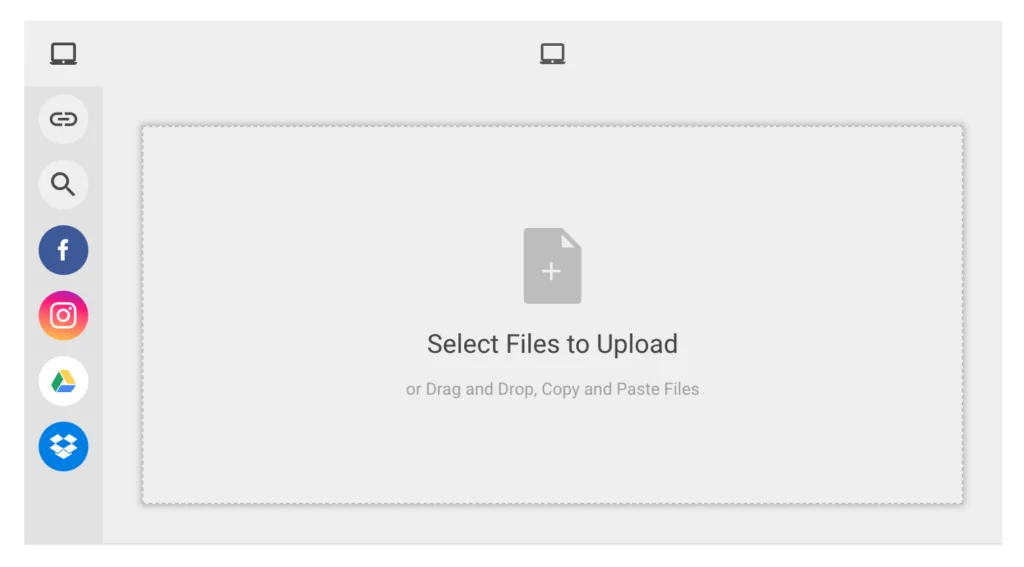
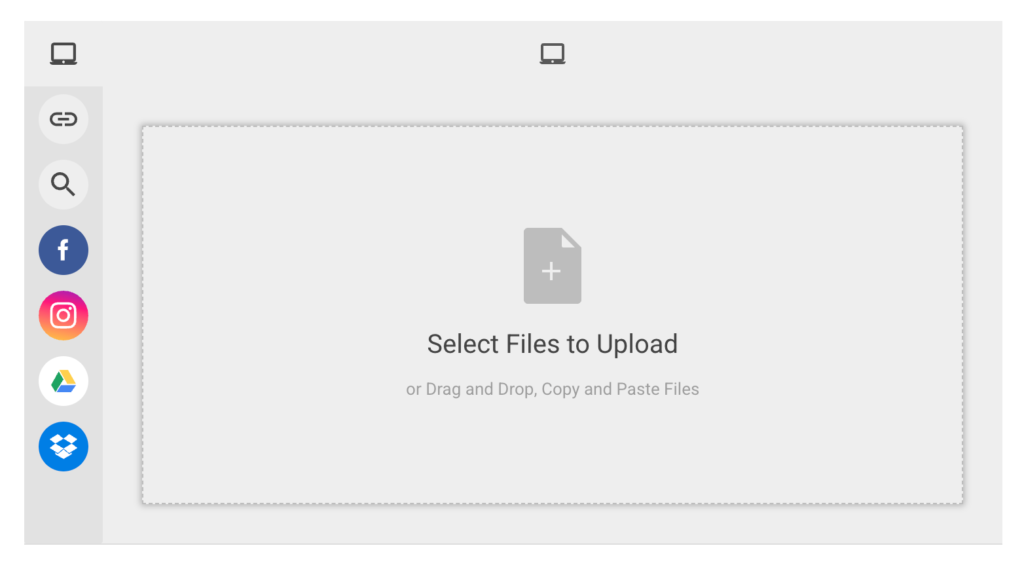
File ingestion represents the critical first touchpoint in any media pipeline. A poorly designed upload interface can frustrate users, leading to high abandonment rates, particularly on mobile devices where network instability is common. Filestack addresses this challenge by offering a highly polished, feature-rich file picker component that can be initialized with minimal JavaScript code:
// Initializing the Filestack client and opening the picker via JavaScript
const client = filestack.init("YOUR_API_KEY");
const picker = client.picker(
    onUploadDone: (res) => console.log(res),
    maxFiles: 5,
    accept: ['image/*', 'video/*']
);
picker.open();
The resulting user interface provides an elegant, highly functional modal window that supports advanced features such as drag-and-drop functionality, progress bars, file validation, and direct imports from over twenty popular third-party services. Users can seamlessly pull photographs from their Facebook or Instagram accounts, retrieve documents from Google Drive or Dropbox, or ingest code repositories via GitHub without leaving the upload modal. This versatility significantly reduces user friction and broadens the accessibility of web applications.
For workflows that require backend processing, server-to-server transfers, or automated cron jobs, client-side UI components are neither practical nor secure. To accommodate these scenarios, Filestack provides robust server-side libraries. For instance, Python developers can handle secure file transfers directly to cloud buckets such as Amazon S3 while attaching custom metadata and upload tags using the following implementation:
from filestack import Client

# Initialize the Filestack client with the appropriate API key
client = Client("YOUR_API_KEY")

# Define storage parameters including destination and metadata tags
store_params =
    'location': 's3',
    'path': 'user_uploads/documents/',
    'upload_tags':
          "department": "engineering",
          "verified": "true"


# Execute the upload and retrieve the persistent filelink reference
filelink = client.upload(
    filepath='/path/to/local/filename.jpg',
    store_params=store_params
)
print(filelink.url)
This dual-paradigm capability ensures that whether an asset originates from an end-user’s smartphone browser or an automated enterprise data ingestion pipeline, the resulting storage and referencing mechanisms remain uniform and reliable.
Real-Time Transformation and Dynamic Asset Manipulation
Once a file is successfully uploaded, it rarely exists in the precise state required by the application interface. A user might upload a 4000-pixel-wide photograph taken on a high-end digital camera, whereas the application layout may only possess a designated thumbnail container measuring 300 by 300 pixels. Forcing the browser to download the multi-megabyte original file and scale it down via CSS results in severe performance degradation. Consequently, dynamic file transformation is an essential requirement for modern digital platforms.
Filestack enables transformations across multiple media types, including raster images, vector graphics, audio, video, and documents. Crucially, these transformations can be executed asynchronously via background workflows or in real-time through URL-based parameter manipulation. By appending specific transformation tasks directly to the asset’s Content Delivery Network (CDN) URL, developers can generate tailored variations of a file instantly without generating duplicate physical copies on the storage server.
For example, resizing an image to a specific width can be achieved by modifying the asset URL as follows:
https://cdn.filestackcontent.com/resize=width:300/pdn7PhZdT02GoYZCVYeFIf the application interface requires additional aesthetic modifications—such as applying a custom color filter, rotating the orientation, and rendering a stylized vintage border—these transformations can be chained together sequentially within the URL string:
https://cdn.filestackcontent.com/resize=width:300/sepia=tone:80/polaroid/pdn7PhZdT02GoYZCVYeFBeyond basic image manipulation, the platform supports advanced operations including intelligent cropping (utilizing facial recognition and machine learning to center crops on points of interest), optical character recognition (OCR) for document parsing, file format conversion (e.g., converting HEIC images to JPEG or DOCX files to PDF), and video transcoding across various bitrates and resolutions. Furthermore, for applications that empower end-users to edit their own media, Filestack offers an embeddable Transformation UI. This interactive interface allows users to crop, rotate, apply filters, and annotate images directly within the application before final submission, providing a desktop-class editing experience within a standard web browser.
Accelerating Delivery via Global Content Delivery Networks (CDNs)
The final phase of the media lifecycle—delivery—is arguably the most critical for business outcomes. Regardless of how efficiently a file is uploaded or transformed, if it fails to render quickly on the end-user’s device, user engagement metrics will suffer. Latency is the primary enemy of web performance, and serving media from a centralized origin server inevitably introduces delays for users located far from the host data center.
To combat latency, Filestack integrates a globally distributed Content Delivery Network (CDN) that caches transformed and raw assets across numerous edge locations worldwide. When a user requests a specific file URL for the first time, the request is routed to the origin infrastructure where the necessary transformations are computed. The resulting asset is then cached at the edge server closest to the requesting user.
Subsequent requests for that exact URL are served instantaneously from the edge cache, bypassing origin computation entirely. To balance storage efficiency with freshness, Filestack’s CDN retains cached copies of unique URLs for a standard duration of thirty days. If an asset is requested again after the expiration window, the edge node re-evaluates the asset and re-caches it. This intelligent caching strategy ensures optimal load times while preventing stale data from persisting indefinitely.
Enterprise Implications and Future Outlook
The adoption of comprehensive media management utilities reflects a broader paradigm shift in software architecture toward specialized microservices and serverless infrastructure. Rather than dedicating internal engineering resources to the maintenance of commodity infrastructure—such as file storage servers, image processing queues, and CDN configurations—organizations increasingly choose to integrate proven, third-party platforms via robust APIs.
Industry analysts observe that this shift yields measurable financial and operational advantages. By offloading resource-intensive tasks like video transcoding and real-time image processing to specialized providers, companies can significantly reduce their cloud computing bills and minimize the risk of catastrophic pipeline failures during traffic spikes. Moreover, compliance features such as automated malware scanning, secure token-based URL signing, and data residency controls ensure that managed file pipelines can meet the stringent security and privacy standards required by modern regulatory frameworks, including GDPR and HIPAA.
As emerging technologies such as augmented reality, high-frame-rate video streaming, and artificial intelligence-generated media become standard features in consumer and enterprise applications, the volume and complexity of digital assets will continue to escalate. Platforms that successfully bridge the gap between seamless ingestion, intelligent transformation, and lightning-fast delivery will remain indispensable to the engineering community. By transforming what was once a cumbersome, error-prone development bottleneck into an automated, streamlined utility, services like Filestack exemplify the modern approach to scalable web architecture, empowering developers to deliver richer, faster, and more engaging digital experiences to users worldwide.