Optimizing Social Media Engagement: A Comprehensive Guide to Ideal Post Lengths Across Key Platforms


The efficacy of social media content is inextricably linked to its length, a critical factor influencing both visibility and audience interaction across an increasingly competitive digital landscape. In an era defined by fleeting attention spans and sophisticated algorithmic curation, understanding the optimal character, word, or video duration for each platform is no longer merely a best practice but a strategic imperative for brands and individual creators alike.
The "See More" Dilemma: A Universal Challenge to Engagement

A pervasive challenge across most major social media platforms is the automatic truncation of longer posts, typically hidden behind a "See More" or "Read More" button. This seemingly minor interface element acts as a significant barrier to engagement. Each tap required from a user represents an additional micro-decision, and a percentage of the audience will inevitably drop off rather than expend the effort. Consequently, fewer readers translate directly into fewer likes, comments, and shares—the very engagement signals that algorithms utilize to determine the broader distribution and prominence of content within user feeds. Research consistently demonstrates that content requiring an extra click experiences a measurable dip in interaction rates, underscoring the value of front-loading key messages and adhering to platform-specific brevity guidelines. This principle extends beyond text to video content, where retention rates are paramount indicators of success.
Platform-Specific Benchmarks: Navigating the Digital Landscape
While the overarching principle favors conciseness, the precise ideal length varies considerably depending on the platform and content type. A nuanced understanding of these benchmarks is crucial for crafting content that resonates effectively with target audiences and maximizes algorithmic favorability.

Facebook: Balancing Brevity with Depth
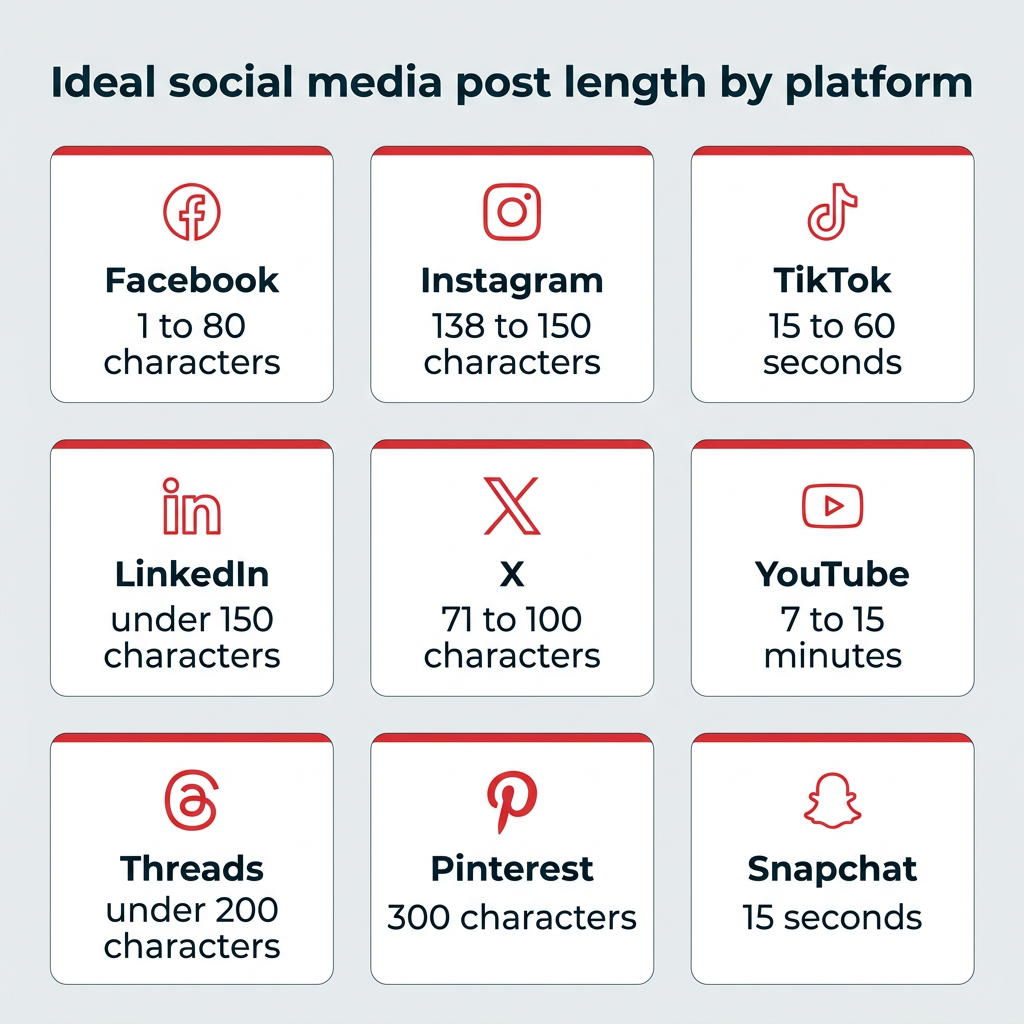
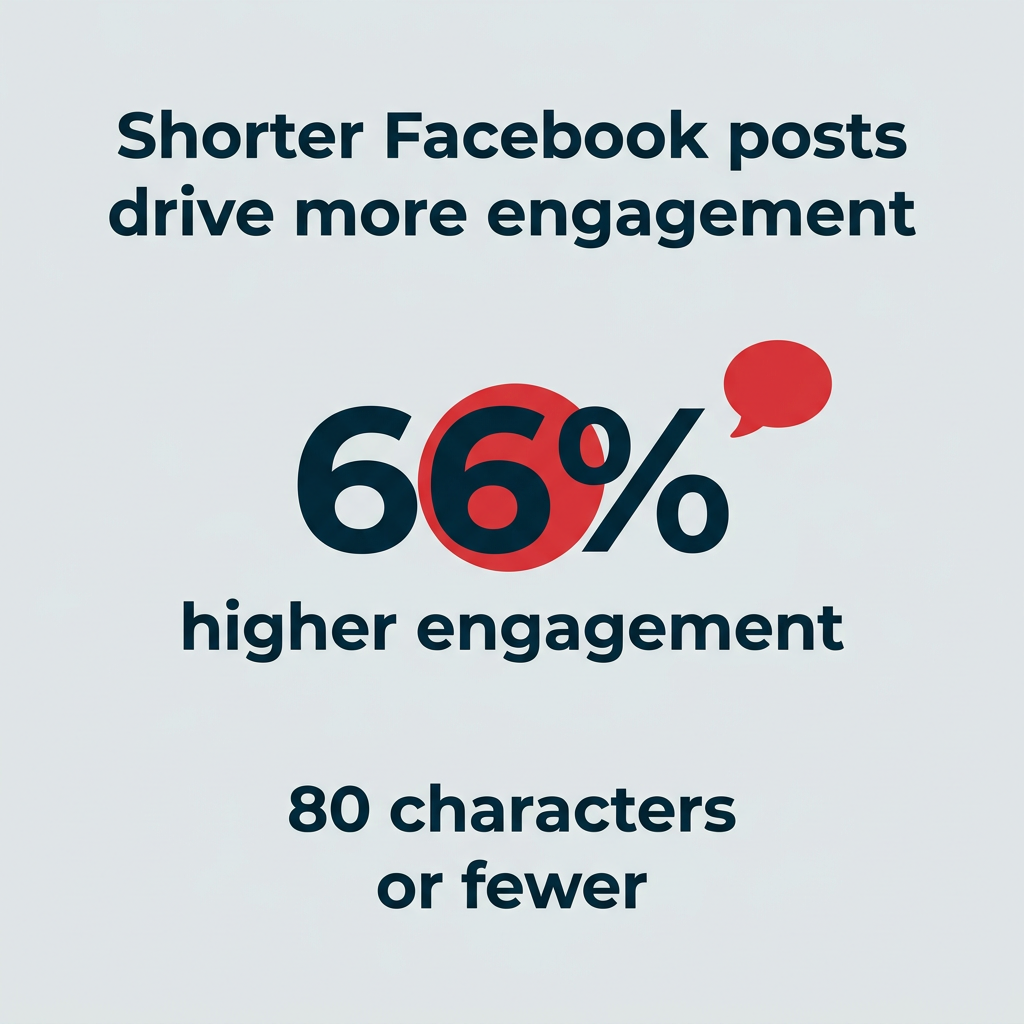
Despite Facebook’s allowance for extensive post lengths (up to 63,206 characters), user behavior and algorithmic preferences strongly lean towards shorter, more digestible content. Studies from as early as 2016 by BuzzSumo, analyzing over 800 million Facebook posts, indicated that posts under 50 characters consistently garnered higher engagement. Further data published by Jeff Bullas, referencing Buddy Media research, highlighted that posts containing 80 characters or fewer achieved an impressive 66% higher engagement rate. This is primarily attributed to two factors: the aforementioned "See More" truncation and the reduced cognitive load of consuming brief messages.
For Facebook ad copy, the imperative for conciseness intensifies. An analysis of 752,626 Facebook ads by AdEspresso in 2018 revealed optimal lengths for different ad components: primary text typically performing best at 14 words, headlines at 5 words, and descriptions at 19 words. These findings underscore the need for direct, impactful messaging in paid campaigns where every word carries a financial implication.
In terms of Facebook video content, while the platform permits uploads up to 240 minutes, the ideal length for organic viral content is often less than one minute, with Stories performing optimally under 20 seconds. However, for content intended to qualify for in-stream ads, videos must exceed three minutes, suggesting a dual strategy where shorter videos drive initial engagement and longer formats cater to monetization or deeper narrative development, such as episodic series or live streams.
Instagram: Visuals First, Concise Captions Always
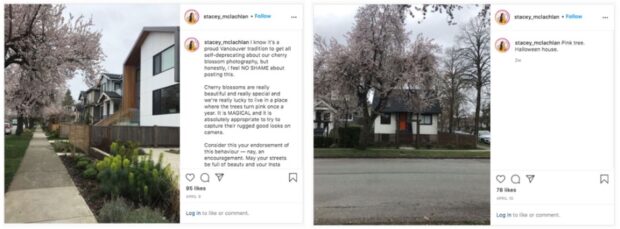
Instagram, fundamentally a visual platform, still relies heavily on accompanying text to provide context, express brand personality, and drive calls to action. While captions can extend up to 2,200 characters, optimal engagement for organic Instagram captions is found within a much narrower band of 138 to 150 characters. This length ensures the caption is fully visible without truncation, aligning with the fast-scrolling nature of the Instagram feed. For sponsored Instagram captions, the recommendation is even stricter: under 125 characters, maximizing readability and immediate impact.
The rise of short-form video on Instagram, particularly Reels and Stories, necessitates adherence to mobile-first best practices. Stories are limited to 15 seconds per frame, and Meta emphasizes capturing attention instantly. Reels, which now support durations up to 3 minutes for most accounts, show strongest engagement between 15 and 60 seconds. Shorter Reels (under 15 seconds) remain effective for quick hooks. The key is to deliver value rapidly, encouraging watch-throughs and replays, which are crucial signals for the Instagram algorithm.
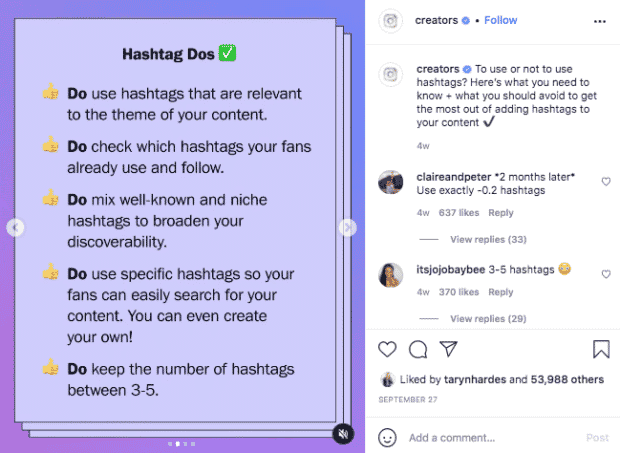
Instagram hashtag strategy also benefits from moderation. Despite a limit of 30 hashtags per post, Instagram itself has indicated that 3-5 well-chosen hashtags yield the best results. Overstuffing captions with numerous tags can appear spammy and dilute the effectiveness of targeted discoverability.
TikTok: Mastering the Art of Short-Form Video
TikTok’s phenomenal growth, with over 3 billion downloads globally, has solidified the dominance of short-form video. While the maximum video length for most users is 10 minutes (with experiments extending to 20, 30, and even 60 minutes), the platform’s algorithm prioritizes watch time and completion rates. Consequently, organic TikTok videos performing optimally range from 15 to 60 seconds. A strong "hook" within the first second is paramount to preventing users from swiping past. The platform’s "7-second challenge" has demonstrated the viral potential of ultra-short content when executed creatively, reinforcing the principle of immediate impact.
For TikTok ads, the platform recommends a duration of 21 to 34 seconds for top performance, balancing informative content with the platform’s rapid consumption pace.
LinkedIn: Professional Content with Strategic Lengths
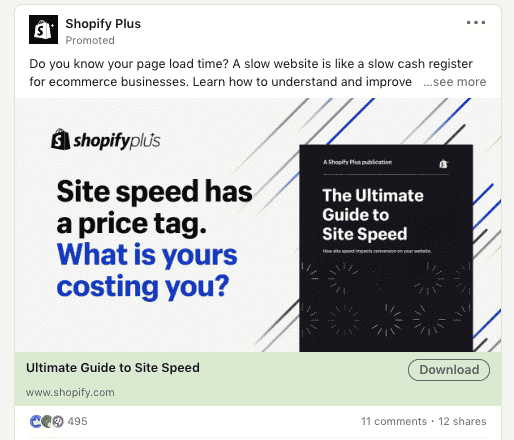
LinkedIn, with over 1 billion professionals, has evolved from a simple networking site into a robust content publishing platform. For organic and paid LinkedIn posts, similar to other platforms, brevity above the fold is key. Posts are truncated after approximately 140-150 characters, making it essential for the core message to be delivered upfront. The overall character limit for a standard post is 3,000.
However, LinkedIn also supports longer-form content through its article and newsletter features. Paul Shapiro’s analysis of over 3,000 successful LinkedIn publishing posts revealed that articles between 1,900 and 2,000 words garnered the most views, likes, comments, and shares. Titles for these articles also performed best when kept between 40 and 49 characters. This indicates that for professional thought leadership and in-depth insights, a longer, well-researched format is highly valued on LinkedIn, differentiating it from more ephemeral platforms.
LinkedIn video content also has distinct optimal lengths. For brand awareness and consideration campaigns, videos under 30 seconds achieve significantly higher completion rates (up to 200% more) than longer formats. For upper-funnel marketing goals, videos between 30 and 90 seconds are recommended, allowing for more detailed storytelling without sacrificing viewer retention.
X (formerly Twitter): Precision in Every Character
The platform now known as X has a storied history with character limits. Initially restricted to 140 characters, it expanded to 280 in 2017. While X Premium subscribers can now post up to 25,000 characters, the fundamental principle for organic and promoted X posts remains conciseness. Buddy Media’s research, though older, found that posts under 100 characters received 17% higher engagement. This still holds true in 2026; long-form posts on X are generally reserved for "threads" or deep-dives, where a series of short, connected posts can convey a larger message. Link shorteners are also valuable tools for preserving character count.
For X hashtags, experts recommend keeping them under 6 characters. Shorter, single-word or brief-letter hashtags are easier to read, remember, and search for, maximizing their discoverability potential.
YouTube: Optimizing for Search and Retention
As the world’s second-largest search engine, YouTube relies heavily on text metadata for organization and ranking. Beyond video length, optimizing titles and descriptions with relevant keywords is crucial for discoverability.
For YouTube long-form videos, retention is the primary KPI. While videos can be up to 12 hours long, Statista reports the average video length at 11.7 minutes, with Social Media Examiner suggesting optimal performance for videos between 7 and 15 minutes. This length allows for comprehensive content delivery while maintaining viewer interest.
YouTube Shorts, the platform’s answer to short-form video, adheres to similar principles as TikTok and Reels. While they can extend up to 3 minutes, Shorts between 30 and 60 seconds tend to generate more replays, a strong signal for the Shorts feed algorithm. Hooks are vital within the first second to encourage looping.
YouTube titles are a critical SEO factor. Keeping them to a maximum of 70 characters ensures they are fully displayed in search results and feeds. YouTube descriptions are also vital, with the first 100 to 150 characters appearing under the video. This prime real estate should be optimized with rich detail and compelling keywords to encourage clicks and provide context.
Threads: Quick Conversations, Rapid Engagement
Meta’s text-first application, Threads, has rapidly gained traction, boasting over 500 million monthly active users by mid-2026. Designed for quick, conversational interactions, Threads posts have a 500-character limit. However, early engagement patterns suggest that posts under 200 characters perform best, facilitating easy reading and inviting prompt replies. Unlike other platforms, Threads uses a single topic tag per post instead of traditional hashtags, emphasizing concise, focused discussions.
Pinterest: Visual Dominance with Descriptive Power
On Pinterest, image size is paramount, with best practices recommending a 2:3 aspect ratio (e.g., 1000 x 1500 pixels) for optimal visual display. However, the accompanying text is equally important for context and discoverability. Pinterest descriptions of approximately 300 characters tend to receive the most repins, according to Social Marketing Writing. This length allows for storytelling, key promises, and the integration of Pinterest SEO best practices without overwhelming the user. Idea Pins, the multi-page video format, also benefit from short, digestible text per page to maintain viewer flow.
Snapchat: Ephemeral Content, Instant Impact
Snapchat content is inherently brief and ephemeral. While Snapchat Story videos can be up to 60 seconds, optimal engagement typically occurs with much shorter content, ideally around 15 seconds. The focus here is on immediate impact and visual storytelling. Snapchat video captions are secondary to the visual content, with a limit of 80 characters, but often performing best around 50 characters, ensuring they don’t detract from the visual experience.
Beyond Benchmarks: The Imperative of Data-Driven Optimization
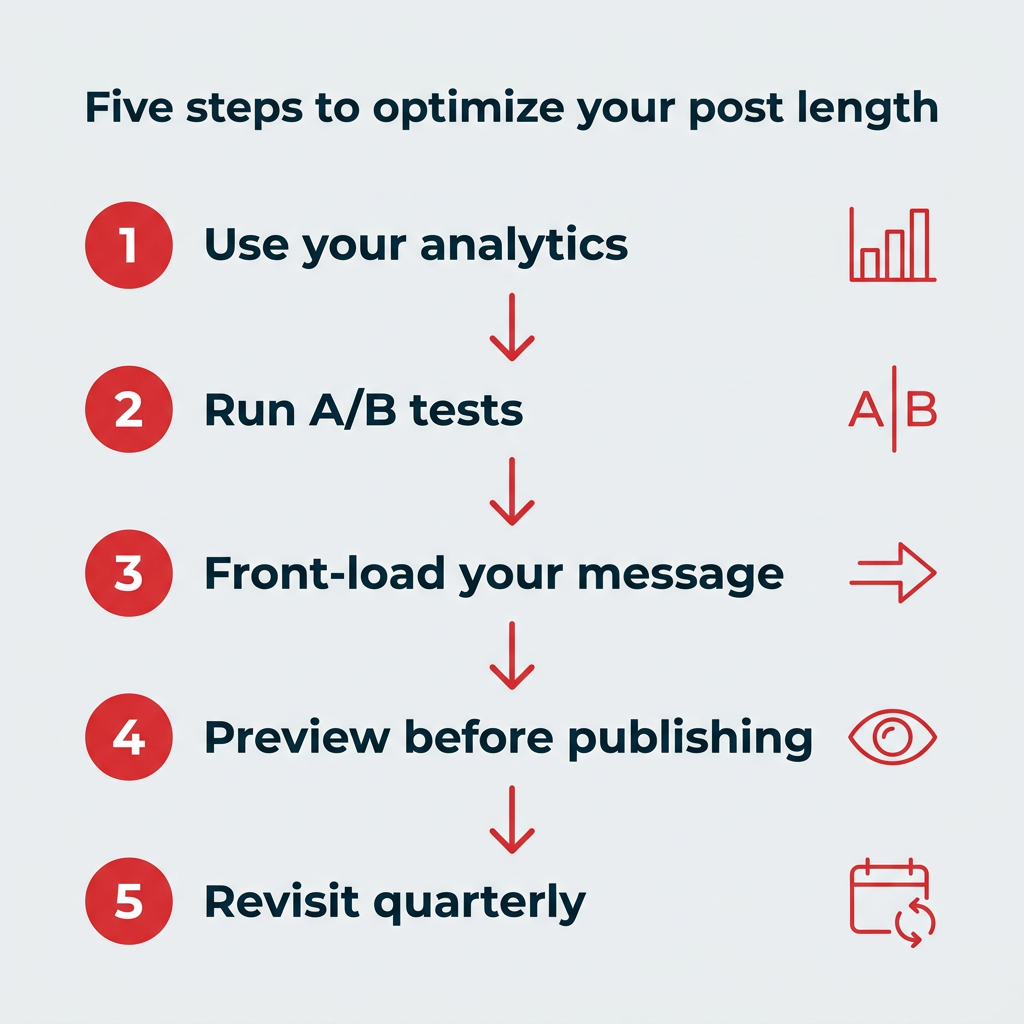
While these benchmarks provide a strong foundation, the most effective social media strategy is one that is continually refined through data analysis and experimentation. Each brand’s audience is unique, and what resonates with one demographic or industry may not with another.
Key strategies for optimization include:
- Audience Research: Understanding user behavior, preferences, and the typical content consumption habits of your specific followers.
- A/B Testing: Experimenting with different post lengths for the same content type to identify what performs best.
- Analytics Monitoring: Closely tracking key performance indicators (KPIs) such as reach, engagement rate, click-through rates, and video retention.
- Platform-Specific Adaptation: Avoiding a one-size-fits-all approach and tailoring content length to the inherent characteristics and user expectations of each platform.
- Competitive Analysis: Observing what successful competitors and industry leaders are doing in terms of content length and style.
- Leveraging AI Tools: Utilizing AI-powered caption and content generators to draft concise, engaging copy that adheres to optimal lengths.
Expert Perspectives on Evolving Social Media Strategies
Leading digital marketing analysts consistently emphasize that social media algorithms are dynamic and constantly evolving. "The platforms are in an ongoing battle for user attention, and their algorithms are designed to reward content that keeps users engaged for longer, or provides immediate value," notes one prominent social media strategist. "This means marketers must be agile, constantly reviewing their analytics, and ready to adapt their content strategies, including post length, to stay ahead of the curve." Platform recommendations, such as those from Meta’s business insights or TikTok’s Creative Center, serve as invaluable guides, representing aggregated data on millions of campaigns. However, the ultimate arbiter of success remains the brand’s own audience data.
The Future of Content Length: Adaptability as Key
The trend towards shorter, more impactful content, especially in video formats, is likely to continue, driven by mobile-first consumption and the ever-shrinking global attention span. However, the success of longer-form content on platforms like LinkedIn and YouTube demonstrates that there is still a significant appetite for depth, provided it is delivered in a contextually appropriate manner. The future of content length on social media will be characterized by a need for extreme adaptability, requiring marketers to master both the art of the succinct message and the craft of comprehensive storytelling, strategically deployed across a diverse and fragmented digital ecosystem.

Conclusion: A Strategic Approach to Digital Storytelling
In conclusion, the ideal social media post length is not a static number but a dynamic benchmark dictated by platform algorithms, user behavior, and content objectives. From Facebook’s preference for ultra-short updates to LinkedIn’s appreciation for in-depth articles, and TikTok’s dominance in rapid-fire video, a strategic approach requires platform literacy and a commitment to data-driven optimization. Brands and creators who meticulously tailor their content lengths to each unique digital environment will be best positioned to cut through the noise, capture audience attention, and ultimately achieve their marketing goals in the ever-evolving world of social media.
Related posts: